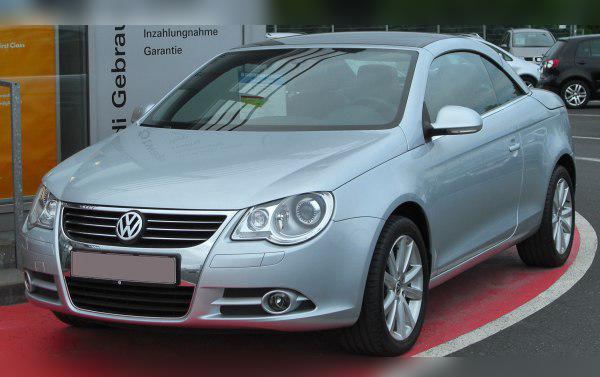
VW 2.0 FSI (BVY, BVZ) – Experiences, problems, fuel consumption and buying tips
Key points (TL;DR)
- Direct injection (FSI): Advanced technology for its time, but prone to carbon buildup on intake valves.
- No turbocharger: Simpler design means fewer potential expensive failures compared to TFSI/TSI engines.
- Dual-mass flywheel: It is present and represents a significant cost when replacing the clutch kit.
- LPG is complicated: Due to direct injection, LPG installation is expensive and often not cost-effective.
- Performance in the Eos: The engine is smooth, but struggles with the heavy body; it’s not meant for sporty driving.
- Oil consumption: Noticeable, but usually lower than on newer TSI generations. Regular checks are mandatory.
- Recommendation: A good choice for those who want smooth operation and to avoid turbo issues, and who don’t cover huge mileages.
Contents
Introduction and applications
The 2.0 FSI (Fuel Stratified Injection) engine with the codes BVY and BVZ represents Volkswagen’s transition from conventional petrol engines to units with direct fuel injection. These engines were installed in the mid-2000s, and in the Volkswagen Eos they serve as an entry point into the world of hardtop convertibles.
Unlike older generations, FSI technology injects fuel directly into the combustion chamber under high pressure, which was supposed to bring better efficiency and power. BVY and BVZ are specific because, unlike the first FSI engines, they are often mapped to run in homogeneous mode (without stratified charge), which solved some NOx sensor issues but slightly increased fuel consumption. This is an engine for drivers who like classic naturally aspirated power delivery without turbo lag.
Technical specifications
| Characteristic | Value |
|---|---|
| Displacement | 1984 cc (2.0 L) |
| Power | 110 kW (150 hp) at 6000 rpm |
| Torque | 200 Nm at 3500 rpm |
| Engine codes | BVY, BVZ |
| Injection type | Direct injection (FSI) |
| Aspiration | Naturally aspirated (no turbo) |
| Number of cylinders/valves | 4 cylinders / 16 valves |
Reliability and maintenance
This engine is considered mechanically robust, but it requires disciplined maintenance due to the complex injection system.
Timing belt or chain?
This is a frequent question that confuses owners. The 2.0 FSI uses a combination of timing belt and chain. The main timing drive (camshaft drive) is via a timing belt. However, there is also a small chain on the opposite side of the engine that connects the two camshafts. While the timing belt is replaced at regular intervals, the chain and its tensioner can wear out at higher mileage, which manifests as rattling on cold start.
Major service
The factory recommendation for timing belt replacement is often optimistic (180,000 km), but real-world experience calls for caution. A major service is recommended every 90,000 to 120,000 km or every 5 years, whichever comes first. During the major service, the condition of the small camshaft chain must be checked and it should be replaced if rattling is heard.
Most common failures
The biggest enemy of this engine is carbon buildup (coking) on the intake valves. Since fuel does not pass over the valves (because it is injected directly into the cylinder), there is nothing to “wash” them. Symptoms are rough idle, loss of power and increased fuel consumption. Cleaning requires removing the intake manifold or walnut shell blasting.
Ignition coils are also a common failure point, which leads to the engine running on three cylinders. The NOx sensor can cause problems (on models that have it, depending on the market), with the symptom being a lit “Check Engine” light along with increased fuel consumption.
Oil: capacity and consumption
The engine holds approximately 4.6 liters of oil. Only fully synthetic oil of grade 5W-30 or 5W-40 that meets VW standards (VW 504.00 / 507.00 or 502.00) is recommended. Oil consumption is present, but not as alarming as on early TSI engines. Consumption of 0.3 to 0.5 liters per 1,000 km is, unfortunately, considered “within normal limits” by factory specifications, but in practice a healthy engine should not consume more than one liter between services (10–15 thousand km). If it consumes more, valve stem seals or piston rings are usually to blame.
Spark plugs
Due to direct injection and the specific combustion process, spark plugs are under greater stress. Replacement is recommended every 60,000 km. Use only high-quality spark plugs (NGK or Bosch) intended for FSI engines.
Specific parts (costs)
Dual-mass flywheel
Yes, this engine has a dual-mass flywheel. Its role is to dampen engine vibrations before they reach the gearbox. Although petrol engines vibrate less than diesels, the flywheel still wears out, usually after 150,000–200,000 km. Symptoms are knocking when switching the engine off or vibrations in the clutch pedal. The cost of replacing the clutch kit with the flywheel is high (it falls into the “expensive” category).
Injection system and injectors
The system uses a high-pressure pump and specific FSI injectors. The injectors are generally reliable but sensitive to poor fuel quality. Injector failure manifests as leaking (which can dilute the oil with petrol) or clogging. The price of a single injector is high (varies by market, but it’s not cheap). The high-pressure pump can suffer from cam follower wear, which should be checked if a metallic noise is heard from the top of the engine.
Turbo, DPF, EGR
- Turbo: This engine does not have a turbocharger. This is a big advantage for maintenance, as it eliminates one of the most expensive potential failures.
- DPF: As a petrol engine, it does not have a DPF filter.
- EGR valve: Yes, it has an EGR valve. It recirculates exhaust gases back into the intake to reduce emissions. It often gets clogged with soot, which causes hesitation while driving or a warning light on the dashboard. Cleaning is possible, but replacement is sometimes unavoidable.
- AdBlue: There is no AdBlue system.
Fuel consumption and performance
Real-world fuel consumption
Don’t expect miracles from a 2.0 naturally aspirated petrol engine in a heavy car like the Eos. City driving realistically takes between 10 and 12 liters per 100 km, and in winter or heavy traffic jams up to 14 liters. On the open road, consumption drops to a more acceptable 7 to 8 liters, provided you drive moderately.
Is the engine “lazy”?
The Volkswagen Eos is a heavy car (due to the roof mechanism and chassis reinforcements it weighs around 1.5 tons). With 200 Nm of torque available only at 3500 rpm, this engine can be described as “sluggish” at low revs. Unlike diesels or turbo petrol engines that push you into the seat immediately, the FSI needs to be revved high to pull properly. For relaxed cruising it is perfectly adequate, but overtaking requires downshifting and full throttle.
Behaviour on the motorway
On the motorway the engine is in its element. It is very smooth and quiet. At a speed of 130 km/h in sixth gear (with the manual gearbox), the engine spins at around 3,000–3,200 rpm (depending on the final drive). This allows comfortable driving without excessive noise, but fuel consumption at that speed rarely drops below 8 liters.
Additional options and modifications
LPG installation
This is a sore point for the 2.0 FSI. Due to direct injection, installation of a standard sequential LPG system is not possible. A special direct-injection LPG system is required, which either uses a mixture of petrol and gas (to cool the petrol injectors) or injects liquid gas directly through the petrol injectors. These systems are very expensive (often two to three times more expensive than standard ones) and cost-effectiveness is questionable unless you cover huge mileages. Also, a system that uses petrol while running on LPG (around 10–20% petrol) further extends the payback period.
Chip tuning (Stage 1)
Since this is a naturally aspirated engine, chip tuning is a waste of money. The gain is negligible, usually around 10–12 hp and 10–15 Nm, which you will hardly feel in real driving. It is better to invest that money in quality fuel and proper maintenance.
Gearbox
The 2.0 FSI in the Eos most commonly comes with a 6-speed manual gearbox. There were also automatic gearbox options (Tiptronic – conventional automatic), but they are rarer in combination with this engine (they were more often paired with TFSI or V6 units).
Manual gearbox
The manual gearbox is precise and reliable. There are no specific systemic issues. The biggest drivetrain-related expense is the aforementioned dual-mass flywheel. Oil change in the manual gearbox is recommended every 100,000 km, even though VW often claims it is “lifetime filled”. Fresh oil will extend the life of the synchros and make shifting easier in winter.
Automatic gearbox
If you come across an automatic (usually the 09G Tiptronic, not a DSG in this engine/generation combination, although check by VIN as variations are possible), it is comfortable but slower than modern gearboxes. Failures are related to the valve body (jerking when changing gears). Servicing (oil and filter change) is mandatory every 60,000 km.
Buying used and conclusion
Before buying an Eos with the 2.0 FSI engine, pay attention to the following:
- Engine noise on cold start: If you hear chain rattling for 2–3 seconds or longer, it is a sign that the camshaft chain or tensioner is nearing the end of its life.
- Idle quality: The engine should idle smoothly. Vibrations can indicate dirty valves (carbon buildup), bad injectors or a worn flywheel.
- Diagnostics: Check for fault codes related to the NOx sensor, EGR valve and intake manifold flaps.
- Roof: Although not part of the engine, the roof is a critical point on the Eos. Check whether it leaks and whether it opens/closes smoothly with the engine running.
Conclusion: The VW Eos 2.0 FSI is a car for enjoyment, not for racing. The BVY/BVZ engine is a good compromise for those who are wary of the complexity of turbo engines but want something more modern than old 8-valve units. If you accept somewhat higher fuel consumption and the impossibility of cheap LPG running, this engine will, with regular maintenance, serve you faithfully for hundreds of thousands of kilometres.