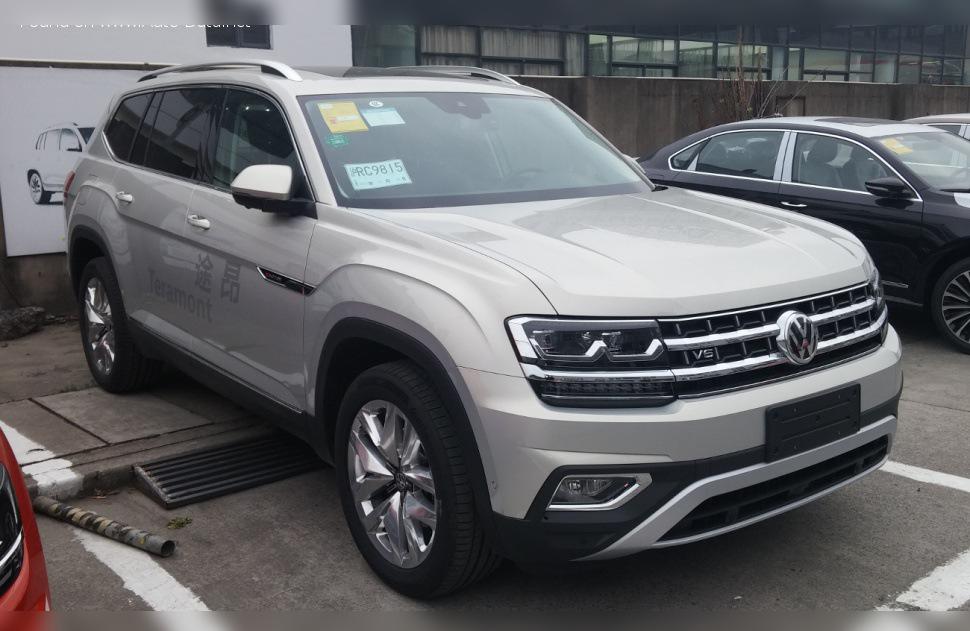
CDVA 3.6 FSI VR6: The Last of the Mohicans – Experiences, Issues, Fuel Consumption and Maintenance
Key points in short (TL;DR)
- Engine type: Naturally aspirated VR6 petrol – robust, linear and long-lasting, but "old school".
- Main issue: Carbon buildup on intake valves (due to FSI direct injection) and the PCV valve.
- Timing: Uses a chain located at the rear of the engine (towards the gearbox). Replacement is very expensive due to difficult access.
- Fuel consumption: High. In a heavy vehicle such as the Teramont, city driving rarely goes below 14–15 l/100 km.
- Maintenance: Generally more reliable than modern turbo engines, but requires quality oil and regular spark plug replacement.
- Recommendation: Ideal for those who want power and sound without turbo-related complications, and who are not too concerned about fuel consumption.
Contents
Introduction: What is the CDVA engine?
The engine with the code CDVA belongs to Volkswagen Group’s legendary VR6 engine family. This is a 3.6‑liter FSI (Fuel Stratified Injection) unit that represents an evolution of the older VR6 concepts. Unlike classic V6 engines where the cylinders are at an angle of 60 or 90 degrees, here the angle is extremely narrow (10.6 degrees), which allows the engine to have only one cylinder head, making it almost as compact as an inline engine.
It is primarily installed in the Volkswagen Teramont (known as the Atlas on some markets). This is a "workhorse" for heavy SUVs, designed to provide linear power delivery and smoothness rather than the explosiveness of modern turbo engines. For mechanical enthusiasts, this is one of the last big naturally aspirated engines offered by VW before the full dominance of 2.0 TSI units and electrification.
Technical Specifications
| Characteristic | Data |
|---|---|
| Engine code | CDVA (EA390 family) |
| Displacement | 3597 cc (3.6 L) |
| Configuration | VR6 (narrow angle, 24 valves) |
| Power | 206 kW (280 hp) @ 6200 rpm |
| Torque | 360 Nm @ 2750 rpm |
| Injection type | FSI (direct petrol injection) |
| Aspiration | Naturally aspirated |
Reliability and Maintenance
Timing system: Chain or belt?
This engine uses a timing chain. A specific feature of the VR6 design, including the CDVA engine, is that the chain mechanism is located at the rear of the engine, between the engine and the gearbox. Although the chain is designed to last a long time (often over 200,000 km, even 300,000 km with good maintenance), if the chain stretches or the tensioner fails, the repair is very expensive. (It depends on the market, but expect a lot of labor hours because the engine or gearbox has to be removed.) Symptoms of problems include rattling on cold start ("chain rattle") or the "Check Engine" light coming on with camshaft/crankshaft correlation errors.
Most common failures
Although it is mechanically very robust (the block and pistons are durable), the CDVA has several weak points:
- PCV valve (oil separator): The membrane in the crankcase ventilation/oil separator often tears. Symptoms include a whistling noise from the engine, rough idle and increased oil consumption. Fortunately, this is not a very expensive repair.
- Carbon buildup: As with any direct injection engine (FSI), the intake valves are not "washed" by fuel. Over time, carbon deposits build up, choking the engine, reducing power and increasing fuel consumption. Cleaning (so‑called "walnut blasting") is recommended every 100,000 km.
- Coil packs (ignition coils): They can fail, causing the engine to run on fewer cylinders (misfire). It is recommended to use only OEM or top-quality aftermarket parts (e.g. NGK, Bosch).
- Coolant leaks: The thermostat housing and sometimes the water pump are plastic parts that become brittle and crack over time.
Major and minor service
Since the engine has a chain, there is no classic "major service" in the sense of replacing a timing belt at a fixed interval. The chain is replaced as needed (when it becomes noisy or stretches). However, the serpentine belt that drives the alternator and A/C should be replaced at around 100,000–120,000 km.
Oil: Capacity and consumption
The CDVA engine takes approximately 5.5 to 5.7 liters of oil (always check the dipstick). The recommended viscosity is usually 5W‑30 or 5W‑40 with VW 502 00 or 504 00 specification.
Does it consume oil? Yes, VR6 engines are known to "drink" some oil, especially if driven hard. Consumption of around 0.5 liters per 3,000–5,000 km can be considered acceptable for a higher‑mileage engine. If it uses a liter per 1,000 km, that points to an issue with the piston rings or the PCV valve.
Spark plugs
On FSI engines, ignition is critical. Spark plugs should be replaced every 60,000 km (or every 4 years). Using worn plugs can lead to overheating and coil failure.
Specific Parts (Costs)
Fuel injection system
The engine uses a high‑pressure FSI system. The injectors are generally durable but sensitive to poor fuel quality. If they fail, replacement is expensive (depends on the market). A more common issue than the injectors themselves can be the high‑pressure fuel pump (HPFP), whose cam follower can wear out, although this is a rarer problem on the CDVA than on older 2.0 TFSI engines.
Turbocharger and dual‑mass flywheel
- Turbocharger: This engine DOES NOT HAVE a turbocharger. That is a huge advantage when buying used – no turbo rebuild costs, intercooler issues or turbo lag.
- Dual‑mass flywheel: Since the Teramont 3.6 FSI comes with an automatic gearbox, the situation is as follows: if it is a conventional automatic (Aisin 8‑speed, which is standard for the US/global Teramont/Atlas), it uses a torque converter and does not have a classic dual‑mass flywheel that fails like on diesels. Instead, it has a flexplate, which is very cheap and rarely fails. This is a major saving in maintenance.
Emissions systems (DPF, EGR, AdBlue)
As a petrol engine, it DOES NOT HAVE a DPF filter or AdBlue system. That means – no clogged DPF in city driving and no urea refills. It does have catalytic converters (usually two large ones), which are expensive if they fail. On these engines, EGR function is often achieved via variable valve timing (internal recirculation), so a classic EGR valve that clogs with soot is not a primary issue here as it is on diesels.
Fuel Consumption and Performance
Real‑world consumption
Let’s be honest – the CDVA 3.6 is a thirsty engine. The Teramont is a heavy vehicle (over 2 tons with passengers) and has all‑wheel drive (4MOTION).
- City driving: Expect 14 to 17 l/100 km. In heavy stop‑and‑go traffic, the figure can be even higher.
- Country roads: With a very light foot, it is possible to get down to 8.5–9.5 l/100 km.
- Highway (130 km/h): Consumption is around 10.5–12 l/100 km.
Is the engine "lazy"?
The engine is not "lazy", but it is naturally aspirated. That means it does not have that sudden torque surge at 1,500 rpm like diesels or turbo petrols. It needs revs. For the Teramont to pull hard, the gearbox has to drop 2–3 gears and the engine has to spin above 3,500–4,000 rpm. That’s when it shows its 280 hp and sounds fantastic. It is perfect for relaxed cruising, but for sudden overtakes it needs a kick‑down.
Cruising on the highway
Thanks to the 8‑speed gearbox, the engine is not heavily loaded. At 130 km/h it runs at relatively low revs (around 2,000–2,200 rpm), which contributes to cabin quietness, but the aerodynamics of the large body take their toll on fuel consumption.
Additional Options and Modifications
LPG conversion
It is possible, but complicated and expensive. Due to FSI direct injection, you cannot install a standard sequential LPG system. You need a system designed for direct injection that also uses some petrol while running on gas (to cool the petrol injectors) or, even better (and more expensive), a liquid LPG injection system through the petrol injectors. Given this engine’s high fuel consumption, the investment can pay off if you drive a lot of kilometers annually, but the installation costs are significantly above average (very expensive).
Chiptuning (Stage 1)
On naturally aspirated engines, "chipping" does not have a major effect on power. A Stage 1 remap can bring maybe 10–15 hp and slightly better throttle response, but do not expect miracles. The biggest gain is felt in a "smoother" torque curve, but realistically – it is not worth investing in software on this type of engine unless you are removing some factory speed limiter.
Gearbox
Type of gearbox
The 3.6 FSI in the Teramont is most commonly paired with an Aisin 8‑speed automatic gearbox (AQ450). This is NOT a DSG (dual‑clutch) gearbox, but a conventional automatic with a hydraulic torque converter. That is great news for those seeking comfort and reliability, especially for towing or light off‑road use.
Failures and maintenance
Aisin gearboxes are extremely reliable, perhaps even more reliable than DSG in harsh operating conditions.
- Most common issues: They are rare. You may experience harsh shifts ("kicking") if the oil is old or overheated. The transmission oil cooler should be checked.
- Gearbox service: Although manufacturers often say "sealed for life" (no maintenance), in practice the oil in the gearbox should be changed every 60,000 to 80,000 km. This drastically extends the life of the valve body and clutch packs inside the transmission.
- Clutch: As mentioned, there is no classic clutch disc or dual‑mass flywheel that wear out like on manual or DSG gearboxes. The torque converter lasts as long as the gearbox, often over 300,000 km with regular oil changes.
Buying Used and Conclusion
Before buying, make sure you do the following:
- Cold start: Listen to the engine when it is completely cold. Any rattling, knocking or grinding noise from the rear of the engine (towards the cabin) indicates a chain problem. The repair is very expensive.
- Diagnostics: Check for misfire codes by cylinder (this may indicate carbon buildup or bad coils/spark plugs).
- Test drive: The gearbox should shift smoothly and almost imperceptibly. Revs should not fluctuate at a constant speed.
Conclusion: The CDVA 3.6 VR6 engine is an excellent choice for drivers who appreciate classic mechanics, the sound of a six‑cylinder and linear power delivery. It is ideal for those who do not rack up huge annual mileage (due to fuel consumption) and want to avoid potential issues with turbochargers and DPF filters. It is more reliable than many modern 2.0 TSI engines in a heavy body, provided you accept frequent visits to the fuel station.