CJCA 2.0 TDI Engine (143 HP) – Experiences, issues, fuel consumption and used-car buying tips
Key points in short (TL;DR)
- Injection system: Common Rail generation, incomparably quieter and more reliable than the old PD (Pumpe-Düse) engines.
- Timing belt: The engine uses a belt, not a chain. A full timing service is crucial for engine longevity and safety.
- Sensitive high-pressure pump: A known weak point is the fuel pump which, due to poor-quality diesel, can create metal shavings and destroy the entire injection system.
- DPF and EGR: In city driving they are prone to clogging; replacement or cleaning can be very expensive.
- Dual-mass flywheel: Present on both manual and automatic gearboxes; its lifespan is around 150,000 to 200,000 km, depending on driving style.
- Tuning potential: The engine has proven excellent for a Stage 1 remap, which is highly recommended for heavier bodies such as the Audi Q5.
Contents
- Introduction: About the engine and its applications
- Technical specifications
- Reliability and maintenance
- Specific components and costs
- Fuel consumption and performance
- Additional options and modifications
- Gearbox: Manual and automatic
- Buying used and conclusion
Introduction: About the engine and its applications
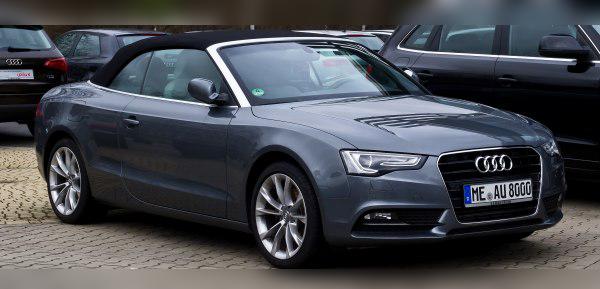
The engine with the code CJCA is part of the well-known Volkswagen/Audi group and represents an improved 2.0 TDI Common Rail architecture. With its 105 kW (143 HP) and 320 Nm of torque, it is one of the most common choices for drivers looking for a balance between efficiency and performance on the open road. It is used in more luxurious and heavier mid-class models such as the Audi A4 allroad (B8 facelift), the elegant Audi A5 Cabriolet and the popular SUV Audi Q5 first generation (facelift). Due to the weight of these vehicles, this engine has a specific task – it has to pull a fairly heavy body while keeping fuel consumption at an acceptable level.
Technical specifications
| Specification | Value |
|---|---|
| Engine displacement | 1968 cc |
| Engine power | 105 kW (143 HP) |
| Torque | 320 Nm |
| Engine code | CJCA |
| Injection type | Common Rail (Direct injection) |
| Charging method | Variable-geometry turbocharger, intercooler |
| Fuel type | Diesel |
Reliability and maintenance
When it comes to maintenance, one thing should be stressed right away: the CJCA engine uses a timing belt. The factory interval for a full timing service is optimistically set at 210,000 km, but any experienced mechanic will tell you it should be done much earlier – at 150,000 km or at the latest after 5 to 6 years. The timing kit (belt, tensioner, rollers and water pump) must be of proven quality only, because a snapped belt leads to catastrophic damage to the valves and cylinder head.
The engine takes between 4.3 and 4.7 liters of oil (depending on the exact shape of the oil pan and the presence of an oil cooler), and fully synthetic 5W-30 oil that meets the VW 507.00 standard is strictly recommended, primarily because of the DPF filter. As for oil consumption between services, it is normal for it to use around 0.5 to 0.8 liters per 10,000 km. If your car regularly lights up the warning light and asks for larger top-ups, the problem usually lies in a worn turbocharger or, less often, in stuck piston rings.
Failures and weak points (injectors and pump)
As a Common Rail diesel, the CJCA is extremely smooth, but the injection system can be its Achilles’ heel. The injectors themselves are quite durable – they easily go beyond 250,000 km if you regularly change the fuel filter and use quality Euro diesel. However, the main culprit for their failure is the Bosch CP4 high-pressure pump. Due to poor lubrication from low-quality fuel, the internal parts of the pump rub against each other and create so-called metal shavings. These shavings travel through the entire fuel system, completely destroying the injectors. Repairing this failure is extremely expensive and includes cleaning the complete system from the tank to the engine.
Specific components and costs
Buying this kind of used car also means checking the more expensive assemblies. First in line is the dual-mass flywheel. It absorbs shocks from the crankshaft and protects the gearbox, and on this engine it usually lasts from 150,000 to 200,000 km. Symptoms of wear are metallic rattling and clattering when starting and switching off the engine, as well as vibrations at idle and jolts when changing gears.
The engine is equipped with a single turbocharger with variable geometry (VGT). Its lifespan follows the engine’s service life, provided that the oil is changed on time (recommended at a maximum of 15,000 km, never at “LongLife” intervals of 30,000 km) and that you do not switch off the engine the very second you park after hard motorway driving, so that the oil can cool the turbo shaft.
Emissions systems: DPF, EGR and AdBlue
All CJCA engines are equipped with a DPF filter and an EGR valve. These systems are a nightmare for drivers who use the car exclusively for short city trips. The EGR valve and its cooler often get clogged with soot, which results in loss of power, a check engine light, and often loss of coolant (antifreeze) because the EGR cooler can crack. As for the AdBlue system, the CJCA mostly belongs to the Euro 5 generation and most of these engines do not have an SCR catalyst (AdBlue). However, transitional years and certain markets can have variations, so the golden rule is – check the VIN in an authorized service center to be 100% sure whether there is a urea tank or not, as its pump is also known to cause problems.
Fuel consumption and performance
Real-world fuel consumption depends mostly on which model the engine is installed in:
- In the city: In an Audi A5 Cabriolet, consumption is around 7.5–8.5 l/100 km. If the engine is installed in a heavy Audi Q5 with quattro drive, count on at least 8.5–9.5 l/100 km in stop-and-go traffic.
- On the motorway: At 130 km/h, depending on the gearbox ratios, revs are around 2,100–2,300 rpm. The engine cruises without stress and consumption drops to a reasonable 6–7 l/100 km.
Is it “lazy”? For everyday use and overtaking in an A4 or A5, there is more than enough power. However, in the first-generation Audi Q5 (especially loaded with family and luggage), its 143 HP and 320 Nm can feel a bit weak on mountain passes compared to the 170/177 HP 2.0 TDI versions, so the driver has to reach for the gearbox more often.
Additional options and modifications
Because of the mentioned lack of punch in heavier models, owners often opt for “chipping”. The CJCA engine hardware shares many components with more powerful versions, so a Stage 1 remap is absolutely recommended if done by a reputable tuner. Power can be safely raised to around 175–185 HP, and torque to nearly 400 Nm. This gives the car a completely new dimension, especially when overtaking on country roads, without overloading the engine components as long as the car is in good mechanical condition.
Gearbox: Manual and automatic
Depending on the drive (front-wheel drive or quattro) and body style, several gearbox options are available:
- 6-speed manual gearbox: Extremely reliable, actual gearbox failures are rare. The cost for the owner is the aforementioned dual-mass flywheel and clutch kit, whose replacement is far from cheap. Regular oil changes are recommended every 100,000 km, despite the manufacturer’s claim that the oil is “lifetime”.
- Multitronic (CVT): In models with front-wheel drive only (e.g. A5), the Multitronic automatic with continuously variable transmission is common. Very smooth, but sensitive. Electronic failures and chain breakage inside the gearbox are serious issues if servicing is neglected. The oil must be changed every 60,000 km without exception.
- S-Tronic (DSG - DL501): Models with quattro drive usually come with a 7-speed S-Tronic dual-clutch gearbox. Fantastic to drive, sharp and quick, but sensitive to maintenance. The most common failures are related to the mechatronics unit (electro-hydraulic control unit) and clutch packs. Changing the oil and filter every 60,000 km is a matter of life and death for this gearbox. It also uses a dual-mass flywheel.
Buying used and conclusion
Before you hand over your money, an inspection of a used car equipped with the CJCA engine must include the following:
- Diagnostics (VCDS): Reading DPF filter parameters (differential pressure and soot/ash load) and injector correction values.
- Cold start: Pay attention to metallic clattering from the dual-mass flywheel while the engine is completely cold. Cracking or harsh noises are not a good sign.
- Fuel filter inspection: Experienced mechanics always open the fuel filter housing. If they find even a trace of metal shavings inside, that car should not be bought, as the pump and injectors are on their last legs.
- Suspension check: Considering the heavy cars it is fitted to (Q5, A4 Allroad), the suspension and running gear components are under heavy load, so check the condition of control arms, ball joints and bushings.
Final word: Who is the CJCA engine for? It is an excellent purchase for people who cover serious mileage on open roads and value proven mechanics. The engine has proven more reliable than its predecessors, provided it has not been abused in city traffic and has been regularly serviced. If you are buying an Audi Q5 or Allroad solely for stop-and-go city congestion, a petrol engine is a better option; but if you want a durable machine for highways and long trips with moderate fuel consumption, the 2.0 TDI CJCA is a proven workhorse that will not let you down.