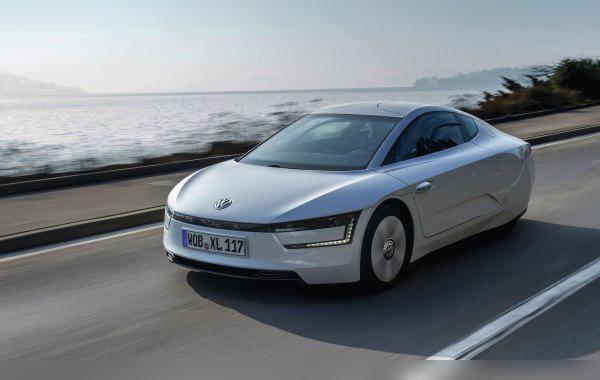
0.8 TDI (CSCA) Engine in the Volkswagen XL1 – Experiences, Problems, Fuel Consumption and Buying Tips
Key points in brief (TL;DR)
- Exclusivity: This engine was installed almost exclusively in the ultra-rare Volkswagen XL1. This is not an engine for a “people’s car”.
- Engineering: It is essentially “half” of the well-known 1.6 TDI engine (two cylinders), optimized for extreme efficiency.
- Fuel consumption: Its biggest asset. Real-world fuel consumption is tiny, often below 2 liters per 100 km, thanks to the hybrid system and low weight.
- Maintenance: Parts are highly specific and very expensive (depends on the market). Maintenance requires specialized VW service centers.
- Vibrations: As a two-cylinder, the engine naturally has more vibrations, but it has a balance shaft that compensates for this.
- Hybrid system: The engine never works on its own under heavy load; the electric motor always assists it, which reduces stress.
- Conclusion: This is a collector’s piece of technology, not a car for everyday “abuse” on the commute to work and back in the usual sense.
Contents
- Introduction and application
- Technical specifications
- Reliability and maintenance
- Specific parts (costs)
- Fuel consumption and performance
- Additional options and modifications
- Gearbox
- Buying used and conclusion
Introduction and application
The engine with the code CSCA is an engineering gem born from Volkswagen’s obsession with creating a “1‑liter car” (a car that uses 1 liter of fuel per 100 km). It was installed in the futuristic Volkswagen XL1, which was produced in a very limited series (only 250 units were sold to the public).
This is a 0.8‑liter two‑cylinder turbodiesel. Basically, the engineers took the reliable 1.6 TDI (EA189 series), “cut it in half”, and applied state‑of‑the‑art materials to reduce friction and weight. This engine works in tandem with a 20 kW (27 hp) electric motor, making the XL1 a plug‑in hybrid vehicle. Its purpose is not racing, but demonstrating the maximum possible efficiency of an internal combustion engine.
Technical specifications
| Characteristic | Value |
|---|---|
| Engine code | CSCA |
| Displacement | 800 cc (0.8 l) |
| Configuration | Inline, 2 cylinders |
| Power (ICE engine) | 35 kW (48 hp) @ 3000 rpm |
| Total system power | Approximately 51 kW (69 hp) |
| Torque (ICE engine) | 120 Nm @ 2000–2500 rpm |
| Total torque | 140 Nm (system) |
| Fuel type | Diesel |
| Injection | Common rail |
| Charging | Turbocharger + intercooler |
| Emission standard | Euro 6 |
Reliability and maintenance
Timing belt or chain?
The CSCA engine uses a timing belt to drive the camshaft. Since it is based on the 1.6 TDI engine architecture, the system is similar. Although the manufacturer often specifies a long replacement interval (e.g. 210,000 km for TDI engines of that generation), for such a rare and specific car it is recommended to replace the belt based on time – every 5 to 7 years, regardless of mileage. A snapped belt would be catastrophic because a replacement engine practically does not exist on the open market.
Most common failures
Since this is a two‑cylinder, vibrations are the biggest enemy. Although the engine has a balance shaft (counterweight) that spins at crankshaft speed to cancel out inertial forces, the engine mounts are under greater stress. In addition, the hybrid system electronics can be a source of problems – the sensors that coordinate the operation of the diesel and electric motor are complex.
Major service and oil
The major service is done preventively due to the age of rubber components (belts, hoses). The engine holds an extremely small amount of oil, approximately 2.5 to 3 liters (check the exact figure in the service book, as it varies with the filter). Low‑viscosity oil must be used, most commonly 5W‑30 with the VW 507.00 specification.
Oil consumption
This engine was designed with “low‑friction” rings and cylinders. Because of this, some oil consumption is possible, especially if driven more aggressively on the motorway. Consumption of up to 0.5 liters per 5,000 km can be considered acceptable, but any sudden increase indicates a problem with the turbo or piston rings.
Injectors
It uses a high‑pressure common rail system. The injectors are generally reliable if quality fuel is used. However, since the engine often operates in start‑stop mode (turning on and off while the hybrid system takes over), the injectors must be in perfect condition. Symptoms of bad injectors are uneven idling (which on a 2‑cylinder is hard to distinguish from normal operation without diagnostics) and increased smoke.
Specific parts (costs)
Dual‑mass flywheel
Yes, this system uses a dual‑mass flywheel. It is absolutely essential here. Two‑cylinder diesel engines produce extremely strong torsional vibrations (much stronger than four‑cylinders). The flywheel has to “smooth out” these shocks before they reach the sensitive DSG gearbox. Replacement cost is very high (depends on the market) because the part is specific to this model.
Turbocharger
The engine has a single turbocharger. Its service life is closely related to driving style. Since the XL1 is a hybrid, the engine often shuts off. If, after hard driving, the engine is switched off immediately, the oil in the turbo can coke. Fortunately, the car’s software usually takes care of cooling.
DPF and EGR
The model is equipped with both a DPF filter and an EGR valve to meet Euro 6 standards. Interestingly, the DPF here clogs less often than on standard diesels driven in city traffic. The reason? In city congestion the XL1 runs on electricity! The diesel only starts when you get out on open roads, where conditions for DPF regeneration are ideal.
AdBlue
Most versions of this engine in the XL1 do not use an AdBlue system in order to save weight, relying instead on a sophisticated EGR and oxidation catalyst together with the DPF. Still, check the specific VIN, as VW technology varies.
Fuel consumption and performance
Real‑world fuel consumption
Here the numbers sound like science fiction. The stated fuel consumption is 0.9 l/100 km.
In practice:
- If you regularly charge the battery (plug‑in): Consumption will be between 0.5 and 1.2 l/100 km.
- If you drive with an empty battery (diesel only + recuperation): Consumption rises to about 2.0 to 2.5 l/100 km.
That is still incredibly low.
Is the engine “sluggish”?
On paper, 48 hp sounds laughable. However, the XL1 is made of carbon and weighs only about 795 kg. On top of that, the electric motor adds torque instantly. Up to 60–70 km/h the car is surprisingly lively. It’s no sports car, but it’s not sluggish in city driving thanks to the “electric torque”.
Behavior on the motorway
The car can reach an electronically limited 160 km/h. Cruising at 130 km/h is possible, but at that point the diesel engine is working close to its maximum. Sound insulation is minimal to save weight, so engine and wind noise are noticeable. This is not an ideal car for long trips on German autobahns, but rather for main roads.
Additional options and modifications
Chiptuning (Stage 1)
Theoretically, any turbo engine can be remapped. However, on the CSCA engine in the XL1 this is absolutely not recommended. The gearbox (DSG DQ200) is already close to its torque limit, and the cooling system is sized exactly for the factory power. Any power increase risks catastrophic failure on a one‑of‑a‑kind car.
Gearbox
Type of gearbox
The CSCA engine comes exclusively with a 7‑speed DSG gearbox (DQ200). This is the version with “dry” clutches. However, in the XL1 the gearbox housing is often made of magnesium to save weight.
Failures and maintenance
The DQ200 is notorious for problems with the mechatronics unit (the electro‑hydraulic unit that shifts gears) and premature wear of clutch packs.
Failure symptoms: Jerking when setting off, hesitation when changing gear, metallic noises.
Service: Although VW claims the oil in this gearbox is “lifetime fill”, workshop experience shows it should be changed (both in the mechatronics and gear section) every 60,000 km to extend its life.
Buying used and conclusion
Buying a vehicle with the CSCA engine (VW XL1) is not buying a means of transport, but an investment in a collector’s item. If you are considering this car:
- Battery check: The hybrid battery loses capacity with age. Replacement is very expensive (depends on the market).
- Sound profile: The engine sounds rougher than a regular 4‑cylinder. That is normal. However, metallic knocking or rattling from the chain/valvetrain is not.
- Bodywork: The XL1 is made of carbon‑fiber‑reinforced plastic (CFRP). Any body damage requires specialists in composite materials, not a regular panel beater.
Conclusion: The CSCA 0.8 TDI is a masterpiece of efficiency. It is intended for technology enthusiasts and collectors who want to own a piece of history. For everyday driving, maintaining this engine can be a logistical nightmare due to the rarity of parts, but the feeling of driving a “car of the future from the past” is priceless.