VW 1.0 TSI (DKLA, DLAC) – Experiences, problems, fuel consumption and used car buying guide
Key points (TL;DR)
- Reliability: Significantly more reliable than the older 1.2 TSI engines; timing chain issues have been solved by switching to a timing belt.
- Characteristic: This is a three-cylinder engine – expect mild vibrations at idle and a specific sound under acceleration.
- Main advantage: The 95 hp DKLA/DLAC variant usually comes with a solid flywheel, which significantly reduces maintenance costs.
- Main drawback: Prone to carbon buildup on intake valves (direct injection) and GPF filter sensitivity to short city trips.
- Gearbox: The 95 hp version is most often paired with a 5-speed manual gearbox which is reliable, but lacks a sixth gear on the motorway.
- Recommendation: An excellent choice for city driving and regional roads; for frequent motorway trips, look for the more powerful 110/115 hp version with a 6-speed gearbox.
Contents
- Introduction and applications
- Technical specifications
- Reliability and maintenance
- Specific parts and costs
- Fuel consumption and performance
- Additional options and modifications
- Gearbox
- Buying used and conclusion
Introduction and applications
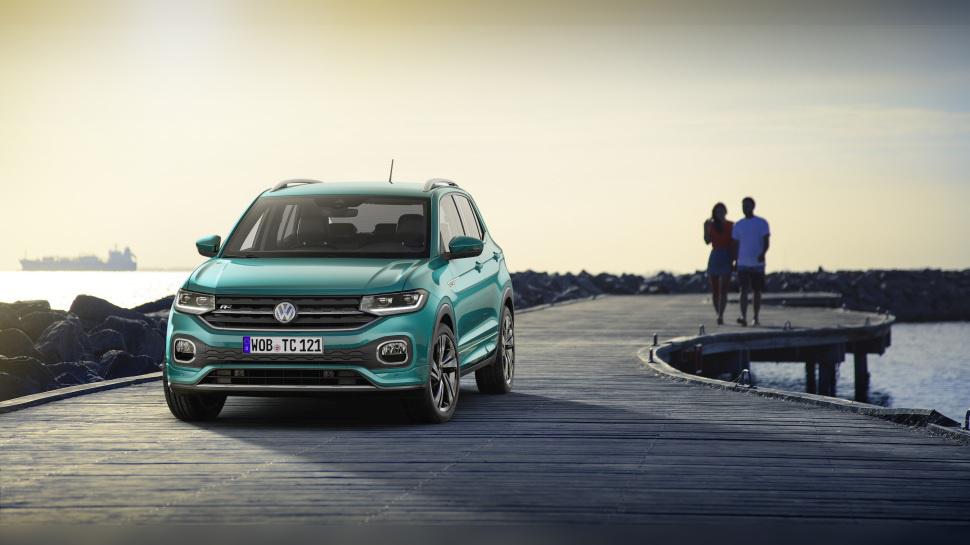
Volkswagen’s 1.0 TSI engine, especially in variants with the engine codes DKLA and DLAC, is at the core of the modern range of small city SUVs and hatchbacks within the VW Group. These engines belong to the EA211 family (more precisely, the newer revisions with a GPF filter) and came as a replacement for the once popular but problematic 1.2 TSI units. Specifically, in the Volkswagen T-Cross model, this 95 hp version serves as the “entry-level” option, offering a balance between low registration costs and sufficient performance for everyday use.
Unlike older generations, engineers here have implemented solutions that drastically increased durability, but due to strict emission standards (Euro 6d-TEMP and newer), they also introduced components that can cause headaches if the car is driven exclusively in heavy city traffic.
Technical specifications
| Characteristic | Value |
|---|---|
| Engine displacement | 999 cc (1.0 L) |
| Configuration | Inline, 3 cylinders |
| Power | 70 kW (95 hp) at 5000–5500 rpm |
| Torque | 175 Nm at 2000–3500 rpm |
| Engine codes | DKLA, DLAC |
| Injection system | TSI (Turbo Stratified Injection) – Direct |
| Induction | Turbocharger with intercooler |
| Camshaft drive | Timing belt |
Reliability and maintenance
Belt or chain?
This is the most common question and it brings good news. Unlike the notorious EA111 engines that suffered from timing chain stretch issues, the DKLA and DLAC engines use a timing belt. This system has proven to be extremely reliable and quieter in operation.
Most common failures
Although the engine is mechanically robust, the peripheral components can cause problems:
- Water pump and thermostat housing: This is a plastic module. Coolant leaks or thermostat sticking are common. If you notice that the engine struggles to reach operating temperature or is losing coolant, this is suspect number one.
- Carbon buildup: Due to direct injection, fuel does not “wash” the intake valves. Over time, carbon deposits accumulate, which can lead to rough idle and power loss.
- Turbo actuator: A common issue is rattling of the turbo actuator rod (wastegate rattle). Often it is only an acoustic problem, but in more severe cases it can trigger a fault on the dashboard (EPC light).
- GPF filter: Since the DKLA/DLAC codes indicate newer Euro standards, these engines are equipped with a gasoline particulate filter. City driving can clog it, requiring regeneration (a longer drive on open roads).
Major service (timing belt service)
For this engine generation, Volkswagen often lists a very long interval for timing belt inspection (e.g. at 210,000 km or even “never” in some markets, with only visual checks). However, real-world practice and mechanics’ experience call for caution. It is recommended to replace the timing belt kit and water pump between 150,000 km and 180,000 km or at the latest after 10 years of age, whichever comes first. A snapped belt will cause catastrophic engine damage.
Oil: quantity, grade and consumption
The engine takes approximately 4.0 litres of oil. For DKLA/DLAC engines, VW usually specifies the VW 508.00 / 509.00 standard, which corresponds to a 0W-20 grade (LongLife IV). This thin oil is used to reduce friction and fuel consumption.
Oil consumption: These engines are not notorious oil burners like some older generations, but a small amount of consumption is normal. Up to 0.2–0.3 litres per 1,000 km under aggressive driving is considered acceptable, although most owners do not need to top up between services. If it consumes more than 0.5 l/1000 km, this points to an issue with the piston rings or the turbocharger.
Spark plugs
The spark plugs are under high thermal load due to turbocharging and direct injection. It is recommended to replace them every 60,000 km or 4 years. Using worn spark plugs can damage the ignition coils (which are also expensive).
Specific parts (costs)
Dual-mass flywheel
This is one of the biggest advantages of the 95 hp version (compared to the 110/115 hp one). In most cases, and especially in the T-Cross with the 5-speed gearbox, this engine DOES NOT have a dual-mass flywheel, but uses a conventional solid flywheel instead. This drastically reduces the cost of clutch replacement when the time comes.
Injection system
It uses high-pressure direct injection. The injectors are generally durable, but very sensitive to poor fuel quality. Injector failure manifests as engine misfire, fuel leaking into the cylinder (which can wash away the oil film and damage the engine), or a check engine light. The price of a single injector falls into the “expensive” category (varies by market).
Turbocharger
The engine has a single small turbocharger with low inertia. Its lifespan is closely tied to regular oil changes. With service intervals of 15,000 km (and not 30,000 km as sometimes stated), the turbo can easily exceed 200,000 km. Symptoms of failure include whistling, blue smoke from the exhaust, or loss of power.
DPF/GPF and EGR
This model has a GPF (Gasoline Particulate Filter), which is the petrol equivalent of a diesel DPF, as well as an EGR valve. GPFs clog less frequently than diesel DPFs because petrol exhaust gases are hotter, but if you drive your T-Cross only 2–3 km a day, the filter warning light will eventually come on. The EGR valve can get clogged with soot, causing rough engine operation.
AdBlue
No, this engine does not have an AdBlue system. AdBlue is used exclusively on diesel engines (TDI) to reduce nitrogen oxides. On this petrol engine, emission standards are met using a catalytic converter and the GPF filter.
Fuel consumption and performance
Real-world city consumption
The T-Cross is not particularly heavy, but it is not as aerodynamic as a low saloon either. In real-world city traffic, you can expect fuel consumption between 6.5 and 7.5 l/100 km. If you have a heavy right foot, the figure easily climbs to 8.5 litres, as turbo petrol engines increase consumption drastically under load.
Is the engine “sluggish”?
With 175 Nm of torque available from as low as 2000 rpm, the engine feels surprisingly lively in the city. It is not “sluggish” when setting off or overtaking on urban boulevards. The feeling of lack of power (sluggishness) appears mainly when the car is fully loaded with passengers and luggage, especially on uphill sections, where the small displacement becomes apparent.
Behaviour on the motorway
This is the “Achilles’ heel” of the 95 hp version, primarily because of the gearbox (more on that in the Gearbox section). At 130 km/h in 5th gear, the engine spins at around 3,000–3,200 rpm. This means more engine noise in the cabin and fuel consumption rising to about 6.5–7.0 l/100 km. Overtaking at these speeds requires planning and often dropping down to 4th gear.
Additional options and modifications
LPG conversion
Is it possible? Yes. Is it cost-effective? Hardly. Due to the direct injection system, you cannot install a simple sequential LPG kit. You need a system that either injects liquid gas directly through the petrol injectors (very expensive) or a system that mixes petrol and gas (consuming about 15–20% petrol while running on gas to cool the injectors). Considering the already low fuel consumption of this petrol engine, the return on investment (ROI) for an LPG conversion is extremely long, unless you drive more than 30,000 km per year.
Remapping (Stage 1)
The 1.0 TSI engines have tuning potential. A Stage 1 remap can safely raise power to around 115–120 hp and torque to 200+ Nm. However, be careful: the 95 hp version has a weaker clutch and smaller brakes than the more powerful variants. Excessive power increase can lead to clutch slip.
Gearbox
Manual and automatic
With the 95 hp (DKLA/DLAC) engine in the T-Cross, the standard option is a 5-speed manual gearbox (MQ200). There are rare versions or specific markets where a 7-speed DSG (automatic) was offered, but it is mostly reserved for the more powerful 110/115 hp version.
Gearbox failures
- Manual (5-speed): Very reliable. The most common issues are related to synchronisers if shifted roughly, or oil leaks at the driveshaft seals. The lack of a 6th gear is a functional drawback, not a failure.
- Automatic (DSG DQ200): If you come across an automatic, it is a dry-clutch DSG gearbox. Its mechatronics are sensitive and repairs are very expensive (varies by market). Symptoms include juddering when setting off or delayed gear changes.
Costs and servicing
As mentioned, the manual gearbox does not have a dual-mass flywheel, so replacing the clutch kit (pressure plate, disc, release bearing) is relatively affordable (“not expensive”). VW declares the oil in the manual gearbox as “lifetime fill”, but for longevity it is recommended to replace it every 60,000–80,000 km. It takes about 1.5–2 litres of oil.
Buying used and conclusion
When buying a used T-Cross with this engine, pay attention to the following:
- Cold start: Listen to the engine while it is cold. Timing chain rattle should not be heard (because there is no chain), but turbo actuator rattle is often present. Metallic knocking or uneven running are not a good sign.
- Signs of coolant leaks: Check the coolant level and look for white traces of dried coolant around the thermostat housing (on the right-hand side of the engine when viewed from the front).
- Clutch: Test the clutch on an uphill slope. Since the engine is small, drivers often “burn” the clutch by giving more throttle when setting off to avoid stalling.
Conclusion: The VW 1.0 TSI (95 hp) is a rational and mature engine. It is ideal for drivers who spend 80% of their time in the city and suburban areas. It offers low regular maintenance costs (no dual-mass flywheel, small sump, reasonably priced tyres for a T-Cross of this power). However, if you are a “long-distance” driver who lives in the fast lane of the motorway, this engine will tire you with noise and higher fuel consumption at high speeds – in that case, look for a 1.5 TSI or at least a 1.0 TSI 115 hp with a 6-speed gearbox.