Volkswagen 2.5 TDI EA153 (AXE) – Experiences, problems, fuel consumption and used-buying tips
- No timing belt or chain: The engine uses a complex gear-driven timing system, which eliminates the classic major timing service, but makes repairs more difficult.
- Cylinder wall flaking: The biggest weakness of this engine is damage to the plasma coating on the cylinder walls, which leads to a full engine rebuild.
- Fluid mixing: The water pump often leaks coolant directly into the engine oil.
- Cylinder head damage: Pumpe-Düse (PD) injectors gradually damage the aluminum seats in the cylinder head, which leads to diesel and oil mixing.
- Performance: With 400 Nm of torque, this is an extremely strong engine that has no problem pulling heavy bodies under load.
- Expensive maintenance: Repairs are specific, require special tools and engine removal, which significantly increases labor costs.
Contents
- Introduction: The beast from Hanover
- Technical specifications
- Reliability and maintenance
- Specific parts and costs
- Fuel consumption and performance
- Additional options and modifications
- Gearbox and drivetrain
- Buying used and conclusion
Introduction: The beast from Hanover
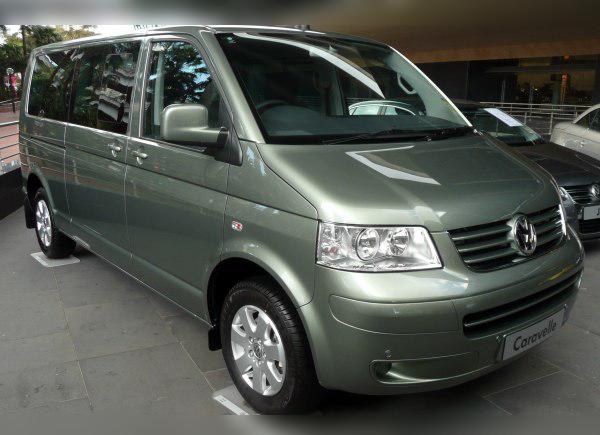
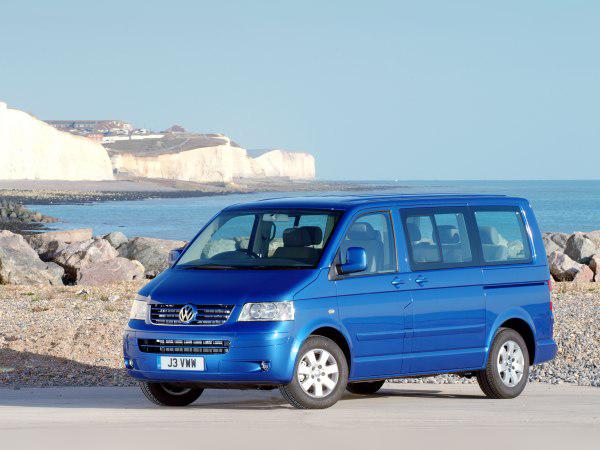
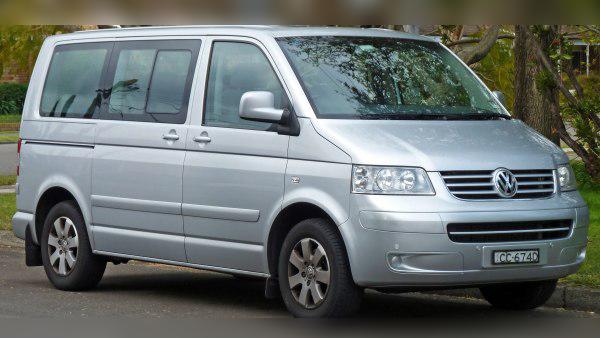
Volkswagen’s engine code AXE, part of the EA153 family, represented the top of the range at the time when the legendary T5 (Transporter, Caravelle, Multivan) first saw the light of day. This 2.5‑liter five‑cylinder engine delivers a respectable 174 hp, designed specifically for the needs of heavy light commercial vehicles and passenger vans that swallow hundreds of thousands of kilometers across the continent.
The engineers took a radical approach: the block is made entirely of aluminum alloy, without classic steel liners, while the timing is driven by a geartrain on the gearbox side. Although on paper it was conceived as a “maintenance‑free timing” engine, in practice it turned out to have serious design flaws that can drain huge amounts of money from owners’ pockets. It is intended exclusively for those who are ready for expensive and regular maintenance.
Technical specifications
| Engine displacement: | 2460 cc |
| Engine power: | 128 kW (174 hp) |
| Torque: | 400 Nm |
| Engine code: | AXE (EA153) |
| Injection type: | Pumpe-Düse (PD – unit injector) |
| Charging system: | Variable-geometry turbocharger (VGT) + intercooler |
Reliability and maintenance
Timing system: No belt, no chain
This is one of the most specific characteristics of this engine. The EA153 has neither a timing belt nor a timing chain. The camshaft and auxiliaries are driven by a complex cascade of gears (the so‑called geartrain) located on the gearbox side. Because of this, there is no classic major timing service at a set mileage. The gears are designed to last as long as the engine itself. However, the auxiliary units (alternator, A/C compressor) are driven via special elastic couplings (so‑called overrunning pulleys and rubber couplings) that must be replaced at around 150,000 km. Symptoms of a worn coupling are loss of battery charging or the A/C stopping working.
Most common failures: Headaches for owners
The biggest and most expensive flaw of this engine is the flaking of the plasma coating on the cylinder walls. The aluminum block has no liners, only a special coating a few microns thick. Due to the use of incorrect oil or overheating, this coating peels off. Symptoms are drastic oil consumption, blue smoke from the exhaust and complete loss of compression. Repair requires boring the block and installing classic steel liners, which is very expensive (depends on the market).
Another common problem is the water pump, which is installed inside the block and driven by gears. When its seal fails, coolant does not leak outside, but drains directly into the sump. Symptoms: coolant level drops, while the oil level on the dipstick rises and the oil takes on a “milky coffee” color (emulsion).
The exhaust manifold, made of thin steel, also often cracks. The symptom is the smell of exhaust gases in the cabin and soot (black carbon deposits) around the turbocharger.
Engine oil: The heart of the problem
The engine holds about 7.4 liters of oil. The most important thing with this engine is oil choice! Due to the specific plasma coating and gear-driven timing, the manufacturer strictly requires oil that meets the VW 506.01 specification (usually 0W‑30 grade). Using cheaper oil with the 505.01 spec can fatally damage the timing system and cylinders in less than 50,000 km. Normal operating oil temperature reaches about 90 °C, but under load it can exceed 110 °C.
It is normal for the engine to consume a little oil between services, usually up to 0.5 liters per 10,000 km. Any consumption over 1 liter per 1,000 km is an alarm for serious problems with the turbo or piston rings/cylinders.
Injector (Pumpe-Düse) lifespan
The PD injector assemblies themselves can last over 300,000 km with good-quality fuel. However, the problem is mechanical in nature. Each injector is secured to the cylinder head with only one bolt. During operation, the injector vibrates microscopically and literally “digs” into the aluminum seat in the head. Because of this, the injector seals fail, so fuel (diesel) leaks into the sump and dilutes the oil. Symptoms: harder cold starts, higher oil level on the dipstick, rough idle.
Specific parts and costs
The engine of course uses a dual-mass flywheel on versions with a manual gearbox. Its job is to smooth out the vibrations of the powerful five‑cylinder, but due to the huge 400 Nm of torque, it often fails on heavy vans after 150,000 to 200,000 km. Replacing the clutch kit and dual-mass flywheel is expensive to very expensive (depends on the market).
The turbocharger is based on variable geometry. Service life is excellent (250,000+ km) provided the oil is not contaminated with diesel or coolant. Symptoms of failure are loss of power (“safe mode”), whistling and increased oil consumption. Rebuilding is relatively affordable.
EGR and DPF system: Since we are talking about the AXE engine, it usually meets Euro 3 standards from the factory and does not have a DPF particulate filter. This makes maintenance easier. Later derivatives (such as the BPC engine) do have a DPF. The EGR valve is present and mechanically actuated; it is prone to soot build‑up from city driving. Cleaning it is not expensive. This engine does not use an AdBlue system.
Fuel consumption and performance
The AXE unit is anything but “lazy”. On the contrary, 400 Nm available already at low revs allows the T5 to pull strongly at any moment, even when fully loaded with passengers or cargo. It doesn’t run out of breath on climbs.
However, this comes at a price. Real-world city fuel consumption for the heavy body (often over 2 tons kerb weight) is between 10 and 12 l/100 km, and on versions with 4MOTION all‑wheel drive and automatic transmission it can reach 13 liters.
On the motorway the situation is completely different. This vehicle is made for cruising. At 130 km/h in sixth gear, the engine spins at a very relaxed 2,300–2,500 rpm. Motorway consumption is around 8 to 9 l/100 km, depending on roof profile and load.
Additional options and modifications
Given that this is a turbo diesel with huge potential, many owners opt for remapping (Stage 1). Without major hardware changes, the AXE can safely be “pushed” to around 200 to 210 hp and close to 480 Nm of torque. The engine will breathe better and accelerate more sharply. However, this modification is not recommended if the engine has high mileage and the cylinder head is not in perfect condition, because it massively increases the load on the sensitive cylinder plasma coating, the gearbox and the dual-mass flywheel.
Gearbox and drivetrain
Two gearbox options are most commonly combined with the AXE engine, with the possibility of 4MOTION all‑wheel drive:
- Six-speed manual gearbox: Extremely robust, but its weak point is the already mentioned dual-mass flywheel. Gearbox failures themselves are rare and mostly relate to second and third gear synchros on vehicles that have been abused in city delivery work. The oil in the manual gearbox should be changed every 100,000 km.
- Six-speed Tiptronic (Aisin 09K / TF-60SN): This is a conventional automatic with a torque converter. Its biggest problem is overheating and failure of the valve body (hydraulic block). Symptoms are strong bangs and jerks when shifting from second to third gear, or when the oil gets hot. For long life of this gearbox, changing the oil and filter every 60,000 km is absolutely mandatory. Repairing the valve body is very expensive (depends on the market).
Buying used and conclusion
What to check before buying?
Buying a used vehicle with the AXE engine is like walking a tightrope. The following is recommended:
- Cold start and diagnostics: The engine must start “on half a turn” without a cloud of smoke. Using VCDS diagnostics, you MUST check the injector compensation values (blocks 013 and 023). If deviations are large, the cylinder head is damaged.
- Oil check: Unscrew the oil filler cap. If you smell a strong diesel odor – walk away from that vehicle (injector seat problem). If you see whitish sludge – there is a problem with the water pump.
- Exhaust and noises: Listen for metallic rattling from the gearbox side at idle (worn dual-mass flywheel). Look for black soot behind the engine on the firewall, which indicates a cracked exhaust manifold.
- Test drive: Floor the throttle at low revs. If the power comes “in waves” and you hear hissing, the turbo hose system is leaking, or the turbo has a geometry issue.
Who is this engine for?
The Volkswagen 2.5 TDI AXE (174 hp) is not for people on a tight budget, nor for those looking for a cheap van for market runs. This is a powerful commercial/passenger engine with top‑class performance that offers comfort and speed worthy of a sedan. However, due to engineering shortcomings (plasma coating, oil sensitivity, injector seats), maintenance requires uncompromising adherence to procedures, genuine parts and an experienced mechanic. If you find an example with impeccable service history, it will provide you with unreal driving characteristics, but you should have a reserve fund ready for unforeseen repairs.