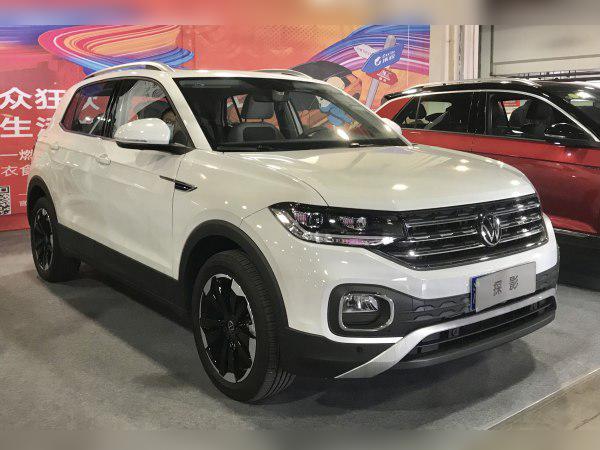
VW 1.5 MPI (EA211) – Experiences, problems, fuel consumption and used car buying guide
Key points (TL;DR)
- Reliability: Extremely reliable old-school engine in a modern package. No turbo, no direct injection.
- Maintenance: Cheaper than TSI variants. Classic timing belt and simple construction.
- Performance: The engine is “lazy” by today’s standards. Lack of torque is noticeable on uphill sections and during overtaking.
- LPG: An ideal candidate for LPG conversion (as it is an MPI version), which makes driving very cheap.
- Transmissions: Comes with reliable manual gearboxes or automatic transmissions (often Aisin or DSG, depending on the market).
- Recommendation: Perfect for city driving and calm drivers who want minimal maintenance costs.
Contents
Introduction
The engine we’re talking about today is a kind of “unicorn” in the modern era of turbochargers. It is a 1.5-liter naturally aspirated petrol engine from the EA211 family. Although most of us associate EA211 with TSI engines (turbo), Volkswagen developed this naturally aspirated version for certain markets (such as China, where the VW Tacqua is produced, as well as some markets in South America and Russia) to replace the legendary 1.6 MPI.
In the Volkswagen Tacqua model (which is basically the “twin brother” of the T-Cross), this engine represents the entry-level option. Its purpose is not speed, but simplicity and longevity. For buyers who want to avoid complex turbo systems, this is one of the few remaining newer-generation options.
Technical specifications
| Parameter | Value |
|---|---|
| Displacement | 1498 cc (1.5 L) |
| Power | 83 kW (113 hp) |
| Torque | 145 Nm |
| Engine code | EA211 series (e.g. DACA/DLF – depending on the market) |
| Injection type | MPI (Multi Point Injection) – Indirect |
| Aspiration | Naturally aspirated – No turbo |
| Number of cylinders | 4 (inline) |
Reliability and maintenance
Does this engine have a timing belt or a chain?
The EA211 1.5 MPI engine uses a timing belt. This is a big advantage compared to the older EA111 engines that had problematic chains. The belt system on this generation of engines is very reliable, quiet and durable.
What are the most common issues with this engine?
This engine belongs to the group of very reliable units, mainly because “there’s not much that can go wrong”. Still, experience has shown a few minor things:
- Sensors (lambda probes/O2 sensors): The “Check Engine” light may come on due to poor fuel quality or dirty sensors.
- Oil leaks: At higher mileage, check the valve cover gasket.
- Ignition coils: As with any petrol engine, coils can fail, which leads to rough running (running on 3 cylinders).
The good news is that this engine does not suffer from carbon buildup on intake valves, which is a common issue on TSI engines, because here the fuel washes the valves (MPI system).
At what mileage should the major service be done?
Factory recommendations are often optimistic (sometimes up to 210,000 km or 10 years for “inspection”), but real-world practice and mechanics say otherwise. The major service (replacement of timing belt, tensioner, water pump) is recommended every 120,000 to 150,000 km or every 6 to 7 years, whichever comes first. The cost is average for this class (not expensive – depends on the market).
How many liters of oil does this engine take and which grade is recommended?
The sump holds approximately 4.0 to 4.5 liters of oil (always buy 5 liters). The recommended grade is usually 5W-30 or 5W-40, meeting standards VW 502 00 or VW 504 00. For newer model years, check whether the “thin” 0W-20 (VW 508 00) is required, although for naturally aspirated engines in warmer climates 5W-30 is the golden standard.
Does it consume oil between services?
EA211 engines have drastically reduced oil consumption compared to their predecessors. Still, it is normal for the engine to “drink” around 0.3 to 0.5 liters per 10,000 km, especially if driven at high revs on the motorway. If it consumes more than 1 liter over a service interval, this may indicate an issue with piston rings or valve stem seals, but that is rare at low mileage.
At what mileage should the spark plugs be replaced?
Spark plugs should be replaced every 60,000 km. It is recommended to use quality NGK or Bosch plugs specified for this engine. Neglecting this can lead to ignition coil failure.
Specific parts (costs)
Does this engine have a dual-mass flywheel?
In most cases, this naturally aspirated engine paired with a manual gearbox has a solid (single-mass) flywheel. The torque of 145 Nm is low enough not to require an expensive dual-mass flywheel. If it comes with an automatic gearbox (DSG), the situation can be different, but in general – you won’t have the high flywheel costs typical of diesels.
What kind of injection system does it have and are the injectors problematic?
The system is MPI (Multi Point Injection), which means that fuel is injected into the intake manifold, not directly into the cylinder. This is a huge advantage for a used car. Injectors are cheap, robust, tolerant of poorer fuel quality and rarely fail. Refurbishment or replacement is significantly cheaper than on TSI/FSI engines.
Does this engine have a turbocharger?
No. This is a naturally aspirated engine. No turbo, no intercooler, no boost pipes that can crack under pressure. One big worry less.
Does this model have a DPF filter or EGR valve?
As a petrol engine, it has no DPF (which is for diesels). However, newer models (depending on production year and market, e.g. if built for strict Euro 6 standards) may have a GPF (Gasoline Particulate Filter). Still, on MPI engines the GPF clogs much less frequently than on direct-injection engines because combustion is cleaner in terms of soot particles. An EGR valve is present, but it rarely gets dirty enough to cause problems, again thanks to cleaner petrol combustion.
Does this engine use AdBlue?
No. AdBlue is used exclusively on diesel engines. Here you only fill up with petrol.
Fuel consumption and performance
What is the real-world fuel consumption in city driving?
Although the engine has a small displacement, the body of models like the Tacqua (SUV crossover) is not light and the aerodynamics are not ideal. In heavy city traffic you can expect consumption between 7.5 and 9.0 liters per 100 km. If you have a heavy right foot, it can go up to 10 liters, because you have to “wring out” the engine to get it to pull.
Is this engine “lazy” for the weight of the car?
To be honest – yes. With 113 hp and only 145 Nm (available only at higher revs), this engine struggles with the weight of an SUV. In the city it is perfectly adequate and reasonably nippy at traffic lights, but as soon as you get onto open roads and need to overtake a truck uphill, you’ll have to shift down two gears and rev the engine to 4,000–5,000 rpm. It’s not for racers.
How does the engine behave on the motorway and at what revs does it cruise at 130 km/h?
On the motorway, the engine lacks a sixth gear (if it’s a 5-speed manual) or power (if it’s an automatic). At 130 km/h the engine spins at around 3,200 to 3,600 rpm (depending on the gearbox). This means noticeable engine noise in the cabin and fuel consumption rising to about 7.5–8.0 l/100 km. Long trips are possible, but not as relaxing as with a diesel or a more powerful TSI engine.
Additional options and modifications
Is this engine suitable for LPG conversion?
YES, absolutely! This is one of the biggest advantages of the 1.5 MPI engine. Due to indirect injection, LPG installation is simple, cheap (standard sequential system) and the engine handles LPG very well. This drastically reduces running costs and makes it ideal for taxi use or for those who cover high mileage.
How much can this engine be safely “chipped” (Stage 1)?
With naturally aspirated engines, remapping (chip tuning) makes little sense. The gain would be negligible, maybe 3 to 5 hp, which you won’t feel in real driving. Don’t waste money on “Stage 1” for this engine; invest in quality tyres or regular servicing instead.
Transmission
Which gearboxes are fitted?
The VW Tacqua 1.5 usually comes with two options:
- Manual gearbox (5 or 6 speeds): Precise, with the typical Volkswagen feel.
- Automatic gearbox (6-speed Tiptronic or 7-speed DSG): Some caution is needed here. For markets outside Europe (where the Tacqua is sold), a classic Aisin 6-speed automatic (torque converter) is often fitted, which is extremely reliable. However, in some variants you can also find the DSG7 (DQ200). Always check via the VIN which gearbox the car has.
What are the most common failures?
- Manual: Very reliable. Possible oil leaks at the driveshaft oil seal at high mileage.
- Automatic (Aisin): Almost indestructible with regular oil changes.
- Automatic (DSG DQ200): If it’s this version, the mechatronics and clutch pack (dry clutch) are problematic. Symptoms include jerking when moving off or hesitation when changing gears.
Cost of clutch replacement and gearbox service?
For the manual gearbox, the clutch kit is relatively cheap (not expensive) and there is no dual-mass flywheel. The oil in the manual gearbox is officially “lifetime fill”, but it is recommended to replace it at around 150,000 km.
For the automatic gearbox, an oil change is mandatory every 60,000 km to extend its service life. The cost of servicing the automatic is moderate (depends on the market).
Buying used and conclusion
What should you check before buying?
When looking at a used VW Tacqua with the 1.5 engine, pay attention to:
- Engine sound: A cold start should be smooth. Slight ticking for the first few seconds is acceptable (hydraulic lifters), but if it continues, walk away.
- Leaks: Check the joint between engine and gearbox, as well as the plastic thermostat housing (a common VW issue).
- Test drive: Be sure to test the car on an uphill road. If it’s an automatic, it must shift smoothly without jolts. Be aware of the engine’s performance – don’t buy it and then complain that “it’s slow”.
Conclusion: Who is it for?
VW Tacqua 1.5 MPI (113 hp) is a car for the head, not the heart. It is intended for drivers who want:
- Simple mechanics without expensive failures.
- A car for city driving (from point A to point B).
- The option of cheap driving on LPG.
It is not intended for those who often drive on motorways, enjoy aggressive driving or tow heavy loads. If you accept its performance, this engine will serve you for hundreds of thousands of kilometers with minimal investment.