Volkswagen/Škoda 1.5 TSI (EA211 evo / DADA) 150 hp: Experiences, problems, fuel consumption and used car buying tips
- Drive system: Uses a highly reliable timing belt instead of a chain, eliminating the issues of older TSI engine generations.
- Innovative technology: Equipped with ACT (Active Cylinder Technology), which shuts down two cylinders while cruising to save fuel.
- Early issues: The first engine batches (DADA code) had a problem with “kangaroo” jerking in first gear on a cold start, which was solved with a software update.
- Sensitivity: Requires very strict adherence to service intervals and exclusively rare synthetic 0W-20 oil.
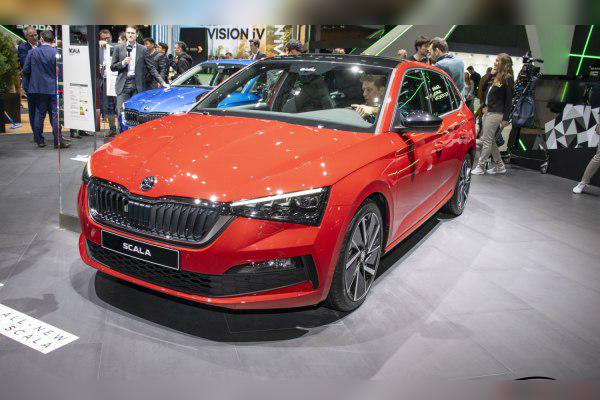
- Performance vs weight: Shines in models like the Škoda Scala and Kamiq, but the lack of torque can be felt in a heavily loaded Kodiaq.
- LPG installation: Due to direct injection, LPG installation is uneconomical and technically complicated.
- DSG gearboxes: Front-wheel-drive versions use the dry-clutch DSG (DQ200), which deserves special attention when buying used.
Contents
- Introduction: Get to know the 1.5 TSI EA211 evo
- Technical specifications
- Reliability and maintenance
- Specific parts and maintenance costs
- Real-world fuel consumption and performance
- Additional options and modifications
- Gearbox: Manual vs DSG
- Buying used and conclusion
Introduction: Get to know the 1.5 TSI EA211 evo
The engine with the code designation EA211 evo (best known by the first engine code DADA, and later DPCA) is the direct successor to the very successful 1.4 TSI engine from the Volkswagen Group. It was introduced to meet increasingly strict emission standards while retaining the driving dynamics European drivers are used to.
This 150 hp (110 kW) unit has become the backbone of Škoda’s petrol lineup, from compact models such as the Scala and Kamiq, through the popular Karoq SUV, all the way to the Superb sedan and the largest SUV, the Kodiaq. It is characterized by high injection pressure, a turbocharger and an ACT system that deactivates the second and third cylinders in situations where high engine power is not needed, significantly reducing fuel consumption and harmful emissions.
Technical specifications
| Feature | Specification |
|---|---|
| Displacement | 1498 cc |
| Power | 110 kW (150 hp) |
| Torque | 250 Nm (available from 1500 to 3500 rpm) |
| Engine codes | DADA, DPCA (EA211 evo generation) |
| Injection type | Direct injection (TSI), pressure up to 350 bar |
| Charging | Turbocharger with intercooler |
| Camshaft drive | Timing belt |
Reliability and maintenance
Timing belt or chain?
Good news for all potential buyers is that this engine uses a timing belt for the valve train. The VW Group learned its lesson from the problematic chains in older 1.2 and 1.4 TSI engines, so with the EA211 series it switched to a belt that has proven to be extremely reliable. Belt failure is practically a non-existent issue if service intervals are respected.
Most common failures and symptoms
This engine is generally considered very reliable, but it is not flawless. The first batches (produced 2017–2019, with engine code DADA) had a pronounced problem with jerking when setting off in first gear while the engine is cold, known as the “kangaroo effect” (kangarooing). The cause was a poor engine map related to emission standards. The symptom manifests itself as the car literally hopping and jerking when releasing the clutch. The solution is an official engine control unit (ECU) software update at an authorized service center.
Another potential issue is carbon buildup on the intake valves (a characteristic of every direct-injection engine). Symptoms include rough idle, a slight loss of power and increased fuel consumption. This is why it is important to occasionally drive the car on open roads at higher revs.
Also, the water pump in the entire EA211 series may show signs of coolant leakage over time. The driver will notice a drop in coolant level in the expansion tank or a warning on the instrument cluster.
Service intervals and engine oil
Although the manufacturer often states so-called “LongLife” intervals of 30,000 km, any experienced mechanic will tell you that this is murder for the engine. Always do a minor service at 10,000 to 15,000 km, or once a year. The major service (replacement of timing belt, tensioner, rollers and water pump) is, according to the factory, only to be checked after more than 200,000 km, but the recommendation from workshop practice is to replace it at 120,000 to 150,000 km or at the latest after 6 years of age.
The engine takes about 4.3 liters of oil. The most important thing with this engine is the oil grade – you must use exclusively 0W-20 oil that meets VW 508 00 specification. Using thicker oil (such as 5W-30) can damage the variable oil pump and the cylinder deactivation system (ACT).
Oil consumption and spark plugs
Oil consumption is not alarming as with older TSI engines (such as the notorious first-generation EA888), but due to the thin 0W-20 oil, it is normal for the engine to consume about 0.3 to 0.5 liters per 10,000 km, especially if driven fast on the motorway. Anything over 1 liter per 10,000 km requires inspection and often points to an issue with the piston rings, although this is rare with this model. According to the schedule, spark plugs on this petrol engine are replaced every 60,000 km to preserve the health of the ignition coils.
Specific parts and costs
Dual-mass flywheel and clutch
Yes, the 1.5 TSI with 150 hp has a dual-mass flywheel, regardless of whether it is paired with a manual or DSG automatic gearbox. Its purpose is to dampen vibrations, especially when the engine is running on only two cylinders (ACT mode). Replacing the complete clutch and dual-mass flywheel set is: very expensive (depends on the market).
Injection system and turbocharger
The injection is direct, and the system operates at an extremely high pressure of 350 bar (the older 1.4 TSI had 200 bar). The injectors are not inherently problematic, but they are extremely sensitive to fuel contamination. Injector failure manifests itself as a loss of performance, difficult starting and a fault code on diagnostics (misfire). The engine uses a single turbocharger of conventional design in the 150 hp version (the lower 130 hp version uses a turbo with variable geometry). With regular oil changes, the turbo’s service life easily exceeds 200,000 km.
Emission systems (GPF/OPF)
Since this is a modern petrol engine, it does not have a DPF (Diesel Particulate Filter), but it does have its petrol equivalent called the GPF (Gasoline Particulate Filter), or OPF in German. The good news is that the GPF is much less prone to clogging than its diesel counterpart, because petrol engines operate at much higher exhaust gas temperatures, so soot is burned off on the go. The car does not have an AdBlue system, as it is a petrol engine.
Fuel consumption and performance
Real-world fuel consumption
Thanks to its efficiency, this unit’s fuel consumption is impressively low for a 150 hp petrol engine. In stop-and-go city driving, depending on the body style (lighter Scala versus heavier Kodiaq), real-world consumption is 7.5 to 9.5 l/100 km. On country roads, with the help of the ACT system that deactivates cylinders, consumption can drop to an incredible 5.0 l/100 km.
Performance by body style
Is the engine “lazy”? That depends entirely on the model it is installed in:
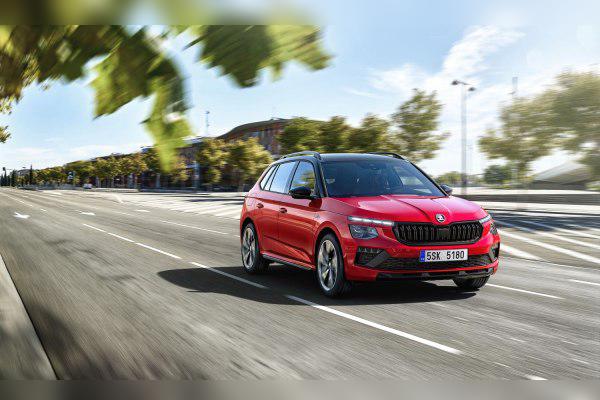
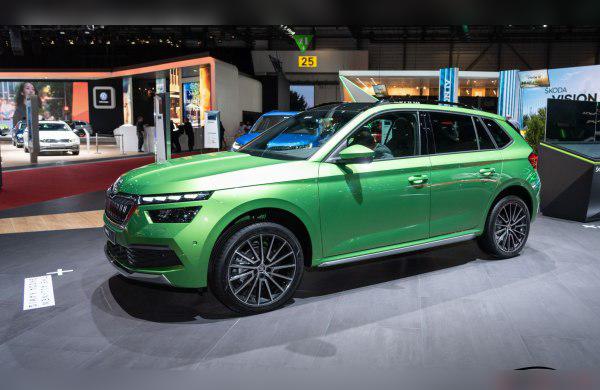
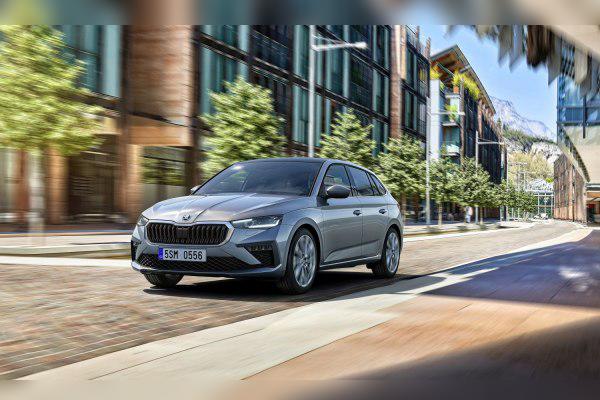
- Škoda Scala and Kamiq: In these lighter models, the 1.5 TSI is fantastically lively. The car accelerates with ease, overtaking is safe and it gives the impression of a genuine sporty car.
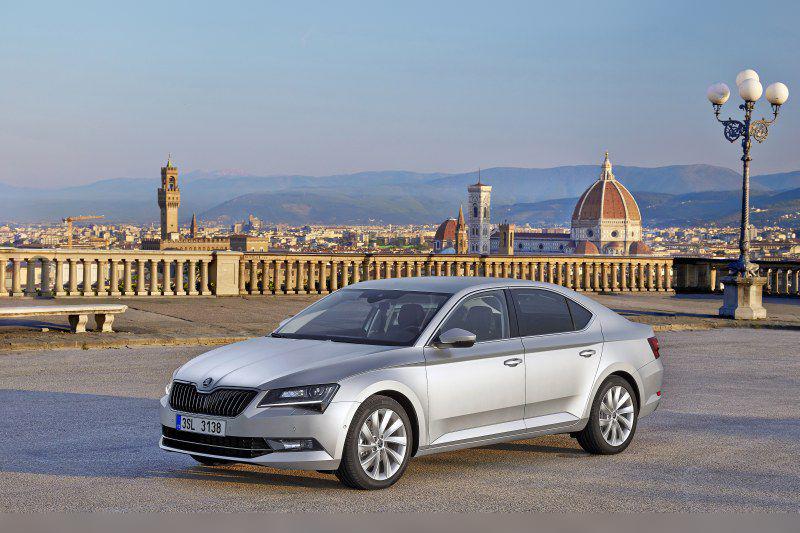
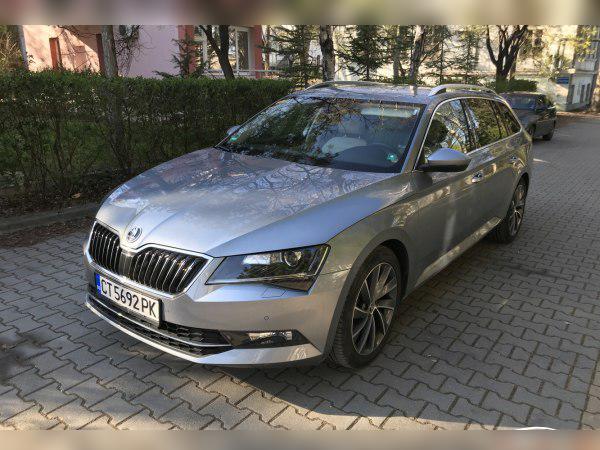
- Škoda Karoq and Superb: Represents the golden middle ground. It offers enough power reserve for safe overtaking while maintaining an excellent balance of comfort and efficiency.
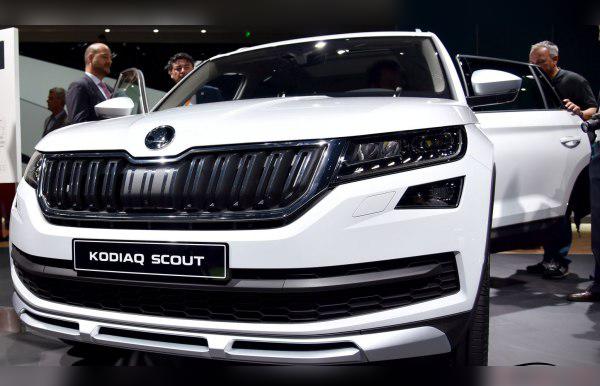
- Škoda Kodiaq (especially with 4x4 drive and 7 seats): In a large SUV weighing over 1.6 tons, under full load (passengers + luggage), the 1.5 TSI with 250 Nm of torque can feel “lazy” on steeper climbs. For towing heavy loads and frequent fully loaded uphill driving, the 2.0 TDI is a better choice due to its drastically higher torque.
Motorway behavior
On open roads the engine is impressively quiet, refined and well balanced. At a cruising speed of 130 km/h in top gear (6th for the manual, 7th for the DSG), the engine spins at an ideal and relaxed 2600 to 2800 rpm, and fuel consumption is around 6.5 to 7.5 l/100 km, depending on the model’s aerodynamics.
Additional options and modifications
LPG installation
Is LPG worth it on the 1.5 TSI engine? Mechanics’ answer is usually: No. This engine has direct petrol injection into the cylinders, and the tips of the petrol injectors are inside the combustion chamber itself. If the engine were to run exclusively on LPG, the petrol injectors would melt due to the lack of cooling normally provided by the petrol flowing through them. There are special LPG systems that simultaneously inject a small percentage of petrol to cool the injectors, or liquid-phase LPG systems, but the price of such setups is: very expensive (depends on the market) and usually completely uneconomical given the engine’s already low factory fuel consumption.
Tuning (Stage 1 remap)
The EA211 evo is very receptive to safe software tuning (Stage 1). Power can usually be raised from 150 hp to 180 to 185 hp, while torque increases from 250 Nm to about 300 to 320 Nm. If the modification is done by reputable tuning shops that do not remove the factory turbo and temperature protection limits, the engine will handle it without issues. However, the limiting factor here is not the engine, but the gearbox (as described in the section below).
Gearbox: Manual vs DSG
Types of gearboxes and reliability
This unit was paired with an excellent and precise 6-speed manual gearbox, as well as with the renowned 7-speed DSG dual-clutch automatic gearbox.
The manual gearboxes are absolutely trouble-free. Failures are very rare, and maintenance boils down to the recommendation of experienced mechanics (even though the manufacturer claims otherwise) to change the gearbox oil every 100,000 km to extend the life of the synchros.
DSG: Which one is fitted and what are the issues?
This is where you need to pay attention. If you are buying a 1.5 TSI with front-wheel drive in models such as the Scala, Kamiq, Karoq or Superb, it is paired with the DQ200 DSG gearbox with dry clutches. This gearbox is known for its clutch pack wearing out quickly in heavy urban stop-and-go traffic. Symptoms of wear include jerking and thumps when shifting from second to first gear when approaching a traffic light. Repairing the mechatronics and replacing the dry clutch pack falls into the category: expensive to very expensive (depends on the market).
On the other hand, if the engine is installed with all-wheel drive (4x4), as in the Kodiaq or Karoq 4x4 models, a much more robust DSG gearbox is used (often the DQ381) with wet clutches (in an oil bath). These gearboxes can easily handle much higher torque and harsher conditions.
Servicing DSG gearboxes
For the DQ200 with dry clutches, the manufacturer does not prescribe regular oil changes. However, in practice, changing the oil in the mechatronics assembly every 60,000 to 80,000 km is a wise decision. For DSG models with “wet” clutches, changing the oil every 60,000 km is a strict and absolute requirement, without any delay.
Note on tuning: If you remap an engine paired with the DQ200 DSG gearbox, keep in mind that the manufacturer has limited the maximum rated torque for this gearbox to 250 Nm. Increasing clutch clamping pressure in the gearbox software by the tuner is mandatory; otherwise, the gearbox will slip.
Buying used and conclusion
What must be checked before buying?
Buying a used vehicle equipped with the 1.5 TSI engine carries less risk than buying a diesel, but still requires a thorough inspection:
- Cold start: The engine must start smoothly, without metallic rattling. Pay attention during the first test drive – if the car jerks when setting off (kangaroo effect), check whether the vehicle is eligible for a free software update or if this is a symptom of a more serious fault.
- Service history: This is the most important point. The engine must have proof (invoices, electronic service book) that minor services were done regularly and that only oil to VW 508 00 specification (0W-20) was used. Any experimentation with cheaper oils by the previous owner shortens the life of the engine’s variable systems.
- Diagnostics: Reading the engine ECU can reveal faults in the throttle body, cylinder misfires (due to dirty valves) and the proper operation of the complex ACT system (cylinder deactivation must be imperceptible while driving).
- Automatic gearbox test: If you are buying a version with a DSG gearbox (DQ200), get into light traffic. The gearbox must shift smoothly from 1st to 2nd gear and back. Any dull thumps, unpleasant friction or delay when changing gears are a warning sign of a major investment in the near future.
Conclusion: Who is this engine for?
The 1.5 TSI (DADA / DPCA) engine is one of the most refined and best-balanced mid-displacement petrol units on the car market. It is an ideal solution for drivers who cover up to about 20,000 km per year, commute through the city, and cruise at up to 130 km/h on the motorway at weekends in absolute silence. Registration and regular maintenance costs are lower than with more complex diesels, and you do not have to worry about a clogged DPF filter or topping up AdBlue due to city driving.
On the other hand, if you are buying a Kodiaq to regularly carry seven passengers, a full roof box and tow a trailer over long distances – this is not the engine for you. It simply lacks the brutal torque of heavy diesels for such workloads. In every other, normal use case, it offers a stress-free driving experience, with pleasant driving dynamics and fuel consumption that often surprises with its minimal figures.