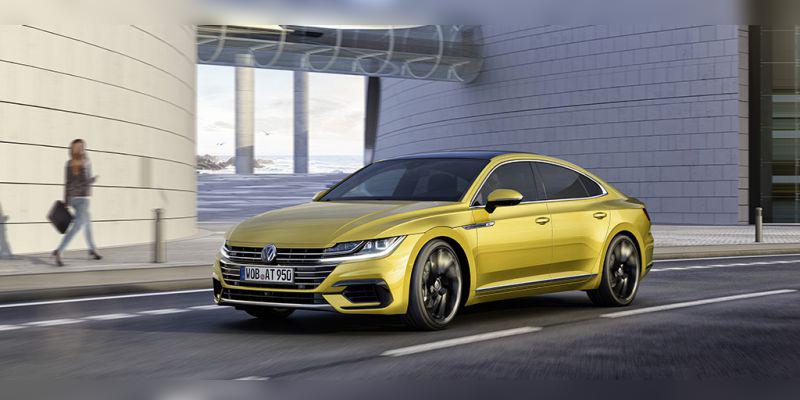
VW Arteon 2.0 TSI (280 hp) - EA888 Gen 3: Experiences, issues, fuel consumption and buying tips
Key points (TL;DR)
- Performance: This is the top-spec version of the 2.0 TSI engine (EA888 Gen 3), offering sporty performance (under 6 seconds to 100 km/h) in the elegant body of the Arteon. It is anything but “lazy”.
- Most common failure: The thermostat housing and water pump are made of plastic and prone to cracking and coolant leaks.
- Drivetrain: Comes exclusively with 4MOTION all-wheel drive and a DSG gearbox, which means maintenance is not cheap (servicing the drivetrain, gearbox and engine).
- Fuel consumption: Expect double-digit consumption in the city. This is not an economical engine if you have a heavy right foot.
- Tuning potential: Huge. This is one of the best engines on the market for “chipping” (Stage 1 easily goes over 350 hp).
- Recommendation: An excellent choice for those who want Golf R performance in a more comfortable and larger sedan, provided you have the budget for regular, high-quality maintenance.
Contents
- Introduction and applications
- Technical specifications
- Reliability, maintenance and failures
- Specific parts and systems
- Fuel consumption and performance
- Additional options and tuning
- Gearbox and drivetrain
- Buying advice and conclusion
Introduction and applications
The engine in question is the legendary EA888 Gen 3 in its most powerful factory versions (codes CJXA, DJHC). In the case of the Volkswagen Arteon, this engine represents the very top of the range before the arrival of the “R” model. With 280 horsepower, this unit transforms the Arteon from a comfortable long-distance cruiser into a serious sports machine. It is important to note that this is a technological “twin brother” of the engine found in the Golf 7 R or Audi S3, but the engine map and throttle response are adapted to the character of a Grand Tourer vehicle.
Technical specifications
| Displacement | 1984 cc (2.0 L) |
| Power | 206 kW (280 hp) |
| Torque | 350 Nm |
| Engine codes | CJXA (pre-OPF), DJHC (with OPF/GPF) |
| Injection type | Combined (Direct + MPI) or Direct only (depending on model year) |
| Forced induction | Turbocharger (IHI IS38) + intercooler |
| Camshaft drive | Chain |
Reliability and maintenance
Timing belt or chain?
This engine uses a timing chain. Unlike the notorious earlier generations of EA888 engines (Gen 2), the system here is significantly improved. The chain is more reliable, but not eternal. Chain stretch can occur, usually at mileages over 150,000–200,000 km. The first symptom is rattling during a cold start (the so-called “cold start rattle”) that lasts longer than a few seconds.
Most common failures
Although this is a robust engine, it has a few specific weak points:
- Thermostat and water pump: This is the “Achilles’ heel” of this engine. The housing is plastic and is exposed to large thermal cycles. Cracking of the housing or leaks at the gasket are very common. Symptoms are loss of coolant and the smell of antifreeze under the hood.
- PCV valve (oil separator): When the membrane in this valve tears, the engine starts consuming oil, idles roughly, or you may hear a whistling sound. It is relatively cheap and easy to replace.
- Carbon buildup: Although some versions have additional injectors in the intake manifold (MPI) that “wash” the valves, direct injection over time creates deposits on the intake valves, which can lead to power loss and rough running.
Service intervals and oil
The major service on chain-driven engines is not fixed like with a belt. Chain condition is checked via diagnostics (cam/crank correlation angle) or “by ear”. It is recommended to replace the chain, guides and tensioner preventively if you can hear them or if diagnostics show deviations, usually between 180,000 and 200,000 km, although many last longer with regular oil changes.
The engine takes approximately 5.7 liters of oil. 5W-30 (VW 504.00 standard) is recommended for our climate and fixed change intervals. On newer models (DJHC) 0W-20 (VW 508.00) is often recommended, but for engine longevity, especially if driven hard, 5W-30 or 5W-40 (high-quality synthetic) are a better choice.
Oil consumption
Gen 3 engines have solved the catastrophic oil consumption problem that Gen 2 had. Still, this is a high-performance engine. Consumption of around 0.5 liters per 3,000 to 5,000 km can be considered acceptable if the car is driven aggressively. If it uses a liter per 1,000 km, you have a problem (piston rings, PCV valve or turbocharger).
Spark plugs and injectors
On such a powerful petrol engine, spark plugs are crucial. They are replaced every 60,000 km, or earlier (at 30–40k km) if the car is chipped or driven exclusively in city/spirited conditions. Use only NGK or OEM spark plugs specified for this engine.
Specific parts (costs)
Dual-mass flywheel
Yes, this model (paired with the DSG gearbox) does have a dual-mass flywheel. It is subjected to high loads due to the torque and 4MOTION drivetrain. Symptoms of failure are metallic knocking at idle that disappears when you rev the engine, or vibrations when switching the engine off. Replacement is expensive (depends on the market), but necessary to protect the gearbox.
Turbocharger
The engine uses a single but large turbocharger (usually IHI IS38). Its lifespan is generally good and follows the engine’s lifespan with proper maintenance. However, the turbo shaft can fail if the engine is switched off immediately after hard driving (the oil “bakes” inside). Rebuilding is possible, but a new original turbo is very expensive.
Fuel system and emissions
The injectors are generally reliable. Issues can occur with high-pressure fuel pumps (HPFP), but this is not widespread.
As for emissions:
- GPF/OPF filter: Newer versions (DJHC, usually from 2018/2019 onwards) have a gasoline particulate filter (GPF/OPF). It rarely clogs compared to a diesel DPF because petrol engines run at higher exhaust gas temperatures, which makes passive regeneration easier.
- AdBlue: This engine does not have AdBlue. That system is reserved exclusively for diesel engines.
Fuel consumption and performance
Real-world fuel consumption
Let’s be honest – 280 hp, all-wheel drive and the weight of the Arteon do not go hand in hand with low fuel consumption.
- City driving: Expect between 11 and 14 l/100 km. In heavy traffic it can go over 15 liters.
- Country roads: It is possible to get it down to 7.5–8.5 l/100 km with a light right foot.
- Motorway (130 km/h): Consumption is around 8.5–9.5 l/100 km.
Performance and behavior
Is the engine lazy? Absolutely not. With 350 Nm available from low revs (around 1,700 rpm), the Arteon “jumps” as soon as you touch the throttle. Overtaking is effortless. On the motorway at 130 km/h the engine is in 7th gear (on newer DSGs) at around 2,200–2,400 rpm, which makes driving extremely quiet and comfortable. Top speed is electronically limited to 250 km/h, but the engine has enough power for more.
Additional options and modifications
LPG conversion
Installing LPG on this engine is technically possible, but complicated and expensive (depends on the market). Due to direct injection, you need a system that either injects liquid gas directly through the petrol injectors (the best but most expensive solution) or a system that uses a mixture of petrol and gas (to cool the injectors). Given the engine’s complexity and potential issues with high-pressure pumps, most owners avoid LPG on this model.
Tuning (chiptuning)
The EA888 Gen 3 is the “holy grail” of tuning. The engine is overengineered from the factory.
- Stage 1: With a software-only remap, this engine safely reaches 350–360 hp and over 450 Nm of torque. The difference is dramatic.
- It is important to note that tuning shortens the replacement intervals for spark plugs and oil, and also wears out the gearbox clutches faster if you do not also remap the gearbox (TCU tuning).
Gearbox
Type of gearbox
The Arteon with this engine does not come with a manual gearbox. It is available exclusively with a DSG dual-clutch automatic. Depending on the model year, this is:
- DQ250 (6-speed, wet clutch) – older models (less common in the Arteon, more in the Passat).
- DQ381 (7-speed, wet clutch) – the most common in the Arteon 280 TSI. This is a more modern and robust gearbox.
Gearbox maintenance and failures
The most common issues are related to the mechatronics unit (the gearbox “brain”) and clutch packs, but with the DQ381 these problems are rarer than with older generations. However, if the oil is not changed regularly, failures are inevitable and very expensive.
Gearbox service: The manufacturer specifies oil and filter changes in the DSG every 60,000 km (or 120,000 km for some newer DQ381 versions, but experts strongly advise always doing it at 60,000 km). Do not play around with this interval.
Buying used and conclusion
When buying a used Arteon 2.0 TSI, make sure to check:
- Signs of coolant leaks: Look around the intake manifold for whitish/pink traces of dried antifreeze (thermostat).
- Cold start: The engine must run smoothly immediately after starting, without chain rattling for longer than 2–3 seconds.
- DSG behavior: The gearbox must engage smoothly, without jerks, especially when shifting from R to D and back while the car is cold.
- Service history: Check whether the oil in the DSG and the Haldex coupling (4MOTION drivetrain) has been changed on time.
Conclusion: The Arteon with this engine is a fantastic all-rounder. It offers the space and comfort of a sedan, with the performance of a hot hatch. With proper maintenance, the engine is very reliable. However, fuel costs, registration and specific parts (suspension, 4x4 drivetrain, DSG, large-size tires) mean this is not a car for someone looking to save on maintenance. It is intended for enthusiasts who want a powerful machine and have outgrown the “GTI” class.