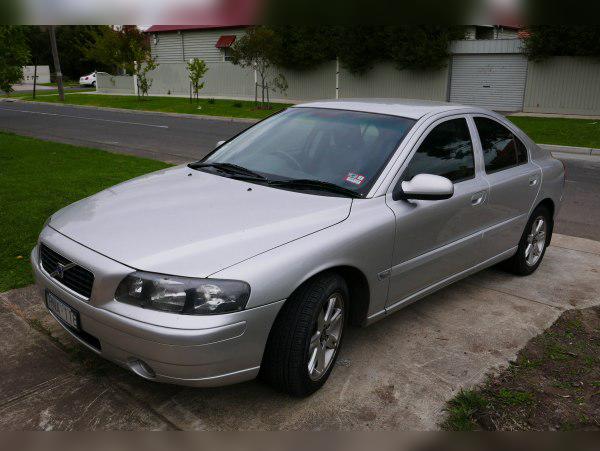
Volvo 2.0 T engine (B5204T5) 180 hp – Experiences, problems, fuel consumption and used car buying guide
- Legendary durability: An inline five-cylinder that, with proper maintenance, easily exceeds 400,000 km.
- Great sound and smoothness: The distinctive Volvo five-cylinder sound and linear power delivery thanks to a low-pressure turbo.
- Crankcase ventilation system (PCV): The most common source of issues and oil leaks, requires preventive replacement.
- Fuel consumption: Expect higher consumption in city driving, given that it is installed in heavy sedans and wagons.
- Automatic requires attention: Aisin automatic gearboxes are reliable only if the oil has been changed regularly; otherwise, valve body repair is inevitable.
- LPG (autogas) tolerance: Handles alternative fuel very well, which is a big plus for reducing running costs.
Contents
- Engine and model overview
- Technical specifications
- Reliability, maintenance and common failures
- Specific components and fuel injection system
- Real-world consumption and performance
- LPG installation and remapping
- Gearboxes, flywheels and transmission maintenance
- Buying used and conclusion
Engine and model overview
When people talk about the golden era of Swedish car manufacturing, the B5204T5 engine stands out as one of Volvo’s most important engineering signatures. It belongs to the famous series of so‑called "Whiteblock" engines (aluminium block engines). Specifically, this is a 2.0‑liter inline five‑cylinder petrol engine, supported by a low‑inertia turbocharger. It was installed in the model range that defined Volvo in the mid‑2000s: the S60 and S80 sedans, as well as the indestructible V70 II generation wagon. Because its displacement is below 2.0 liters, it was very popular in markets where registration and tax are calculated based on engine capacity, delivering the performance of much larger engines without additional penalties.
Technical specifications
| Specification | Value |
|---|---|
| Engine code | B5204T5 |
| Displacement | 1984 cc (2.0L) |
| Power | 132 kW (180 hp) |
| Torque | 240 Nm |
| Engine type and fuel | Inline 5 cylinders (R5), Petrol |
| Aspiration | Turbocharger (LPT - Low Pressure Turbo) |
| Injection type | Multi-point electronic fuel injection (EFI) |
Reliability, maintenance and common failures
The B5204T5 is considered an extremely reliable unit, but it is not indestructible if its specific maintenance needs are ignored. The camshafts are driven by a timing belt. The official interval for the major service ranges from 120,000 up to even 160,000 km depending on model year; however, based on real‑world experience, it is strongly recommended to perform the major service (replacement of belt, tensioner, idler pulleys and water pump) at a maximum of 90,000 km or every 5 to 7 years. A snapped belt leads to catastrophic contact between valves and pistons, and that repair is usually very expensive (depends on the market).
Lubrication system and oil consumption
This five‑cylinder takes about 5.5 to 5.8 liters of oil. The recommended grade is 5W‑40 or 5W‑30 fully synthetic (most often ACEA A3/B4 specification, unless the manual for newer model years requires A5/B5). Due to the nature of a turbo engine and the age of these cars, up to 0.5 to 1 liter of oil per 10,000 km is considered normal consumption. If consumption exceeds this value, the problem usually lies in hardened valve stem seals or leaks at the oil seals caused by a clogged PCV system.
Most common engine issues
The first and by far most important fault you must watch out for is clogging of the PCV system (oil separator / crankcase ventilation). Symptoms include smoke coming out of the dipstick tube when the engine is hot, a whistling noise around the engine bay, and oil being pushed out through the crankshaft and camshaft seals. Replacing the complete PCV system, including hoses, is a key preventive measure. Other issues include problems with the VVT cam phaser, which starts rattling at startup or begins to leak oil. Also, the electronic throttle module (ETM) on older models up to 2003 can cause issues, leading to unstable idle. As for the spark plugs, the set of 5 should be replaced every 60,000 km to protect the ignition coils, which can fail due to excessive gap on worn plugs.
Specific components and fuel injection system
The injection system on the B5204T5 is a classic indirect multi‑point setup. This means the engine does not suffer from direct‑injection issues (such as carbon buildup on intake valves). The injectors are very durable and rarely need replacement; in most cases, ultrasonic cleaning after 200,000 km solves rough‑running problems.
As a typical petrol engine from this era, it does not have a DPF filter or AdBlue system, which immediately eliminates huge potential costs typical of modern diesels. It also does not have a conventional EGR valve prone to clogging; exhaust emissions and vapor circulation are handled through the aforementioned PCV system and the catalytic converter.
The turbocharger is an LPT (Low Pressure Turbo), most often from Mitsubishi (TD04 family). Its service life is impressive – if the oil has been changed regularly and the engine has not been abused when cold, the turbo can easily exceed 250,000 km without a rebuild. Signs of wear are bluish smoke from the exhaust when lifting off the throttle or a noticeable drop in power.
Real-world consumption and performance
Thanks to the low‑pressure turbo, the engine delivers its maximum 240 Nm of torque already at very low revs. In practice, this means it drives very similarly to a turbo‑diesel, without the need to rev it into the red. The engine is definitely not "lazy", even in heavy bodies such as the Volvo S80 or V70 (which weigh around 1.6 tons). It responds eagerly and provides very smooth driving.
However, the weight and five cylinders take their toll at the fuel pump. Realistic city consumption ranges between 11 and 14 l/100 km, depending on traffic and gearbox type (the automatic uses about one to two liters more in town). On country roads and highways, consumption drops to a reasonable 7 to 8 l/100 km. On the motorway, the engine is an exceptionally quiet cruiser. At 130 km/h, it spins at around 2,700 to 3,000 rpm (depending on gearbox type), and fuel consumption stabilizes at about 8.5 to 9 l/100 km.
LPG installation and remapping
Good news for drivers who want to cut running costs – this engine is excellent for installing a sequential LPG system. Its valves tolerate LPG operation very well, provided the mixture is properly mapped in the LPG ECU. Poorly tuned LPG can lead to overheating of exhaust valves or triggering of the "Check Engine" light (due to deviations detected by the lambda sensor). Regularly checking spark plug gaps is mandatory if you run the engine on LPG.
As for increasing power, remapping (Stage 1 software tune) is very popular. Thanks to solid factory headroom, the engine can be safely taken from 180 hp to around 210 to 220 hp, with torque rising to over 300 Nm. Still, be careful – although the engine can handle it, older automatic gearboxes often do not cope well with a sudden torque increase, which can lead to faster wear of the internal clutch packs.
Gearboxes, flywheels and transmission maintenance
This engine was paired with both manual and automatic gearboxes, and the differences in maintenance are significant.
Manual gearbox (M56)
If you buy a version with a manual gearbox, you get the virtually indestructible M56 five‑speed transmission. Failures of the gearbox itself are extremely rare. The oil inside (about 2 liters, usually 75W‑90) should be changed preventively at 100,000 km. However, this version uses a dual‑mass flywheel. Given the age, if you feel strong vibrations when pulling away, shaking at idle or knocking when switching the engine off, a replacement of the complete clutch and flywheel set is approaching. This job is considered very expensive (depends on the market).
Automatic gearbox (Aisin AW55-50/51SN)
Most S80 and V70 models on the market come with this five‑speed automatic gearbox (commercially called Geartronic by Volvo). The automatic does not have a dual‑mass flywheel, but uses a torque converter instead. The biggest downside of this gearbox is its sensitivity to old oil. If you feel jolts when shifting from "P" to "D" or harsh shifts between 2nd and 3rd gear, it is a clear sign that the valve body has worn out due to irregular maintenance.
Golden rule for the automatic: The gearbox requires regular flushing and oil replacement (flush method, about 10 to 12 liters of JWS 3309‑spec oil) every 60,000 km. If you do this, the gearbox will outlast the body; if you don’t, repairs are very expensive (depends on the market).
Buying used and conclusion
When buying a used car with the 2.0T (B5204T5) engine, age and mileage call for caution. Here is what you absolutely must check:
- Glove test (PCV system): Warm the engine up to operating temperature (90 °C). Open the oil filler cap on the valve cover and place a regular rubber glove over it. If the engine slightly pulls the glove inward, the system is working perfectly. If it inflates the glove, the PCV system is clogged and crankcase pressure is too high. In addition, pull out the dipstick while the engine is running – there should be no smoke.
- Noises from the timing belt area: Listen for a "clack‑clack" sound at cold start, which would indicate a worn VVT pulley.
- Automatic gearbox check: Warm up the car and drive it slowly through town. The gearbox must shift smoothly up and down as you slow down towards traffic lights. Harsh downshifts are a red flag.
- Visual inspection under the car: Look for oil residue between the engine and gearbox (rear crankshaft seal), which is often the result of the aforementioned bad PCV system.
Who is this engine for?
The Volvo 2.0 T (B5204T5) is for drivers who value reliability, a great engine note, the safety of a Swedish tank and comfortable long‑distance cruising, and who are not overly concerned about higher city fuel consumption. It avoids the expensive components of modern diesels (no DPF, no AdBlue, no costly high‑pressure pumps), and its suitability for LPG makes it a rational choice. If you find a car with a well‑documented transmission service history and a sorted PCV system, you will get an extremely dependable long‑distance companion.