Volvo 2.5 T5 (B5254T7) – Experiences, issues, fuel consumption and used-car buying tips
- Great performance and sound: A legendary inline five-cylinder with a distinctive sound and massive low-end torque.
- Timing belt: The engine requires regular major services, and this is not the place to save money.
- Problematic PCV system: The oil separator is the most common “weak spot” that causes oil leaks and a characteristic whistling noise.
- High fuel consumption: In city driving it easily gulps more than 12 liters of petrol.
- Modification-friendly: Works very well with LPG (autogas) conversions and Stage 1 remaps, but going overboard with power can lead to block cracking.
- Automatic transmission maintenance: Geartronic gearboxes are reliable only if the oil is changed every 60,000 km.
Contents
- Introduction: Swedish five-cylinder in a compact package
- Technical specifications
- Reliability and maintenance
- Specific parts and costs
- Fuel consumption and performance
- Additional options and modifications
- Transmissions and drivetrains
- Used-car buying tips and conclusion
Introduction: Swedish five-cylinder in a compact package
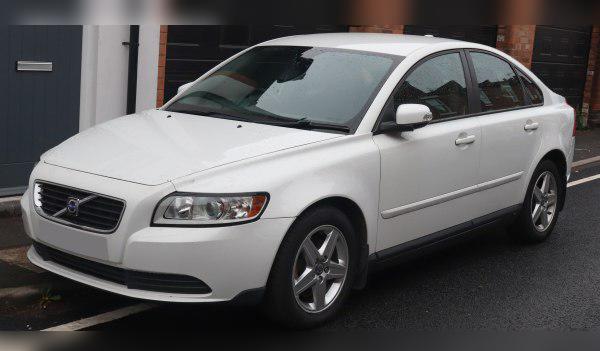
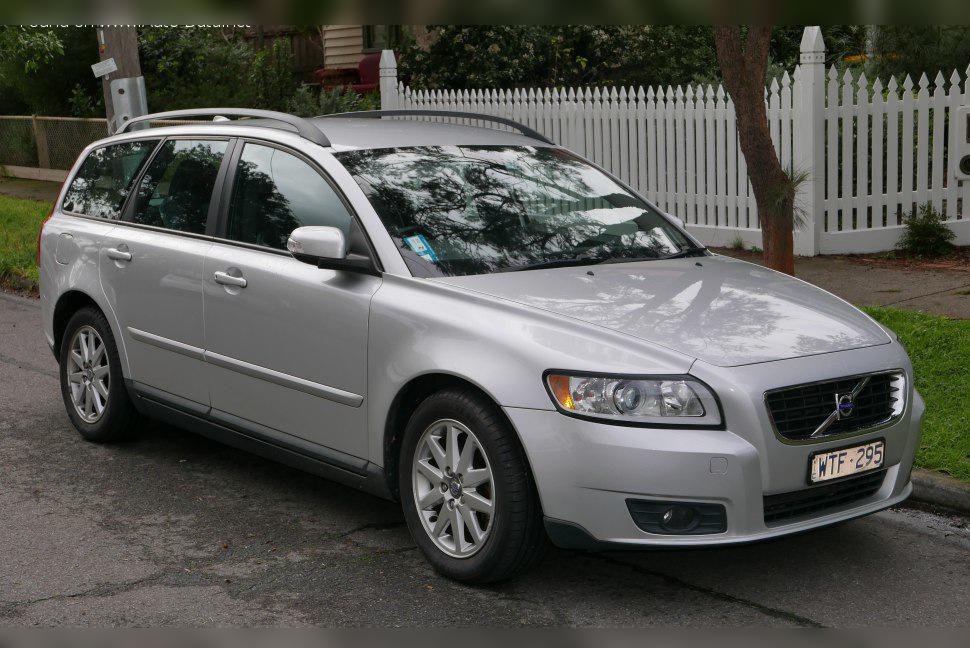
When people mention Volvo from the golden era of the turn of the millennium, the association is almost always the robust inline five-cylinder turbo petrol. The engine designated B5254T7 is an evolution of the well-known Swedish architecture, “squeezed” into vehicles based on the P1 platform (developed in cooperation with Ford). This 2.5‑liter, 230‑horsepower unit was mostly installed in facelifted models from 2007 until the end of production: Volvo C30, S40 II, V50 and C70 II convertible. Thanks to its massive torque and smooth operation, this engine is sought after among enthusiasts, but buying a used car with this heart requires good information and a clear maintenance budget.
Technical specifications
| Specification | Data |
|---|---|
| Engine displacement | 2521 cc |
| Power | 169 kW (230 hp) at 5000 rpm |
| Torque | 320 Nm at 1500–5000 rpm |
| Engine code | B5254T7 |
| Injection type | MPI (multi-point indirect injection) |
| Aspiration | Turbocharger with intercooler |
Reliability and maintenance
Timing system: Belt or chain?
The B5254T7 engine uses a timing belt. According to factory specifications, the major service is due at 150,000 km or every 10 years. However, based on real-world experience and mechanics’ advice, the strict recommendation is to shorten this interval to 100,000–120,000 km or every 7 years. A snapped belt leads to catastrophic damage to the valves and cylinder head, and repairs are extremely expensive.
Most common failures and symptoms
Although the engine’s core is extremely robust, there are some “childhood diseases”:
- PCV system (oil separator): By far the most common issue. When the membrane in the oil filter housing tears, the engine starts drawing in unmetered air. The symptom is a loud whistling noise under the hood at idle, which disappears when you pull out the dipstick. If not resolved in time, crankcase pressure will blow out the crankshaft and camshaft seals, leading to serious oil leaks.
- Cracked cylinder liners: This 2.5 block has very thin walls between the cylinders. In cases of overheating (due to a bad water pump or old coolant) or excessive remapping, microcracks can appear in the cylinders. Symptoms include coolant loss with no visible leaks, rock-hard coolant hoses and overheating.
- VVT (variable valve timing) pulleys: Over time they can start leaking or sticking. Symptoms are rough idle and fault codes on diagnostics (Check Engine).
Oil and oil consumption
This engine takes about 5.5 to 5.8 liters of oil. The factory recommends a 0W‑30 (A5/B5 specification). Due to the turbocharger and high temperatures, the recommendation is to change the oil strictly every 10,000 to a maximum of 15,000 km.
As for oil consumption between services, a healthy engine will use a minimal amount (around 0.5 liters per 10,000 km). The factory tolerates more, but if the engine consumes over 1 liter per 5,000 km, this points to a problem with stuck piston rings, leaks at the seals (as a consequence of a bad PCV) or a worn turbocharger.
Spark plugs
Since this is a powerful turbo petrol engine, the spark plugs are heavily stressed. They are typically replaced every 60,000 km. If cheap aftermarket plugs are used or the interval is extended, the engine will start to hesitate under full throttle (misfire), which can damage the ignition coils and catalytic converter.
Specific parts and costs
Fuel injection system
Unlike modern engines with direct injection, this Volvo uses the old, reliable MPI (multi-point) technology that injects fuel into the intake manifold. The injectors are extremely durable, rarely fail and do not suffer from carbon buildup on the intake valves. If they do get clogged, ultrasonic cleaning solves the problem at a very low cost.
Turbocharger
The engine uses a BorgWarner (KKK) low/mid-inertia turbocharger (low-pressure turbo) integrated with the exhaust manifold. Its service life is long – with regular oil changes and proper cooldown after spirited driving, the turbo easily lasts over 250,000 km without issues. Repair or replacement is expensive (depends on the market).
Emissions equipment (DPF, EGR, AdBlue)
Since this is a petrol engine, it does not have a DPF filter and does not use AdBlue. Also, this engine does not have a typical external EGR valve like diesels; instead, exhaust gas recirculation is controlled internally by valve overlap (via the VVT system). This drastically reduces maintenance costs compared to diesels of the same age.
Fuel consumption and performance
Real-world fuel consumption
This is where we come to the biggest downside of this engine – it is not economical. In heavy stop‑and‑go city traffic, fuel consumption ranges between 12.5 and 15 l/100 km, depending on how heavy your right foot is and on the type of gearbox (automatics use more). On the open road things are better, with consumption dropping to around 7–8 l/100 km.
Performance and cruising
The engine is never “lazy”. The 320 Nm of torque are available from just 1500 rpm, which means that in city driving it behaves as elastically as a diesel, does not require high revs, and when you floor the throttle it delivers fantastic power with a phenomenal five‑cylinder sound. In the Volvo C30 this engine turns the car into a proper little hot hatch monster, while in the heavier C70 it handles the extra weight without breaking a sweat.
On the motorway it is extremely refined. At 130 km/h in sixth gear (manual or newer automatic), the engine cruises at a relaxed about 2500 to 2800 rpm. The cabin is quiet, and there is always plenty of power for overtaking without the need to downshift.
Additional options and modifications
LPG (autogas) conversion
Thanks to MPI injection, this engine is an excellent candidate for an LPG system. The valves and valve seats are quite durable. However, because of the turbocharger and high power output, you must not install cheap systems. A strong vaporizer (rated up to 250 hp or two smaller ones) and very fast gas injectors are required. The LPG map must also be perfectly tuned so that the engine does not run lean at high revs, which would inevitably burn the valves.
Remapping (Stage 1)
The B5254T7 responds very well to remapping. With just a software change (Stage 1), power safely jumps from 230 hp to around 250–265 hp, while torque goes up to 380–400 Nm. The difference in driving is dramatic.
Warning: Although the engine can deliver this power, more aggressive maps that push torque early from low revs put enormous stress on the already mentioned thin cylinder walls (liners). If you are planning more serious tuning, the so‑called “block mod” is recommended – inserting metal shims between the cylinders to strengthen the block.
Transmissions and drivetrains
Gearbox options
This engine was paired with two main gearbox options, with front‑wheel drive (FWD) or all‑wheel drive (AWD):
- Manual (M66): A reliable six‑speed gearbox developed with Getrag. The gearbox itself is almost indestructible. However, it comes with a dual‑mass flywheel that eventually wears out under the onslaught of torque. Symptoms are vibrations when taking off and knocking when switching the engine off. A clutch kit with dual‑mass flywheel is expensive (depends on the market).
- Automatic (Geartronic – Aisin): Most commonly the five‑speed (AW55‑51) or the more advanced six‑speed (TF‑80SC) was fitted. These are conventional automatic transmissions with a torque converter.
Automatic gearbox failures and maintenance
Aisin automatic gearboxes are known to be long‑lasting, but only if they are regularly maintained. Volvo once claimed that the transmission fluid was “lifetime fill”, which led to widespread valve body failures.
Failure symptoms: The gearbox engages harshly (jerks) when shifting from P to R or D, or it shudders when shifting from 2nd to 3rd gear, especially when the transmission is hot.
Maintenance: The automatic transmission fluid must be changed every 60,000 km. A full machine flush is strongly recommended to remove all old oil and sludge from the converter.
Used-car buying tips and conclusion
What to check before buying?
Buying a used car with a T5 engine requires a cool head, no matter how tempting the sound:
- Whistling under the hood: Start the car and let it idle. If you hear a high‑pitched whistle that disappears after you pull out the dipstick, the PCV separator needs to be replaced. Check whether the engine is pushing oil out through the seals under the plastic timing belt cover.
- Cooling system: This is the most important test because of the risk of a cracked block. The coolant hoses must not be rock‑hard while the engine is running. The coolant reservoir must not smell of exhaust gases or petrol.
- Bluish smoke: Rev the engine while it is at operating temperature. If it emits blue smoke, the problem may be valve stem seals (a common issue on older T5 engines) or a failed turbocharger.
- Gearbox and suspension: If you are buying an automatic, make sure to drive it until the transmission fluid is fully warmed up (at least 20 minutes) to check for jerks. Due to the high torque, these engines eat front tires, and the front suspension bushes are under constant stress.
Conclusion: Should you buy a B5254T7?
This engine is intended for true driving enthusiasts who want a reliable and powerful car and do not mind a higher fuel bill. It is not an engine for courier services or short city hops to the corner shop. If you find a car with a proper service history, where the engine and gearbox oil have been changed regularly, you will get a vehicle with exceptional character, fantastic acceleration and a long service life. If, however, you buy a neglected example, repairs will very quickly cost you more than the car itself.