Volvo 2.4 D5 (D5244T10) 205 HP – Experiences, problems, fuel consumption and used car buying tips
Key points (TL;DR)
- Strong and flexible: Inline five-cylinder diesel with two turbos that offers excellent performance and a distinctive sound.
- Critical weak point – auxiliary belt: If the auxiliary (serpentine) belt snaps or jumps off, it can get caught under the timing belt and completely destroy the engine. As prevention, it must be replaced strictly on time!
- Not for city driving: The DPF filter and EGR valve are sensitive to short trips. A common issue is rising oil level due to fuel dilution caused by incomplete DPF regenerations.
- Transmissions: The 6-speed Aisin automatic (Geartronic) is comfortable, but requires regular oil changes every 60,000 km, otherwise the valve body fails.
- Expensive maintenance: Piezo injectors and a complex twin-turbo system mean higher costs in case of failure. Expect repair prices higher than on average four-cylinder diesels.
Contents
- Introduction: A Swedish legend in Twin-Turbo guise
- Technical specifications
- Reliability and maintenance
- Specific parts (costs)
- Fuel consumption and performance
- Additional options and modifications
- Gearbox and drivetrain
- Buying used and conclusion
Introduction: A Swedish legend in Twin-Turbo guise
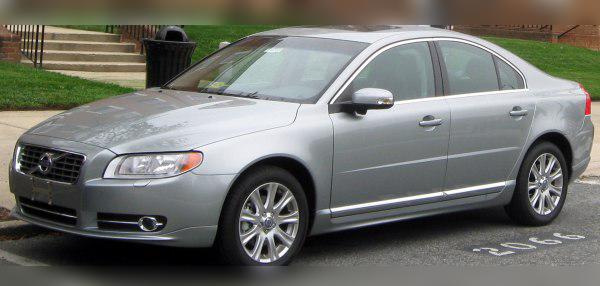
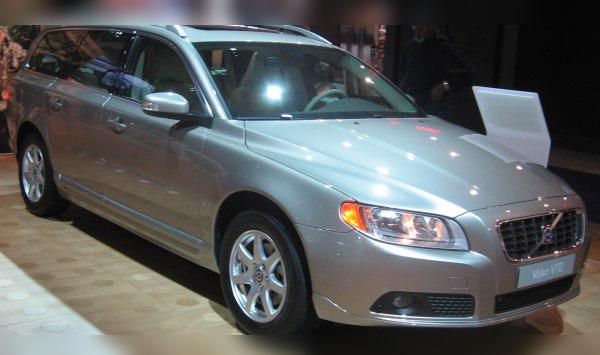
When someone mentions a Volvo diesel, the first association is the famous “five” – an inline five-cylinder engine. The specific code D5244T10 denotes an iteration of this engine that produces a serious 151 kW (205 HP) and a strong 420 Nm of torque. This engine debuted around 2009 and was installed in the heavyweights of the Swedish manufacturer: the S80, V70, XC60 and XC70, as well as in the somewhat lighter V60.
Unlike older and weaker D5 versions, this model uses twin-turbo technology (two sequential turbochargers) to eliminate turbo lag and provide linear acceleration. The engine is highly appreciated among drivers who cover huge mileages on open roads, but it comes with a certain level of technical complexity that requires a deep wallet when the time comes for more serious repairs.
Technical specifications
| Specification | Data |
|---|---|
| Engine displacement | 2400 cc (2.4 L) |
| Engine power | 151 kW (205 HP) |
| Torque | 420 Nm |
| Engine code | D5244T10 |
| Number and layout of cylinders | 5 in-line |
| Injection type | Common Rail (piezoelectric injectors) |
| Charging system | Twin turbocharger, intercooler |
Reliability and maintenance
Belt or chain?
This engine uses a timing belt to drive the camshafts and water pump. However, the biggest design weakness of this engine is not the timing belt itself, but the auxiliary (serpentine) belt that drives the alternator and A/C compressor. If the serpentine belt tensioner fails or the belt snaps, its remains almost always end up under the timing belt cover, causing the timing to jump and resulting in catastrophic valve damage. This is why many experienced mechanics insist on strict replacement intervals and genuine parts for the entire timing system.
Most common failures
Besides the mentioned issue with the auxiliary belt, owners most often encounter problems related to emissions systems (EGR and DPF), cracking intercooler hoses, as well as oil leaks from the crankshaft seal. Also, the swirl flaps in the intake manifold tend to accumulate large amounts of soot, which leads to the actuator sticking, so the engine throws an error on diagnostics and loses power.
When is the major service due?
The manufacturer specifies a major service at around 150,000 to 180,000 km, but any serious mechanic will recommend shortening this interval to 120,000 km or every 5 to 6 years, primarily because of the risk related to the tensioners mentioned above. Minor services should be done strictly every 10,000 to 15,000 km.
Oil: quantity, grade and consumption
The engine takes about 5.5 to 5.9 liters of oil (depending on the filter). The manufacturer strictly specifies a 0W-30 grade with ACEA A5/B5 specification. Using the wrong oil directly shortens the service life of the hydraulic lifters, camshafts and DPF filter.
As for oil consumption, a healthy D5244T10 usually does not burn oil, but there is another, much more serious problem – rising oil level. If the car is mostly driven in the city, DPF regenerations will constantly be interrupted, so unburned diesel runs down the cylinder walls into the sump. The “oil” level rises, lubrication worsens, and the engine can be damaged. If you notice on the dipstick that you have too much oil and that it strongly smells of diesel, go to a workshop immediately for an oil change and to resolve the DPF issue.
Injector lifespan
Advanced Bosch Piezo Common Rail injectors are installed. They are very precise and provide quieter operation than on older models, and their typical lifespan is between 200,000 km and 250,000 km if you use quality fuel. Symptoms of wear include harsher idle, bluish smoke on first cold start in the morning, increased vibrations and difficult starting. Unfortunately, overhauling these injectors is extremely difficult and expensive, so most often the entire cartridge or the complete injector is replaced.
Specific parts (costs)
Dual-mass flywheel
Yes, versions paired with a manual gearbox have a dual-mass flywheel. In automatic (Geartronic) versions, this function is taken over by the torque converter. Replacing the dual-mass flywheel together with the clutch and concentric slave cylinder costs from 600 to 1000 EUR (depending on the market).
Twin-turbo system
The charging system consists of a smaller and a larger turbocharger. The small one kicks in at low revs (just above idle), while the larger one takes over at higher revs. Mechanically, the turbos (BorgWarner) are very durable and can easily exceed 300,000 km without issues. However, the actuators (vacuum and electronic valves) that control their operation often fail, resulting in a “check engine” light and lack of power at certain revs. The cost of turbo overhauls or actuator replacement varies and falls into the more expensive repairs.
DPF, EGR and AdBlue
This generation of D5 engines (mostly Euro 5 standard) does not have an AdBlue system, which is great news for owners because you avoid costly failures of pumps, tank heaters and NOx sensors that are the Achilles’ heel of newer diesels.
However, the EGR valve and DPF filter are present. The EGR valve gets clogged with soot fairly quickly, which leads to engine hesitation at 1500–2000 rpm. The DPF filter is a huge problem if you are buying the car for city driving. Constant engine choking leads to continuous attempts at regeneration (symptoms: elevated idle speed, radiator fan running when you switch the car off). Cleaning and washing the DPF is a regular part of maintenance at around 200,000 km.
Fuel consumption and performance
City and highway driving
Volvo models with this engine weigh between 1600 kg (V60) and close to 2 tons (XC90, although the D5244T10 was mostly used in the XC60 and XC70 / S80 series). Because of the weight, fuel consumption is noticeable as well. Realistic city consumption ranges from 8.5 to 10.5 l/100 km, depending on how heavy your right foot is, drivetrain (AWD increases consumption by about 1 liter) and gearbox.
Is the engine “lazy”?
Not at all. With 420 Nm of torque available already from a low 1500 rpm thanks to the small turbo, the engine moves these heavy bodies with great ease. In-gear acceleration (from 80 to 120 km/h) for safe overtaking is particularly impressive. The sound of the five-cylinder under acceleration gives the impression of a much larger engine.
Motorway cruising
This is the natural habitat of this engine. On the motorway at 130 km/h, fuel consumption drops to around 6.5 to 7.5 l/100 km. In sixth gear the engine usually spins at a very relaxed ~2200 rpm (it varies slightly depending on whether it is a manual or automatic, and whether it is an S80 or XC60 with different gear ratios). The cabin is very well insulated, so engine noise is practically inaudible, except for a deep growl on climbs.
Additional options and modifications
Remapping (Stage 1)
The Volvo D5244T10 has a robust engine block with thick walls and forged internal components, so it responds very well to software tuning. A safe “Stage 1” remap raises power from 205 HP to about 240 to 245 HP, while torque goes beyond 500 Nm. If you decide to do this, keep in mind that higher torque requires a perfectly healthy automatic gearbox (or clutch set), so a remap is recommended only on cars that are mechanically in top condition.
Gearbox and drivetrain
Manual and automatic gearboxes
This engine comes combined with two types of gearboxes:
- M66 manual gearbox (6-speed): Structurally very strong and reliable. The problem with the manual is not the gearbox itself but the expensive clutch kit with dual-mass flywheel that has to cope with the huge 420 Nm of torque.
- Aisin TF-80SC Geartronic (6-speed automatic): The most common choice on these models (S80, XC60). It is a classic hydraulic automatic that prioritizes smoothness and comfort over sporty, fast gear changes.
Gearbox failures and maintenance
On the automatic, the weakest point is the valve body. If the oil is not changed on time, the inside of the gearbox fills with metal shavings from the friction discs, which clog the tiny channels and valves. Symptoms of a sick automatic are harsh jolts when engaging “D” or “R” once the car is at operating temperature (it often works perfectly when cold), as well as “shuddering” under braking when the gearbox shifts from 3rd to 2nd gear.
Maintenance: The oil in the Geartronic gearbox must be changed every 60,000 km. Although some authorized dealers claim the oil is “lifetime”, any automatic transmission specialist will tell you that means “until the gearbox fails”, which usually happens around 180,000 km if the oil is never changed. A full fluid exchange using a flushing machine is the best option and costs between 250 and 400 EUR (depending on the market).
Buying used and conclusion
What to check before buying?
When buying a used Volvo with the D5244T10 engine, make sure you do the following:
- Engine oil level: Pull out the dipstick. If the level is well above the “MAX” mark, walk away from that car – DPF regenerations are ruined and the engine has been bathing in a diesel–oil mix.
- Timing system (sound and visual inspection): Listen to the side of the engine where the belts are. If you hear squealing, scraping or uneven operation of the auxiliary belt tensioner, plan an immediate visit to a workshop because the car is not safe to drive due to the risk of the belt getting under the timing system.
- Gearbox test: Drive the car for at least 30–40 minutes in stop-and-go city traffic. The gearbox must shift smoothly when the oil is at 90 °C. Jolts are a sign of a worn valve body.
- Oil leaks and vacuum hoses: Inspect the engine from underneath because the hoses around the turbo and intercooler often weep oil due to loose clamps or small cracks.
- Original VIDA diagnostics: Volvo systems are complex. Reading fault codes with a generic scanner means nothing. Only Volvo VIDA software gives a proper insight into injector condition and the pressure of both turbos.
Who is this engine for?
The Volvo 2.4 D5 205 HP is an unmatched motorway mile-eater. It is intended for drivers who primarily use their car for long-distance trips, travel and towing trailers (which is why it is fantastic in XC60 or XC70 bodies). The sound, safety and power reserves are impressive.
On the other hand, if you are buying the car mainly for a “home – work – kindergarten” commute in congested city conditions, this engine is not for you. The DPF filter, vehicle weight and fuel consumption will make maintenance extremely uneconomical. Buy it from a conscientious owner who has changed the oil and timing on time, give it open roads, and this Swedish “five” will serve you for hundreds of thousands of kilometers without issues.