Volvo Engine D5244T5 2.4 D (163 HP): Experiences, Issues, Fuel Consumption and Used-Buying Tips
- Legendary architecture: Inline five-cylinder with a distinctive sound, engineered for hundreds of thousands of highway kilometers.
- Drive: Uses a timing belt. Special attention must be paid to the auxiliary (serpentine) belt which, if it snaps, can slip under the timing belt and destroy the engine.
- Injection system: Very reliable Bosch Common Rail system; injectors are extremely durable with good-quality fuel.
- Fuel consumption: Due to the heavy bodies of the models it was fitted to (XC90, V70, S80), expect higher fuel consumption in city driving conditions.
- Eco systems: The EGR valve and DPF filter (on newer generations) suffer from exclusively city driving; regular highway runs are essential.
- Transmissions: Aisin automatic gearboxes require strict adherence to oil change intervals; otherwise, valve body repair becomes very expensive.
- Tuning potential: Since this is a software-detuned version of the more powerful D5 engines, it is extremely suitable for Stage 1 modifications.
Contents
- Introduction: About the D5244T5 Engine
- Technical Specifications
- Reliability and Maintenance
- Specific Parts and Costs
- Fuel Consumption and Performance
- Additional Options and Modifications
- Transmission and Drivetrain
- Buying Used and Conclusion
Introduction: About the D5244T5 Engine
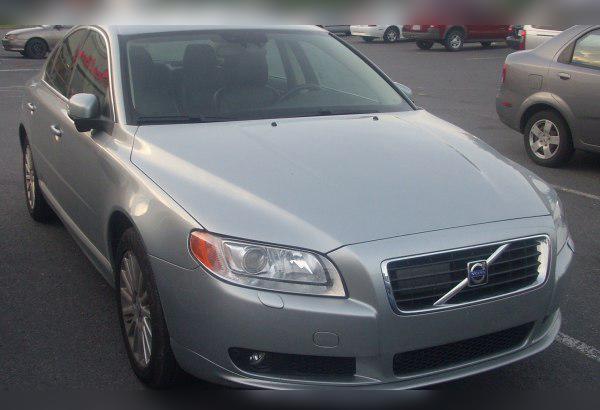
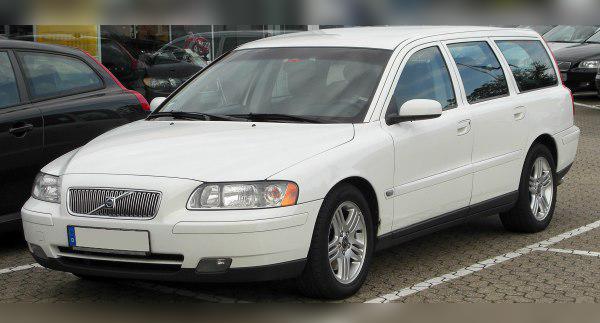
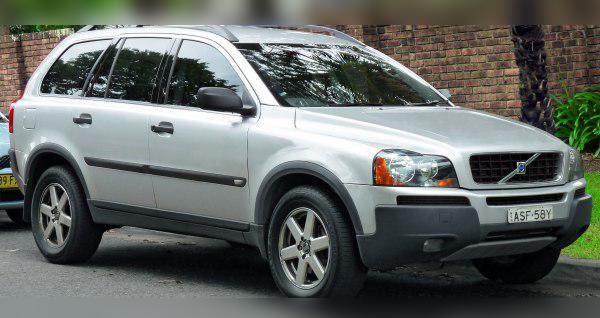
When Volvo and diesel technology are mentioned, the association is always the same – the famous five-cylinder engine. The code D5244T5 hides under the hood a 2.4-liter unit with 163 HP and 340 Nm of torque. Interestingly, it was often marketed simply as "2.4 D" to distinguish it from its more powerful sibling badged "D5", which delivered 185 HP (and more in later versions). This engine found its place in true cruisers: the S80 II sedan, the practical V70 II and III estate, as well as the massive SUV XC90. Because it operates under lower mechanical and thermal stress than its more powerful variants, this engine is considered one of the most reliable diesels of its era, provided it has been properly maintained.
Technical Specifications
| Specification | Data |
|---|---|
| Engine displacement | 2400 cc (2.4 liters) |
| Engine power | 120 kW (163 HP) |
| Torque | 340 Nm |
| Engine code | D5244T5 |
| Injection type | Common Rail (Bosch) |
| Charging system | Turbocharger (VNT), Intercooler |
| Fuel type | Diesel |
Reliability and Maintenance
From a design standpoint, this five-cylinder is a true masterpiece, but it requires attention to a few specific points. The engine uses a timing belt for valve timing. The manufacturer specified a rather optimistic interval for the major service, often around 150,000 to 160,000 km, but practice and experienced mechanics dictate that the major service must be done at 120,000 km. The biggest design flaw of this engine, which every owner must be aware of, is the position of the tensioner and the path of the auxiliary (serpentine) belt. If the serpentine belt snaps or comes off due to a worn tensioner, it very often slips under the timing belt. This immediately leads to timing jump, broken rocker arms, and even more serious damage to the cylinder head and crankshaft.
As for lubrication, the system holds about 5.5 to 6.0 liters of oil. Volvo most often recommends 0W-30 (ACEA A5/B5), although on older models without a DPF filter or in warmer climates, 5W-30 is also successfully used. Typical and normal oil consumption between services (which should not exceed 15,000 km) ranges from 0.3 to 0.5 liters. If the engine needs more than one liter of oil per 10,000 km, it is time to inspect the turbocharger, piston rings, or the crankcase ventilation system (PCV).
When it comes to the injectors, this engine uses the proven Bosch Common Rail system. The injectors are extremely durable and, with quality fuel and regular filter changes, easily cover 250,000 to 300,000 km before showing the first signs of wear. Symptoms indicating problems include rough idle, increased black smoke from the exhaust under hard acceleration, or difficult first start in the morning.
Specific Parts and Costs
Modern diesel engines come with complex emissions components. Depending on the production year and exact market (especially around the facelift period 2004–2007), the 163 HP version may come without or with a DPF filter. Euro 4 and Euro 5 versions are always equipped with it. The EGR valve quickly clogs with soot due to frequent stop-and-go city driving, which leads to engine strangling and loss of power. The DPF fails if the car is driven mostly in the city and active regeneration cycles are regularly interrupted. Replacement with a new unit or professional cleaning is expensive (depends on the market). The good news for buyers of models with this specific engine (D5244T5) is that this engine does not have an AdBlue system, so you are spared the headaches with heaters, pumps and urea tanks, which are a nightmare on newer generations of Volvo engines.
The engine has a single turbocharger with variable geometry (VNT). Its service life is impressive; most often the actuator fails or the variable vanes get stuck due to soot build-up, and the turbo shaft itself fails more rarely, unless the engine has been driven with old or low oil. Turbocharger overhaul is now a standard procedure and, cost-wise, is considered not excessively expensive (depends on the market).
Fuel Consumption and Performance
One has to be realistic: a 2.4-liter engine paired with heavy cars such as the Volvo XC90 (which weighs over 2 tons empty) or the V70 cannot be truly economical in dense city traffic. Real-world city consumption for models like the V70 and S80 ranges between 8.0 and 10.0 l/100 km, while in the heavy XC90 with automatic transmission and all-wheel drive (AWD) it can easily reach 11 to 12 l/100 km in winter.
Is the engine "lazy"? For sedans and estates, 163 HP and 340 Nm are quite adequate for relaxed family driving. However, in the massive Volvo XC90, the lack of power is noticeable when overtaking on country roads with a fully loaded car. Acceleration is not brutal and the engine requires a more calculated driving style.
This five-cylinder shows its true character on the motorway. It was designed for cruising. At 130 km/h, the engine runs smoothly, usually between 2,200 and 2,400 rpm (depending on the gearbox). Cabin sound insulation masks the raw diesel sound, and fuel consumption on the open road drops significantly, ranging from 6.5 to 8.0 l/100 km, which guarantees excellent range.
Additional Options and Modifications
Since this engine is, hardware-wise (mechanically), almost identical to the 185 HP version from the same period, the D5244T5 is extremely suitable for remapping (Stage 1). With software tuning, power can be safely raised to around 190 to 205 HP, and torque to over 400 Nm. This modification drastically solves the "sluggishness" problem on heavier models and often even slightly reduces fuel consumption on the open road. However, mechanics warn: if you go for Stage 1, pay close attention to the condition of the gearbox (especially the automatic) and the dual-mass flywheel on manual versions, as they are the first to suffer from the sudden increase in torque.
Transmission and Drivetrain
This engine was paired with robust 6-speed manual gearboxes (mostly code M66) and Japanese automatic gearboxes made by Aisin (Geartronic). The manual versions are very resistant to failures but are equipped with a dual-mass flywheel. Symptoms of a worn flywheel include strong vibrations at idle, metallic knocks when switching off the engine, and jerks when setting off. A complete clutch kit with dual-mass flywheel is expensive (depends on the market) and represents a significant maintenance item.
With automatic (Geartronic) gearboxes, the biggest enemy is irregular maintenance. Initially, Volvo stated that the oil in these gearboxes is "lifetime fill", which led to numerous failures. Every specialized workshop will recommend that the automatic transmission oil be changed every 60,000 km, ideally using the flush method that cleans the entire system. The most common failure on these automatics is valve body failure. Symptoms include harsh "thumps" when shifting from P to R or D, as well as jerking and slipping when changing from 2nd to 3rd gear, especially when the gearbox is fully warmed up.
Buying Used and Conclusion
When buying a used car with the D5244T5 engine, you must put emotions aside and approach it critically.
What must be checked before purchase?
- Cold start: The engine must start instantly, without clouds of white or grey smoke. The sound of the hydraulic lifters should be audible only for the first few seconds.
- Condition of the auxiliary belt system: Inspection of the auxiliary (serpentine) belt and its tensioner must be done immediately; if it looks cracked, do not drive the car before replacement.
- Behaviour of the automatic gearbox: Be sure to drive the car until it reaches operating temperature (at least 30 minutes). If the gearbox starts to jerk when hot, you are looking at a very expensive overhaul.
- Suspension and steering: Heavy models like the V70, S80 and especially the XC90 quickly wear out control arm bushes, ball joints and tie rods on the front axle.
- Diagnostics: Reading the DPF filter status (amount of accumulated ash) and injector correction values is essential before handing over any money.
Final verdict
The Volvo D5244T5 engine (163 HP) is not intended for those who want a traffic-light racer, nor for drivers who use the car exclusively for short commutes to work and back. It is aimed at people who drive long distances, where passenger safety and motorway stability are priceless. If you find a car with a properly documented gearbox service history and proof of a replaced timing and auxiliary belt kit, you get a fantastically durable engine that, with minimal care, will easily cover half a million kilometers.