2WW Engine (Toyota 2.0 D-4D 143 HP) – Experiences, problems, fuel consumption and used-car buying tips
Key points in short (TL;DR)
- This is not a classic Toyota engine, but a reworked BMW unit (from the N47/B47 family), which brings Bavarian strengths, but also their well-known weaknesses.
- The timing chain is located at the rear of the engine and tends to stretch, which requires removing the engine and a serious financial outlay.
- It is extremely economical on the open road, but stop-and-go city driving quickly kills the DPF filter and the EGR valve.
- It has a dual-mass flywheel whose replacement is very expensive, so the condition of the clutch must be a priority when buying.
- Performance is optimal for the Avensis, while in the heavier RAV4 the engine struggles a bit more under serious load.
- Regular maintenance and shortened oil change intervals are the key to this engine’s longevity.
Contents
- Introduction: Why is there a BMW engine in a Toyota?
- Technical specifications
- Reliability and maintenance
- Specific parts and costs
- Fuel consumption and performance
- Additional options and modifications
- Gearbox and drivetrain
- Buying used and conclusion
Introduction: Why is there a BMW engine in a Toyota?
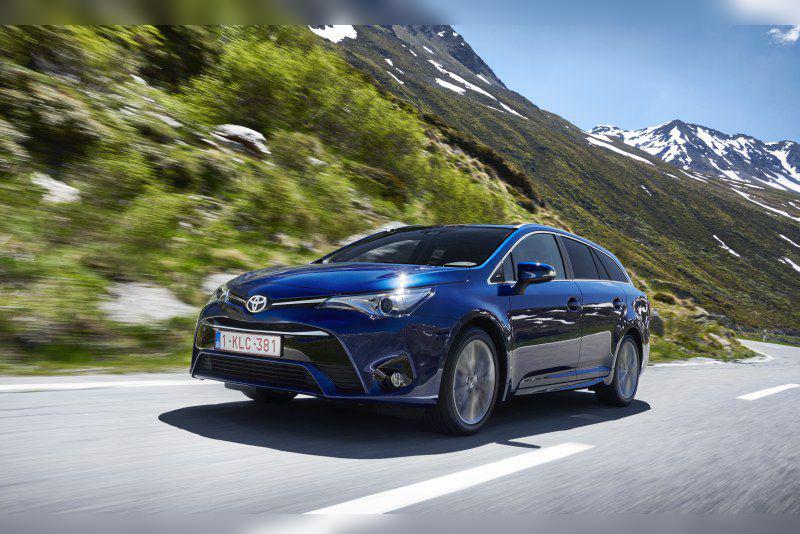
When Toyota realized that developing an all-new diesel engine for the European market would not be profitable, they turned to BMW. That is how the 2WW engine (and its smaller 1.6-liter brother 1WW) came to be. Even though the cover says D-4D, underneath it beats a Bavarian heart. This 2.0-liter, 143 HP engine was installed in the facelifted Toyota Avensis III and RAV4 IV models from 2015 onwards. It is important because it combines Toyota’s conservative engineering around the peripherals with BMW’s dynamics, but that also means that local mechanics have to apply “German” logic when repairing it. Is that a winning combination? Both yes and no, depending on how the previous owner maintained the car.
Technical specifications
| Specification | Data |
|---|---|
| Engine code | 2WW (BMW-based) |
| Displacement | 1995 cc |
| Power | 105 kW (143 HP) |
| Torque | 320 Nm |
| Fuel type | Diesel |
| Injection type | Common Rail (direct injection) |
| Charging | Variable-geometry turbocharger, intercooler |
Reliability and maintenance
Timing system: Chain instead of belt
This engine uses a timing chain to drive the camshafts. Since it is derived from BMW’s N47 series, the chain is located at the rear of the engine, towards the gearbox. Although Toyota required certain revisions to avoid the notorious chain snapping, stretching is still an issue. When the tensioner and guides wear out, the chain starts rattling. There is no “major service” in the classic sense with a fixed interval, but a complete timing replacement is most often done between 150,000 and 200,000 km. Because of the chain’s position, the engine (or gearbox) has to come out, which makes this job quite expensive.
Oil and regular servicing
The oil pan of this engine holds about 5.2 liters of engine oil. The recommended grade is 5W-30, which must strictly meet the ACEA C3 standard because of the DPF filter. The factory states a 20,000 km oil change interval, but any experienced mechanic will tell you to change oil and filters every 10,000 to 15,000 km at most. The engine can consume some oil between services; consumption of up to 0.5 liters per 10,000 km is considered completely normal and does not indicate a problem with the piston rings or the turbo, but is a consequence of evaporation and DPF regenerations.
Most common failures and injector condition
The most common issues on this engine block are related to emissions equipment. The injectors are piezo-electric and are generally very durable. If you use quality Euro diesel, they can easily last over 250,000 km without any problems. However, they are sensitive to poor fuel. If the high-pressure pump, due to poor lubrication, starts producing metal shavings, those particles will directly destroy the injectors. Symptoms include rough idle, increased smoke under acceleration and loss of power.
Specific parts and costs
Flywheel and turbocharger
Like any modern diesel of this power, the 2WW has a dual-mass flywheel. Its lifespan is around 150,000 to 200,000 km, and it fails faster if you drive the car at too low revs (“lugging” the engine in a high gear) or launch it aggressively from a standstill. Replacing the clutch kit and dual-mass flywheel is a serious hit to the budget and is among the most expensive “regular” failures.
The engine is equipped with a single variable-geometry turbocharger. The turbo itself is reliable, but the variable vanes tend to get stuck with soot if the car is mostly driven in the city. If you notice that the car goes into limp mode under heavy throttle, the problem is often a dirty turbo geometry rather than the bearing or the turbine wheel itself.
DPF, EGR and AdBlue system
Emissions equipment is the Achilles’ heel of this engine if you buy it for city traffic. The DPF filter and EGR valve clog up quickly. The EGR cooler can start leaking, which results in loss of coolant without a visible puddle under the car. As for the AdBlue system (SCR catalyst), its presence depends solely on the model year and the exact Euro 6 standard for the specific market (some early versions relied only on NOx trap catalysts). To be sure, always check via the VIN in an authorized service. If the system is present, the AdBlue injector can crystallize, and the pump in the tank can fail in winter if the fluid freezes, so adding an anti-crystallization additive is highly recommended.
Fuel consumption and performance
Real-world fuel consumption
Real fuel consumption depends on the body style. In the city, an Avensis with this engine uses about 7.5 to 8.5 l/100 km, while in the heavier and less aerodynamic RAV4 that figure easily exceeds 9 l/100 km. On the motorway the situation changes drastically in favor of the driver – at a cruising speed of 130 km/h, the engine spins at a pleasant and calm ~2200 rpm (in sixth gear), and consumption drops to an excellent 5.5 to 6.5 l/100 km.
Is the engine “lazy”?
With 143 HP and 320 Nm, this engine offers solid acceleration. In the Avensis estate it is more than adequate for comfortable family trips. However, in the RAV4, especially when loaded with passengers and luggage and heading uphill, you will feel that it runs out of breath a bit and that you have to reach for the gear lever more often. It’s not dead, but it’s not a race engine either.
Additional options and modifications
When it comes to remapping, this block has solid potential, considering that it is structurally designed for higher outputs as well (BMW extracts up to around 190 HP from the same base). A safe Stage 1 remap usually raises power to about 175–185 HP and torque to around 390 Nm. The car then feels noticeably more lively, especially in the RAV4. However, keep in mind that the increased torque drastically shortens the lifespan of an already tired dual-mass flywheel, so make sure to check the condition of the drivetrain before remapping.
Gearbox
The 2WW engine is usually paired with a precise six-speed manual gearbox. In the manual, the gearbox mechanics themselves (gears, synchros) are practically indestructible. Failures are limited almost exclusively to the mentioned clutch kit (friction disc, pressure plate, release bearing) and the dual-mass flywheel. The factory declares the oil in the manual gearbox as “lifetime” (no change required), but experienced mechanics recommend changing it every 100,000 km to prolong synchro life.
If you come across a car (mostly RAV4) with an automatic gearbox, it will be an Aisin conventional automatic with a torque converter. This gearbox is extremely reliable if serviced regularly. The most common failures in the automatic come from neglected maintenance – then the valve body (hydraulic block) and the torque converter fail. The oil in the automatic gearbox must be changed every 60,000 km (ideally with a full fluid exchange machine).
Buying used and conclusion
What exactly should you check before buying?
- Cold start: Ask the seller not to start the car before you arrive. When you crank it, listen carefully to the rear of the engine. If you hear metal rattling for a few seconds that then disappears, the chain and tensioner are due for replacement.
- Dual-mass flywheel condition: Switch the engine off and on again without pressing the clutch. If you hear a strong thud (a dull metallic sound) or feel strong vibrations on the clutch pedal when it is half-pressed, prepare a substantial amount of money.
- Mandatory diagnostics: Do not buy this car without connecting it to a quality diagnostic tool. Have a mechanic check injector corrections and, even more importantly, the DPF filter ash saturation. If the DPF is at the end of its life, regenerations will be very frequent.
Final conclusion
Who is a Toyota with the 2WW engine for? This is an ideal car for drivers who cover serious mileage on open roads and motorways. There it will show top-notch economy and comfort. On the other hand, if you need a car for taking kids to school and short trips from one traffic light to the next in the city – stay away from this engine. You will clog the DPF, the EGR will seize, and the costs will come back to bite you. Toyota made an excellent move by taking this BMW block, but it has retained all the traits of modern diesels: it demands regular maintenance, good fuel and open roads.