Engine M47R / 204D2 (116 HP): Experiences, issues, fuel consumption and used-car buying tips
- Origin: Basically, this is the famous BMW M47 engine, adapted for transverse installation (front-wheel drive) by Steyr.
- Drive: Uses a reliable timing chain, which reduces major service costs.
- Reliability: Extremely durable mechanically, it covers huge mileages without opening the block.
- Issues: The weakest points are the oil separator (PCV), thermostats and crankshaft pulley.
- Emissions: It has no DPF filter or AdBlue system, which is a huge plus for cheap maintenance, but the EGR valve requires regular cleaning.
- Transmissions: The Jatco automatic gearbox is comfortable, but requires strict oil changes. Manual gearboxes suffer from the standard wear of the dual-mass flywheel.
- Performance: With 116 HP it can feel “lazy” in heavy bodies, but it handles a Stage 1 remap fantastically well.
Contents
- Introduction: BMW heart in a British suit
- Technical specifications
- Reliability and maintenance
- Specific parts and costs
- Fuel consumption and performance
- Additional options and modifications
- Transmissions: Manual vs Automatic
- Buying used and conclusion
Introduction: BMW heart in a British suit
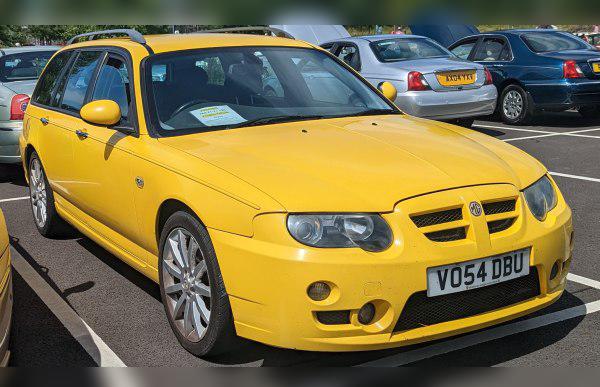
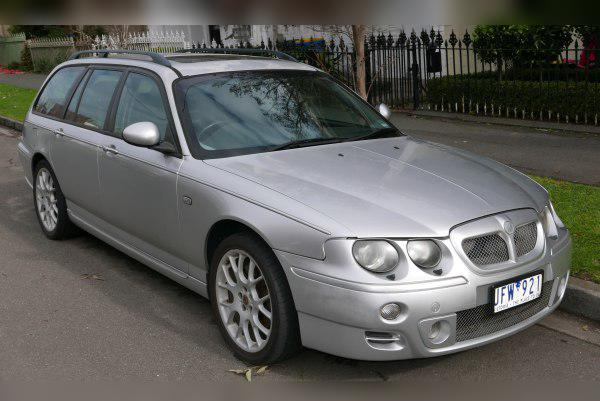
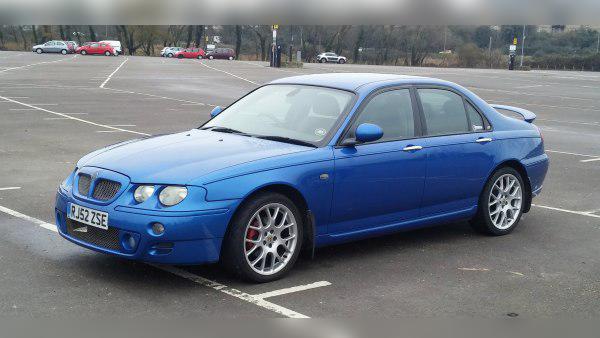
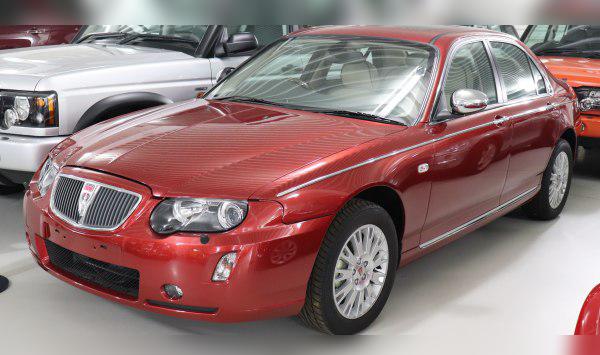
When the M47R engine (code 204D2) is mentioned, many mechanics will immediately recognize BMW’s genetic code. This unit was created in the period when BMW owned the Rover Group. The letter “R” in the designation stands for Rover, because the original BMW engine (M47D20) had to be modified for transverse installation in front-wheel-drive models, such as the Rover 75 and its sporty brother MG ZT (including Tourer estate versions, both pre- and post-facelift in 2004).
This is an engine that offers premium engineering at an affordable price. Thanks to Common Rail injection it runs relatively smoothly for a diesel of its generation, and its robustness makes it one of the most desirable choices on the used-car market in this vehicle class.
Technical specifications
| Specification | Data |
|---|---|
| Engine displacement | 1951 cc |
| Power | 85 kW (116 HP) |
| Torque | 260 Nm |
| Engine code | M47R / 204D2 |
| Fuel type | Diesel |
| Injection type | Common Rail (Bosch EDC15) |
| Charging | Turbocharger with intercooler |
Reliability and maintenance
One of the first questions buyers ask is: Does this engine have a timing belt or a chain? The M47R uses a chain. This is excellent news because the chain on this engine (unlike its successor N47) does not snap easily and is extremely long-lasting. Because of that, the classic “major service” (replacement of chain and sprockets) is done only when the chain becomes noisy (usually over 300,000 km). Still, it is recommended to replace the auxiliary belt, tensioner, idlers and water pump at around 100,000 to 120,000 km, which is not expensive (depends on the market).
Most common failures and symptoms
Although the mechanical part is virtually indestructible, the engine peripherals require attention. The biggest enemy of this engine is the oil separator (PCV valve). If it gets clogged, overpressure builds up in the crankcase, preventing oil from returning from the turbo. The result? The turbo pushes oil into the intake or exhaust and fails. The driver notices this as thick blue smoke from the exhaust and loss of power. The PCV filter must be replaced at every third oil service.
The second weak point is the crankshaft pulley. The rubber inside it deteriorates over time, resulting in metallic knocking at idle and vibrations. Thermostats are also a common issue. This engine has two thermostats (main and EGR thermostat). When they fail, they remain open, so the engine cannot reach operating temperature in winter (the gauge drops on the open road), running at barely 70 °C instead of the optimal 90 °C, which increases fuel consumption.
Oil and service intervals
For an oil service you need about 6.8 liters of oil. High-quality synthetic oil of grade 5W-30 or 5W-40 with the appropriate specifications (BMW LL-98 or LL-01) is recommended. Oil consumption between services is minimal on a healthy engine. Topping up to 0.5 liters per 10,000 km is considered normal. If the engine consumes more, the problem is usually not in the piston rings, but in the aforementioned oil separator or the turbo.
Specific parts and costs
Injection system (injectors)
The engine uses a reliable Bosch Common Rail system. The injectors are very durable and rarely fail before 250,000 km. However, the copper washers (seals) under the injectors can burn through over time. The symptom is a characteristic “hissing” sound or exhaust smell in the cabin. If ignored, a hardened black mass (“black death”) forms around the injector, which makes later removal difficult. Rebuilding the injectors themselves is now affordable, but extracting seized injectors can be expensive (depends on the market).
Turbocharger and emissions
The engine is equipped with a single turbocharger (most often Garrett). Its service life is long, over 250,000 km, provided that the oil is changed on time and the PCV valve is functioning properly. Turbocharger rebuilding is moderately expensive (depends on the market).
As far as emissions are concerned, owners have a reason to celebrate: this model has no DPF filter and no complicated, troublesome AdBlue system. This makes it extremely easy to maintain. On the other hand, it does have an EGR valve that tends to clog with soot, especially in city driving. Symptoms of a dirty EGR are jerking at low revs and black smoke when you press the accelerator. Cleaning is simple and solves the problem in 90% of cases.
Fuel consumption and performance
This engine powers heavy cars – the Rover 75 and MG ZT are massive vehicles, weighing over 1.5 tons. Is 116 HP “lazy”? Honestly, yes. When pulling away from a standstill and at low revs it lacks sharpness compared to lighter cars, but thanks to 260 Nm of torque, once it gets going, the engine pulls linearly and respectably.
Real-world fuel consumption:
- City driving: 7.5 to 9 l/100 km (with the automatic it easily goes over 9 l/100 km in winter).
- Open road: Around 5.0 to 5.5 l/100 km.
- Motorway (130 km/h): Around 6.0 to 6.5 l/100 km.
On the motorway it behaves like a true limousine. At 130 km/h in fifth gear (with the manual gearbox) it cruises at a comfortable ~2500 to 2600 rpm. Engine noise is very well insulated, so comfort is at a high level.
Additional options and modifications
Since the mechanical base of this engine is almost identical to the 131 HP version (which was also fitted to these models), this unit is crying out for an ECU remap (chiptuning). A Stage 1 remap is extremely safe for this engine and is recommended because it eliminates the mentioned “laziness” when pulling away. The engine has no problem increasing power from 116 HP to 145 to 150 HP, while torque rises to over 320 Nm. Load on the gearbox and clutch increases slightly, so you should drive smoothly, but the difference in driving is dramatic and overtaking becomes incomparably easier.
Transmissions: Manual vs Automatic
The M47R engine was paired with 5-speed manual gearboxes (Getrag) and 5-speed automatic gearboxes (Jatco). There are significant differences in maintenance.
Manual gearbox (Getrag)
The gearbox itself is bulletproof (virtually indestructible), but the clutch system requires investment. Yes, versions with a manual gearbox have a dual-mass flywheel. If you hear metallic knocking when switching off the engine, or if you feel strong vibrations in the cabin when accelerating in a higher gear, the dual-mass flywheel is at the end of its life. Replacing the complete set (flywheel, clutch disc, pressure plate, release bearing) is very expensive (depends on the market). It is recommended to change the oil in the manual gearbox every 80,000 to 100,000 km, even though many manufacturers do not list this as mandatory.
Automatic gearbox (Jatco JF506E)
The automatic version offers smooth gear changes, but requires attention. The most common failures are related to the solenoid valves in the valve body and cracking of the reverse piston (loss of reverse gear). If the gearbox jerks when shifting from second to third, the problem is usually in the solenoids or extremely dirty oil. Servicing and oil changes in the automatic must be carried out strictly every 60,000 km! A specific oil is used (N402 specification). Due to the complicated procedure of checking the oil level, this must be done by a specialist workshop.
Buying used and conclusion
Before buying a car with the M47R engine, be sure to do the following:
- Listen to the engine when it is completely cold: Any rattling from the front of the engine indicates a stretched chain. Chirping noises indicate a worn crankshaft pulley.
- Check the exhaust smoke: Heavy black smoke under full throttle means a clogged EGR or torn intercooler hoses (a common and cheap fault). Bluish smoke means a problem with the turbo or PCV valve.
- Enter test mode: The Rover 75 / MG ZT has a digital menu on the instrument cluster where you can monitor engine temperature while driving. If it does not exceed 75–80 °C, the thermostats need replacing.
- Test the clutch / automatic: On the manual, release the clutch abruptly halfway in neutral – if it bangs, the flywheel is bad. On the automatic, select ‘R’ on an uphill slope; it should hold the car without slipping.
Who is this engine for? This is an engine for people who cover a lot of kilometers on open roads and value limousine comfort with reasonable fuel consumption. Thanks to the absence of a DPF, it also tolerates a fair amount of city driving. It is not a “racer” in its stock 116 HP form, but with a quality software tune it offers an excellent balance between the durability of Bavarian engineering and British elegance.