BMW S65B40A 4.0 V8 engine: Ownership impressions, common issues, fuel consumption and used-buying tips
Key points in short (TL;DR):
- This is an engineering masterpiece, the last naturally aspirated V8 engine ever installed in a BMW M3 (E90/E92/E93).
- Connecting rod bearings are the biggest weak point – they require preventive replacement at 80,000 to 100,000 km to avoid catastrophic failure.
- Throttle actuators are an electro‑mechanical component that fails regularly.
- Fuel consumption is extremely high, especially in the city, and it is also normal for the engine to use up to 1 liter of oil per 1,000 km.
- It requires a specific engine oil grade, 10W-60; any deviation can be disastrous for the engine.
- Maintenance is very expensive (depends on the market), and the engine is absolutely not intended for LPG (autogas) conversion nor does it offer big gains from a simple “chip tune”.
Contents:
- Introduction: Birth of a legend
- Technical specifications
- Reliability and maintenance (Failures, servicing, oil)
- Specific components and systems
- Fuel consumption and performance
- Extras, LPG and modifications
- Gearbox: Manual vs M DCT
- Buying used and conclusion
Introduction: Birth of a legend
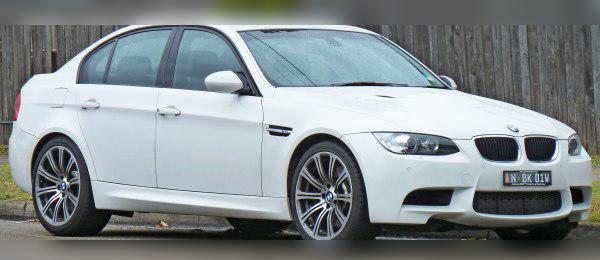
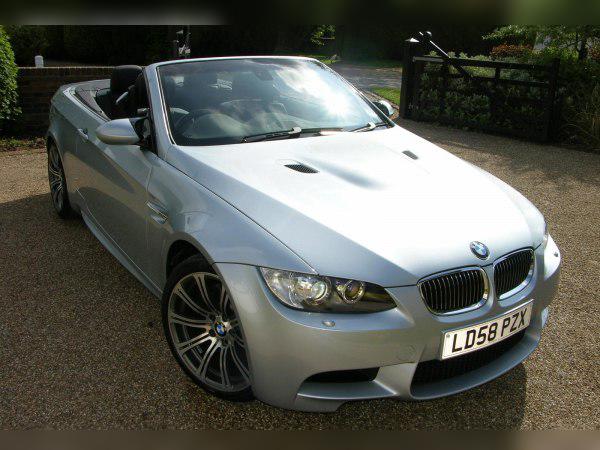
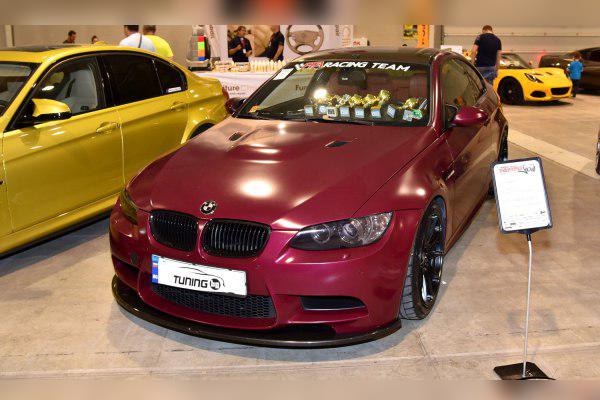
The S65B40A engine is an icon of the automotive world. Designed specifically for the fourth‑generation BMW M3 (E90 sedan, E92 coupe and E93 convertible), this powerplant is essentially a “cut‑down” V10 (S85) from the M5, with which it shares its architecture. With a redline that starts only at 8,400 rpm, it delivers a race‑car feel in a production vehicle. Thanks to its performance and sound, many consider it one of the best naturally aspirated V8 engines ever built. However, owning such an engineering gem comes with serious financial commitments and specific risks.
Technical specifications
| Parameter | Data |
|---|---|
| Engine displacement | 3999 cc (4.0L) |
| Power | 309 kW (420 hp) at 8,300 rpm |
| Torque | 400 Nm at 3,900 rpm |
| Engine code | S65B40A |
| Injection type | Indirect (port injection) |
| Induction type | Naturally aspirated |
Reliability and maintenance
Timing system: Chain or belt?
Like most high‑performance BMW engines, the S65 uses a timing chain drive. Fortunately, the timing chain on this engine is very robust and rarely snaps. Because of that, the classic “major service” in the sense of a timing belt replacement does not exist. Still, it is recommended to visually inspect and check the chain tensioner and guides at around 150,000 to 200,000 km, as the plastic guides become brittle over time due to high temperatures.
Most common and most expensive failures
The reliability of this engine is viewed through the lens of preventive maintenance. Two failures are absolutely dominant:
- Connecting rod bearings: This is every owner’s nightmare. The factory left the clearances between the crankshaft and the bearings too tight. When you combine that with thick oil that struggles to flow while the engine is cold, the bearings wear out quickly. Symptoms include a slight knocking from the lower part of the engine on startup or fine metallic particles in the oil filter. If this is ignored, a bearing will spin, destroy the crankshaft and often even punch a hole in the engine block. Preventive replacement is advised every 80,000 to 100,000 km. This is an expensive maintenance item (depends on the market), but incomparably cheaper than a new engine.
- Throttle actuators: This engine has individual throttle bodies for each cylinder (ITB), controlled by two electric motors (actuators). The gears inside them are made of soft plastic that wears out over time, which leads to overheating of the electronics on the board. The symptom is the car suddenly going into limp mode (reduced power mode) with the “Check Engine” light coming on. There are permanent solutions with replacement metal gears.
- Oil leaks: The valve covers are made of magnesium and gradually lose their sealing ability, so oil leaks directly onto the exhaust manifold or into the spark plug wells.
Oil and spark plugs
This engine takes around 8.8 liters of oil, and the only allowed grade is 10W-60 (approved by BMW M division, most commonly Castrol, Shell or Liqui Moly). Due to the high revs and ring design, oil consumption is a normal occurrence. Consumption of 1 liter per 2,000 km is considered perfectly normal, and according to factory specs, up to 1 liter per 1,000 km is tolerated under hard driving. Never allow the oil level to drop below the minimum mark!
Since this is a high‑revving petrol engine, spark plugs should be replaced every 30,000 to 60,000 km (ideally at every third minor service). Worn spark plugs can cause detonation/misfire, which directly destroys ignition coils and catalytic converters.
Specific components and systems
Fuel injection system and emissions
The S65 uses indirect injection (port injection). Unlike the direct injection used on newer BMW engines, this is a big advantage. The valves are constantly washed by fuel, so there is no carbon buildup. The injectors are very reliable and rarely cause issues. It is enough to occasionally add a fuel system cleaner.
This engine does not have a turbocharger (it is fully naturally aspirated), which means you are spared worries about failing turbos, intercoolers and high‑pressure hoses. Since it is a petrol engine, it does not have a DPF filter or AdBlue system, so there are no clogging issues in city driving like with modern diesels. It does have a secondary air system (which helps heat up the catalytic converters), which can sometimes fail, but the repair is not excessively expensive.
Fuel consumption and performance
Buyers of this kind of car should not be concerned about fuel consumption, because the figures are brutal. Real‑world consumption in city driving rarely drops below 18 to 20 liters per 100 km. If you are stuck in heavy traffic, the trip computer will easily show 22 l/100 km. On the highway, at a cruising speed of 130 km/h, consumption drops to a more bearable 10.5 to 12 l/100 km.
Is the engine “lazy”? Because the vehicle weight exceeds 1,600 kg (especially in the E93 convertible, which is the heaviest), the engine can feel “soft” at low revs compared to modern turbo engines. With 400 Nm available only at 3,900 rpm, it requires high‑rev driving to show its full potential. The real punch and brutal acceleration happen only above 4,500 rpm. At 130 km/h on the highway, the engine cruises at around 3,000 to 3,300 rpm (depending on the gearbox), responding instantly to throttle input and delivering its characteristic, deep V8 sound.
Extras, LPG and modifications
Is the S65 suitable for LPG (autogas)?
Technically speaking, since it has port injection, an LPG conversion is possible. However, it is strongly not recommended. Due to the complex intake with individual throttle bodies (ITB) for each cylinder, installation is an engineering nightmare. In addition, the high combustion temperatures of LPG could damage the valves on such a sensitive, race‑bred engine. If fuel consumption is an issue for you, this car simply is not for you.
Chip tuning (Stage 1)
Since this is a naturally aspirated engine that the factory has already pushed close to its limits, a classic Stage 1 (ECU remap) yields negligible results – usually around 15 to 20 hp and about 15–20 Nm of torque. More significant power gains are only possible with mechanical modifications (exhaust system upgrade, removal of primary catalytic converters and a Stage 2 map), or with an extremely expensive supercharger kit, which also requires serious engine reinforcement.
Gearbox: Manual vs M DCT
This engine was paired with two types of gearboxes: a 6‑speed manual and a 7‑speed dual‑clutch automatic (M DCT – Dual Clutch Transmission). Driving dynamics and running costs depend on your choice.
Manual gearbox
The manual gearbox (Getrag) is very robust. Its biggest downside lies in the clutch system. It has a large and heavy dual‑mass flywheel that gradually loses its balance. Symptoms include judder when taking off and metallic rattling noises when switching the engine off. The cost of replacing the complete clutch kit with the dual‑mass flywheel is very high (depends on the market).
M DCT (automatic gearbox)
The M DCT dramatically improves performance, shifts faster and makes the car feel more aggressive. However, failures can be frighteningly expensive. The most common issues include oil leaks from the transmission pan (which is plastic and deforms) or from the mechatronics seals. The clutch packs wear out over time, especially on cars that frequently used the Launch Control system. Replacing the clutch packs on the DCT is an extremely costly operation (depends on the market). Although BMW often claims that the transmission oil is “lifetime”, any experienced mechanic will tell you that a gearbox service (oil and filter change) is mandatory every 60,000 to 80,000 km to preserve the mechatronics.
Buying used and conclusion
What must you check before buying?
- Service history: An E9x M3 is not bought “on someone’s word”. Ask for invoices clearly showing that 10W‑60 oil was used and at what mileage.
- Rod bearings: If the seller does not have clear, documented proof (an invoice from a reputable workshop) that the bearings were recently replaced, factor this job in as an unavoidable cost as soon as you buy the car.
- Cold start: Always listen to the engine completely cold. Listen to the lower part of the engine block. Any deep, metallic knocking (rod knock) means you should walk away from that car. Slight lifter ticking for the first few seconds is acceptable.
- Diagnostics: Reading fault codes is crucial. Errors related to limp mode, throttle position sensor and actuators (codes around 2B15, 2B16) indicate that the actuators will need replacing soon.
- Exhaust and smoke: Blue smoke under acceleration points to worn valve stem seals or piston rings. Given the engine’s natural oil consumption, the catalytic converters can fail earlier.
Conclusion
The S65B40A engine was not made for rational buyers. This is an engine you buy with your heart, aimed at true enthusiasts who understand mechanics and are willing to pay the price of enjoyment. If you are ready to replace the rod bearings preventively, sort out the throttle actuators and regularly feed it expensive oil and huge amounts of petrol, you will get a car that screams up to 8,400 rpm, offers unreal handling (especially in the E92 coupe) and is a sure future classic whose value will only go up.