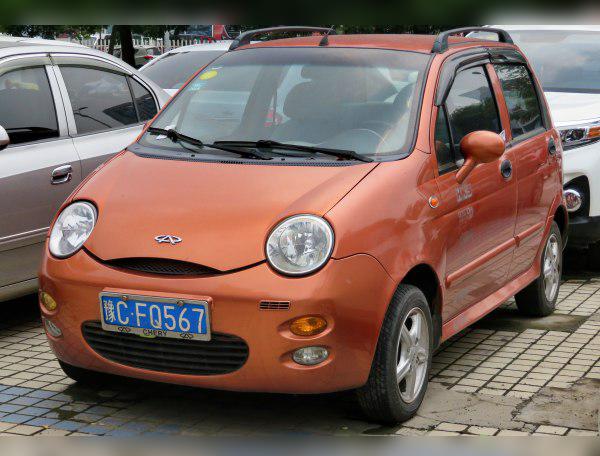
Chery SQR 372 (0.8) – Experiences, issues, fuel consumption and maintenance of the Chinese three‑cylinder engine
If you’re considering buying a Chery Sweet (better known as Chery QQ), you’re probably looking at the heart of this little car – the engine designated SQR 372. This is the power unit that marked the entry of the Chinese car industry into many world markets in the ultra‑cheap city car segment. It’s a technology that heavily relies on proven but older solutions (many compare it to Daewoo/Suzuki engines from that era), adapted for mass production and low costs.
As someone who has seen many of these “city buzzers”, I can tell you this engine has two faces: on one side, incredibly cheap maintenance; on the other, performance that demands a lot of patience. In the rest of the text, we’ll go in detail through all the drawbacks, advantages, and real costs of owning this three‑cylinder engine.
Key points in short (TL;DR)
- Simplicity: The engine is extremely simple, with no expensive parts like a dual‑mass flywheel, turbo, or DPF.
- Performance: With 52 hp, this is strictly a city engine. It is very limited on open roads.
- Noise and vibration: As a typical three‑cylinder, it has a characteristic “snorty” sound and transmits vibrations to the body, especially at idle.
- Major service: The engine uses a timing belt. Regular replacement is crucial because a snapped belt leads to catastrophic damage.
- Gearbox: The manual is the more reliable choice. The “automatic” is actually a robotized gearbox (AMT) that can be problematic and jerky.
- Fuel consumption: It’s not as low as you’d expect from 800 cc, because the engine constantly has to be “pushed”.
- LPG: It handles LPG very well and that’s the most economical way to run it.
Contents
- Technical specifications
- Reliability and maintenance
- Specific parts and costs
- Fuel consumption and performance
- Additional options and LPG
- Gearbox: manual vs automatic
- Buying used and conclusion
Technical specifications
| Parameter | Data |
|---|---|
| Engine name | SQR 372 |
| Displacement | 812 cc (0.8 L) |
| Configuration | Inline 3‑cylinder |
| Power | 38 kW (52 hp) @ 6000 rpm |
| Torque | 77 Nm @ 3500–4000 rpm |
| Injection type | MPI (Multi‑Point Injection) |
| Induction | Naturally aspirated (no turbo) |
| Valvetrain | 12 valves (DOHC) |
Reliability and maintenance
Timing system: belt or chain?
The SQR 372 uses a timing belt to drive the camshafts. This is a critical maintenance point. Although the manufacturer may specify longer intervals, real‑world experience shows it’s safest to do a major service every 50,000 to 60,000 km or every 4–5 years, whichever comes first. A snapped belt on this engine almost certainly leads to piston‑to‑valve contact, which means an expensive repair or engine replacement.
Most common failures
Although simple, the engine is not immune to problems, mostly related to component quality and age:
- Overheating: The cooling system has a small capacity. The thermostat and water pump are weak points. If the engine overheats, the head gasket quickly fails, which shows up as oil and coolant mixing or “mayonnaise” under the oil cap.
- Electronics and sensors: Ignition coils often fail (one per cylinder or a coil pack, depending on model year), causing it to run on two cylinders and lose power. The IAC valve (idle air control) also gets dirty, leading to unstable idle.
- Oil leaks: The valve cover gasket and crankshaft oil seals are typical places where this engine likes to “mark its territory”.
- Alternator: A common issue on older cars; diodes or the voltage regulator can fail.
Oil and spark plugs
This small sump holds about 2.9 to 3.0 liters of oil. A 10W‑40 (semi‑synthetic) grade is recommended for most European climates, or 5W‑30 if you live in very cold regions. Because of the small oil quantity, it’s important to check the level regularly.
Oil consumption: Older engines with higher mileage can consume oil. Consumption of up to 0.3–0.5 liters per 1,000 km is often tolerated on older examples, but anything above that points to worn piston rings or valve stem seals. If there’s no blue smoke, it’s probably just leaking somewhere.
Spark plugs: As this is a petrol engine, spark plugs are a regular service item. Replacement is recommended every 30,000 km. Use quality plugs (NGK or Denso), as the ignition system is sensitive.
Specific parts (costs)
This is where we come to the biggest advantage of this engine – cheap parts. However, availability can vary depending on the market.
- Dual‑mass flywheel: This engine does not have a dual‑mass flywheel. It uses a classic solid flywheel that practically never fails. This significantly reduces the cost of clutch replacement.
- Fuel injection: It uses a classic MPI system (Multi‑Point Injection) with low‑pressure electronic injectors. The injectors are generally durable and not as sensitive as on diesels or direct‑injection petrol engines. They can clog due to poor fuel, but cleaning is cheap.
- Turbo: The engine has no turbocharger. That’s one (expensive) worry less. There’s no turbo to start whining or burning oil.
- DPF and EGR: There is no DPF filter (this is a petrol engine). An EGR valve may be present on newer Euro 4/5 versions, but it’s of simple design. It often gets dirty from city driving, which is solved by cleaning.
- AdBlue: There is no AdBlue system.
Fuel consumption and performance
Don’t let the 800 cc displacement fool you. This is not a fuel‑saving champion, mainly because of the power‑to‑weight ratio.
City driving
In real‑world city driving, a Chery with this engine uses between 6.5 and 8 liters of petrol per 100 km. Why so much? Because to keep up with traffic, you have to press the accelerator pedal deep. The engine has no torque at low revs, so you have to “rev it”.
Is the engine “sluggish”?
Yes, it’s very sluggish. With 77 Nm of torque, every overtaking maneuver requires serious planning. Switching on the air conditioning immediately feels like a 20% power loss. If you’re driving four people uphill, you’ll have to drop to first or second gear. This is a car for flat terrain and city congestion.
Motorway and cruising
This is not the natural habitat of the SQR 372 engine. It struggles on the motorway.
At 130 km/h, the engine is at very high revs (often over 4,500 or 5,000 rpm, depending on the gearbox), cabin noise is high, and vibrations are pronounced. The top speed is quoted at around 148 km/h, but getting there takes “an eternity”. The recommended cruising speed is about 100–110 km/h, where fuel consumption is around 5–5.5 liters.
Additional options and modifications
LPG conversion
This is an excellent candidate for LPG. Thanks to the simple MPI injection, installation is routine and not too expensive (depending on the market). The engine handles LPG well, but it’s recommended to check valve clearances every 30–40 thousand kilometers if you run on gas, as the cylinder head can be more sensitive to higher combustion temperatures. The tank usually goes in place of the spare wheel (doughnut tank), which is practical.
Remapping (Stage 1)
Forget about it. On a naturally aspirated engine of this displacement, “chipping” is a waste of money. The gain would be in the range of 1–2 hp, which is imperceptible in real driving. You’re better off investing that money in quality tires or regular servicing.
Gearbox: manual vs automatic
With the SQR 372 you’ll most often encounter two types of transmission:
- Manual gearbox (5‑speed): This is the better choice. Although the gear lever travel can be imprecise and “rubbery” (the cables stretch over time), the gearbox itself is robust. Failures are rare, and a clutch kit is very cheap to replace. The gearbox oil is changed every 60,000 km (75W‑90).
- Automatic gearbox (AMT – Automated Manual Transmission): Chery often calls this “automatic”, but it is actually a robotized manual gearbox (often a Magneti Marelli system or similar).
Problems: This is a weak point. Drivers complain about jerking, slow gear changes and the gearbox getting confused on hills. The most common failure is the hydraulic actuator (robot) or gear position sensors, and repairs can cost almost as much as the car itself. Maintenance includes changing the oil in the gearbox and the hydraulic oil in the robot.
Buying used and conclusion
When buying a used Chery with this engine, pay attention to the following:
- Belt/tensioner noise: Even though it has a belt, listen for noise from the tensioner bearings.
- Exhaust smoke: Blue smoke when you press the throttle means the engine is burning oil.
- Oil cap: Check for white emulsion (“mayonnaise”), which indicates a blown head gasket.
- Gearbox (if AMT): Test it both cold and hot. If it hesitates, jerks, or drops into “N” (neutral), walk away from that car.
Conclusion
The SQR 372 engine is a workhorse for city streets. It’s intended for students, delivery services and drivers who need the cheapest possible transport from point A to point B, without leaving the city. It’s not prestigious, it’s not fast and it’s not quiet, but it is cheap to maintain (if you avoid the AMT gearbox).
If you’re looking for a car for motorways or family trips, this engine will disappoint you. But as a second car in the household for “running around town”, with LPG installed, driving is almost free.