318 Magnum 5.2 V8 Engine: Experiences, Problems, Fuel Consumption and Used-Buying Tips
- Old-school V8 engine: Extremely durable cast-iron block, designed to withstand heavy loads.
- Notorious "Plenum Gasket": The most common failure is the intake manifold plenum gasket blowing out, which leads to oil consumption and loss of performance.
- Fuel consumption: Be prepared for frequent visits to the gas station – city fuel consumption easily exceeds 20 l/100 km.
- Ideal for LPG: Due to its low compression and simple design, this engine handles autogas (LPG) phenomenally well.
- Reliable timing chain drive: There is no timing belt; instead, it uses a thick chain that rarely needs replacement.
- Automatic transmissions are a weak point: The four-speed automatics require regular maintenance and band adjustment.
Contents
- Introduction: A workhorse icon
- Technical specifications
- Reliability and maintenance
- Specific parts and costs
- Fuel consumption and performance
- Additional options and modifications
- Transmission and drivetrain
- Buying used and conclusion
Introduction: A workhorse icon
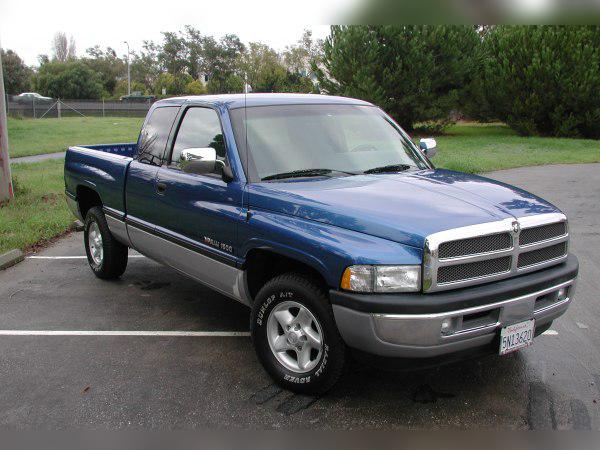
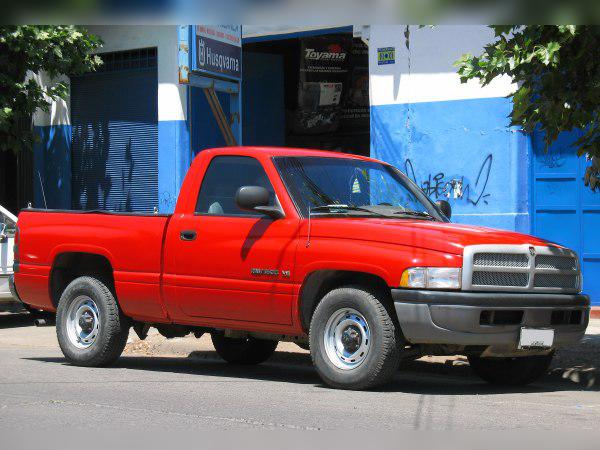
When someone mentions Chrysler’s 318 Magnum (5.2 V8), any experienced mechanic will nod with a dose of respect. This is an engine whose roots go back to the 1960s (known as the LA series), but in the 1990s it received a serious update in the form of “Magnum” cylinder heads and a multi-port fuel injection system (MPFI). It was widely installed in Dodge Ram 1500 and 2500 models throughout the 1990s and early 2000s. Whether you’re towing a heavy trailer, visiting construction sites, or just cruising, the 318 Magnum is built to last, although that longevity comes with a hefty fuel bill.
Technical specifications
| Parameter | Value |
|---|---|
| Displacement | 5211 cc (5.2 L) |
| Power | 162 kW (220 hp) |
| Torque | 407 Nm |
| Engine code | ELF (Magnum 5.2) |
| Injection type | Multi-Port Fuel Injection (MPFI) |
| Induction system | Naturally aspirated |
Reliability and maintenance
Does this engine have a timing belt or a chain?
This unit is an old-school OHV (Overhead Valve) design and uses a chain to drive the camshaft, which is located in the engine block itself. The chain is extremely robust and massive. Forget about snapping like on modern engines – here the chain lasts as long as the engine itself. Wear symptoms (after 300,000+ km) show up as a slight rattle at startup, but it rarely jumps timing.
What are the most common issues with this engine?
The main weak point of the 318 Magnum is the infamous “plenum gasket” (intake manifold bottom plate gasket). The intake manifold is made of aluminum, while the bottom plate (plenum pan) is steel. Because these metals expand differently with temperature changes, the gasket cracks. Symptoms? The engine starts consuming a lot of oil, you hear characteristic valve “pinging” (detonation due to poor mixture and oil in the cylinders), and the inside of the intake manifold becomes completely oily. Other, less serious issues include water pump leaks, ignition coil failure, and crankshaft position sensor failure, which can cause the engine to occasionally stumble or refuse to start.
At what mileage is the major service due?
The classic “major service” with timing belt replacement does not exist here. Maintenance comes down to checking and replacing the serpentine belt, idler pulleys, tensioner, and water pump every 100,000 to 120,000 km, or earlier if the pump shows signs of coolant leakage.
Oil and regular servicing
The 5.2 V8 sump holds about 4.7 liters of oil (including the filter). The factory recommends 10W-30, although in colder climates switching to 5W-30 provides better lubrication during cold starts. An oil change service is recommended every 8,000 to 10,000 km.
Does it consume oil between services?
A healthy 318 Magnum will use very little, up to 0.5 liters per 8,000 km. However, if the plenum gasket has failed, the engine can gulp down as much as 1 liter of oil per 1,000 km! If you’re inspecting a used one and notice bluish smoke or excessive oil loss, this is suspect number one. The repair (installing a thicker aluminum plate) permanently solves the issue, and the parts for it are: not expensive (depends on the market and shipping costs from the U.S.).
Spark plugs and ignition
Since this is a gasoline engine, spark plugs are crucial. For the 318 Magnum, standard copper spark plugs (e.g. Champion) are explicitly recommended. Due to the high combustion chamber temperatures, platinum or iridium plugs often cause idle problems on this engine. Copper plugs should be replaced every 45,000 to 50,000 km.
Specific parts and costs
Dual-mass flywheel and clutch
Good news: this engine does not have a dual-mass flywheel. Whether you’re buying a manual (which uses a classic solid flywheel) or an automatic (where the torque converter takes over that role), you won’t be facing expensive dual-mass flywheel repairs like on modern European diesels. A clutch kit is available at: moderate cost (depends on the market).
Fuel injection system and injectors
The engine uses an MPFI (Multi-Port Fuel Injection) system with one gasoline injector for each of the eight cylinders. The injectors are extremely robust. Problems arise only if the vehicle sits for a long time or is run exclusively on poor-quality fuel, which can clog the injector screens. In most cases, ultrasonic cleaning solves any rough-running issues.
Turbo, DPF, EGR, AdBlue?
- Turbo: The engine is a pure naturally aspirated unit, with no turbocharger. There is no turbo lag; power delivery is linear.
- DPF and AdBlue: As this is an older-generation gasoline engine, there is absolutely no DPF filter or AdBlue system.
- EGR valve: Early model years (mostly before 1996) had an EGR valve that can get clogged with soot, causing jerking at steady throttle. On later versions, Chrysler optimized the camshaft and removed the EGR system.
Fuel consumption and performance
City driving and “sluggishness”
Driving a 5.2 V8 in city traffic is an expensive hobby. Real-world city consumption ranges between 20 and 25 l/100 km, especially in the heavy Dodge Ram chassis. Although it has 220 hp (which by today’s standards doesn’t sound like much for a V8), it delivers an excellent 407 Nm of torque at low revs. In the Ram 1500 (half-ton) model, the engine feels perfectly adequate and lively. However, if you find it in a heavy Dodge Ram 2500 body with 4x4, it can feel rather “sluggish” under load compared to the stronger V8 (5.9) or diesel options (Cummins).
Highway behavior
Things improve on the open road, although pickup aerodynamics don’t help. At 130 km/h, thanks to long overdrive gearing, the engine cruises at a very relaxed 2,000 to 2,200 rpm (depending on the differential ratio). Highway consumption is around 14 to 16 l/100 km. Sound insulation is decent, and the deep V8 burble doesn’t bother you while driving.
Additional options and modifications
Is this engine suitable for LPG?
Absolutely YES. Thanks to its thick cylinder walls, relatively low compression, and simple design, the 318 Magnum loves sequential LPG systems. Installing LPG is the only way to make this vehicle economically viable for everyday use in Europe. The intake manifold offers plenty of room for accurately drilling ports for the gas injectors.
ECU remap (Stage 1)
In short: it’s not worth it. Remapping old naturally aspirated gasoline engines yields negligible gains. A “Stage 1” tune might add at most 10 to 15 hp, with a slightly better throttle response. Instead of remapping, enthusiasts usually install performance intake manifolds, exhaust headers, and change the rear differential ratio for better acceleration.
Transmission and drivetrain
Automatic and manual transmissions
The 318 Magnum most commonly comes with a four-speed automatic transmission known as 46RH (for earlier models) or 46RE (for 1996 and later models with electronic control). Robust five-speed manual transmissions are less common (NV3500 for the Ram 1500 and the heavy-duty NV4500 for the Ram 2500).
Most common transmission issues
- Automatic (46RE/46RH): These gearboxes do not tolerate neglect. The biggest problems are caused by the governor pressure solenoid and sensor, which can make the transmission “hang” in first or second gear and refuse to shift up. Also, the internal bands must be mechanically adjusted, and owners often ignore this, which leads to slipping.
- Manual (NV3500/NV4500): Incredibly durable. The only real downside of the NV3500 after high mileage is wear of the third-gear synchro, so the shifter may grind when engaging third.
Transmission servicing
The automatic transmission requires fluid changes (only ATF+4 specification, never regular Dexron!), filter replacement, and band adjustment every 40,000 to 50,000 km. If you stick to this, the transmission will withstand abuse, but if you neglect service, you’ll be looking at a rebuild that is: very expensive (depends on the market).
Buying used and conclusion
What to check before buying?
When you go to inspect a Dodge Ram with the 318 Magnum engine, check the following:
- Look deep into the throttle body: Take a flashlight with you. If you remove the air filter, open the throttle plate and see pools of oil at the bottom of the intake manifold, the plenum gasket has failed.
- Listen to the engine under load: If, when driving uphill and adding throttle, you hear a fine rattling (pinging/detonation), this is a sign of a lean mixture, most likely caused by the aforementioned intake gasket.
- Transmission fluid: Pull out the automatic transmission dipstick (check is done with the engine running, in Neutral). The fluid must be reddish and must not smell burnt. Shift from P to R, then to D – there should be no harsh clunk or delay.
- Front suspension: This generation of Dodge Ram suffers from a weak front end, especially tie rods and ball joints (the so-called “death wobble” on 4x4 models due to the panhard bar). Pay attention to steering play and behavior while driving.
Who is this engine for?
The 5.2 V8 318 Magnum is an ideal choice for drivers who want a classic vehicle with the character of a workhorse. If you have access to quality LPG installation and appreciate simple repairs without complex electronics, it will reward you with reliability and an incredible V8 sound. It is not for those who plan aggressive street driving or expect low fuel consumption – this is a heavy iron engine that demands as much fuel on the road as it needs, and expects respect in return.