EDZ 2.4 Engine (152 HP) – Experiences, Issues, Fuel Consumption and Buying Used
Key points (TL;DR)
- Old-school petrol engine: Naturally aspirated with indirect injection, extremely robust and easy to maintain.
- Timing drive: Uses a timing belt that requires regular replacement, but maintenance costs are low.
- Fuel consumption: Very thirsty, especially in heavy bodies such as the Chrysler Voyager.
- LPG (Autogas): Handles LPG perfectly, which is the only way to make running this engine economically viable.
- Dual-mass flywheel, turbo, DPF: It has none. The savings on potentially expensive failures are huge.
- Sensors as a weak point: The most common problems are failures of the crankshaft and camshaft sensors, as well as oil leaks from the valve cover.
- Performance: Acceptable in sedans (Stratus), but in minivans (Voyager/Caravan) it is quite “lazy” and demands a patient driver.
Contents
- Introduction: The workhorse of American industry
- Technical specifications
- Reliability and maintenance
- Specific parts and costs
- Fuel consumption and performance
- Additional options (LPG and chip tuning)
- Gearbox and drivetrain
- Buying used and conclusion
Introduction: The workhorse of American industry
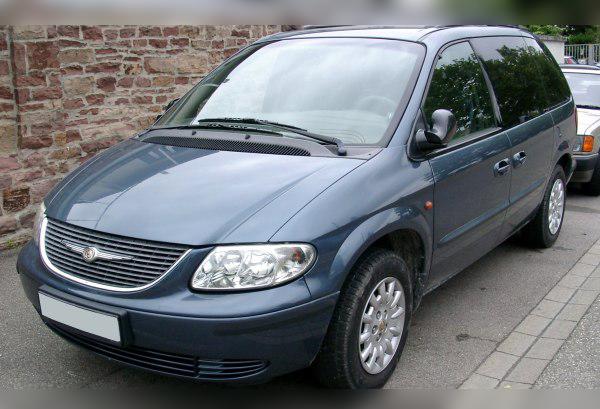
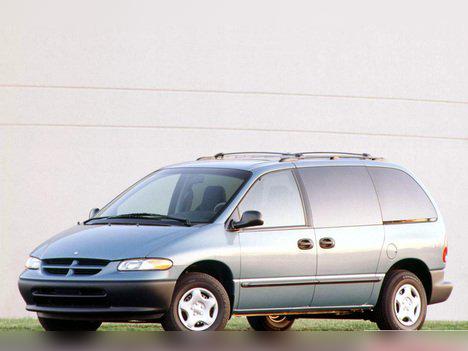
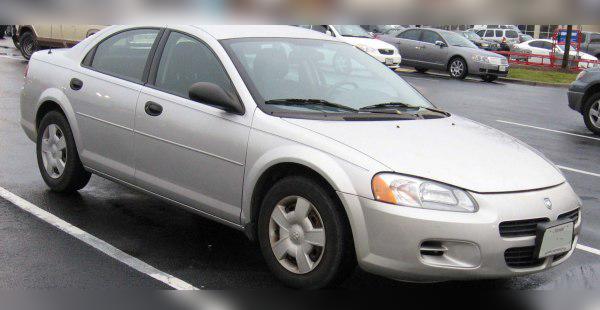
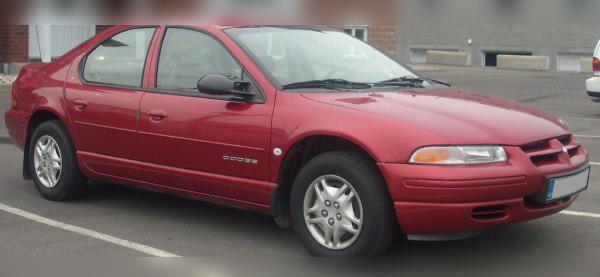
The EDZ engine is a 2.4‑liter, naturally aspirated inline-four petrol engine with 16 valves (DOHC), developed by the Chrysler group. This engine marked an entire era in the late nineties and early 2000s. Thanks to its reliability and low production cost, it was widely installed in family minivans such as the Chrysler Voyager and Dodge Caravan, as well as in mid-size sedans like the Dodge Stratus.
This is not a racing engine, nor a technological marvel. It is old-school engineering where displacement was a substitute for a turbocharger. Although it seems outdated today, for drivers who want simplicity, resistance to wear and cheap parts, the EDZ 2.4 is still an excellent choice on the used market.
Technical specifications
| Specification | Value |
|---|---|
| Engine code | EDZ |
| Displacement | 2429 cc |
| Power | 113 kW (152 HP) at 5200 rpm |
| Torque | 226 Nm at 4000 rpm |
| Fuel type | Petrol |
| Injection system | Indirect (MPI – Multi-Port Injection) |
| Aspiration | Naturally aspirated (no turbo) |
Reliability and maintenance
Timing belt or chain?
This engine uses a classic timing belt for valve timing. Replacement intervals are quite strict. The major service (replacement of timing belt, tensioner, idler pulleys and water pump) is done at around 90,000 km, up to a maximum of 100,000 km, or every 5 to 6 years, depending on which comes first. The price of parts for the major service is not high (depends on the market).
Most common failures
The engine block and cylinder head themselves are extremely durable, but the peripheral components can fail. The best-known weak points of this engine include:
- Crankshaft and camshaft sensors: This is the most common reason why the EDZ leaves its driver stranded. The engine starts jerking, stalls while driving or refuses to start when hot. Replacement is quick and relatively cheap (depends on the market).
- Valve cover gasket: Due to heat, the rubber gasket hardens over time and oil starts to leak down the engine block, often filling the spark plug wells. Symptom: The smell of burning oil in the cabin or rough running (misfiring) because oil has seeped into the plug wires/coil pack.
- PCV valve: The crankcase ventilation valve often seizes. When that happens, crankcase pressure rises and the engine starts pushing oil out everywhere, including through the crankshaft seals. Preventive replacement solves the problem.
Engine oil and spark plugs
The EDZ engine takes about 4.7 liters of oil (including the filter). The factory recommendation is usually 5W‑30, although many mechanics pour 10W‑30 or 10W‑40 into engines with more than 200,000 km to reduce oil consumption and quiet down the hydraulic lifters.
Does it burn oil? Due to its age and mileage, almost every EDZ consumes a certain amount of oil. Consumption of 0.3 to 0.5 liters per 1,000 km is considered normal. If it uses more, the cause is usually worn valve stem seals, which harden from high operating temperatures (100+ °C), rather than the piston rings themselves.
As for the spark plugs, since this is a petrol engine, standard copper plugs are replaced at around 40,000 to 50,000 km. If higher-quality iridium or platinum plugs are installed, the interval can be extended up to 90,000 km.
Specific parts and costs
This is where the EDZ engine really shines when it comes to cheap maintenance.
- Dual-mass flywheel: This engine does not have a dual-mass flywheel. Manual versions use a simple solid flywheel, while automatics have a torque converter. The cost here is zero.
- Injection system: It uses simple, indirect (MPI) petrol injection. The injectors are robust and rarely fail. Even if they clog, ultrasonic cleaning solves the problem and is not expensive (depends on the market).
- Turbocharger and DPF: The EDZ is a naturally aspirated petrol engine, which means it has no turbo, and since it’s petrol, it has no DPF filter, nor the notorious AdBlue system. Forget about the expensive failures of the modern diesel era.
- EGR valve: This engine does have an EGR valve in most variants (to meet emissions standards). It can get clogged with carbon deposits, resulting in rough idle, hesitation when you press the throttle, or the Check Engine light coming on. Cleaning usually solves the issue, and a new part is not too expensive (depends on the market).
Fuel consumption and performance
Is this engine “lazy”?
If you drive it in a Dodge Stratus, the EDZ copes quite decently. However, in a Chrysler Voyager or Dodge Caravan (especially Grand versions), this engine is, as mechanics would say – a dead horse. A body weighing around two tons is simply too much for 226 Nm of torque that only comes in at a high 4000 rpm. Overtaking on country roads with a fully loaded vehicle (seven people and luggage) requires careful planning and high revs.
Real-world fuel consumption
Physics is unforgiving. Because of the heavy vehicle and the low efficiency of the old gearbox, the EDZ engine has very high fuel consumption:
- City driving: Expect a realistic 13 to 16 l/100 km in minivans, and around 11 to 13 l/100 km in sedans.
- Highway / open road: It can drop to about 8–9 l/100 km if you drive very gently.
Behavior on the motorway
On the motorway the engine is acoustically very present in the cabin. Due to the old four-speed automatic transmission, at a cruising speed of 130 km/h the engine spins at a high 3,000 to 3,200 rpm. This further increases fuel consumption and noise. It is not ideal for hammering down the fast lane, but rather for relaxed family cruising at 110–120 km/h.
Additional options (LPG and chip tuning)
LPG conversion
Is it suitable for LPG? Absolutely YES. Installing an LPG system is practically mandatory if you don’t want to go broke at the fuel station. Thanks to the simple indirect injection and conventional valves, the EDZ engine handles LPG phenomenally. It does not require expensive direct-injection systems or special valve lubrication kits. If the system is properly tuned, you will not feel any difference between running on petrol and on LPG.
Chip tuning (Stage 1)
How much can it be “chipped”? The answer is: Not at all. This is a naturally aspirated engine without a turbo. A “Stage 1” remap would at best give you 5 to 8 horsepower, which you won’t even notice. Don’t waste money on software tuning for this engine.
Gearbox and drivetrain
The EDZ was most commonly paired with an automatic transmission, but there are also rare manual versions.
Manual gearbox (5-speed)
In sedans and very rare base versions of the Voyager you will find a manual gearbox. Failures are usually related to worn synchros (grinding when shifting into second and third gear). Since it does not have a dual-mass flywheel, replacing the clutch kit (disc, pressure plate, release bearing) is a very cheap and straightforward job (depends on the market).
Automatic gearbox (most often 4-speed 41TE)
This is, in 95% of cases, the gearbox you will find paired with the EDZ engine. Failures are common if the gearbox has not been maintained.
- Most common problem: The gearbox goes into so‑called “limp mode”, where it is stuck only in second gear. This is most often caused by a failure of the solenoid pack or the speed sensor on the gearbox.
- Maintenance: The fluid must absolutely be changed every 50,000 to 60,000 km. This includes removing the transmission pan and replacing the filter.
- CRITICAL: This gearbox must only be filled with fluid that meets the ATF+4 specification. Many inexperienced mechanics have destroyed these gearboxes by filling them with generic Dexron III.
Buying used and conclusion
What to check before buying?
- Oil leaks: Inspect the engine from the top and from the back. Oily residue on the valve cover and around the sensors means it is due for resealing.
- Hydraulic lifter noise: When you start it completely cold, listen to the top of the engine. Rattling that does not disappear after 3–4 minutes indicates clogged oil passages, poor-quality oil or failed hydraulic lifters.
- Automatic gearbox test: Start off gently, then floor the throttle. The gearbox must shift without dull thumps, jolts or delays. If you feel a kick in the back when you engage “Drive” or “Reverse”, the engine mounts are broken (a common issue on heavy Voyagers).
- Diagnostics: The Check Engine light often comes on due to trivial issues such as a failed oxygen sensor (lambda probe) or even a bad fuel cap (EVAP system), but always read the codes to make sure the problem is not with the crankshaft or camshaft sensor.
Who is this engine for?
The EDZ 2.4 with 152 HP was not built for drag races at traffic lights, but to reliably cover hundreds of thousands of kilometers. Its biggest drawbacks are its lack of power in heavy vehicles and high petrol consumption. However, its greatest strengths are cheap maintenance, the absence of modern expensive systems and fantastic tolerance of LPG systems.
It is intended for family-oriented people on a limited budget, who drive defensively, want a comfortable American car and definitely plan to run it on LPG. If you find a car whose automatic gearbox has been regularly serviced with ATF+4 fluid and which does not burn a liter of engine oil per 1,000 km, you can buy it with confidence – parts are readily available and not expensive.