EZH Engine (5.7 HEMI V8): Real-world experience, issues, fuel consumption and used-buying guide
Key points in short (TL;DR)
- Raw power and sound: A legendary naturally aspirated V8 engine delivering 290 kW (395 hp), known for durability and classic American character.
- No turbocharger and no dual-mass flywheel: The absence of these sensitive components drastically reduces the risk of extremely expensive unexpected repairs.
- Specific weakness ("HEMI tick"): The biggest issue with this engine is lifter failure, which can damage the camshaft.
- Exhaust manifold bolt failure: Exhaust manifold bolts often break, which usually requires machine-shop work.
- Requires the exact oil: Because of the MDS system (cylinder deactivation), the engine strictly requires 5W-20 oil. Any other grade leads to lifter failure.
- Fuel consumption: Very high in city driving, but the engine absolutely shines when a quality sequential LPG (autogas) system is installed.
- Transmission: Paired exclusively with automatic gearboxes; newer versions (from 2013) come with the fantastic ZF 8-speed transmission.
Contents
- Introduction: A working-class American icon
- Engine technical specifications
- Reliability, maintenance and typical "HEMI" failures
- Specific components and fuel injection
- Fuel consumption, performance and the MDS system
- LPG (autogas) conversion and remapping
- Transmission: Dependable, with no manual option
- Buying used and Conclusion
Introduction: A working-class American icon
The engine designated as EZH is nothing more than the latest evolution of the famous 5.7-liter HEMI V8 powerplant from the Chrysler group (FCA/Stellantis). This engine represents the very core of the American automotive industry. The specific EZH version went through serious revisions compared to earlier generations, bringing VVT (variable valve timing) and MDS (Multi-Displacement System – cylinder deactivation) so that this huge displacement could meet modern emissions standards while still delivering the massive torque needed for towing and hauling.
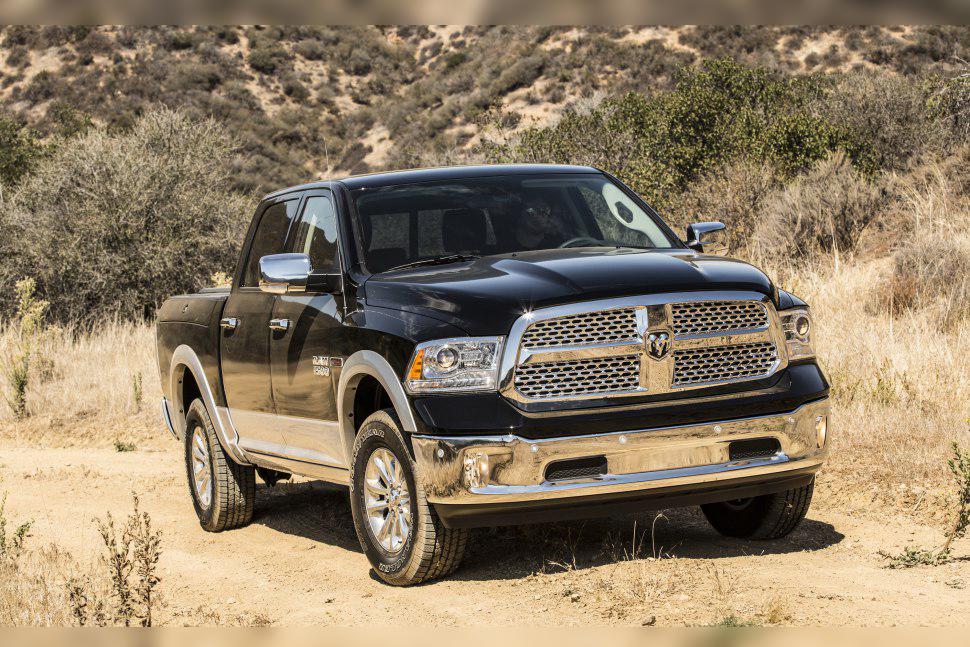
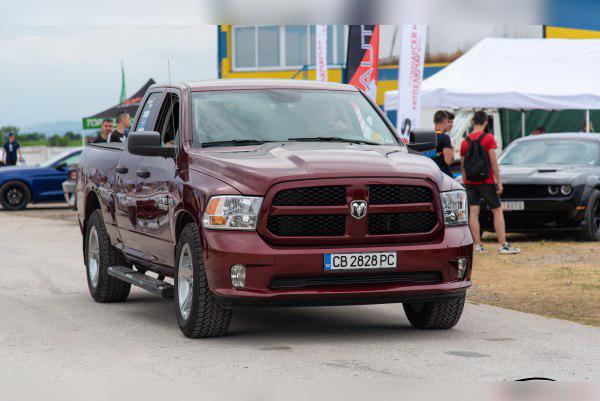
Its main application is in the RAM 1500 (from 2013 facelift onwards), in almost all body styles (Crew Cab, Quad Cab, Regular Cab) and drivetrain options (RWD and 4x4). Whether it’s pulling a heavy trailer, cruising on the open road or serving as a status symbol, the EZH delivers raw power and that characteristic V8 sound that has become increasingly rare today.
Engine technical specifications
| Specification | Value |
|---|---|
| Engine code | EZH (5.7L HEMI V8) |
| Engine displacement | 5654 cc (5.7 liters) |
| Power output | 290 kW (395 hp) |
| Torque | 548 Nm |
| Fuel type | Gasoline (Petrol) |
| Injection type | MPFI (Multi-Port Fuel Injection) into the intake manifold |
| Aspiration | Naturally aspirated (no turbo) |
| Camshaft drive | Timing chain |
Reliability, maintenance and typical "HEMI" failures
American V8 engines are synonymous with covering huge mileages with only basic maintenance, but the EZH has several specific weaknesses that every potential owner must be aware of. First of all, the engine is driven by a timing chain. A “major service” in the European sense (replacement every 100,000 km) is not performed, because the chain is designed to last as long as the engine itself. However, it is recommended to check the tensioners and chain condition after around 250,000 km, especially if you hear rattling on cold start.
Failure no. 1: The infamous "HEMI Tick"
By far the most well-known issue with this engine is failure of the valve lifters. Due to a lubrication design flaw at idle, the roller on the lifter can seize. When that happens, it starts to grind away the camshaft lobe. The symptom is very clear: a rhythmic, loud ticking from the top of the engine, especially noticeable when the engine is warm and idling. Replacing the camshaft and all lifters is very expensive (depends on market), as it requires extensive engine disassembly.
Failure no. 2: Broken exhaust manifold bolts
If you hear a ticking noise that disappears once the engine warms up (after a few minutes), the problem is most likely the exhaust manifold bolts. Due to the huge temperature differences, the engine block and the exhaust manifold expand at different rates. This leads to the rear bolts breaking (most commonly on cylinders 7 and 8). The repair requires extracting the broken bolts and resurfacing (machining) the exhaust manifold, which is a tricky job for a mechanic and falls into the category of expensive repairs (depends on market) because of the labor hours involved.
Oil and Spark Plugs – The key to longevity
This massive block takes about 6.6 liters of oil. Warning: Because of the MDS system, which hydraulically deactivates cylinders, you are allowed to use ONLY 5W-20 oil. Filling it with a thicker oil (e.g. 5W-40) will quickly destroy the lifters. The oil change interval should be at most every 10,000 to 12,000 km. The EZH engine can consume some oil between services (around 0.5 to 1 liter per 10,000 km is normal, often due to the PCV valve), so regularly checking the dipstick is mandatory.
An interesting feature of this engine is its ignition system – it uses two spark plugs per cylinder, meaning a total of 16 spark plugs! Replacement is done roughly every 50,000 km for standard copper plugs, or up to 100,000 km if you use premium iridium plugs. Replacing all 16 is expensive (depends on market) and requires patience due to the difficult access to the rear cylinders near the firewall.
Specific components and fuel injection
Good news for your wallet: the EZH is a naturally aspirated gasoline engine. This means it has no turbocharger, no DPF filter, and does not use AdBlue. You don’t have to worry about turbo rebuilds or a clogged DPF from city driving. However, it does have an EGR valve (exhaust gas recirculation system) which rarely clogs on gasoline engines, but can trigger a fault code at higher mileages. Cleaning or replacing it is not expensive (depends on market).
The injection system is MPFI (Multi-Port Fuel Injection), i.e. conventional port injection into the intake manifold, not direct injection into the cylinder. This is a huge plus! The injectors operate at lower pressures and are extremely reliable. Even if they fail or get dirty, cleaning and replacement are affordable. Also, since the fuel washes over the intake valves, this engine does not suffer from carbon build-up on the intake valves, which is the Achilles’ heel of many modern direct-injection engines.
Fuel consumption, performance and the MDS system
Let’s be honest: when you buy a 5.7-liter V8 in a vehicle weighing over 2.5 tons (RAM 1500), fuel economy is not the priority. In stop-and-go city driving, real-world consumption is between 18 and 22 l/100 km. The engine is anything but “lazy”; 395 hp and a massive 548 Nm of torque allow this beast to move with surprising ease, with brutal acceleration accompanied by a deep exhaust roar.
However, on country roads and highways, things change. The EZH uses MDS (Multi-Displacement System). At steady speeds with low load, the ECU cuts fuel and closes the valves on 4 cylinders. Because of this, and thanks to the modern 8-speed transmission, the engine cruises at 130 km/h at a relaxed 1,800 to 2,000 rpm. Highway fuel consumption can drop to a surprisingly reasonable 11 to 13 l/100 km. The transition from V4 to V8 mode is almost imperceptible, although drivers with a keen ear may notice a change in exhaust resonance.
LPG (autogas) conversion and remapping
Given the fuel consumption, the main question is LPG. The answer is: Yes, this engine is absolutely perfect for an LPG (autogas) conversion. Because of its conventional (indirect) injection, installing a sequential LPG system is fairly straightforward and does not require very expensive direct-injection systems. However, due to the high output of 290 kW, it is necessary to install a top-quality system with two vaporizers (or one extremely strong one) and very fast LPG injectors so that the engine does not run out of fuel (lean mixture) at full throttle, which could burn the valves. A properly installed LPG system drastically reduces running costs.
As for software “tuning” (Stage 1 remap), on naturally aspirated gasoline engines it’s mostly a waste of money if you’re chasing raw power. Gains are marginal, at most around 15 to 20 hp. However, ECU remapping on this engine is often done for other reasons: improving throttle response, changing transmission shift points, or fully disabling the MDS system in software (MDS delete), which many owners do as a preventive measure to protect the lifters (at the cost of slightly higher highway fuel consumption).
Transmission: Dependable, with no manual option
The RAM 1500 with the 5.7 HEMI EZH engine (2013+ generation) is not offered with a manual gearbox. So, the usual story about a conventional clutch and a dual-mass flywheel simply does not apply here. This engine uses a torque converter automatic.
Before the facelift, it used the somewhat archaic but robust 6-speed 65RFE automatic. However, the key upgrade on newer RAMs was the introduction of the TorqueFlite 8 (which is actually the fantastic German ZF 8HP70 8-speed transmission). This gearbox transformed the vehicle, giving it much better acceleration and lower fuel consumption.
Transmission failures and maintenance: The ZF 8HP is one of the most reliable transmissions on the market today. Failures are rare, and when they do occur, they are usually related to the mechatronics unit at very high mileages. The vehicle manufacturer (Stellantis) often claims the oil is “lifetime fill”, which is a big misconception. The transmission manufacturer (ZF) itself insists that the oil be changed every 80,000 to 100,000 km. The procedure involves replacing the transmission pan, because the filter is integrated into it, and only original ZF oil should be used. This service is expensive (depends on market), but absolutely essential for long transmission life.
Buying used and Conclusion
When inspecting a used RAM 1500 with the EZH engine, your best tools are your ears and a completely cold engine.
- Cold start: Insist that the truck is not started before you arrive. When you crank it, carefully listen to the top of the engine and the area around the front wheels. If you hear a sewing-machine-like ticking that quiets down after a few minutes, negotiate the price with the cost of replacing the exhaust manifold bolts in mind. If the ticking remains even when the engine is fully hot, walk away – that’s the “HEMI tick” indicating camshaft damage.
- Test drive: Drive gently at around 70–80 km/h. Try to feel when the system switches from 4 to 8 cylinders. If the engine jerks or behaves erratically, the problem may be in the MDS solenoids, or the previous owner may have used the wrong oil.
- Undercarriage check: Inspect the suspension components and driveshaft U-joints, especially on 4x4 models, because the huge torque can “chew up” components if the vehicle has been towing very heavy loads or used for hard off-roading.
Who is it for? The EZH 5.7 HEMI V8 is a gem for fans of old-school automotive engineering. It is not for those who count every drop of fuel or drive only short city trips. This is an engine for people who need a serious work vehicle, tow heavy trailers, or simply enthusiasts in love with the roar of a V8 who want proven, mechanically robust hardware without complicated turbochargers and DPF systems. If you always use the correct 5W-20 oil and don’t ignore unusual noises from the engine bay, this powerplant will serve you for hundreds of thousands of kilometers.