ETJ 6.7 Cummins Engine (350 HP): Real-world experience, issues, fuel consumption and used-buying tips
Key points in short (TL;DR)
- No timing belt or chain: The timing is gear-driven and the gears are practically indestructible.
- Huge torque: With 827 Nm, this engine “plays” with heavy loads and trailers.
- VGT turbocharger: A common issue is actuator seizure due to soot build-up, especially if the truck is driven mostly in the city.
- Emissions as the Achilles’ heel: DPF, EGR and the AdBlue (DEF) system cause the most headaches and require expensive repairs.
- Transmission and clutch: Manual versions have a dual-mass flywheel that doesn’t tolerate aggressive driving well, while the automatic requires strictly regular fluid changes.
- Maintenance is “big scale”: The sump holds over 11 liters of oil, and it must be changed strictly on time to protect the turbo and injectors.
Contents
- Introduction: A workhorse in civilian clothes
- Technical specifications
- Reliability and maintenance
- Specific components and emissions systems
- Fuel consumption and performance
- Upgrades and modifications
- Transmissions: Manual vs automatic
- Buying used and conclusion
Introduction: A workhorse in civilian clothes
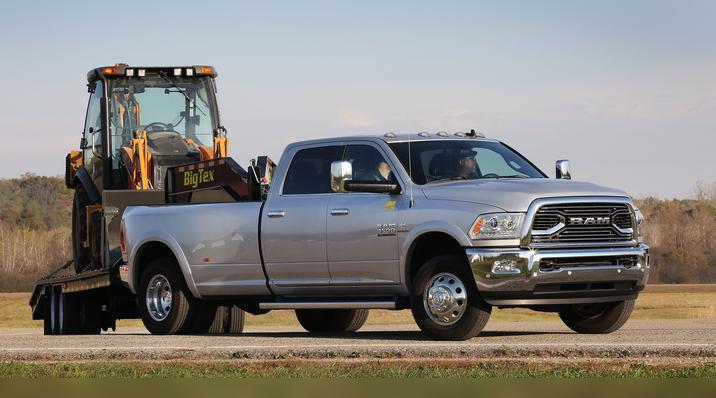
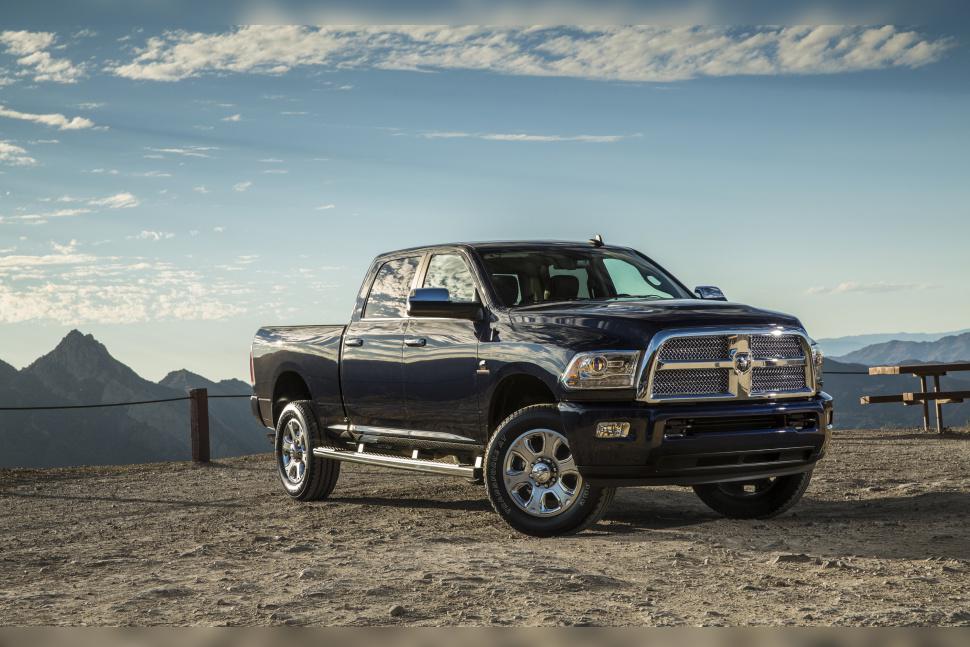
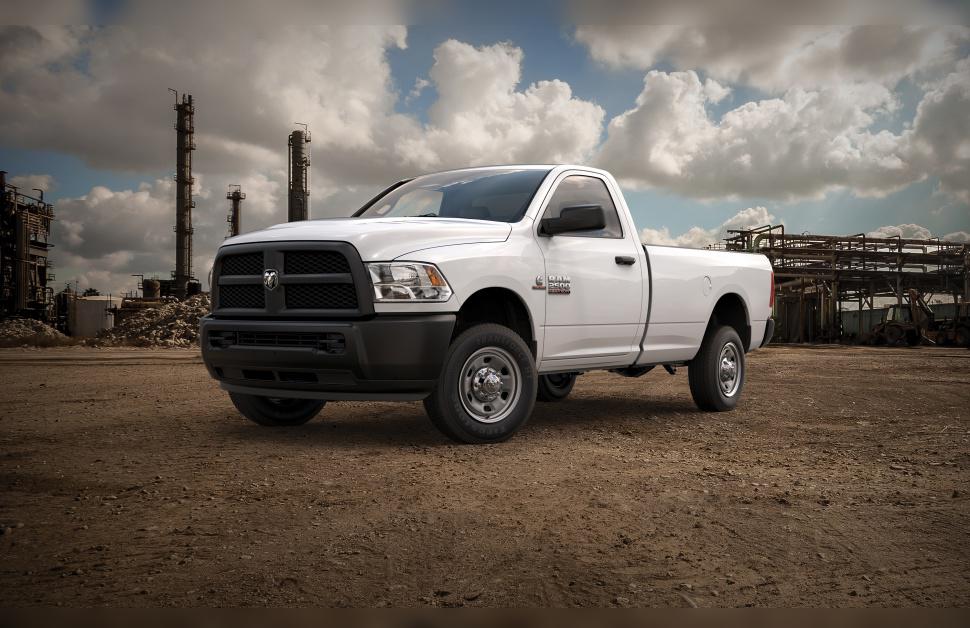
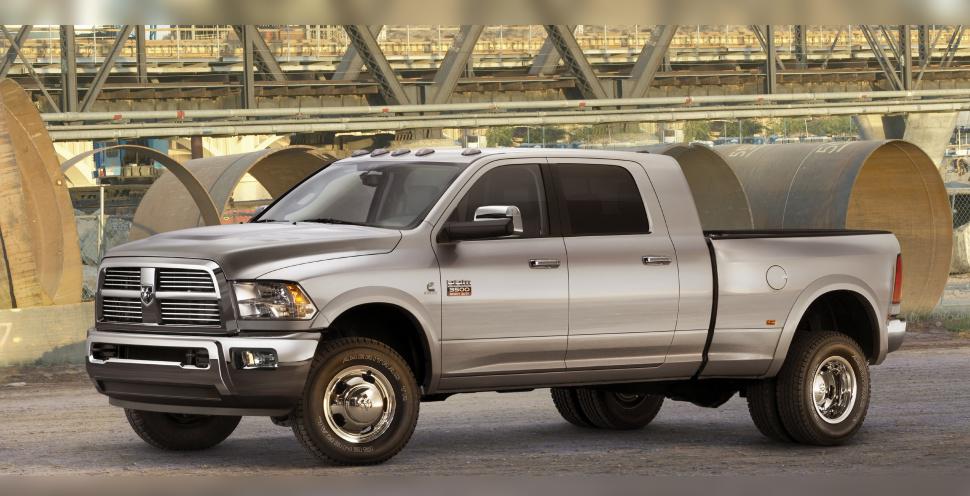
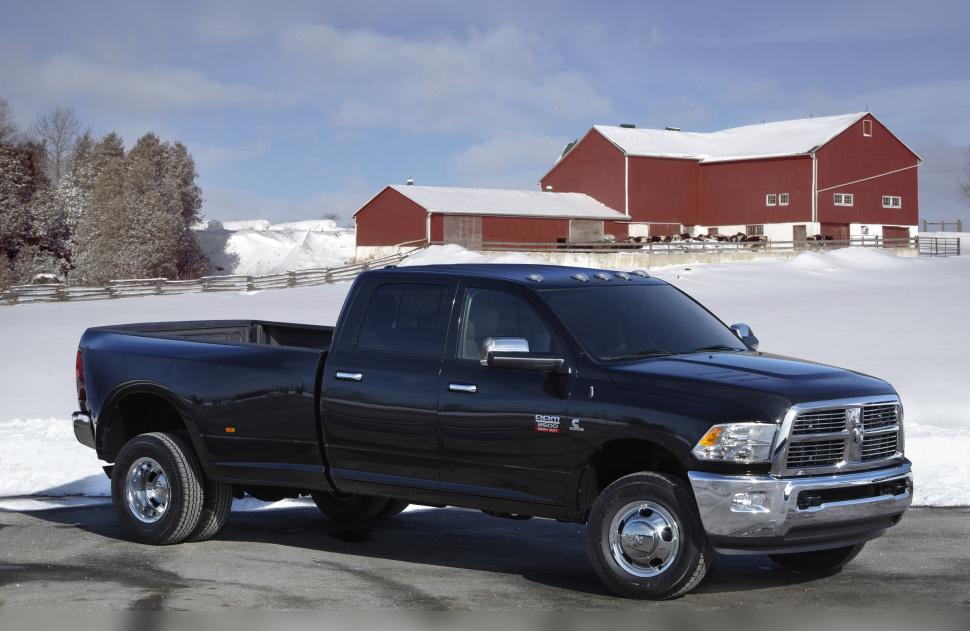
When someone mentions the RAM 2500 or 3500 (Heavy Duty series), the first association is the monumental 6.7-liter Cummins turbodiesel. Within this lineup, the engine with the code ETJ is the version optimized for longevity, delivering 350 HP and an impressive 827 Nm of torque. This engine started to be widely installed with the 2013 facelift models, covering Mega Cab, Crew Cab and Regular Cab variants, with single or dual rear wheels (DRW). Its architecture is based on an inline six-cylinder (I6) cast-iron block. Unlike modern European SUV engines, this powerplant was designed primarily as a commercial work engine meant to cover hundreds of thousands of kilometers under full load. Because of that, its maintenance philosophy and driving behavior differ drastically from what an average passenger car driver is used to.
Technical specifications
| Parameter | Value |
|---|---|
| Displacement | 6690 cc (6.7L) |
| Power | 261 kW (350 HP) |
| Torque | 827 Nm |
| Engine code | ETJ (Cummins ISB 6.7) |
| Configuration | I6 (inline six-cylinder) |
| Injection type | Bosch Common Rail (direct injection) |
| Induction | VGT turbocharger, intercooler |
Reliability and maintenance
One of the most common questions when buying a heavy-duty truck is: does this engine have a timing belt or a chain? The answer is – neither. The Cummins 6.7 uses gear-driven timing. These gears are located at the front of the engine and are essentially designed to last as long as the engine block itself. Because of this, the classic “major service” in the sense of timing replacement is not performed. Servicing comes down to replacing the serpentine belt, idlers and tensioner at around 150,000 km, as well as the water pump when it shows the first signs of leaking or play.
What’s specific to the Cummins ETJ is the need for occasional valve lash adjustment. The manufacturer recommends checking and adjusting every 240,000 km. Although many owners ignore this, skipping it can lead to reduced compression, poorer combustion and camshaft wear.
As for lubrication, this is a serious commercial-grade block. The engine holds approximately 11.4 liters of engine oil. The most commonly recommended grade for moderate and warmer climates is 15W-40 (mineral or semi-synthetic heavy-duty oil), while for colder regions where temperatures drop below -15 °C, 5W-40 (full synthetic) is strongly recommended. The regular service interval varies depending on operating conditions, but any smart mechanic will tell you to change it at a maximum of 15,000 km or once a year. A healthy ETJ engine does not consume a large amount of oil between services. A loss of up to 1 liter per 10,000 km is considered completely normal. If the engine consumes more, the problem usually lies in the VGT turbo seals or the piston rings due to irregular maintenance.
Regarding the fuel system, the injectors in this engine (Bosch Common Rail) are extremely robust, but sensitive to contamination and the presence of water in the diesel. On average they last over 250,000 km, but their lifespan directly depends on regular fuel filter replacement. This RAM has two fuel filters (one under the hood, one near the rear wheel) and both must be replaced at every second oil service. Bad injectors manifest as white smoke on cold start, rough idle and a rising oil level in the sump (due to diesel leaking into the oil, which can destroy the crankshaft).
Specific components and emissions systems
The ETJ engine is equipped with a single but very complex turbocharger. It is a VGT (Variable Geometry Turbocharger) made by Holset. While the “core” of the turbo itself is very durable, the biggest weak point of this engine is the VGT actuator (the electronics and mechanism that move the vanes). The problem arises because of the EGR valve, which recirculates exhaust soot into the intake. If the vehicle is not driven under load or is used too often in the city and idles a lot, soot blocks the turbo vanes, which leads to overheating and actuator failure. Replacement is expensive (depends on market), and the symptoms are a sudden loss of power and an illuminated Check Engine light.
Speaking of soot, the emissions systems are the biggest enemy of this powerplant. The 2013 model is equipped with an EGR valve, a DPF filter and an SCR catalyst that uses AdBlue (known as DEF in the US).
- DPF filter: It often clogs if the truck is used as a city runabout for short trips to the store. Active regenerations require a high exhaust temperature (over 500 °C), which is only achieved on the open road or while towing.
- AdBlue system: The first issues with this generation are the heaters in the AdBlue tank and the pump itself. The level sensors and NOx sensors in the exhaust are sensitive and prone to failure. Proper maintenance means using only high-quality AdBlue fluid and avoiding running the tank dry. Repairs on this system are very expensive (depends on market).
Fuel consumption and performance
With an empty vehicle weight often exceeding 3.2 tons and the aerodynamics of a brick, fuel consumption is noticeable. In pure city driving with frequent stop-and-go traffic, real-world consumption is between 16 and 20 l/100 km. On the highway, things improve slightly, and you can expect around 12 to 15 l/100 km.
Even though the vehicle is huge, this engine is definitely not “lazy”. Thanks to the massive 827 Nm of torque available at around 1,500 rpm, acceleration is surprisingly strong. The body literally lifts, and the engine easily conquers any hill, even with a heavy trailer hooked up behind.
On the highway it is an extremely stable cruiser. At 130 km/h, depending on the differential gear ratio (usually 3.42, 3.73 or 4.10), the engine runs at a relaxed 1,900 to 2,200 rpm. Engine noise is present – it is a work diesel after all – but it is very well isolated inside the cabin.
Upgrades and modifications
As one of the most commonly tuned diesel engines in the world, the Cummins’ potential is brutal. The stock 350 HP and 827 Nm are a very conservative setup designed to protect the emissions systems and the transmission.
A safe tune (Stage 1) on stock components can add an extra 50 to 80 HP and raise torque to a frightening 1,000 to 1,100 Nm. However, here lies the trap: the ETJ engine itself will handle this power increase without any issues, but the transmission and clutch (or torque converter on the automatic) will not. That’s why a transmission tune on the automatic or an upgraded clutch on manual models is almost always recommended alongside the engine tune.
Transmissions: Manual vs automatic
With the 350 HP (ETJ) version, two transmissions are most commonly fitted: the six-speed manual (G56) or the six-speed automatic (68RFE). There is also the heavy-duty Aisin AS69RC automatic, but it usually comes with the H.O. (High Output) engine versions of around 385 HP.
Manual transmission (G56)
This model leaves the factory with a dual-mass flywheel to reduce the vibrations of the massive diesel and provide a more comfortable ride for passengers. Unfortunately, the dual-mass flywheel has proven to be the weakest link. When towing heavy loads at low rpm or after even a mild power increase (remap), the flywheel quickly fails. Symptoms are strong vibrations when taking off, knocking at idle and difficulty engaging gears. The cost of replacing the clutch and dual-mass flywheel is very high (depends on market), which is why many owners convert to a solid (single-mass) flywheel with an upgraded clutch disc. The oil in the G56 manual transmission should be changed every 50,000 to 60,000 km to preserve the synchronizers.
Automatic transmission (68RFE)
The standard automatic for this power level offers comfort, but has its drawbacks. The most common failures are overheating and wear of the overdrive clutch packs (the top two gears), especially if the driver tows a heavy trailer in fifth or sixth gear. The torque converter can also fail due to excessive torsional shock. Proper maintenance of this transmission is absolutely crucial: replacing the filters and the specific ATF fluid every 50,000 to 65,000 km is what separates a long-lasting transmission from one that will need a complete and very expensive rebuild.
Buying used and conclusion
When inspecting a used RAM with the ETJ Cummins engine, don’t be fooled by shiny paint and massive wheels. Your focus must be on how the engine runs and what the diagnostics say.
- Checking blow-by (crankcase ventilation): With the engine fully warmed up and idling, unscrew the oil filler cap on the valve cover and just rest it over the opening. If the cap dances and a large amount of smoke comes out, it’s a sign of worn rings and dropping compression.
- Turbo and exhaust sound: Listen for changes in engine sound at idle. If you hear whistling or if the truck occasionally loses power under load while driving, the VGT turbo actuator is on its way out.
- Emissions status via diagnostics: Always hook up diagnostics specific to the Chrysler/FCA group and check the DPF soot load, the number of failed regenerations and the AdBlue system fault history.
- Suspension and driveline condition: The weight of this truck destroys tie rods, ball joints and driveshaft U-joints, especially on 4x4 versions. Always put the vehicle on a lift.
Who is this engine for?
If you’re looking for a family SUV for mall runs and daily city traffic, forget about the Cummins 6.7. Because of emissions systems, size and maintenance costs, that would be a mistake. However, if you need an unstoppable workhorse, for hauling heavy trailers, boats or construction materials across the continent, the ETJ Cummins is probably one of the most reliable heavy-duty engines ever built. Its mechanical “skeleton” is made to survive decades, provided you have the budget and discipline for regular, heavy-duty maintenance.