15S4C Engine
- Engine
- 1498 cm3
- Aspiration
- Naturally aspirated engine
- Fuel
- Petrol (Gasoline)
- Fuel injection system
- Multi-port manifold injection
- Power
- 106 hp @ 6000 rpm
- Torque
- 141 Nm @ 4500 rpm
- Cylinders
- 4
- Valves
- 16, 4 per cylinder
- Cylinders position
- Inline
- Valvetrain
- DOHC
- Oil capacity
- 4.1 l
- Coolant
- 5.4 l
# Vehicles powered by this engine

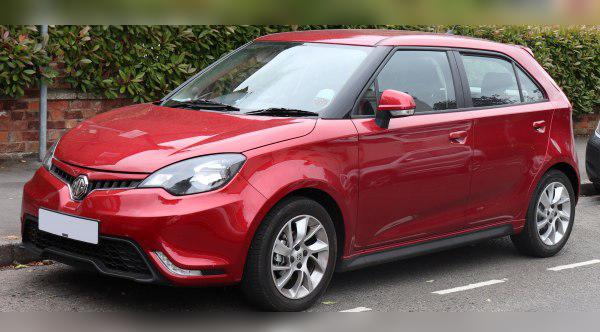
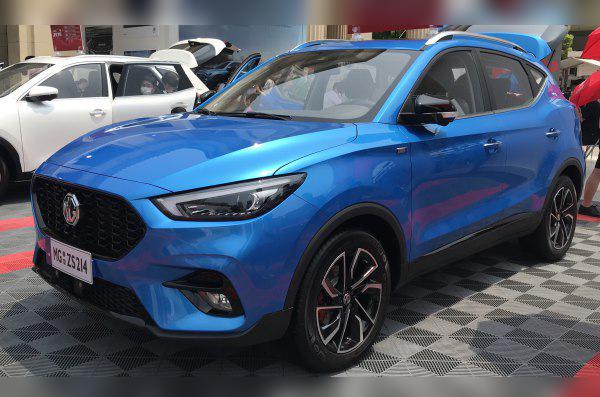
MG 1.5 VTi-Tech (15S4C): Experiences, problems, fuel consumption and used car buying guide
Key points (TL;DR)
- Old school: This is a classic naturally aspirated engine without a turbo – simple to maintain, but “lazy” to drive.
- Timing chain: Uses a timing chain instead of a belt, which reduces regular maintenance costs if the oil is changed on time.
- Ideal for LPG: Thanks to its indirect injection, this engine is a perfect candidate for LPG conversion.
- Performance: In the MG ZS, this engine struggles. It lacks torque for overtaking and uphill driving.
- Gearbox: The five-speed manual gearbox has short ratios, which means high revs and noise on the motorway.
- Conclusion: An excellent choice for drivers who want simplicity and low running costs and don’t care about speed and performance.
Contents
- Introduction: What kind of engine is this?
- Technical specifications
- Reliability and maintenance
- Specific parts and costs
- Fuel consumption and performance
- Additional options and modifications (LPG/Tuning)
- Gearbox and drivetrain
- Used car buying tips and conclusion
Introduction: What kind of engine is this?
The engine designated as 15S4C, better known under the commercial name 1.5 VTi-Tech, is the heart of the entry-level MG models after the brand came under the ownership of Chinese giant SAIC Motor. Although MG has British heritage, this engine is a product of modern Chinese engineering that relies on proven, somewhat conservative solutions.
It is primarily installed in the hatchback MG3 and the popular crossover MG ZS. Its main role is not to break speed records, but to offer a cheap alternative to complex European turbo engines. For used car buyers, this is an interesting engine because it offers “peace of mind” when it comes to expensive failures, but it requires compromise in terms of driving characteristics.
Technical specifications
| Parameter | Data |
|---|---|
| Engine code | 15S4C (NSE Major family) |
| Displacement | 1498 cc (1.5 L) |
| Power | 78 kW (106 hp) @ 6000 rpm |
| Torque | 141 Nm @ 4500 rpm |
| Induction type | Naturally aspirated |
| Injection system | Multipoint (indirect injection) |
| Number of cylinders/valves | 4 cylinders / 16 valves |
Reliability and maintenance
Timing belt or chain?
The 15S4C engine uses a timing chain to drive the camshafts. This is good news for owners because there is no fixed replacement interval like with a belt (e.g. every 5 years). The chain is designed to last as long as the engine, but in practice its lifespan directly depends on the quality of the oil and regular oil changes. If you hear metallic rattling on cold start that disappears after a few seconds, it’s a sign that the chain has stretched or that the hydraulic tensioner is failing.
Most common issues
This is generally a robust unit, but it’s not immune to problems:
- Sensors: Issues with the MAP sensor or camshaft position sensor are common. Symptoms include rough idle or the “Check Engine” light coming on.
- Coil packs and spark plugs: The factory coil packs are not of the highest quality. If the engine “jerks” under acceleration, one of the coils is probably about to fail.
- VTi system (variable valve timing): The solenoids that control variable valve timing can get clogged if poor-quality oil is used, which leads to loss of power.
- Fluid leaks: On older examples (pre-facelift MG3), pay attention to the thermostat housing and the valve cover gasket.
Major and minor service
Minor service (oil and filters) is recommended every 10,000 km up to 15,000 km at most or once a year. Since the engine has a chain, there is no “major service” in the classic sense; instead, the chain is inspected at around 150,000 km. The chain is replaced only if necessary (based on noise).
Oil: Capacity and consumption
The sump holds approximately 4.5 litres of oil. The recommended grade is 5W-30 or 5W-40, meeting API SN/CF or ACEA A3/B4 standards. It is very important to use fully synthetic oil.
Oil consumption: This engine is not known as a heavy oil burner. Consumption of up to 0.5 litres per 10,000 km is acceptable. However, if you often drive on the motorway at high revs (because of the short gearing), the engine may “drink” a bit more oil due to evaporation and higher thermal load.
Specific parts (costs)
Dual-mass flywheel and clutch
Good news: This engine does NOT have a dual-mass flywheel. It uses a conventional solid flywheel. The clutch is relatively cheap to replace (falls into the “affordable” category), which significantly reduces the risk of expensive repairs compared to diesels or more powerful turbo petrol engines.
Injection system and turbo
The engine has no turbocharger. This means there is no risk of turbo failure, intercooler issues or expensive pressurised hoses. The injection is classic indirect multipoint into the intake manifold. The injectors are simple, cheap and extremely resistant to poorer fuel quality, unlike modern GDI (direct injection) injectors.
DPF and EGR
As a petrol engine, this unit does not have a DPF filter (which diesels do). Newer models (from around 2018/2019 onwards, Euro 6d-TEMP standard) may have a GPF (gasoline particulate filter), but it very rarely clogs because the exhaust gas temperature of a petrol engine naturally keeps the filter clean. There is an EGR valve, but it rarely causes problems.
Fuel consumption and performance
Real-world fuel consumption
Although it has a small displacement, the 1.5 VTi-Tech is not a fuel economy champion. The reason is simple: the engine is underpowered for the weight of the body (especially in the MG ZS), so the driver has to “push it” to keep up with traffic.
- City driving: Expect between 8.0 and 9.5 l/100 km. In heavy stop-and-go traffic it can go up to 10 litres.
- Country roads: This is where it’s most economical, around 5.5–6.5 l/100 km.
- Motorway (130 km/h): Consumption rises to about 7.5–8.5 l/100 km due to high revs.
Is the engine “lazy”?
To be honest: Yes, the engine is sluggish, especially in the MG ZS. With 141 Nm of torque available only at a high 4500 rpm, you don’t get that shove in the back like with turbo engines. For overtaking you have to drop two gears and rev the engine close to the redline. In the MG3 the situation is better because the car is lighter, so it feels more lively, but it still requires frequent gear changes.
Behaviour on the motorway
At 130 km/h the engine spins at a fairly high 3500 to 4000 rpm (depending on the model and wheel size). This results in increased cabin noise. It’s not an ideal cruiser for long journeys, but it will maintain speed without problems as long as there are no steep climbs.
Additional options and modifications
LPG conversion
This is an ideal engine for LPG. Thanks to its indirect injection, installation is simple, cheap (a “standard” sequential system) and cost-effective. There is no need for expensive systems for direct injection. The valves are relatively durable, but it is recommended to install a valve lubrication system (“valve saver”) as a precaution.
Chiptuning (Stage 1)
On naturally aspirated engines, chiptuning is a waste of money. The gain would be at most 3 to 5 hp, which you won’t feel in real driving. The only thing that can be improved is throttle response (pedal remapping), but actual performance will remain the same. Not recommended.
Gearbox
Types of gearboxes
This engine is most commonly paired with a 5-speed manual gearbox. In some markets (and older MG3 models) there was an outdated 4-speed automatic (Aisin), but in Europe the manual is standard for the 1.5 naturally aspirated version.
Manual gearbox issues
The manual gearbox is mechanically reliable, but the shift feel is not great. The gear lever throw can be imprecise, and engaging first gear or reverse sometimes requires a bit more force when the gearbox is cold. There is no dual-mass flywheel, which is a big plus for your wallet.
Clutch kit replacement is routine and counts as a cheaper repair. It is recommended to change the gearbox oil every 60,000 to 80,000 km, even though the manufacturer often claims it is “fill for life”. Changing the oil significantly improves shift quality.
Used car buying guide and conclusion
What to check before buying?
- Cold start: Listen to the engine when it is completely cold. Chain rattling lasting longer than 2–3 seconds is a red flag.
- Idle: The engine should idle smoothly. Fluctuating revs indicate a dirty throttle body, sensor issues or a vacuum leak.
- Test drive: Be sure to test acceleration uphill. If the car “doesn’t want to go” and struggles more than you’d expect from 106 hp, the catalytic converter may be clogged or there may be a problem with the VTi system.
- Service history: Because of the chain, it is crucial that the oil has been changed regularly. Skip examples without proof of servicing.
Conclusion
The 1.5 VTi-Tech (15S4C) engine is aimed at rational drivers. If you use your car to transport your family from point A to point B, want low maintenance costs and plan to install LPG – this is an excellent choice. You avoid all the expensive failures of modern diesels and turbo petrol engines.
However, if you enjoy driving, often travel on the motorway or are bothered by the need to shift gears frequently to get the car to pull, this engine will disappoint you. In that case, look for the 1.0 Turbo version (in the MG ZS), which offers much better torque.
Was this content useful to you?
Your opinion helps us to improve the quality of the content.