4A91 Engine
- Engine
- 1499 cm3
- Aspiration
- Naturally aspirated engine
- Fuel
- Petrol (Gasoline)
- Fuel injection system
- Multi-port manifold injection
- Power
- 105 hp @ 6000 rpm
- Torque
- 141 Nm @ 4000 rpm
- Cylinders
- 4
- Valves
- 16, 4 per cylinder
- Cylinders position
- Inline
- Valvetrain
- DOHC-VVT
- Oil capacity
- 3.8 l
- Coolant
- 5 l
- Systems
- Start & Stop System
# Vehicles powered by this engine
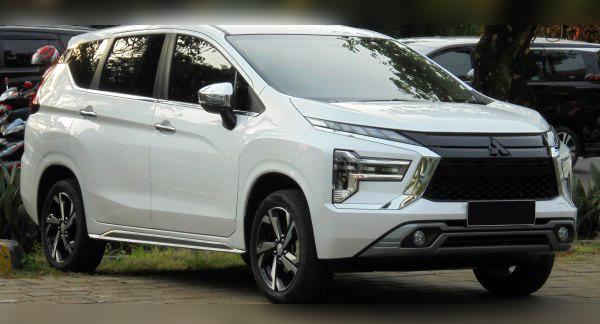
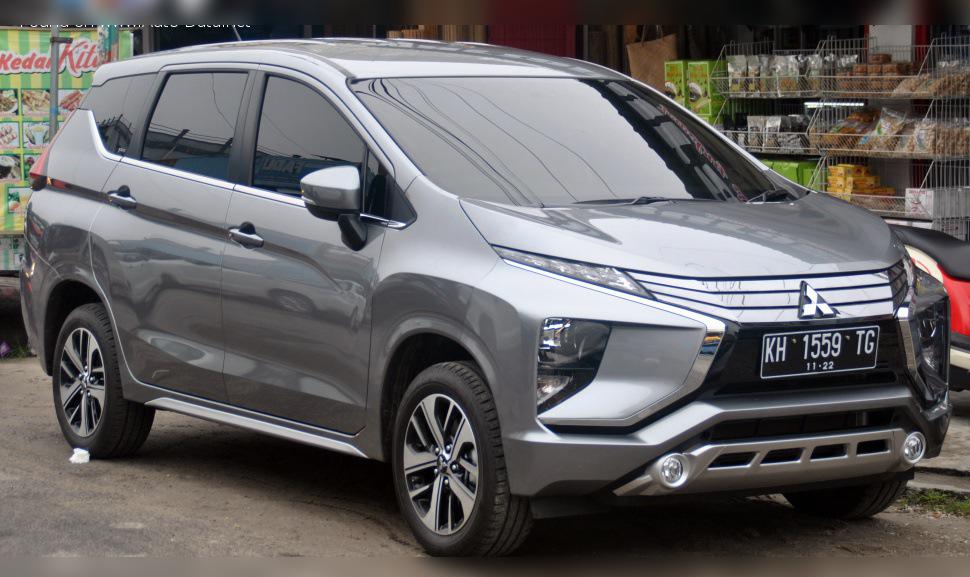
Mitsubishi 1.5 MIVEC (4A91) – experiences, problems, fuel consumption and used car buying tips
Key points (TL;DR)
- Reliable naturally aspirated engine: Simple design without turbocharger and direct injection ensures longevity with regular maintenance.
- Oil consumption: Older series of this engine had issues with stuck piston rings. Although this was solved on newer Xpander models, the oil level should still be checked regularly.
- Timing chain: The engine uses a chain instead of a belt, which reduces regular maintenance costs, but requires high-quality oil.
- Lack of power: With only 141 Nm of torque, this engine struggles in the heavy Xpander body, especially when the car is fully loaded.
- Ideal for LPG: Thanks to the MPI injection system, this is one of the best modern engines for LPG conversion.
- Maintenance: Parts are affordable, and the engine is familiar to most mechanics (shares DNA with Lancer and Colt models).
Contents
- Introduction and applications
- Technical specifications
- Reliability and maintenance
- Specific parts and costs
- Fuel consumption and performance
- Additional options and modifications (LPG/Tuning)
- Gearbox and drivetrain
- Buying used and conclusion
Introduction and applications
The engine designated as 4A91 is not new to the market, even though in the Mitsubishi Xpander (primarily intended for the markets of Southeast Asia, Latin America and parts of Africa/the Middle East) it is presented as a modern solution. It is an aluminum four-cylinder engine developed back in the days of Mitsubishi and Daimler-Chrysler cooperation.
This engine is a classic representative of the "old Japanese school" – naturally aspirated, with MIVEC technology (variable valve timing) and a focus on simplicity. In the Xpander, which is a fairly large MPV (minivan) with 7 seats, this engine has a tough job. Its main role is not to provide sporty performance, but to take the family from point A to point B with minimal breakdowns.
Technical specifications
| Specification | Data |
|---|---|
| Engine code | 4A91 |
| Displacement | 1499 cc (1.5 liters) |
| Power | 77 kW (105 hp) at 6000 rpm |
| Torque | 141 Nm at 4000 rpm |
| Induction | Naturally aspirated |
| Injection system | MPI (Multi-Point Injection) – indirect |
| Number of cylinders / valves | 4 cylinders / 16 valves (DOHC) |
| Engine block | Aluminum |
Reliability and maintenance
Timing system: chain or belt?
The Mitsubishi 4A91 uses a timing chain for valve timing. This is generally good news for owners because there is no fixed replacement interval as with a timing belt. The chain is designed to last "as long as the engine", but in practice this usually means 200,000 to 250,000 km.
The symptom of a stretched chain is a metallic rattling sound on cold start (first few seconds). If you hear this noise, it is necessary to replace the chain kit, guides and tensioner to avoid skipping and catastrophic engine failure.
Most common failures and "Achilles' heel"
Although very reliable, this engine has a few known weak points:
- Oil consumption (piston rings): Older versions of this engine (before 2012, in Lancer/Colt models) had a notorious problem with oil control rings sticking, which led to high oil consumption. In the Xpander (from 2017 onwards) this problem was solved at the factory with better materials, but it is still not unusual for the engine to "drink" some oil if driven at high revs.
- Ignition coils: They can fail individually, causing the engine to run on 3 cylinders, vibrations and the "Check Engine" light to come on.
- Oil leaks: Most often at the crankshaft seal or valve cover gasket after 100,000 km.
Minor and major service
Minor service is recommended every 10,000 km to 15,000 km or once a year. Due to the sensitivity of the MIVEC system to oil quality, my recommendation is to keep the interval closer to 10,000 km, especially in city driving.
A traditional major service (timing belt replacement) does not exist. Instead, at around 100,000 km the auxiliary (serpentine) belt that drives the alternator and A/C should be replaced, and the water pump and coolant checked.
Oil: quantity and grade
The engine takes approximately 4.0 to 4.2 liters of engine oil (with filter). The recommended grade is usually 5W-30 or 0W-20 (for newer models to improve fuel economy). Always use synthetic oil that meets API SN/SP standards.
Oil consumption: For a healthy engine in an Xpander, consumption of up to 0.5 liters per 10,000 km is acceptable. If it uses more than 1 liter between services, this is a warning sign (rings or valve stem seals).
Specific parts (costs)
Dual-mass flywheel and clutch
Good news: this petrol engine does not have a dual-mass flywheel. It uses a conventional solid flywheel that almost never needs replacement. This significantly reduces the cost of clutch replacement on manual versions. The clutch kit (pressure plate, disc, release bearing) falls into the "not expensive" category.
Injection and turbo
The engine does not have a turbocharger. It is a classic naturally aspirated unit, which means you will not face expensive repairs of a turbo, intercooler or boost pressure sensors.
The injection system is MPI (Multi-Point Injection). The injectors are simple, operate at lower pressure than direct injection (GDI) systems and are very rarely problematic. They can even tolerate lower-quality fuel, although this is not recommended.
Emissions: EGR and DPF
As a petrol engine, it does not have a DPF filter. However, it does have an EGR valve that returns part of the exhaust gases back into the intake. The EGR can get dirty from city driving, which manifests as poorer throttle response or unstable idle. Cleaning is relatively cheap and simple.
Note: The latest models for stricter markets may have a GPF (Gasoline Particulate Filter), but most Xpanders on the global market do not. Checking by VIN is mandatory for this detail.
Fuel consumption and performance
City driving and "sluggishness"
This is where we come to the biggest downside of this combination. The Mitsubishi Xpander is a heavy and tall vehicle, and 141 Nm of torque is simply too little for such a body.
Is the engine sluggish? Yes. Acceleration is slow, overtaking requires planning and high revs (above 4000 rpm) for the MIVEC system to really wake up. If the car is fully loaded (7 passengers), be prepared for a very relaxed driving style.
Real-world city consumption: Expect between 8.5 and 10.5 liters per 100 km, depending on traffic and gearbox type (automatic uses more).
Open road and highway
On the highway the engine works under load. Due to the lack of a 6th gear (on the manual) or the automatic gearbox ratios, at 130 km/h the engine revs high, often around 3500–4000 rpm. This creates cabin noise and increases fuel consumption.
Consumption on open roads (two-lane highways) can drop to around 6.5 l/100 km, but on motorways you should expect around 7.5–8.5 l/100 km due to the vehicle’s poor aerodynamics.
Additional options and modifications
LPG conversion
This is an ideal engine for LPG. Thanks to the MPI injection system, installation is simple, inexpensive (a standard sequential system) and the engine handles LPG very well.
Important note: This engine does not have hydraulic tappets, but uses solid lifters ("buckets"). This means that the valve clearance needs to be checked periodically (e.g. every 40,000–50,000 km on LPG). If this is neglected, the valve seats can recede, leading to an expensive cylinder head repair. Installing a valve lubrication system ("valve saver") is recommended.
Chip tuning (Stage 1)
Don’t waste your money. "Chipping" a naturally aspirated 1.5 petrol engine will maybe give you 3 to 5 horsepower, which is imperceptible in real driving. It’s better to invest that money in quality tires or regular maintenance.
Gearbox
The Xpander comes with three types of gearboxes, depending on model year and market:
- 5-speed manual:
- Robust and precise.
- Failures: Rare. Possibly 2nd gear synchro at high mileage.
- Maintenance: Gearbox oil change at 80,000–100,000 km. Clutch replacement cost is low (no dual-mass flywheel).
- 4-speed automatic (4AT):
- Old-school torque converter automatic. Very reliable, but kills performance and increases fuel consumption.
- Failures: Almost indestructible with regular oil changes.
- Maintenance: Change transmission oil and filter every 60,000 km.
- CVT (Continuously Variable Transmission):
- Installed in newer / facelift models. Offers better fuel economy and smooth driving.
- Failures: Sensitive to overheating and aggressive driving. If you hear whining or the car jerks when taking off, the CVT may be on its way out.
- Maintenance: Critically important! CVT fluid must be changed every 40,000 to 50,000 km using only genuine Mitsubishi fluid. Neglecting this leads to gearbox failure, which is very expensive (often more expensive than the engine itself).
Buying used and conclusion
What to check before buying?
- Cold start: Insist that the engine is completely cold. Listen for chain rattling during the first 2–3 seconds.
- Exhaust smoke: Have someone rev the engine while you watch the exhaust. Bluish smoke at high revs or when lifting off the throttle indicates oil consumption (rings or valve stem seals).
- Test drive (CVT): If you are buying an automatic, make sure it accelerates smoothly, without sudden jumps in revs that are not accompanied by acceleration ("slipping").
- Service history: For the CVT gearbox it is crucial whether the oil has been changed on time. If there is no proof of oil changes and the car has 100,000+ km, it is a risky purchase.
Conclusion
The Mitsubishi Xpander with the 1.5 MIVEC (4A91) engine is a reasonable choice for families who do not care about performance, but want reliability and low running costs. It is a "workhorse" that will serve you for years if you can forgive it for being slow uphill.
Should you buy it?
YES – if you mostly drive in the city, value space and want cheap maintenance or plan to install LPG.
NO – if you often travel on the highway with a full car, enjoy dynamic driving or are annoyed by engine noise at high speeds.
Was this content useful to you?
Your opinion helps us to improve the quality of the content.