6VD1-W, Y32NE Engine
- Engine
- 3165 cm3
- Aspiration
- Naturally aspirated engine
- Fuel
- Petrol (Gasoline)
- Fuel injection system
- Multi-port manifold injection
- Power
- 205 hp @ 5400 rpm
- Torque
- 290 Nm @ 3000 rpm
- Cylinders
- 6
- Valves
- 24, 4 per cylinder
- Cylinders position
- V-engine
- Valvetrain
- DOHC
- Oil capacity
- 5.3 l
- Coolant
- 8.8 l
# Vehicles powered by this engine
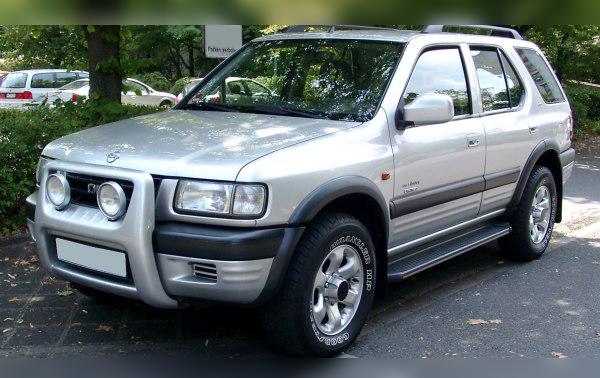
Opel 3.2 V6 (Y32NE / 6VD1) – Experiences, problems, fuel consumption and buying used
Key points (TL;DR)
- Origin: This is actually an Isuzu engine (code 6VD1), known for the robustness and durability of the block itself.
- Fuel consumption: Extremely thirsty engine. Expect high figures in city driving, and it also tends to consume oil.
- Gearbox: The automatic transmission (4L30-E) is the weakest point of this powertrain and requires strict maintenance.
- Timing drive: The timing is driven by a belt, not a chain. Replacement is expensive and complicated.
- LPG: Works very well on LPG, which is almost mandatory for economical driving.
- Purpose: Ideal for heavy off-road use and towing a trailer, not for high‑speed highway runs.
Contents
- Introduction and applications
- Technical specifications
- Reliability and maintenance
- Specific parts and injection system
- Fuel consumption and performance
- Additional options and LPG
- Gearbox: Manual and automatic
- Buying advice and conclusion
Introduction and applications
The engine we’re talking about today is a true heavyweight from the old school. Although in Europe we know it as Opel’s Y32NE (or SE), it is in fact a thoroughbred Japanese Isuzu 6VD1 unit. This V6 engine is the heart of the most powerful versions of the Opel Frontera B after the facelift.
This engine is important because it represents the top of the range for the Frontera, offering the power that diesels and older petrol engines lacked. However, it also comes with specific maintenance challenges typical of large V6 engines from the late ’90s and early 2000s. It is intended for those who want raw power for off‑road use and don’t care too much about fuel costs.
Technical specifications
| Specification | Data |
|---|---|
| Engine displacement | 3165 cc (3.2 L) |
| Configuration | V6, DOHC, 24 valves |
| Power | 151 kW (205 hp) @ 5400 rpm |
| Torque | 290 Nm @ 3000 rpm |
| Engine code | Y32NE (Opel) / 6VD1-W (Isuzu) |
| Injection type | Multi-point indirect injection (MPI) |
| Induction | Naturally aspirated |
Reliability and maintenance
Timing: Belt or chain?
This engine uses a timing belt to drive the camshafts. This is very important information because it is an interference engine – if the belt snaps, the pistons will hit the valves and cause damage that often exceeds the value of the vehicle. A major timing service is recommended every 100,000 to 120,000 km or every 5–6 years (whichever comes first). It is very important to replace the hydraulic belt tensioner as well, because it often fails before the belt itself, which leads to a characteristic rattling noise (as if the engine is running “dry”) before the belt jumps teeth.
Oil consumption and service intervals
Isuzu V6 engines are known for liking oil. Oil consumption of 0.5 to 0.8 liters per 1,000 km is often tolerated on older examples with worn piston rings or valve stem seals, although it is not ideal. Officially, anything over 1 liter per 1,000 km is a red flag for an overhaul.
The sump holds a considerable amount of oil – about 5.7 liters (always check the dipstick while filling). High‑quality synthetic oil of grade 5W-30 or 5W-40 is recommended. If the engine has high mileage and consumes oil, some owners switch to 10W-40 as a temporary solution, but that can make the hydraulic lifters noisier and harder to operate in winter.
Most common failures and issues
Besides oil consumption, here’s what else troubles owners:
- Intake manifold gaskets (IMG): A classic problem. When the gaskets fail, the engine draws unmetered air, which leads to rough idle and increased fuel consumption.
- Ignition coils: The engine uses a coil‑on‑plug system (one coil per spark plug). They often fail, and the symptom is misfiring and loss of power.
- Crankshaft and camshaft sensors: Failure of these sensors can cause the engine to stall while driving or prevent it from starting until it cools down.
- Valve ticking: Often it’s not the valves themselves, but a worn timing belt tensioner producing a noise similar to bad hydraulic lifters.
Spark plugs
Since this is a petrol engine, spark plugs are crucial. They should be replaced every 30,000 to 40,000 km if you use standard copper plugs, or every 60,000–90,000 km if you use iridium/platinum plugs (recommended). Access to the plugs on one bank of the V engine can be difficult due to various hoses and add‑ons, so mechanics usually charge a bit more than for a regular four‑cylinder.
Specific parts (costs)
Dual mass flywheel: Versions with a manual gearbox in the Frontera B usually have a dual mass flywheel to reduce V6 vibrations and protect the gearbox during off‑road driving. Replacing the clutch kit together with the flywheel is expensive (depends on the market), but fortunately these flywheels last quite a long time because the engine doesn’t have the sudden torque spike of turbo diesels.
Turbo and injection: The good news is that this engine does not have a turbocharger. That’s one (expensive) worry less. The injection system is a standard MPI setup with electric injectors. The injectors are very durable and rarely cause problems unless you run the engine on extremely dirty fuel. Ultrasonic cleaning usually solves any issues.
EGR and emissions: This engine has an EGR valve for exhaust gas recirculation. It often gets clogged with soot (especially if the engine burns oil), which leads to the “Check Engine” light and poorer throttle response. Fortunately, it can be cleaned. There is no DPF filter and it does not use AdBlue, as this is an older generation petrol engine.
Fuel consumption and performance
Is it sluggish?
With 205 hp and 290 Nm, a Frontera with this engine is not sluggish, but it’s not a sports car either. The engine has enough power to pull the heavy body and a trailer, but acceleration is linear, without the “kick in the back” you get from turbo engines. Off‑road, the torque at lower revs is quite sufficient for overcoming obstacles.
Real‑world fuel consumption
Here we come to the painful part. To be realistic:
- City driving: Expect between 16 and 20 liters per 100 km, depending on traffic and how heavy your right foot is. In winter, even more.
- Country roads (up to 90 km/h): It’s possible to get it down to 10–12 liters.
- Motorway (130 km/h): Due to the “brick‑like” aerodynamics and gear ratios (especially with the 4‑speed automatic), consumption climbs back to around 14–16 liters. At 130 km/h the engine spins at relatively high revs (around 3000–3500 rpm), which increases noise and fuel consumption.
Additional options and modifications
LPG – saving your wallet
Yes, this engine is very suitable for LPG conversion. Thanks to indirect injection, the conversion is simple and (relatively) affordable, although it requires higher‑quality components (faster injectors, a stronger vaporizer) due to the power output of over 200 hp. The tank is usually mounted under the vehicle or in the boot, but given the fuel consumption, you need a large‑capacity tank to have decent range. Power loss on LPG is negligible if the map is properly tuned.
Chip tuning (Stage 1)
Since this is a naturally aspirated engine, “chipping” (remapping) is basically a waste of money. You might gain 10–15 hp and a slightly better throttle response, but in a heavy off‑roader you won’t really feel it. You’re better off investing that money in proper maintenance or good tyres.
Gearbox: Achilles’ heel or reliable partner?
The 3.2 V6 in the Frontera B most commonly comes with an automatic gearbox, although there are manual versions as well.
Automatic gearbox (GM 4L30-E)
This is a four‑speed automatic that was also used in BMW and Opel models of that era. Unfortunately, it is considered the weakest link in this powertrain.
Problems: The gearbox was designed for lighter vehicles. In the heavy Frontera, especially when towing or off‑roading, it tends to overheat. Common failures include loss of reverse gear, slipping between 2nd and 3rd, or complete failure.
Maintenance: Changing the oil and filter in the gearbox is mandatory every 40,000 to 60,000 km. If the oil smells burnt, the gearbox is probably already due for a rebuild.
Manual gearbox
The manual gearbox (usually 5‑speed) is far more robust and reliable. Failures are rare and usually come down to wear and tear (synchros, bearings) after high mileage. An oil change is recommended every 60,000 km, even though many manufacturers claim it is “fill for life” (don’t believe them).
Buying used and conclusion
When buying a Frontera with the 3.2 V6 engine, make sure to check the following:
- Cold start: Listen for rattling or ticking in the first few seconds (belt tensioner or hydraulic lifters).
- Exhaust smoke: Blue smoke when you blip the throttle or after idling means the engine is burning oil (rings or valve stem seals).
- Gearbox (automatic): It must shift smoothly, without bangs, and it must respond immediately when you select ‘D’ or ‘R’. Any hesitation is a sign of an expensive fault.
- Coolant: Check for traces of oil in the expansion tank (head gasket, although these fail less often here than on the diesels).
Conclusion: The Opel Frontera 3.2 V6 is a vehicle for a very specific buyer. It’s not for city use, and not for long motorway trips because of the fuel consumption. This is a workhorse and weekend off‑roader. If you find an example with a manual gearbox (or a rebuilt automatic) and install LPG, you’ll get a very capable vehicle that won’t let you down in mud or snow, accompanied by the sound of a proper V6 that diesels simply can’t match. Maintenance is not cheap, but mechanically the engine is very durable as long as you don’t let it run low on oil.
Was this content useful to you?
Your opinion helps us to improve the quality of the content.