CAVA, CNWB, CTHA Engine
- Engine
- 1390 cm3
- Aspiration
- Turbocharging and Supercharger, Intercooler
- Fuel
- Petrol (Gasoline)
- Fuel injection system
- Direct injection
- Power
- 150 hp @ 5800 rpm
- Torque
- 240 Nm
- Cylinders
- 4
- Valves
- 16, 4 per cylinder
- Cylinders position
- Inline
- Oil capacity
- 4 l
- Coolant
- 5.6 l
# Vehicles powered by this engine
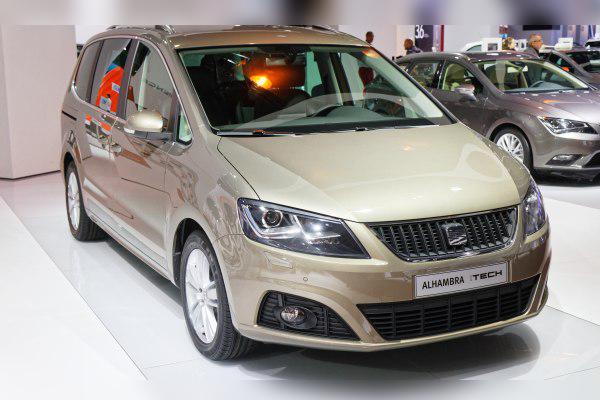
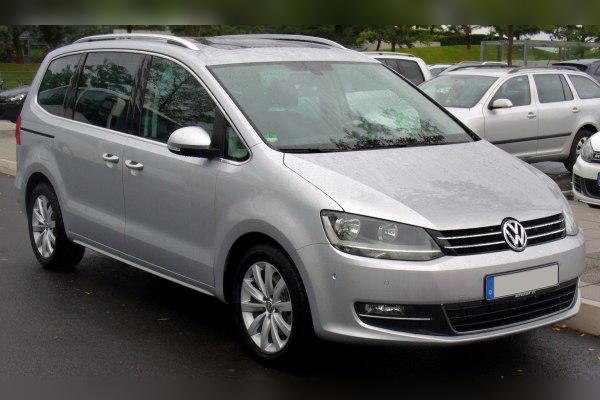
1.4 TSI Twincharger (150 HP) – Experiences, problems, fuel consumption and used car buying guide
Key points (TL;DR)
- Complexity: This is a “Twincharger” engine – it has both a mechanical supercharger and a turbocharger. Performance is excellent, but the system is complicated.
- Achilles’ heel: Timing chain (stretches) and pistons (cracking on earlier CAVA series).
- Vehicle weight: In the Sharan and Alhambra this engine is “working overtime”. It’s not underpowered, but it is heavily loaded.
- Oil consumption: Common issue, requires regular dipstick checks.
- Engine versions: The CTHA code (from 2012/2013) is revised and significantly more reliable than the notorious CAVA engine.
- Recommendation: Requires meticulous maintenance. If you’re buying, look for a car with a replaced chain and, ideally, the newer CTHA version.
Contents
Introduction: A small giant in a big body
The 1.4 TSI engine with 150 horsepower (codes CAVA, CNWB, CTHA) is one of the most technically interesting, but also most controversial powerplants from the Volkswagen Group from the “downsizing” era. It belongs to the EA111 engine family.
Its specificity lies in the fact that it uses twin charging: a mechanical supercharger that provides power at low revs and a conventional turbocharger that takes over at higher revs. Installed in heavy MPVs such as the VW Sharan II and Seat Alhambra II, this engine is tasked with offering the performance of a 2.0‑liter engine with the fuel consumption of a 1.4‑liter. Whether it succeeds in this and at what cost, you’ll find out below.
Technical specifications
| Category | Data |
|---|---|
| Displacement | 1390 cc (1.4 L) |
| Power | 110 kW (150 HP) at 5800 rpm |
| Torque | 240 Nm at 1500–4000 rpm |
| Engine codes | CAVA (older), CNWB, CTHA (newer/revised) |
| Charging system | Twincharger (Supercharger + Turbo) + Intercooler |
| Fuel injection | Direct injection (TSI/FSI) |
| Camshaft drive | Timing chain |
| Emission standard | Euro 5 |
Reliability and maintenance
Timing belt or chain?
This engine uses a timing chain. Unfortunately, the chain is one of the weakest points of EA111 family engines. It often happens that the chain stretches already at mileages between 60,000 and 100,000 km. The symptom is a metallic rattle on cold start that lasts a few seconds. If this is ignored, the chain can jump a tooth, which leads to piston-to-valve contact – in other words, catastrophic engine failure.
Most common failures (Pay special attention)
Besides the chain, these engines have several critical points:
- Piston cracking (ring land failure): This is the most serious problem, especially with the CAVA engine code. Due to high pressure and temperature, as well as poor fuel quality, the rings or even the piston crown can crack. Symptoms are loss of compression, engine misfire and high oil consumption. The CTHA version (installed roughly from late 2012) has reinforced pistons and conrods, and is therefore a much safer purchase.
- Magnetic clutch on the water pump: The water pump on this engine is complex because it has a magnetic clutch that engages and disengages the mechanical supercharger. It often fails, which manifests as squealing or loss of low‑rpm power (the supercharger doesn’t engage).
- Oil consumption: Due to ring design and the PCV valve, these engines can consume oil.
Service intervals and oil
Although the manufacturer often specifies “Long Life” intervals of 30,000 km, for this engine that is a death sentence. Due to thermal stress and complexity:
- Minor service: Always do it at 10,000 km to a maximum of 15,000 km or once a year.
- Major service: Since the engine has a chain, the classic major service is not done strictly by mileage but “by condition”. Still, it’s recommended to replace the chain and tensioners preventively between 100,000 and 120,000 km, or as soon as you hear the first suspicious noise.
- Oil quantity and type: The engine takes approximately 3.6 to 4.0 liters of oil. Recommended viscosity is 5W‑30 or 5W‑40 that meets VW 504.00 or 502.00 specification.
- Oil consumption: Consumption up to 0.5 liters per 1,000 km is, according to the (overly broad) factory tolerances, considered “normal”, but in practice a healthy engine should not consume more than 0.5 to 1 liter between two minor services (over 10,000 km). Anything above that points to problems with the rings or turbo.
Spark plugs and injectors
Since this is a petrol engine with direct injection and high pressures, the spark plugs are under heavy stress. Replacement is recommended every 40,000 to 60,000 km. Use only high‑quality iridium spark plugs (NGK or Bosch) according to the catalog number, because a bad plug can cause detonation that destroys the pistons.
Specific parts and costs
Dual‑mass flywheel: Yes, this 150 HP engine (with both manual and DSG gearboxes) has a dual‑mass flywheel. Its lifespan is usually around 150,000–200,000 km, depending on driving style. Replacement is expensive (varies by market).
Fuel injection system: It uses high‑pressure direct fuel injection. Injectors are generally durable, but sensitive to poor fuel quality. A bigger issue than the injectors themselves is carbon buildup on the intake valves, because fuel does not wash the valves as in older engines. This requires mechanical cleaning (“walnut shell blasting”) at higher mileages if the engine loses power.
Turbo and supercharger:
The engine has one turbocharger and one mechanical (Roots‑type) supercharger.
- Supercharger: Operates from idle up to about 3,500 rpm, providing instant response. It is generally robust, but its drive (via belt and the magnetic clutch on the water pump) is sensitive.
- Turbo: Takes over at higher revs. Turbo lifespan is usually over 200,000 km with regular oil changes and proper cooldown before switching off.
- Diverter valves (N75/N249): The system that switches between turbo and supercharger uses a series of vacuum and electric valves that can fail, causing “flat spots” in acceleration.
DPF, EGR, AdBlue:
- DPF: None (this is a petrol engine). Also, these model years (2010–2015) generally don’t have a GPF (gasoline particulate filter), which came later.
- AdBlue: None.
- EGR: Exhaust gas recirculation is often achieved via variable valve timing, but the system is prone to intake manifold fouling. It’s not as problematic as on diesels.
Fuel consumption and performance
Is the engine “lazy” for the Sharan/Alhambra?
Surprisingly – no. Thanks to the supercharger, the engine has 240 Nm available from just 1500 rpm, which means the large MPV pulls away from the lights very briskly, similar to a diesel. There is no “turbo lag”. However, when the car is fully loaded with passengers and luggage (which is the whole point of these vehicles), the engine has to rev higher to maintain pace, which drastically increases fuel consumption.
Real‑world fuel consumption
- City driving: Expect between 10 and 12 l/100 km. In heavy traffic and winter conditions, this easily goes up to 13 liters. The heavy body takes its toll.
- Country roads: It’s possible to get it down to 7.5–8.5 l/100 km with a light right foot.
- Motorway (130 km/h): At this speed the engine in sixth gear spins at about 2,800–3,000 rpm (depending on gearbox). Consumption is around 9–10 l/100 km. Due to the poor aerodynamics of these vehicles, any increase in speed above 120 km/h drastically raises fuel consumption.
Additional options and modifications
LPG conversion:
Since this is a direct‑injection engine (FSI/TSI), LPG installation is expensive and complicated. It requires a special system (“Direct Liquid Injection” or a system that mixes petrol for injector cooling). The system costs significantly more than a standard one, and the savings are smaller because the engine still uses a certain percentage of petrol while driving. It’s only really worthwhile if you cover very high mileages.
Remapping (Stage 1):
Technically, this engine can be taken up to about 180 HP and 280–300 Nm. However, this is STRICTLY NOT RECOMMENDED for this specific engine, especially if it’s the CAVA version. The pistons are already at the limit of their strength from the factory. Increasing boost pressure and combustion temperature drastically raises the risk of piston failure. In heavy vehicles such as the Sharan, the engine is already under high load – additional stress is an unnecessary risk.
Gearbox: Manual vs DSG
In the Sharan and Alhambra, the following gearboxes were paired with this engine:
- Manual gearbox (6‑speed): Very precise and reliable. Maintenance involves replacing the clutch kit and dual‑mass flywheel when worn. It’s recommended to change the gearbox oil every 60,000 km, even though VW often claims it is “lifetime”.
- DSG automatic gearbox (6‑speed – DQ250): This is good news. Unlike smaller models (Golf, Polo) which with the 1.4 TSI often got the problematic dry 7‑speed DSG (DQ200), the Sharan and Alhambra, due to their weight, mostly use the DQ250 with wet clutch.
Note: Always verify by VIN, but the presence of 6 speeds on a DSG of this generation usually means a “wet” gearbox.
DSG maintenance and failures
If you have the DQ250 (6‑speed), it is robust. The most common failures are the mechatronics unit (the “brain” of the gearbox) and clutch wear at high mileages.
Mandatory maintenance: Changing the oil and filter in the DSG every 60,000 km is critical. If this is skipped, failures are inevitable and repairs are very expensive.
Buying used and conclusion
What to check before buying?
- Cold start: Insist that the engine is completely cold. Listen to the sound during the first 3–5 seconds. Any rattling, knocking or “diesel‑like” sound points to a chain problem.
- Test drive: Pay attention to the transition between 2000 and 3500 rpm. Acceleration should be linear, without jerks. Jerking can indicate problems with spark plugs, coils or the supercharger/turbo switchover (magnetic clutch).
- Exhaust smoke: Bluish smoke under hard acceleration or when engine‑braking is a sign that the engine is burning oil (rings or turbo).
- Compression test: Due to the piston cracking issue, this is the most important step with 1.4 Twincharger engines. If the seller refuses a compression test at a workshop, walk away from the deal.
Conclusion
The 1.4 TSI (150 HP) engine in the Sharan and Alhambra is an engineering marvel that offers great performance for its displacement. It drives nicer than a diesel, is quieter and warms up the cabin faster in winter.
However, it is a risky purchase if you don’t have a complete service history. It requires an owner who is willing to change oil preventively, use quality fuel and not skimp on parts. If you’re looking for “fill up and drive” reliability, the 2.0 TDI is more boring but a safer choice for these vehicles. If you still decide on the 1.4 TSI, look for the CTHA version (2013+) and be prepared for meticulous maintenance.
Was this content useful to you?
Your opinion helps us to improve the quality of the content.