DKLA Engine
- Engine
- 999 cm3
- Aspiration
- Turbocharger, Intercooler
- Fuel
- Petrol (Gasoline)
- Fuel injection system
- Direct injection
- Power
- 95 hp @ 5500 rpm
- Torque
- 175 Nm
- Cylinders
- 3
- Valves
- 12, 4 per cylinder
- Cylinders position
- Inline
- Valvetrain
- DOHC
- Oil capacity
- 4 l
- Coolant
- 10 l
- Systems
- Particulate filter
# Vehicles powered by this engine

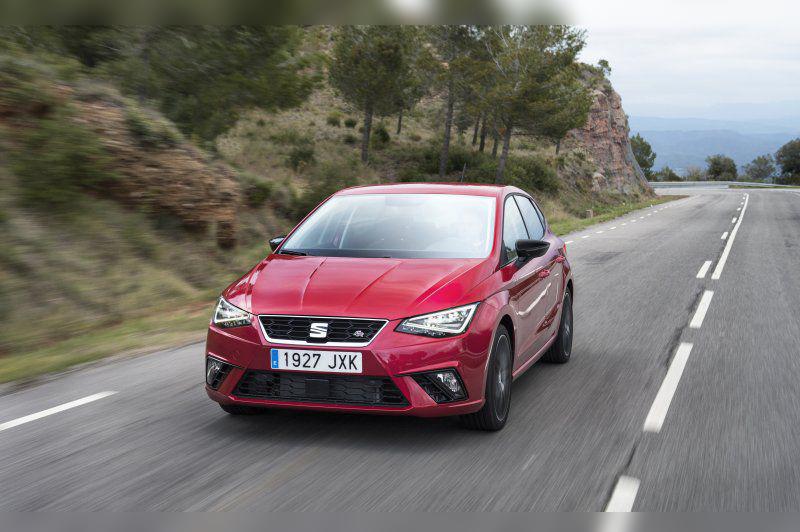
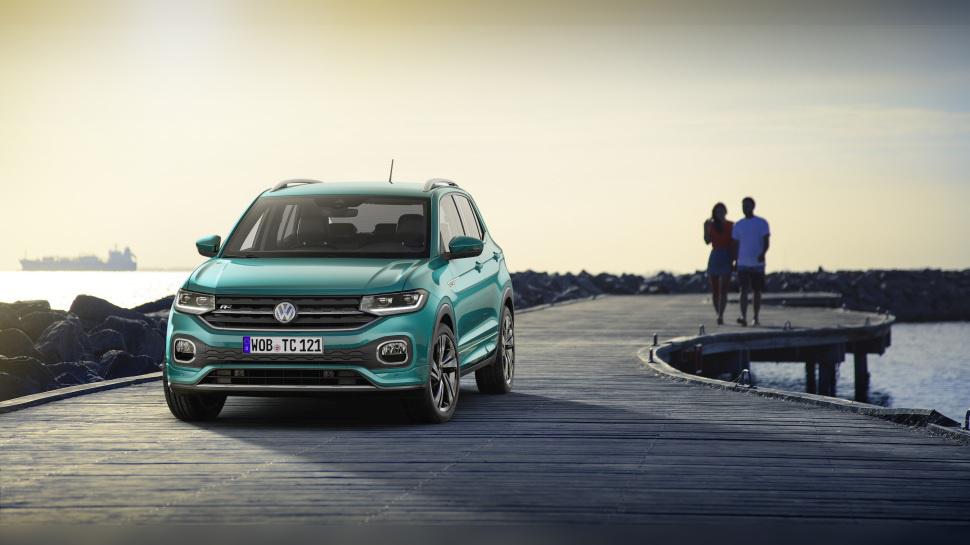
1.0 TSI (DKLA) 95 HP: Experiences, problems, fuel consumption and used car buying guide
Key points (TL;DR)
- No timing chain: Unlike older TSI engines, this one uses a timing belt, which is significantly more reliable and quieter.
- Solid flywheel: The 95 HP (DKLA) version in most cases comes with a solid flywheel, which significantly reduces clutch maintenance costs.
- GPF filter: It has a gasoline particulate filter (OPF/GPF), so it requires occasional driving on open roads.
- Vibrations: As a three-cylinder, it has a characteristic sound and mild vibrations at idle, but is surprisingly refined while driving.
- Fuel consumption: Extremely economical in the city and on country roads, but consumption rises drastically on the motorway at speeds above 130 km/h.
- Recommendation: An excellent choice for city driving and moderate trips, much better than its naturally aspirated predecessors.
Contents
- Introduction and engine applications
- Technical specifications
- Reliability and maintenance
- Specific parts and costs
- Fuel consumption and performance
- Additional options and modifications
- Gearbox
- Buying used and conclusion
Introduction and engine applications
The engine with the code DKLA belongs to Volkswagen Group’s EA211 family. It is a modern 1.0 TSI unit that replaced the older 1.2 TSI engines. Although many drivers are prejudiced against three-cylinder, one-litre engines, this “little one” has proven that it can power bodies such as the Seat Arona, Seat Ibiza and VW T-Cross without major issues in everyday use.
The DKLA code specifically denotes the 95 horsepower version that meets strict Euro 6d-TEMP (and newer) standards, which means it is equipped with a GPF filter. This is the entry-level engine option for crossovers and the standard choice for B-segment city cars, offering a balance between low registration costs and solid torque thanks to the turbocharger.
Technical specifications
| Parameter | Value |
|---|---|
| Displacement | 999 cc (1.0 L) |
| Configuration | Inline, 3 cylinders |
| Power | 70 kW (95 HP) |
| Torque | 175 Nm at 2000–3500 rpm |
| Engine code | DKLA |
| Injection system | Direct injection (TSI/GDI) |
| Induction | Turbocharger + intercooler |
| Emissions standard | Euro 6d-TEMP / Euro 6d (with OPF/GPF) |
Reliability and maintenance
Does this engine have a timing belt or a chain?
The DKLA engine uses a timing belt. This is a big advantage over the older EA111 engines, which had problematic chains. The belt on this engine is designed to last long, run quietly and reduce friction inside the engine.
At what mileage should the major service be done?
The factory recommendation for timing belt inspection is often very optimistic (on some markets they even mention 210,000 km or “lifetime” with inspections). However, real-world practice and experience call for caution. It is recommended to replace the timing belt kit and water pump at an interval between 160,000 km and 180,000 km, or every 8 to 10 years, whichever comes first. On this engine, the water pump is often integrated into the thermostat module and is driven by a separate small belt on the other side of the camshaft, which is a specific feature of the EA211 design.
What are the most common failures on this engine?
Although reliable, the DKLA has a few weak points:
- Water pump and thermostat housing: Coolant leaks can appear on the plastic housing. The symptom is a dropping coolant level in the expansion tank.
- Carbon buildup: Like any direct-injection engine, the valves are prone to deposits, which over time can lead to rough running.
- Turbo actuator: Sometimes you may hear rattling or experience sticking of the wastegate lever, which triggers the engine warning light (EPC fault).
- Oil consumption (less common): It is not a systemic issue as with older TSI engines, but it can occur at higher mileages if the oil has not been changed regularly.
How many litres of oil does this engine take and which grade is recommended?
The sump holds approximately 4.0 litres of oil (often around 3.8 L during an oil change). Due to the OPF filter and low-friction design, this engine requires specific oils. The most commonly used is 0W-20 (specification VW 508.00), which has a greenish colour. Alternatively, 5W-30 (VW 504.00) can be used, but only if this is allowed in the service booklet for the specific market and climate (fixed service interval).
Does it consume oil between services?
A healthy DKLA engine should not consume a significant amount of oil. Consumption of up to 0.5 litres per 10,000 km is considered acceptable. If the engine consumes more than 1 litre per service interval, this indicates a problem with the piston rings, turbocharger or PCV valve.
At what mileage should the spark plugs be replaced?
Since this is a three-cylinder engine that revs freely and has direct injection, the spark plugs are under heavy load. It is recommended to replace them every 60,000 km or 4 years. Always use high-quality iridium or platinum spark plugs designed for TSI engines.
Specific parts (costs)
Does the engine have a dual-mass flywheel?
This is great news for owners of the 95 HP (DKLA) version. In the vast majority of cases, this version paired with the 5-speed manual gearbox has a solid (single-mass) flywheel. This means that the clutch kit is significantly cheaper to replace compared to the more powerful versions (110/115 HP), which almost always have a dual-mass flywheel.
What kind of injection system does it have and are the injectors problematic?
The system is high-pressure direct gasoline injection. The injectors are generally reliable but sensitive to poor fuel quality. Injector failure manifests as jerking while driving or a “check engine” light with a “misfire” error on a specific cylinder. Injector prices are (very expensive), depending on the market, so it is advisable to use quality, additivated fuel.
Does the engine have a turbocharger and what is its lifespan?
It has a single turbocharger. The turbo is small, very responsive (low lag) and the intercooler is water-cooled (integrated into the intake manifold). With regular oil changes and allowing the engine to cool down after fast driving, the turbo will easily last over 200,000 km. It is not prone to premature failure.
Does this model have a DPF filter or an EGR valve?
This petrol engine does not have a DPF (which is for diesels), but it does have a OPF/GPF (Gasoline Particulate Filter). Its role is the same – to trap soot. Unlike diesels, petrol engines reach higher exhaust gas temperatures more quickly, so the OPF regenerates more easily and passively during driving. However, if you drive only short trips in winter, a warning light may come on asking you to drive the car on an open road.
Does this engine use AdBlue?
No, this engine does not have an AdBlue system. That is reserved exclusively for diesel engines.
Fuel consumption and performance
What is the real-world fuel consumption in city driving?
In models such as the Ibiza or Arona, real city consumption is between 6.5 and 7.5 litres per 100 km. In the heavier T-Cross or during winter conditions and heavy traffic, it can go up to 8.5 litres. The start-stop system helps reduce consumption, but many drivers switch it off.
Is this engine “lazy” for the weight of the car?
The engine is not lazy. Thanks to the turbo, 175 Nm is available from just 2000 rpm. In the city it feels very lively and punchy. However, when the car is fully loaded with passengers and luggage, the lack of power can be felt on uphill sections, where you will have to downshift more often.
How does the engine perform on the motorway and at what rpm does it cruise at 130 km/h?
This is the weak point of the 95 HP version, as it is usually paired with a 5-speed gearbox. At 130 km/h the engine runs at about 3000 to 3200 rpm (depending on model and tyres). This increases noise and fuel consumption, which at that speed is around 6.5 to 7.5 l/100 km. For long journeys, a sixth gear is sorely missed.
Additional options and modifications
Is this engine suitable for LPG conversion?
It is not an ideal candidate. Due to direct injection, a specific and expensive sequential LPG system is required, which still uses a certain percentage of petrol (around 10–20%) to cool the petrol injectors. The installation cost is (very expensive) and the payback is questionable unless you cover very high annual mileages.
How far can this engine be safely tuned (Stage 1)?
The DKLA has potential. With a Stage 1 remap, power can be safely raised to around 115 to 125 HP, and torque to around 220–230 Nm. This significantly improves in-gear acceleration. However, be aware that the higher torque puts additional stress on the clutch.
Gearbox
Which manual and automatic gearboxes are fitted to this engine?
With the DKLA 95 HP engine, the standard option is a 5-speed manual gearbox (MQ200). Very rarely, depending on the market, it can be found with a 7-speed DSG automatic (DQ200), but DSG is usually reserved for the more powerful 110 HP version.
What are the most common issues with the manual and automatic gearboxes?
- Manual (MQ200): Very reliable. Possible issues include gearbox bearing wear at high mileage (whining noise), but this is not common. The gear lever is precise.
- Automatic (DSG DQ200): If you come across this version, pay attention. It is a gearbox with dry clutches. The mechatronics unit is expensive to repair, and the clutches can wear out in city driving. Symptoms include juddering when setting off or hesitation when shifting.
How much does clutch replacement cost?
For the manual gearbox, given that there is no dual-mass flywheel, replacement of the clutch kit (pressure plate, disc, release bearing) falls into the category: Not expensive. This is one of the advantages of owning the basic engine version.
At what mileage should the gearbox be serviced and the oil changed?
The manufacturer often states that the oil in the manual gearbox is “lifetime”. However, experienced mechanics recommend changing the gearbox oil every 100,000 km. For the DSG gearbox (if fitted), the oil in the mechatronics and gear set is changed at a specific interval, but the DQ200 technically does not have a prescribed oil change interval like the “wet” DSG gearboxes, although it is advisable to do it preventively.
Buying used and conclusion
Before buying a used car with the DKLA engine, make sure to check:
- Cold start: The engine should quickly settle to a stable idle. There should be no chain rattle (because it has a belt), but listen for any rattling from the turbo area (wastegate).
- Signs of leaks: Look around the thermostat housing (on the right-hand side of the engine when viewed from the front) for any pink, crusty traces of coolant.
- Vibrations: A three-cylinder naturally vibrates more than a four-cylinder, but these vibrations should not be transmitted to the steering wheel and seats to the point of causing discomfort. That may indicate worn engine mounts.
Conclusion: The 1.0 TSI (DKLA) 95 HP engine is an excellent engineering solution for drivers who spend most of their time in city and suburban driving. It offers low running costs (no dual-mass flywheel, cheap regular servicing, low registration fees) and perfectly adequate performance. It is not a motorway cruiser for everyday high-speed runs, but it will handle holiday trips without issue if you show a bit of patience on climbs. If you are looking for a reliable and economical modern petrol engine, this is a safe purchase provided it comes with a verifiable service history.
Was this content useful to you?
Your opinion helps us to improve the quality of the content.