S68 Engine
- Engine
- 4395 cm3
- Aspiration
- Twin-power turbo, Intercooler
- Fuel
- Petrol (Gasoline)
- Fuel injection system
- Direct injection
- Power
- 544 hp @ 5500 rpm
- Torque
- 750 Nm
- Cylinders
- 8
- Valves
- 32, 4 per cylinder
- Cylinders position
- V-engine
- Valvetrain
- VALVETRONIC
- Systems
- Start & Stop System, Particulate filter
# Vehicles powered by this engine
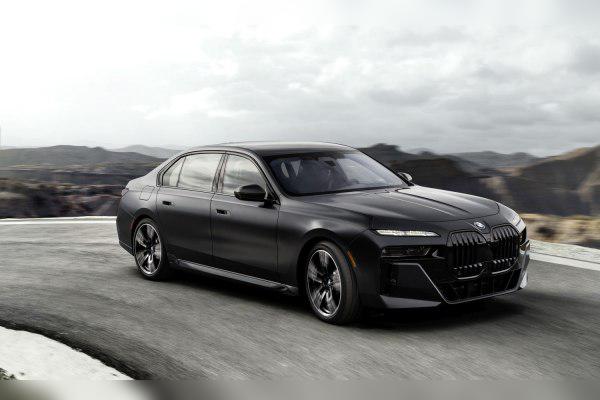
BMW S68 4.4 V8 Twin-Turbo: Experiences, Problems, Fuel Consumption and Buying Used
Key points (TL;DR)
- A true M engine: Although it’s installed in “civilian” models (like the 760i), the S68 is technically an M engine that replaces the old N63, delivering top-level performance.
- Hybrid complexity: This is a 48V mild hybrid system where the electric motor is integrated into the transmission – great for smoothness, but potentially very expensive to repair (Depends on the market).
- Hot-Vee configuration: The two turbos are placed between the cylinder banks. This gives instant throttle response, but creates enormous heat that, in the long run, affects rubber seals and plastic parts.
- Maintenance is not budget-friendly: Requires a large amount of oil, frequent spark plug changes and top-quality fuel.
- Oil consumption: As with any modern BMW V8, oil consumption is an expected occurrence, not necessarily a failure.
- Recommendation: An engine for those who want the last word in V8 technology before full electrification and don’t ask about maintenance costs.
Contents
Introduction and Applications
The BMW S68 is an engine that marks the end of one era and the beginning of another. It is an all-new design that succeeds the famous (and infamous) N63, as well as the sporty S63. Unlike its predecessors, the S68 was designed from the outset as a true “M” engine, even when it’s found in models that don’t carry a full M badge, such as the BMW 7 Series (G70) 760i. Its key feature is the integration of a 48-volt mild hybrid system directly into the transmission, making it one of the most sophisticated V8 units on today’s market.
Technical Specifications
| Feature | Data |
|---|---|
| Engine code | S68 (S68B44) |
| Displacement | 4395 cc (4.4 L) |
| Configuration | V8, Hot-Vee |
| Power | 400 kW (544 hp) |
| Torque | 750 Nm |
| Induction | Twin-Power Turbo (two turbos inside the V) |
| Injection system | Direct injection (High Precision Injection) |
| Hybrid system | 48V Mild Hybrid (integrated into the transmission) |
Reliability and Maintenance
Timing system: Chain or belt?
The S68 engine uses a chain for the timing system. BMW has applied here all the lessons learned from previous generations of V8 engines. The chain is located at the rear of the engine (towards the transmission), which sounds scary from a service perspective, but the system itself is very robust. There is no scheduled replacement, but given the power and operating temperatures, it’s recommended to listen carefully to the engine on cold start after 150,000 km. Rattling at startup is the first warning sign.
Most common failures and symptoms
Although the S68 is a relatively new engine, it genetically inherits certain “traits” of BMW’s V8 architecture:
- Cooling system: Due to the “Hot-Vee” configuration where the turbos (which heat up to over 900°C) are placed between the cylinder heads, thermal load is enormous. Plastic coolant hoses and connectors become brittle and crack. Symptoms include the smell of coolant in the cabin or a puddle under the car.
- Oil leaks: Valve cover and oil pan gaskets are prone to leaking after a few years of use due to extreme heat cycles.
- 48V system electronics: Given the complexity of the hybrid system, software issues or inverter failures are possible, which can result in drivetrain error messages on the dashboard.
Service intervals and oil
A “major service” in the classic sense (replacement of belts and tensioners) here means replacing the accessory (serpentine) belt and related rollers, which should be done at around 100,000 km or every 5–6 years. As for the “minor service”, the factory often recommends intervals of 30,000 km, which for this engine is absolutely wrong if you want it to last. Change the oil every 10,000 to 12,000 km at most or once a year.
The engine takes a large amount of oil, usually around 10.5 liters (the exact amount depends on the oil pan and cooler variant, always check by VIN). Recommended grades are 0W-30 or 0W-20 with the BMW Longlife-17 FE+ specification or newer. Do not skimp on oil quality.
Oil consumption and spark plugs
Does it consume oil? Yes. That’s a characteristic of high-performance V8 twin-turbo engines. Consumption of 0.5 to 1 liter of oil per 3,000–5,000 km is often considered “within normal limits” by the manufacturer, especially if the car is driven aggressively. If it uses a liter per 1,000 km, you have a problem with piston rings or valve stem seals.
The spark plugs are under heavy load due to direct injection and turbocharging. They are replaced more often than in naturally aspirated engines – the recommendation is every 30,000 to 40,000 km. Symptoms of worn spark plugs include rough idle (misfires) and loss of power under hard acceleration.
Specific Parts (Costs)
Injection system and injectors
The S68 uses high-precision piezo injectors that operate at 350 bar. They are extremely efficient but sensitive to poor fuel quality. A failing injector manifests as rough running, the smell of raw fuel from the exhaust and an illuminated “Check Engine” light. The price of a single injector is expensive to very expensive (Depends on the market), and there are eight of them.
Turbochargers
The engine has two turbochargers (twin-scroll). Their lifespan depends directly on maintenance and driving style. If the oil is changed regularly and the engine is not switched off immediately after hard driving (it should be left to idle for a minute or two to cool down), they can last over 200,000 km. Rebuilding is possible, but replacing them with new units is an extremely costly investment.
DPF, GPF and EGR
Since this is a petrol engine, it doesn’t have a classic DPF, but European models (and most global ones) are equipped with a GPF (Gasoline Particulate Filter) or OPF. It rarely clogs if the car is driven on the open road, but frequent city driving can load it up. The pressure sensors on the GPF are known to cause false warnings. EGR valves are present for emissions and exhaust gas recirculation; they are prone to fouling, but less so than on diesels. This engine does NOT use AdBlue fluid.
Fuel Consumption and Performance
City and highway driving
Don’t be fooled by the official figures. In real-world city driving, the heavy 7 Series (G70) body and V8 engine will use between 16 and 22 liters per 100 km, depending on traffic and how heavy your right foot is. The mild-hybrid system helps when setting off, but it doesn’t work miracles for fuel consumption.
On the highway, the situation is much better. At cruising speeds, the engine is under little load and can get down to 10 to 12 liters per 100 km.
Is the engine “lazy”?
Absolutely not. With 544 hp and 750 Nm available from low revs (around 1,800 rpm), this engine catapults the heavy limousine forward. The feeling is like driving a speedboat – the nose lifts and the car accelerates linearly and brutally. There is no sluggishness; overtakes are a matter of a split-second decision.
At 130 km/h, thanks to the 8-speed transmission, the engine “sleeps” at very low revs (below 2,000 rpm), which contributes to cabin quietness.
Additional Options and Modifications
LPG conversion
In theory, it’s possible to install a liquid direct injection LPG system (LDI), but in practice this is economically unjustifiable and technically risky for the S68 engine. Direct injection, two turbos, the Valvetronic system and the hybrid unit make the conversion a calibration nightmare. If you can afford a G70 760i, forget about LPG. The savings will not cover the potential damage.
Chiptuning (Stage 1)
The S68 has huge potential. However, the new BMW ECUs are often locked from the factory and need to be sent to specialized centers (often abroad) for unlocking before remapping. A Stage 1 tune safely raises power to around 600–630 hp and torque close to 850 Nm. Still, keep in mind that higher torque puts additional stress on the transmission and differentials.
Transmission
Type of transmission and maintenance
With the S68 engine in the G70 model you only get the latest-generation 8-speed ZF automatic transmission (8HP). The specific feature of this version is that the electric motor (48V starter-generator) is integrated into the transmission housing. Manual gearboxes are not available with this setup.
Most common failures: The mechanical part of the ZF transmission is “bulletproof” if maintained properly. Problems can occur in the mechatronic electronics or the integrated electric motor. If the electric motor fails, an expensive repair or complete transmission replacement is often required.
Dual-mass flywheel: Automatic transmissions don’t have a classic dual-mass flywheel like manuals. They use a torque converter (wandler) that performs the damping function. It is durable, but its overhaul is expensive (Depends on the market).
Transmission service: BMW claims the oil is “lifetime”. This is not true. The transmission manufacturer (ZF) recommends changing the oil and filter (the transmission pan is also the filter) every 80,000 to 100,000 km. This is mandatory if you want the transmission to shift smoothly even after 200,000 km.
Buying Used and Conclusion
Buying a used BMW with the S68 engine requires caution and expertise. Before purchase, be sure to check:
- Cold start: Listen for chain rattle in the first 3–5 seconds.
- Exhaust smoke: Bluish smoke when you blip the throttle after idling indicates oil consumption (valve stem seals or turbos).
- Cooling system: Look for white traces of dried coolant around hoses and joints in the engine bay.
- Diagnostics: Check the status of the 48V battery and the hybrid system, as these are the most expensive electronic components.
Conclusion: The BMW S68 is an engineering masterpiece and probably one of the last great V8 engines. It is intended for drivers who want uncompromising power, prestige and sound, and who are prepared to pay for very expensive maintenance (Depends on the market) and high fuel consumption. This is not an engine for saving money; this is an engine for pure enjoyment.
Was this content useful to you?
Your opinion helps us to improve the quality of the content.