EJ15 Engine
- Engine
- 1498 cm3
- Aspiration
- Naturally aspirated engine
- Fuel
- Petrol (Gasoline)
- Fuel injection system
- Multi-port manifold injection
- Power
- 105 hp @ 6400 rpm
- Torque
- 142 Nm @ 3200 rpm
- Cylinders
- 4
- Valves
- 16, 4 per cylinder
- Cylinders position
- Boxer
- Valvetrain
- SOHC
- Oil capacity
- 4.2 l
- Coolant
- 7.4 l
# Vehicles powered by this engine
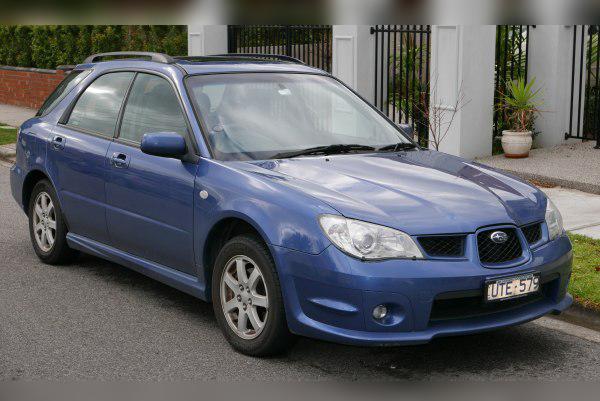
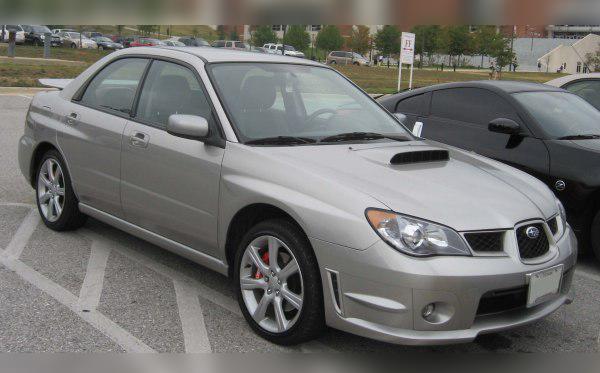
Subaru EJ15 (1.5 R) 105 HP – Experiences, Problems, Fuel Consumption and Buying Guide
Key points in short (TL;DR)
- Drivetrain: Comes with the famous symmetrical AWD system, which is rare and a big plus in this class.
- Performance: The engine is sluggish for the vehicle’s weight and 4x4 drivetrain. It’s not for racing, but for safe driving.
- Maintenance: It has a timing belt. The small service is cheap, but the major service and spark plug replacement can be more expensive due to the Boxer layout.
- Fuel consumption: High for a 1.5-liter engine. Expect consumption similar to a 2.0 engine (10+ liters in the city).
- LPG: Installation is possible, but Boxer engines are sensitive to valves. It requires a system with valve lubrication or frequent (and costly) valve clearance checks.
- Failures: Oil leaks from valve cover gaskets and sometimes from the head gasket (though less often than on the 2.5 engines).
- Conclusion: Ideal for beginners in hilly areas who need reliability in snow, not speed.
Contents
Introduction: A small Boxer in a big body
When you think of the Subaru Impreza, the first association is usually gold wheels, a big spoiler and turbo whistle. However, the reality on the used car market is often different. In front of you is the EJ15 (often in the 1.5R variant), the entry-level model into the world of Subaru. Installed in the "Hawkeye" generation Impreza (2005 facelift), this engine is intended for drivers who want the safety of all-wheel drive (AWD), but don’t want to pay registration and fuel costs for the more powerful WRX models.
This is a classic Boxer engine – the cylinders are laid horizontally, which gives the car a low center of gravity and a distinctive sound (although it is muted on this model). Still, the question that bothers most buyers is: Is 105 horsepower enough to move this not-so-light car with permanent all-wheel drive?
Technical specifications
| Specification | Data |
|---|---|
| Engine displacement | 1498 cc |
| Power | 77 kW (105 HP) at 6400 rpm |
| Torque | 142 Nm at 3200 rpm |
| Configuration | B4 (Boxer, 4 cylinders) |
| Induction | Naturally aspirated |
| Injection type | MPFI (Multi-point fuel injection) |
| Drivetrain | Symmetrical AWD (permanent 4x4) |
Reliability and maintenance
Belt or chain?
The Subaru EJ15 engine uses a timing belt. This is a critical maintenance item. Subaru engines are so-called "interference" engines, which means that if the belt snaps, the pistons will hit the valves and cause catastrophic damage that is often not worth repairing.
Service intervals and oil
The major service is recommended every 100,000 km or every 5 to 7 years, whichever comes first. Due to the specific position of the engine (at the front, near the radiator), replacement is relatively straightforward for an experienced mechanic, but the timing kit (belt, rollers, tensioner) must be of good quality (e.g. INA, SKF, or OEM).
The engine takes about 4.0 to 4.2 liters of oil. The recommended grade is 5W-30 for newer or well-maintained engines, while for higher-mileage engines in our climate it is often common to switch to 10W-40.
Oil consumption: Boxer engines are known for liking to "drink" a bit of oil. For this naturally aspirated engine, consumption of up to 0.5 liters per 1,000 km is often considered acceptable in the manual, but in practice a healthy engine should not consume more than 1 liter between services (over 10,000 km). If it uses more, it’s usually valve stem seals or piston rings.
Most common issues
Although the EJ15 is more reliable than its turbo siblings, it has its own "bugs":
- Valve cover gaskets: Due to the horizontal layout, oil constantly sits on the gaskets. Over time the rubber hardens and oil starts dripping directly onto the hot exhaust manifold. The symptom is a burning smell in the cabin. The repair is not expensive, but it is fiddly.
- Head gasket: A less pronounced problem than on the 2.5 engines, but it can occur around 150–200k km. Symptoms are overheating, mixing of oil and coolant, or coolant being pushed into the overflow tank.
- Spark plugs: Not a failure, but a pain. Replacing spark plugs on a Boxer engine requires either special tools and some "hand gymnastics", or in worse cases, loosening the engine mounts. Due to labor cost, iridium spark plugs are recommended as they last longer (60–90k km).
Specific parts (Costs)
When it comes to parts, Subaru is considered a brand where parts prices are "mid to high", but the durability of OEM parts is excellent.
- Dual-mass flywheel: Good news! This model (1.5 petrol) most often uses a solid flywheel (single mass flywheel). This significantly reduces clutch replacement costs compared to diesel versions.
- Fuel injection system: Uses a classic multi-point system. The injectors are robust and rarely cause problems, unless the car is run on extremely poor fuel or with a neglected LPG system. It is not direct injection, which means fewer deposits on the valves.
- Turbo and DPF: This engine has no turbocharger, no intercooler, no DPF filter. That makes it mechanically simple and cheaper to maintain in the long run.
- EGR valve: It has an EGR valve to meet emissions standards. It can clog from city driving, resulting in rough idle or a "flat spot" when you press the throttle. Cleaning usually solves the problem.
Fuel consumption and performance
Is the engine "lazy"?
To be honest – yes. An Impreza with this engine and AWD weighs around 1300 kg. The torque of 142 Nm is available only at 3200 rpm. This means that for any kind of overtaking you have to shift down and rev the engine above 4000 rpm. The 0–100 km/h time is around 13–14 seconds, which by today’s standards is slow.
Real-world fuel consumption
Permanent all-wheel drive (Symmetrical AWD) creates friction and drag.
- City driving: Expect between 10 and 12 liters per 100 km. More in winter.
- Open road (rural/highway 80–100 km/h): It can go down to 7–8 liters.
- Motorway (130 km/h): Due to the short gearbox ratios (it lacks a 6th gear), the engine revs high (often close to 4000 rpm at 130 km/h). This results in noise and consumption of around 9 liters.
Additional options and modifications
LPG conversion
It is possible to install LPG, but with great caution. Subaru Boxer engines have relatively soft valve seats. Running on LPG increases combustion temperatures, which leads to valve seat recession.
Recommendation: A quality sequential LPG system is a must and, ideally, a valve lubrication system (so-called "dripper" or electronic additive). The biggest problem is the valve clearance check. On this engine it is done mechanically (shims/buckets) and often requires removing the engine from the car due to lack of space, which makes the service very expensive (several hundred euros). If you plan LPG, factor in this cost every 40–50k km.
Chiptuning (Stage 1)
On a small-displacement naturally aspirated engine, chipping is a waste of money. You might gain 3 to 5 HP and a barely noticeable improvement in throttle response, but you will not turn this car into a racer. It’s better to invest the money in quality tires and brakes.
Gearbox
Two transmission options come with the EJ15:
- Manual gearbox (5-speed): Very precise and reliable.
- Low-range: Station wagon versions often have a lever next to the shifter for Hi-Lo reduction. This is a fantastic feature for driving in deep snow, mud, or when towing a trailer uphill. It increases torque at the wheels.
- Failures: Rare. Possibly second-gear synchro if the car has been driven aggressively. Clutch replacement cost is moderate (higher than on a Golf due to removing drive shafts and the prop shaft, but not astronomical).
- Automatic gearbox (4-speed – 4EAT): An older design.
- Characteristics: Very robust, but slow/"lazy". It has only 4 gears, which further increases motorway fuel consumption and chokes an already weak engine.
- Maintenance: Change the oil and filter in the gearbox every 60,000 km. If maintained, this gearbox often outlives the engine.
Buying used and conclusion
Before buying, make sure to check:
- Cold start: Listen if the engine "knocks" (clack-clack-clack) for the first few minutes. This can be a sign of piston slap (piston clearance) or worn crankshaft bearings.
- Oil leaks: Look at the engine from underneath. Oily joints between the head and the block are a red flag and mean an expensive repair.
- Drivetrain: Turn the steering wheel fully and drive slowly in a circle. If you hear knocking or feel the wheels binding, the center differential (viscous coupling) may be faulty.
Verdict:
The Subaru Impreza 1.5R is not a car for speed enthusiasts. It is a car for people who live in hilly areas, where snow and ice are common, and for whom safety and traction are more important than acceleration. Maintenance is more expensive than on an average European compact, but in return you get engineering and stability that few other cars in this class can offer. If you don’t mind higher fuel consumption and lack of power, this "Japanese" will serve you faithfully.
Was this content useful to you?
Your opinion helps us to improve the quality of the content.