S68B44T0 Engine
- Engine
- 4395 cm3
- Aspiration
- Twin-power turbo, Intercooler
- Fuel
- Petrol / electricity
- Fuel injection system
- Direct injection
- Power
- 585 hp
- Torque
- 750 Nm
- Cylinders
- 8
- Valves
- 32, 4 per cylinder
- Cylinders position
- V-engine
- Max engine speed
- 7200 rpm
- Valvetrain
- VALVETRONIC, Double-VANOS
- Oil capacity
- 13.2 l
- Systems
- Start & Stop System, Particulate filter
# Vehicles powered by this engine
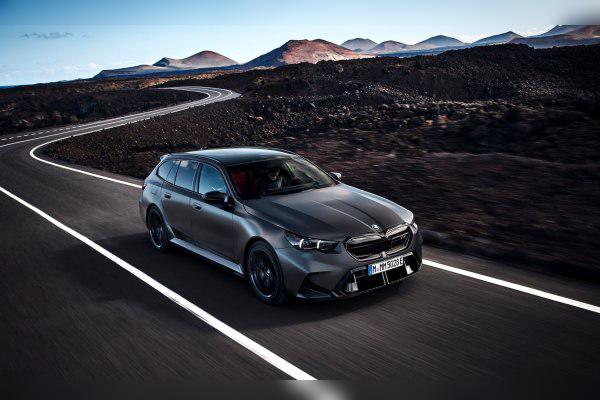
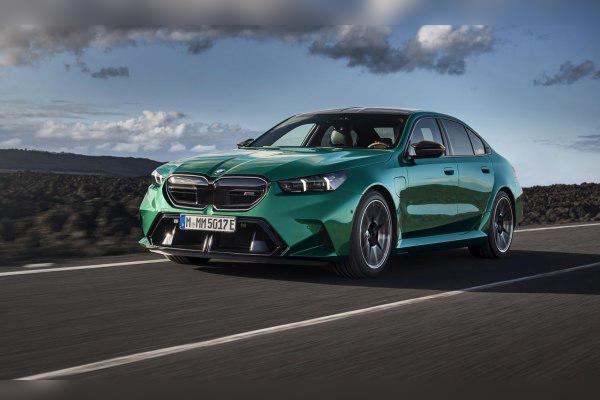
S68B44T0 (BMW M5 G90/G91): Experiences, problems, fuel consumption and used car buying guide
The new king of BMW’s “M” division has arrived, but this time with a major difference – electrification. The engine with the code name S68B44T0 is the heart of the latest BMW M5 (G90) and M5 Touring (G91). Although on paper it looks similar to its predecessor (S63), this is a completely new powerplant designed to work in symbiosis with a powerful electric motor. It is an engineering marvel, but it also brings a level of complexity that scares many fans of classic V8 machines.
In short, the most important (TL;DR)
- Unmatched performance: The combination of a V8 engine and electric drive eliminates any “lag” in acceleration.
- “Hot-Vee” system: Two turbochargers are placed inside the V of the cylinder banks for faster response, which generates enormous heat.
- Hybrid weight: Due to the batteries and hybrid system, this is the heaviest M5 in history, which affects tire and brake wear.
- Maintenance: Requires strict adherence to service intervals; skipping oil changes is fatal for this engine.
- Complexity: In addition to classic mechanical failures, potential issues now also include the high-voltage system.
- Recommendation: An engine for enthusiasts who are ready for high maintenance costs in exchange for brutal performance.
Contents
- Technical specifications
- Reliability and maintenance
- Specific parts and costs
- Fuel consumption and performance
- Additional options and modifications
- Transmission and drivetrain
- Used car buying tips and conclusion
Technical specifications
| Parameter | Data |
|---|---|
| Engine code | S68B44T0 |
| Displacement | 4395 cc (4.4 litres) |
| Configuration | V8, twin-turbo (Hot-Vee) |
| Power (ICE engine) | 430 kW (585 hp) |
| System power (hybrid) | 535 kW (727 hp) |
| Torque (ICE engine) | 750 Nm |
| System torque | 1000 Nm |
| Injection type | Direct injection (High Precision Injection) |
| Hybrid system | Plug-in Hybrid (PHEV) with 18.6 kWh (net) battery |
Reliability and maintenance
The S68 engine is both an evolution and a revolution compared to the previous S63. BMW has changed many things, including the lubrication system and the VANOS system, which is now electric rather than hydraulic. Here’s what that means for maintenance:
Timing system (Chain or belt?)
This engine uses a chain to drive the camshafts. The chain is located at the rear of the engine (towards the transmission), which makes any potential intervention extremely expensive because it requires engine removal. Although BMW has improved the tensioners and guides compared to the older N63/S63 engines, regular oil changes are crucial for the chain to last as long as the engine. The expected chain life is over 200,000 km with proper maintenance.
Most common failures
Since the engine is relatively new on the market, long-term data is still being collected, but based on its architecture and predecessors, you should pay attention to:
- Coolant leaks: Due to the extreme temperatures in the “V” section of the engine where the turbos are located, rubber and plastic hoses are prone to becoming brittle and cracking.
- Cooling system: This is a very complex system with multiple cooling circuits (for the engine, turbos, intercoolers, battery). Failure of a single electric water pump can lead to overheating.
- Oil consumption: Due to the design of the piston rings and turbos, you should expect a certain level of oil consumption.
Service intervals and oil
The major service (chain replacement) is not prescribed by mileage; it is done as needed (usually when rattling noises are heard). However, the “minor service” is where you must not cut corners. Although BMW specifies flexible intervals (up to 30,000 km), as a technical editor I recommend changing the oil every 10,000 to 12,000 km at most.
The engine takes a large quantity of oil, usually around 10.5–11 litres (the exact amount depends on the oil cooler variant). The recommended grades are 0W-30 or 5W-30 with BMW Longlife-12 FE specification or the appropriate spec for M models. Do not experiment with questionable-quality oils.
Oil consumption
Yes, this engine consumes oil and that is “allowed” by the factory. Consumption of 0.5 to 0.8 litres per 1,000 km can be considered acceptable if the car is driven aggressively. If you drive moderately and the engine still uses a litre per 1,000 km, this points to a problem with oil vapor separation (PCV valve), valve stem seals or the turbos.
Spark plugs and ignition
On such powerful petrol engines, the spark plugs are under enormous stress. It is recommended to replace them every 30,000 to 40,000 km (or every second/third minor service). Symptoms of worn spark plugs are rough idle and loss of power at full throttle (misfire).
Specific parts (costs)
Dual-mass flywheel
Yes, this engine is paired with a dual-mass flywheel, but the situation is specific. The flywheel is integrated with the automatic transmission housing and the hybrid module. Its role is to dampen the vibrations of the V8 engine before they are transmitted to the gearbox. Replacement is very expensive (depends on the market, but expect several thousand euros) because it often involves work around the hybrid assembly.
Injectors and fuel injection
It uses piezo-electric direct injection with a pressure of 350 bar. The injectors are generally reliable, but very sensitive to poor fuel quality. A symptom of a bad injector is fuel “dripping” into the cylinder, which can wash away the oil film and lead to cylinder scoring. The price of a single injector is high (expensive).
Turbochargers
The engine has two twin-scroll turbochargers located between the cylinder heads. Their service life is around 150,000–200,000 km, but it heavily depends on driving style. Their biggest enemy is shutting off a hot engine immediately after fast driving. Although there are additional electric pumps that cool the turbos after shutdown, it is recommended to “cool down” the engine with gentle driving before parking.
Emissions (GPF/EGR)
The S68B44T0 is equipped with a GPF (Gasoline Particulate Filter) to meet Euro 6e and future standards. Unlike diesels, petrol engines generate higher exhaust temperatures, so the GPF regenerates passively more easily. However, if the car is driven exclusively in hybrid/electric mode in the city and the engine only starts briefly when cold, the filter can become saturated. There is no AdBlue system because this is a petrol engine.
Fuel consumption and performance
Real-world fuel consumption
This is the most complex question with plug-in hybrids.
Scenario 1 (Full battery): In the city you can cover 40–60 km on electricity with fuel consumption of 0 l/100 km.
Scenario 2 (Empty battery – hybrid mode): When the battery is empty, the engine has to pull a car weighing over 2.4 tonnes. Then city consumption jumps to 14–18 l/100 km. On the open road with moderate driving, you can expect around 10–12 l/100 km.
Is the engine “lazy”?
Absolutely not. With 727 hp and 1000 Nm of system torque, the word “lazy” does not exist in this car’s vocabulary. The electric motor (integrated into the transmission) provides instant throttle response (torque fill) while the turbos build boost. Acceleration is brutal despite the car’s enormous mass.
Behaviour on the motorway
This is the natural habitat of this engine. At 130 km/h the engine runs at extremely low revs (below 2,000 rpm) in 8th gear. Sound insulation is top-notch, and the power reserve is such that overtakes take only a few seconds regardless of gradients or load.
Additional options and modifications
LPG installation
Absolutely not. Installing an LPG system on the S68 engine is technically extremely complicated due to direct injection, complex electronics, the hybrid system and lack of space. The risk of engine damage and loss of warranty is enormous, and the savings are questionable given the petrol consumption required to cool the injectors even while running on gas.
Remapping (Stage 1)
The engine has huge potential, but the ECU (engine control unit) is locked with BMW’s latest security systems. To “unlock” it, the ECU often has to be sent to specialised tuners (Femto and similar). A Stage 1 tune can raise the ICE engine power to over 650 hp and the system power close to 800 hp. However, keep in mind that the transmission and driveshafts are already dealing with a massive 1000 Nm, so further power increases drastically shorten drivetrain life.
Transmission
Type of transmission
This engine is exclusively paired with an 8-speed M Steptronic automatic transmission. It is essentially a modified ZF 8HP gearbox with a powerful electric motor integrated into its housing. A manual gearbox is not an option.
Transmission failures and maintenance
ZF gearboxes are known to be very reliable. However, due to the enormous torque of the electric motor acting directly on the input shaft, the gearbox is under greater stress than in classic petrol applications.
The most common issues are related to the mechatronics (electronic control module) and oil leaks from the transmission pan (which is plastic).
Oil change: Although BMW claims the oil is “lifetime”, ZF (the gearbox manufacturer) recommends changing it every 60,000 to 80,000 km. On such a powerful car, this is mandatory.
Used car buying guide and conclusion
Buying a used M5 (G90) or M5 Touring (G91) with the S68 engine is not for those who are “tight with money”. This is a technological pinnacle, but also a financial bottomless pit if you buy a neglected example.
What to check before buying?
- Rattling on cold start: May indicate a problem with the timing chain or the VANOS system.
- Signs of leaks: Lift the car and remove the undertrays. Look for traces of oil or pink/blue dried residue (antifreeze).
- Hybrid battery condition: Use diagnostics to check the battery’s “State of Health” (SOH). Replacing modules is very expensive.
- Service history: It must be impeccable and recorded in BMW’s electronic database.
Conclusion: The S68B44T0 is a fantastic engine that offers the best of both worlds – the brutality of a V8 and the efficiency of electric drive (in theory). It is aimed at buyers who want the ultimate “super-saloon” and are willing to pay the high costs of maintenance, registration and tyres. If you are looking for economy or simplicity, skip this model.
Was this content useful to you?
Your opinion helps us to improve the quality of the content.