S68B44A Engine
- Engine
- 4395 cm3
- Aspiration
- Twin-power turbo, Intercooler
- Fuel
- Petrol (Gasoline)
- Fuel injection system
- Direct injection
- Power
- 530 hp
- Torque
- 750 Nm
- Cylinders
- 8
- Valves
- 32, 4 per cylinder
- Cylinders position
- V-engine
- Valvetrain
- VALVETRONIC
- Systems
- Start & Stop System, Particulate filter
# Vehicles powered by this engine
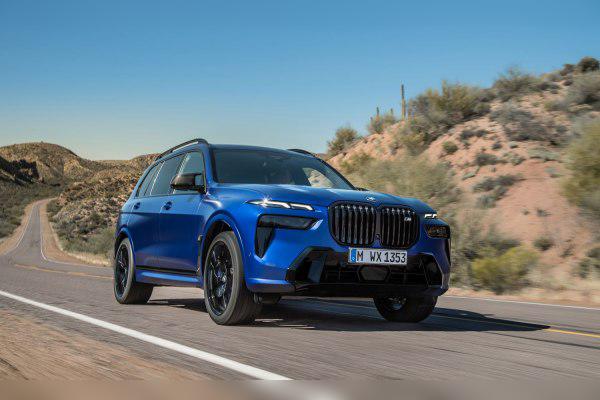
BMW S68B44A (4.4 V8) – Experiences, problems, fuel consumption, and is this finally a reliable V8?
Key points (TL;DR)
- M genetics: Unlike its predecessor (N63), the S68 carries the "S" designation, which means it was developed directly by the BMW M division, even for the “regular” M60i models.
- 48V Mild Hybrid: The electric motor is integrated into the transmission, which improves the start/stop system and smooths out turbo lag, but makes transmission repairs more complicated.
- Heat is the enemy: The “Hot-V” configuration (turbos inside the V layout) generates enormous heat – the cooling system must be flawless.
- Performance: Brutal power and torque make the heavy X7 feel light as a feather, but expect high fuel consumption in city driving.
- Maintenance: This is not an engine for saving money. It requires top-quality oil, frequent services, and preventive replacement of parts.
- No LPG: Installing LPG on this level of technology is technically extremely complicated and is strongly not recommended.
Contents
- Introduction and applications
- Technical specifications
- Reliability and maintenance
- Specific parts and systems
- Fuel consumption and performance
- Additional options and modifications
- Transmission and drivetrain
- Buying used and conclusion
Introduction and applications
The BMW S68B44A is an engine that marks the end of one era and the beginning of a new one. Introduced in 2022, this powerplant is the successor to the infamous yet beloved N63 engine. The key difference lies in the philosophy: while the N63 was a standard BMW V8, the S68 is technically derived from the M division (hence the “S” designation), even though it is installed in M Performance models such as the BMW X7 M60i (facelift).
This is a 4.4-liter V8 with two turbochargers positioned between the cylinder banks (“Hot-V”), equipped with 48-volt Mild Hybrid technology. Its task is demanding: it has to deliver supercar-level performance in the body of a massive SUV, while at the same time meeting strict Euro 6d (and future Euro 7) emission standards.
Technical specifications
| Characteristic | Value |
|---|---|
| Engine code | S68B44A |
| Displacement | 4395 cc (4.4 L) |
| Configuration | V8, Twin-Power Turbo (Hot-V) |
| Power | 390 kW (530 hp) @ 5500–6000 rpm |
| Torque | 750 Nm @ 1800–4600 rpm |
| Injection system | Direct injection (High Precision Injection, 350 bar) |
| Hybrid system | 48V Mild Hybrid (integrated into the transmission) |
| Valve timing | DOHC, Double-VANOS, Valvetronic |
Reliability and maintenance
Does this engine have a timing belt or a chain?
The S68B44A engine uses a timing chain. Since this is a completely new design based on experience with the S63 engine, BMW has reinforced the chain system. However, keep in mind that on modern BMW V8 engines the chain is located at the rear of the engine (towards the cabin/transmission), which makes any potential intervention extremely expensive (the engine has to be removed). With regular oil changes, the chain should last over 200,000 km, but any rattling noise at cold start is a signal to visit a workshop immediately.
What are the most common failures on this engine?
The S68 is still a relatively new engine (on the market since 2022), so long-term failure data is only just coming in. However, based on the architecture and its predecessors, potential weak points are:
- Cooling system: Due to the “Hot-V” configuration, heat levels are enormous. Plastic coolant junctions and hoses are prone to becoming brittle and cracking after a few years of use. Coolant leaks are something that must be monitored regularly.
- 48V hybrid system: While it improves drivability, the additional electronics and battery mean more sensors that can fail. Faults in the 48V system can immobilize the vehicle.
- Oil consumption: As with any high-performance V8, oil consumption is not necessarily a failure but a characteristic, although excessive consumption may indicate problems with oil separators (PCV valve) or valve stem seals at higher mileage.
At what mileage is the “major service” due?
On chain-driven engines there is no classic “major service” at a fixed mileage like with timing belts. However, a preventive inspection of the chain and tensioners is recommended at around 150,000 km. At that mileage it is also often necessary to replace the water pump, thermostat, and the auxiliary (serpentine) belt with its tensioners. Spark plugs and ignition coils are consumables that are replaced earlier.
How many liters of oil does this engine take and which grade is recommended?
This V8 is “thirsty” even when it comes to the oil sump. The engine takes approximately 10.5 liters of oil (the exact amount may vary slightly; always check the precise figure by VIN). Only fully synthetic oil of grade 0W-30 or 5W-30 that meets the BMW Longlife-12 FE or Longlife-17 FE+ specification is recommended. Do not skimp on oil – it is the lifeblood of this engine.
Does it consume oil between services and what amount is considered normal?
Yes, you should expect some oil consumption. For BMW V8 engines, the manufacturer often tolerates up to 0.7 liters per 1,000 km, but in practice a healthy engine should not consume more than 1 liter per 3,000–5,000 km, especially if driven aggressively. If you mostly drive in city traffic (“stop-and-go”), oil consumption may be more pronounced. Always keep a liter of oil in the trunk.
At what mileage should the spark plugs be replaced?
Due to direct injection and the two turbochargers, the spark plugs are under heavy thermal and electrical load. The recommended replacement interval is every 30,000 to 50,000 km (every second minor service). Ignoring this can lead to misfires, which can damage the coils and even the catalytic converters.
Specific parts (costs)
Does the engine have a dual-mass flywheel?
Yes, it has a dual-mass flywheel, but the situation is specific. In S68 engines in the X7, the mild-hybrid electric motor is integrated into the transmission housing, in front of the torque converter. The flywheel serves to dampen V8 vibrations before power is transferred to the transmission. Failure is rare before 200,000 km, but replacement is very expensive (depends on the market) due to the complexity of the system.
What kind of injection system does it have and are the injectors problematic?
It uses the latest generation High Precision Injection system with 350-bar pressure. Piezo injectors are extremely precise. They are generally more reliable than on older N63 engines, but they are sensitive to poor fuel quality. Symptoms of injector failure include rough running, a smell of fuel from the exhaust, and “washing” of the cylinders with fuel (which destroys the oil film). The price of a single injector is high.
Does this engine have a turbocharger (or two) and what is their lifespan?
The engine has two twin-scroll turbochargers located in the V of the engine. This allows for instant throttle response but exposes them to extreme temperatures. Lifespan depends on driving style and cooling after hard driving. Although the engine has electric water pumps that cool the turbos even after the car is switched off, it is still recommended not to shut the engine down immediately after spirited driving. With proper maintenance, the turbos can last over 150,000 km. Rebuilding is possible, but replacement with new parts (often the only option at authorized dealers) is very expensive.
Does this model have a DPF filter or an EGR valve?
Since it is a petrol engine, it does not have a DPF, but it does have a GPF (Gasoline Particulate Filter) or OPF, which is mandatory in Europe. It can become clogged if the car is driven exclusively in the city at low revs. The EGR function on these engines is often achieved through variable valve timing (VANOS), so a classic EGR valve that clogs with soot is not the primary issue, but the intake valves can accumulate carbon deposits due to direct injection.
Does this engine use AdBlue?
No. The S68B44A is a petrol engine and does not use AdBlue fluid. That is reserved exclusively for diesel engines.
Fuel consumption and performance
What is the real-world fuel consumption in city driving?
Let’s be honest: this is a 2.6-ton tank with 530 horsepower. Factory figures are optimistic. In real city driving with traffic jams, you can expect consumption between 16 and 22 liters per 100 km. The mild-hybrid system helps by shutting the engine off at traffic lights and during coasting, but physics cannot be cheated.
Is this engine “lazy” for the weight of the body it’s installed in?
Absolutely not. With 750 Nm available from just 1,800 rpm, this engine catapults the X7. It feels like you’re defying the laws of physics. The 0–100 km/h sprint takes about 4.7 seconds, which is sports car territory. There is no sluggishness; overtakes are a matter of instant decision, not long-term planning.
How does the engine behave on the highway and at what revs does it cruise at 130 km/h?
This is the natural habitat of the X7 M60i. Thanks to the 8-speed transmission and massive torque, at 130 km/h the engine is “bored” at a low ~1800–2000 rpm in eighth gear. The cabin is quiet, and fuel consumption on the open road drops to a more acceptable 10 to 12 liters, provided you maintain a steady speed.
Additional options and modifications
Is this engine suitable for LPG conversion?
In short: No. Although there are theoretically liquid-phase LPG injection (LPI) systems for direct-injection engines, installing one on the S68 (Mild Hybrid, bi-turbo, complex electronics) is risky, extremely expensive (over €2,000), and will almost certainly cause issues with the engine electronics and warranty. Buying a V8 engine implies fuel costs; if that is a problem, the diesel variant (40d) is a better choice.
How far can this engine be safely tuned (Stage 1)?
The S68 has huge potential. A Stage 1 remap (software optimization) can safely raise power to around 600–620 hp and torque to over 850 Nm without mechanical changes. However, note: New BMW models (produced after June 2020) have locked ECUs (Bosch MG1) that require sending the computer abroad (e.g. to FEMto in Finland) for unlocking before tuning. This complicates the process and increases the cost.
Transmission
Which manual and automatic transmissions are paired with this engine?
With the S68 engine in the X7 M60i you only get an 8-speed ZF automatic transmission (Steptronic Sport). A manual gearbox is not an option. This is a specific version of the ZF 8HP transmission that houses an integrated electric motor (ISG) for the 48V mild-hybrid system.
What are the most common failures of the manual and automatic transmissions?
The ZF 8HP is considered the best automatic transmission on the market. Mechanical failures are rare. The most common issues are related to electronics (mechatronics) or oil leaks from the transmission pan (which is plastic). On this hybrid version, a potential failure of the electric motor inside the transmission requires a very expensive repair because everything is integrated.
Does this model have a dual-mass flywheel and what is the cost of clutch replacement?
As mentioned, it has a vibration-damping system similar to a dual-mass flywheel. There is no conventional clutch (since it’s an automatic); instead, it uses a torque converter. If the converter fails (symptoms: fluctuating revs at constant speed, vibrations), rebuilding or replacement is expensive (depends on the market, but expect a four-figure euro amount).
At what mileage should the transmission be serviced and the oil changed?
BMW claims that the transmission oil is “lifetime”. Do not believe that. The transmission manufacturer (ZF) recommends changing the oil and filter (which is integrated into the pan) every 80,000 to 100,000 km or every 8 years. Regular oil changes are key to the longevity of the transmission, especially in a heavy vehicle like the X7.
Buying used and conclusion
When buying a used X7 with this engine, pay attention to:
- Cold start: Listen for any chain rattle in the first 3–5 seconds.
- Signs of leaks: Inspect the engine from underneath and around the turbos. The smell of burnt oil in the cabin is a bad sign.
- Service history: Oil must have been changed at a maximum of every 15,000 km. If it was changed at 30,000 km (Long Life interval), be cautious.
- Coolant: Check the level. If it’s low, there is a leak somewhere, and on a V8 engine that can be expensive to fix.
Conclusion: The BMW S68B44A is an engineering masterpiece that offers an incredible blend of comfort and brutal power. This is an engine for enthusiasts who want the best and are prepared to pay for maintaining such a machine. It is not for those who plan to save on fuel or servicing. If you maintain it regularly and don’t “push” it when cold, it will reward you with outstanding driving pleasure.
Was this content useful to you?
Your opinion helps us to improve the quality of the content.