CFPA Engine
- Engine
- 1984 cm3
- Aspiration
- Turbocharger, Intercooler
- Fuel
- Petrol (Gasoline)
- Fuel injection system
- Direct injection
- Power
- 160 hp @ 3750 rpm
- Torque
- 300 Nm
- Cylinders
- 4
- Valves
- 16, 4 per cylinder
- Cylinders position
- Inline
- Valvetrain
- DOHC
- Oil capacity
- 6.5 l
# Vehicles powered by this engine
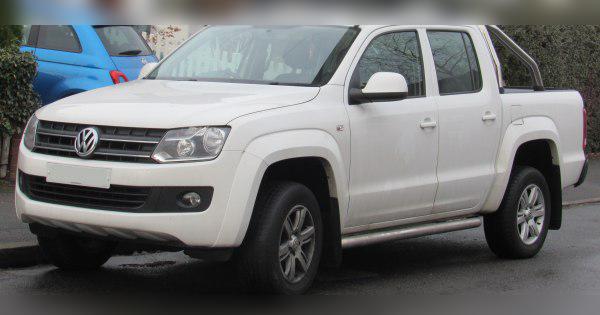
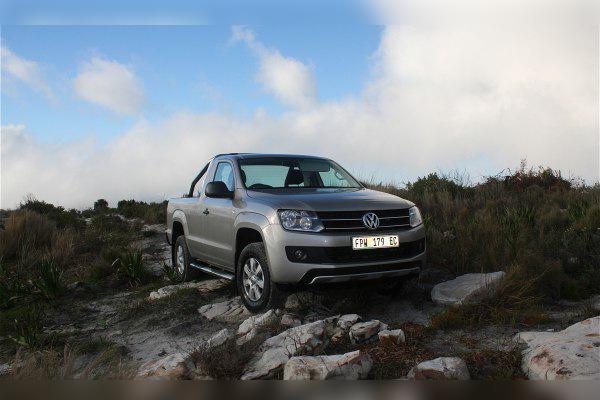
2.0 TSI (CFPA) Engine in the VW Amarok: Experiences, Problems and Maintenance
Key points in short (TL;DR)
- Pros: Significantly quieter and smoother than diesel versions, solid torque for a petrol engine (300 Nm), no complicated DPF and AdBlue systems.
- Main issues: Engine oil consumption (piston ring problem on this generation), timing chain stretch and water pump leaks.
- Fuel consumption: High. The Amarok is heavy and aerodynamically unfavorable; expect double‑digit consumption in city driving.
- Recommendation: Ideal for those who drive short distances where diesel engines suffer, or for cold climates. Not recommended for towing heavy trailers over long distances.
- Maintenance: Requires strictly changing the oil at a maximum of 10–15,000 km and preventive chain inspection.
Contents
Introduction: A petrol engine in a workhorse?
When you think of the Volkswagen Amarok, the first association is a robust TDI diesel engine. However, the engine with the code CFPA is a rare but interesting beast – a 2.0 TSI petrol with 160 horsepower. This unit belongs to the famous (and somewhat notorious) EA888 engine family. Its presence in a "heavyweight" like the Amarok is aimed at specific markets and drivers who want the refinement of a passenger car in a pickup body, or those who want to avoid the environmental complications of modern diesels. Although it may seem like a strange choice, this engine offers surprisingly good agility, but at a certain price at the fuel pump and in the workshop.
Technical specifications
| Parameter | Value |
|---|---|
| Engine displacement | 1984 cc (2.0 L) |
| Power | 118 kW (160 hp) |
| Torque | 300 Nm at 1600–4500 rpm |
| Engine code | CFPA |
| Injection type | Direct injection (TSI/FSI) |
| Induction | Turbocharger + intercooler |
Reliability and Maintenance
Timing: Chain or belt?
The CFPA engine uses a timing chain to drive the camshafts. This is a key point of this TSI generation. Although it was intended to last for the "lifetime" of the engine, in practice that is not the case. The biggest problem is the hydraulic chain tensioner. If the tensioner fails, the chain can jump a tooth, which leads to contact between pistons and valves – a catastrophic engine failure.
Symptoms: Rattling or metallic noise (as if a chain is hitting metal) on cold start during the first few seconds. If you hear this, go to a workshop immediately to replace the timing chain kit.
Oil consumption
Unfortunately, 2.0 TSI engines from this era are known for increased oil consumption. This happens due to the design of the oil control rings on the pistons, which can get clogged with carbon deposits, as well as due to issues with the PCV valve (oil vapor separator).
What is normal? VW often claims that up to 0.5 l or even 1 l per 1000 km is "within normal limits", but realistically, a healthy engine should not consume more than 0.5 to 0.8 liters per 10,000 km. If you are topping up a liter every 1000–2000 km, the engine is ready for a serious overhaul (replacement of pistons/rings).
Service intervals and fluids
Minor service: It is advisable to forget about "Long Life" intervals of 30,000 km. Due to direct injection and the thermal load on the turbo, change the oil at fixed intervals of 10,000 km to 15,000 km (or once a year).
- Oil capacity: The engine takes about 4.6 to 5 liters of oil (always check the dipstick).
- Viscosity: It is best to use 5W-30 or 5W-40 that meets the VW 502.00 or VW 504.00 specification. High‑quality synthetic oil is mandatory because of the turbocharger.
- Spark plugs: The factory interval is often 60,000 km, but for optimal operation and to protect the ignition coils, it is recommended to replace them every 40,000–50,000 km. Use only iridium or platinum plugs according to the catalog.
Most common failures
In addition to the chain and oil consumption, a frequent issue is the water pump housing. It is made of plastic and over time it cracks or deforms from heat, which leads to coolant leaks. Also, the ignition coils tend to fail, which manifests as rough engine operation and the "Check Engine" light coming on. Due to direct injection, carbon buildup on the intake valves is inevitable at higher mileage, which requires mechanical cleaning (walnut shell blasting).
Specific Parts (Costs)
Dual‑mass flywheel
Yes, this engine combined with a manual gearbox does have a dual‑mass flywheel. It is there to absorb engine vibrations before they are transmitted to the gearbox. Since this is a petrol engine, the flywheel is under less stress than on a diesel (due to lower torque and smoother operation), so it usually lasts longer. Still, replacement is a cost that falls into the "expensive" category (depending on the market).
Turbo and Injection
The engine uses a single turbocharger (usually a BorgWarner K03 or an IHI variant). The turbo is quite durable if the oil is changed regularly and the engine is not switched off immediately after hard driving. Failure symptoms are whistling, blue smoke from the exhaust and loss of power.
The injection system is direct (TSI) with high‑pressure injectors. The injectors are generally reliable, but sensitive to poor fuel quality. Replacing a full set of injectors is a very expensive job.
Emissions systems (DPF, EGR, AdBlue)
This is a major advantage of the CFPA engine. As a petrol unit, it DOES NOT HAVE a DPF filter or an AdBlue system. That means no expensive NOx sensors, AdBlue heaters or clogged particulate filters that plague diesel owners in city driving. It does have a catalytic converter and an EGR system, but EGR on petrol engines gets much less dirty and rarely causes problems compared to diesels.
Consumption and Performance
Real‑world fuel consumption
Here we come to the painful part. The Amarok weighs around 2 tons and has the aerodynamics of a brick.
- City driving: Expect consumption between 12 and 15 liters per 100 km. In heavy traffic and in winter, it can go even higher.
- Open road (secondary roads): If you are very gentle on the throttle (up to 80 km/h), you can bring it down to 9–10 l/100 km.
- Motorway: At 130 km/h, consumption is around 11–13 l/100 km.
Is the engine "lazy"?
With 160 hp and 300 Nm, the engine is not lazy when the vehicle is unladen. Acceleration is linear and the engine revs willingly, which gives a feeling of agility in the city. However, if you plan to load 800 kg in the bed or tow a trailer, you will feel the lack of torque compared to the 2.0 TDI or 3.0 V6 TDI engines. You have to rev the petrol engine high to pull the load, while a diesel does it effortlessly at low revs.
On the motorway at 130 km/h the engine runs at somewhat higher revs than a diesel, but is still quieter. Overtaking requires downshifting (with the manual gearbox).
Additional Options and Modifications
LPG conversion
Is it possible? Yes, but it is complicated and expensive. Since this is a direct‑injection engine (injectors are in the cylinder), you cannot install a regular sequential LPG system. You need a system designed for TSI/FSI engines that either uses "additional petrol injection" (for example, 80% LPG and 20% petrol to cool the injectors) or a liquid LPG injection system via the petrol injectors. Installing such systems falls into the "very expensive" category, so the cost‑effectiveness is questionable unless you cover very high mileage.
Chip Tuning (Stage 1)
This engine is an excellent base for tuning. Since it is a 2.0 TSI unit that is factory "detuned" to 160 hp for longevity in a commercial vehicle, a Stage 1 remap can safely raise it to 200–210 hp and about 350–360 Nm. This drastically changes the character of the vehicle and makes it much livelier. However, keep in mind that more power puts additional stress on the clutch and brakes, which already have a tough job on the Amarok.
Gearbox
Manual and automatic gearbox
The CFPA engine in the Amarok is most commonly paired with a 6‑speed manual gearbox. This is a robust gearbox designed for commercial use. The gear ratios are calculated so that first gear is very short (to imitate a low‑range gear when starting under load), while sixth is an "overdrive" for fuel savings.
The automatic gearbox (8‑speed ZF) is more common with the more powerful diesels, but if you come across an automatic, it is usually the extremely reliable ZF 8HP, considered one of the best automatic transmissions on the market.
Gearbox issues and maintenance
- Manual: The most common problem is the clutch kit. Due to the weight of the vehicle, the clutch wears out faster than on a Passat or Golf, especially if it often starts uphill or tows a trailer. Replacing the clutch kit with the dual‑mass flywheel is a significant expense. VW says the oil in the manual gearbox is "lifetime", but it is recommended to replace it every 80,000–100,000 km.
- Automatic: If you are lucky enough to have the automatic, it is more reliable than the clutch on the manual. It requires an oil and filter change every 60,000–80,000 km. Failures are rare and mostly related to electronics (mechatronics) at very high mileage.
Buying used and Conclusion
Before buying an Amarok with the 2.0 TSI engine, pay attention to the following:
- Cold start: The engine must be completely cold. Listen for chain rattling during the first 3–5 seconds of operation.
- Exhaust smoke: Rev the engine when it is at operating temperature. Bluish smoke or excessive soot on the tailpipe is a sure sign that the engine is burning oil.
- Signs of leaks: Check under the intake manifold for traces of reddish residue (coolant from the water pump).
Final verdict
The Volkswagen Amarok 2.0 TSI (CFPA) is a specialized tool for a specific type of buyer. It is intended for someone who wants comfort, quiet operation and the image of a VW pickup, but does not drive more than 15,000 km per year and mostly drives the vehicle unladen. If you need a workhorse for heavy loads and long trips, a diesel is a better choice due to its torque and fuel consumption. However, if you want to avoid the expensive repairs of DPFs, injectors and EGR systems that come with modern diesels, and you are prepared to pay more for fuel, this petrol engine can be a surprisingly good and fun choice.
Was this content useful to you?
Your opinion helps us to improve the quality of the content.