EA888 evo4 / DSFB Engine
- Engine
- 1984 cm3
- Aspiration
- Turbocharger, Intercooler
- Fuel
- Petrol (Gasoline)
- Fuel injection system
- Direct injection
- Power
- 300 hp
- Torque
- 400 Nm
- Cylinders
- 4
- Valves
- 16, 4 per cylinder
- Cylinders position
- Inline
- Valvetrain
- DOHC
- Oil capacity
- 5.7 l
- Coolant
- 10 l
- Systems
- Start & Stop System
# Vehicles powered by this engine
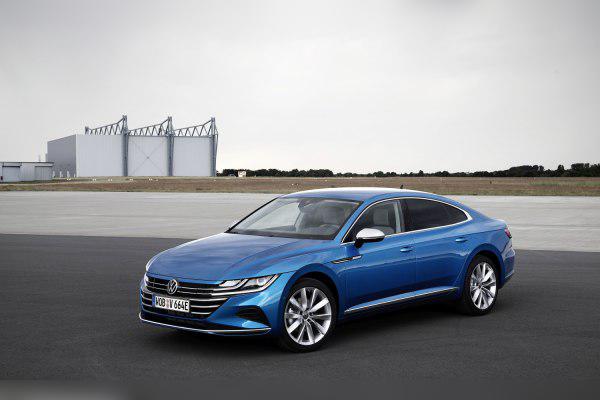
Volkswagen 2.0 TSI (300 hp) EA888 evo4 – Experiences, problems, fuel consumption and buying guide
Key points in short (TL;DR)
- Performance: With 300 hp and 400 Nm, this is a serious sports engine that turns the Arteon into a true high‑speed cruiser.
- Timing drive: Uses a chain. On the Evo4 generation, timing chain stretch issues are largely resolved, but regular oil changes are crucial.
- Fuel consumption: Not for those counting every penny. In city driving it easily goes over 11–12 liters.
- Maintenance: Requires strict adherence to service intervals for the gearbox (DSG) and 4MOTION drivetrain. Failures are expensive.
- GPF filter: Equipped with a gasoline particulate filter (GPF), which means short city trips can lead to clogging.
- Recommendation: An excellent choice for drivers who want Golf R performance in a more elegant package, provided they have the budget for premium maintenance.
Contents
- Technical specifications
- Reliability and maintenance
- Specific components (costs)
- Fuel consumption and performance
- Additional options and modifications
- Gearbox and drivetrain
- Buying used and conclusion
Introduction: The heart of Arteon R-Line and 4Motion models
The EA888 evo4 engine (code DSFB in this iteration) represents the pinnacle of Volkswagen’s development of two‑liter turbo petrol engines. This is not an ordinary engine from a “people’s car”; it is a power unit installed in performance models such as the Arteon (2020 facelift) with 300 horsepower. It bridges the gap between standard 2.0 TSI engines with 190 hp and the brutal “R” models with 320 hp. It is important to note that this is a high‑tech engine with injection pressure up to 350 bar, designed to deliver explosive power while meeting strict Euro 6d standards.
Technical specifications
| Parameter | Value |
|---|---|
| Displacement | 1984 cc (2.0 L) |
| Power | 221 kW (300 hp) |
| Torque | 400 Nm |
| Engine code | EA888 evo4 / DSFB |
| Injection type | Direct injection (TSI) – up to 350 bar |
| Charging system | Single‑scroll turbocharger, intercooler |
Reliability and maintenance
Timing system: Chain or belt?
This engine uses a timing chain. Unlike the notorious earlier generations (EA888 Gen 2), Evo4 has a significantly improved chain and tensioner system. Still, the chain is not eternal. Stretching is possible at higher mileage (over 150,000–200,000 km) or if oil changes are too infrequent. A symptom of trouble is a metallic rattling on cold start that lasts longer than a few seconds.
Most common failures
Although robust, an engine with this level of power is subjected to high loads. The most common issues include:
- Thermostat and water pump housing: The thermal management module is complex and made of plastic. Coolant leaks are common. Symptoms are dropping coolant level or engine overheating.
- Oil leaks: Often occur at the timing cover or crankshaft seal.
- GPF sensors: Pressure sensors on the particulate filter can trigger false alarms or activate the “Check Engine” light.
- Carbon buildup: As a direct‑injection engine, the intake valves are prone to deposits, which leads to rough idle and power loss at higher mileage.
Major and minor service
Since the engine has a chain, a classic “major service” (as with a belt) is not done preventively at a fixed mileage; instead, the condition of the chain is checked. However, the serpentine belt and tensioners should be replaced at around 100,000–120,000 km. Minor service (oil and filters) is factory‑recommended at 30,000 km (Long Life), but for a 300 hp engine that is disastrous. The recommendation is to change the oil every 10,000 to 15,000 km at most.
Oil and oil consumption
The engine holds approximately 5.7 liters of oil. For the Evo4 generation, VW often recommends very thin 0W‑20 oil (VW 508.00 standard) for fuel economy. However, many experts and enthusiasts switch to 5W‑30 (VW 504.00) for better protection at high temperatures, especially if the car is driven hard. Oil consumption is reduced on this generation, but up to 0.5 liters per 5,000 km is considered acceptable, particularly if the engine is often run at high revs.
Spark plugs and injectors
Spark plugs on such a powerful turbo petrol wear out faster. The recommended replacement interval is every 40,000 to 60,000 km. If the car is tuned, the interval should be halved. Use only high‑quality iridium spark plugs (NGK or Bosch).
Specific components (costs)
Dual‑mass flywheel
Yes, this model (paired with a DSG gearbox) has a dual‑mass flywheel. It is necessary to absorb 400 Nm of torque. Its lifespan depends on driving style (hard launches destroy it), but it usually lasts between 150,000 and 200,000 km. Replacement is expensive (varies by market).
Injection system and injectors
The Evo4 uses high‑pressure direct injection (up to 350 bar). Injectors are generally reliable but sensitive to poor fuel quality. A faulty injector manifests as jerking, rough running or a “misfire” error on a cylinder. Replacing a single injector is quite expensive (varies by market).
Turbocharger
The engine uses a single but large turbocharger (usually Continental or Garrett). Service life is long if the engine is properly warmed up and cooled down. There are not two turbos, but this single unit is very efficient.
Emission systems (GPF, EGR, AdBlue)
This petrol engine does not have AdBlue (that’s for diesels). However, it is equipped with a GPF (Gasoline Particulate Filter), the petrol equivalent of a DPF. If you drive only in the city, it can become clogged, although GPF regenerates faster and more easily than a diesel DPF thanks to the higher exhaust gas temperatures of petrol engines. An EGR valve is present and can get dirty, but it is a smaller issue than on diesels.
Fuel consumption and performance
City driving
Let’s be honest – 300 horses need to be fed. In the heavy Arteon body with 4MOTION, real‑world city consumption ranges from 11 to 14 liters/100 km, depending on traffic and how heavy your right foot is.
Is the engine “lazy”?
Absolutely not. With 0–100 km/h in about 5.5 seconds (for 4MOTION models), this engine delivers sports‑car performance. Throttle response is instant, and turbo lag is minimal thanks to the modern turbo design and the DSG gearbox, which quickly selects the right gear.
Highway
This is the engine’s natural habitat. On the highway it is in its element. At 130 km/h in 7th gear, the engine spins at relatively low revs (around 2,200–2,400 rpm), enabling comfortable cruising. Fuel consumption on the open road is around 7.5 to 9 liters/100 km.
Additional options and modifications
LPG conversion
Technically, LPG installation is possible, but it requires “direct injection” liquid‑phase LPG systems that are very expensive (varies by market) and complex to calibrate. Since the engine must also use a certain percentage of petrol to cool the injectors, the savings are not as dramatic as with older engines. For this type of car, LPG is generally not recommended.
Remap (Stage 1)
EA888 engines are legendary for their tuning potential. A Stage 1 remap, without any mechanical changes, safely raises power to about 340–350 hp and torque to 450–470 Nm. The engine and gearbox handle this well, provided they are regularly serviced and 98 or 100 octane fuel is used.
Gearbox and drivetrain
Type of gearbox
With this engine in the Arteon (2020 facelift), you get exclusively a DSG dual‑clutch automatic gearbox (usually code DQ381, 7 speeds, wet clutches). A manual gearbox is not offered with this 300 hp variant.
Gearbox maintenance and failures
The DQ381 is more reliable than older versions, but it requires oil and filter changes every 60,000 km (some say up to 120,000 km, but for longevity stick to 60k). The most common failure is the mechatronics unit (the electronic‑hydraulic brain of the gearbox), which can fail and cause harsh shifting or loss of gears. Repairing the mechatronics is expensive.
Clutch replacement
The clutch pack is located inside the gearbox and is oil‑cooled. It lasts a long time (often over 200,000 km), but when replacement is needed, it is a complex job that is very expensive (varies by market).
Buying used and conclusion
When buying an Arteon with this engine, make sure to check the following:
- Cold start: Listen for chain rattle during the first 3–5 seconds.
- Coolant leaks: Look under the intake manifold for traces of pink coolant (thermostat housing).
- DSG service history: If the gearbox oil has not been changed on time, skip that car.
- Haldex coupling (for 4MOTION): Check whether the oil in the Haldex coupling (all‑wheel drive) has been changed. If not, the system can fail and the car will be left with front‑wheel drive only.
Conclusion
The VW 2.0 TSI (300 hp) EA888 evo4 is a fantastic feat of engineering. It offers sports‑car performance with the usability of a family sedan. However, this is not an engine for those who want to “just drive” without investing in it. It requires quality fuel, regular and high‑quality maintenance, and a careful owner. If you are willing to pay for that pleasure, you will get one of the best all‑round engines on today’s market.
Was this content useful to you?
Your opinion helps us to improve the quality of the content.