DJM Engine
- Engine
- 1498 cm3
- Aspiration
- Naturally aspirated engine
- Fuel
- Petrol (Gasoline)
- Power
- 116 hp @ 6000 rpm
- Torque
- 150 Nm @ 4000 rpm
- Cylinders
- 4
- Valves
- 16, 4 per cylinder
- Cylinders position
- Inline
- Systems
- Particulate filter
# Vehicles powered by this engine
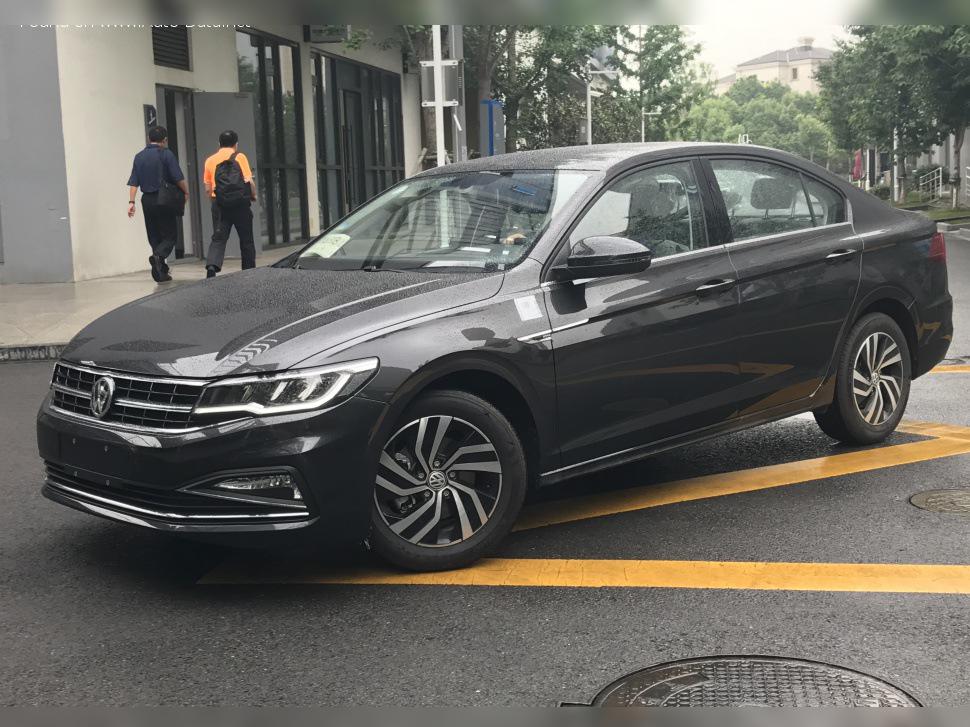
VW 1.5 MPI (DJM) 116 HP: Experiences, Problems and Maintenance – Reliable “Chinese” or Slouch?
Key points (TL;DR)
- Simple design: Naturally aspirated engine without a turbo means fewer expensive failures down the line.
- Performance: With 150 Nm of torque, this is an engine for relaxed driving; overtaking requires high revs.
- Fuel consumption: Economical in the city and on country roads, but “thirsty” on the highway due to the lack of a sixth gear (on manuals) or short gear ratios.
- LPG: An excellent candidate for LPG conversion thanks to indirect injection (in most variants of this series).
- Gearbox: Often paired with a conventional automatic (Aisin), which is more durable than dry-clutch DSG gearboxes.
- Recommendation: Ideal for taxi drivers and users who cover a lot of kilometers in urban conditions.
Contents
- Introduction and applications
- Technical specifications
- Reliability and maintenance
- Specific parts and costs
- Fuel consumption and performance
- Additional options and modifications
- Gearbox: Manual and automatic
- Buying used and conclusion
Introduction and applications
The engine with the code DJM belongs to the newer generation of Volkswagen power units (EA211 family), but with one big “but” – it was primarily designed for specific markets such as China, where it was installed in models like the VW Bora IV. Unlike the European TSI engines that dominate the market, the DJM is a naturally aspirated petrol engine with a displacement of 1.5 liters.
Its purpose is not performance, but simplicity, low production cost and longevity. This is an engine that brings back the “old-school” mechanical feel – no complicated turbochargers, yet it offers a decent 116 HP, which on paper is perfectly fine, but in practice requires some adjustment of your driving style.
Technical specifications
| Parameter | Value |
|---|---|
| Displacement | 1498 cc (1.5 L) |
| Power | 85 kW (116 HP) at 6000 rpm |
| Torque | 150 Nm at 4000 rpm |
| Engine code | DJM (EA211 series) |
| Fuel type | Petrol (Gasoline) |
| Induction | Naturally aspirated |
| Injection | MPI (Multi-Point Injection) – most common |
Reliability and maintenance
Does this engine have a timing belt or a chain?
The DJM engine, as part of the EA211 family, uses a timing belt. This is a big improvement over the older EA111 engines that had problematic chains. The belt is reinforced and designed to last a long time.
At what mileage should the major service be done?
The factory recommendation is often optimistic (inspection at 240,000 km), but real-world practice and common sense suggest otherwise. The major service (replacement of belt, tensioner, water pump) should be done between 150,000 km and 180,000 km or every 8 to 10 years, whichever comes first. If the car is driven exclusively in heavy city traffic (taxi use), the interval should be shortened to 120,000 km.
What are the most common failures on this engine?
This is a very robust engine, but not completely immune to minor issues:
- Thermostat and water pump housing: A common weak point of EA211 engines. The housing is plastic and coolant leaks can occur. Symptoms include a dropping coolant level or traces of crystallization on the engine block.
- Oil consumption: Although not as critical as on older TSI engines, after 150,000 km slight oil consumption may appear due to valve stem seals or piston rings, especially if oil was changed at long intervals.
- Sensors: Occasional issues with the camshaft position sensor or lambda sensor.
Oil: Quantity and grade
The sump holds approximately 4.0 liters of oil (always check the dipstick when changing). The recommended grade is 5W-30 or 0W-20 (for newer model years), meeting VW standards (VW 502 00 / 504 00).
Does it burn oil?
Normal consumption is up to 0.3 liters per 10,000 km. If the engine consumes more than 0.5 liters per 1,000 km, this indicates a mechanical problem (rings or valve stem seals). Regular oil changes every 10,000–15,000 km (and not at 30,000 km) drastically reduce the chance of this issue.
Spark plugs
Spark plugs should be replaced every 60,000 km. Use only iridium or platinum plugs recommended by the manufacturer (NGK or Bosch), as poor-quality plugs can damage the ignition coils.
Specific parts (Costs)
This is where we come to the biggest advantage of this engine – there are no expensive components that usually give headaches to diesel owners or modern turbo-petrol owners.
- Dual-mass flywheel: NONE. This engine uses a conventional solid flywheel. This means the clutch kit is significantly cheaper to replace.
- Turbocharger: NONE. One less worry. No turbo overhauls, no wastegate issues.
- Injectors (Fuel injection): The system is usually MPI (port injection into the intake manifold), which means the injectors are simple, cheap and very resistant to poorer fuel quality. They rarely fail.
- DPF and EGR: No DPF (that’s for diesels). It has a catalytic converter. Newer models may have a GPF (gasoline particulate filter), but on MPI engines it very rarely gets clogged because combustion does not produce as much soot as with direct injection. There is an EGR valve and it can get dirty, but cleaning is routine and not expensive.
- AdBlue: NONE. This is a petrol engine.
Fuel consumption and performance
Is the engine “lazy”?
Honestly – yes, especially by today’s standards. With 150 Nm of torque available only at 4000 rpm, this engine needs to be “revved” if you want brisk acceleration. In the relatively heavy Bora body (similar to a Jetta), you will feel the lack of power on uphill sections or when the car is fully loaded. For city driving it is perfectly adequate, but overtaking on country roads requires planning and shifting down.
Real-world fuel consumption
- City driving: Expect between 7.5 and 9.5 l/100 km, depending on traffic and how heavy your right foot is. The automatic can add about 0.5 L to this figure.
- Open road (country roads): This is where the engine shines; consumption can drop to 5.5–6.0 l/100 km.
- Highway (130 km/h): Due to the lack of a turbo and limited power, the engine runs at higher revs (often around 3500 rpm). Consumption then rises to about 7.0–8.0 l/100 km, and cabin noise becomes noticeable.
Additional options and modifications
LPG conversion
If your engine version uses an MPI system (which the DJM usually does), this is a perfect engine for LPG. Installation is simple, inexpensive (standard sequential system) and the engine handles LPG very well. This is a winning combination for taxi drivers. Check the intake manifold – if the injectors are on the manifold and not directly in the cylinder head, you’re good to go.
Remapping (Stage 1)
Forget about it. Remapping a naturally aspirated petrol engine is a waste of money. The gain is negligible (3 to 5 HP), which you won’t feel in real driving. The only thing you might get is a slightly sharper throttle response, but the power remains the same.
Gearbox
Types of gearboxes
With the DJM engine in the VW Bora IV (China), there are usually two options:
- Manual gearbox (5 or 6 speeds): Precise, with the typical Volkswagen feel.
- Automatic gearbox (6-speed Aisin): This is a conventional “Tiptronic” automatic with a torque converter.
Most common gearbox issues
Manual: Very reliable. Failures are rare, usually limited to oil leaks at the driveshaft seals at high mileage. Clutch life depends on the driver, but typically exceeds 150,000 km.
Automatic (Aisin): This is excellent news. This gearbox is more reliable than the DSG gearboxes (DQ200) fitted to similarly powered European models. There are no problematic mechatronics or dual clutches that wear out quickly. The main “failure” is actually lack of maintenance.
Gearbox service
On the automatic gearbox, the oil should be changed every 60,000 km. Although manufacturers often claim it is “fill for life”, this is not true. Fresh oil protects the valve body and clutch packs inside the gearbox. The cost of replacement is moderate (varies by market, but is not excessively expensive).
Buying used and conclusion
When buying a used car with the DJM engine, pay attention to the following:
- Noise on cold start: The engine should run smoothly. If you hear knocking until it warms up, this may indicate issues with the hydraulic lifters or piston assembly.
- Coolant: Check around the thermostat housing (on the right side of the engine when viewed from the front) for pink traces of leakage.
- Diagnostics: Check for any error codes related to lambda sensors or misfires.
Conclusion:
The VW 1.5 DJM (116 HP) is an engine for the rational buyer. If you want a car that will get you from point A to point B cheaply, that won’t break down often and that you can maintain easily (or run on LPG), this is a great choice. However, if you enjoy spirited driving, like quick overtakes and often drive on the highway, this engine will disappoint you with its sluggishness. This is a “workhorse”, not a racehorse.
Was this content useful to you?
Your opinion helps us to improve the quality of the content.