CFHF, CLCA Engine
- Engine
- 1968 cm3
- Aspiration
- Turbocharger, Intercooler
- Fuel
- Diesel
- Fuel injection system
- Diesel Commonrail
- Power
- 110 hp @ 4200 rpm
- Torque
- 280 Nm
- Cylinders
- 4
- Valves
- 16, 4 per cylinder
- Cylinders position
- Inline
- Valvetrain
- DOHC
- Oil capacity
- 4.3 l
- Systems
- Particulate filter
# Vehicles powered by this engine

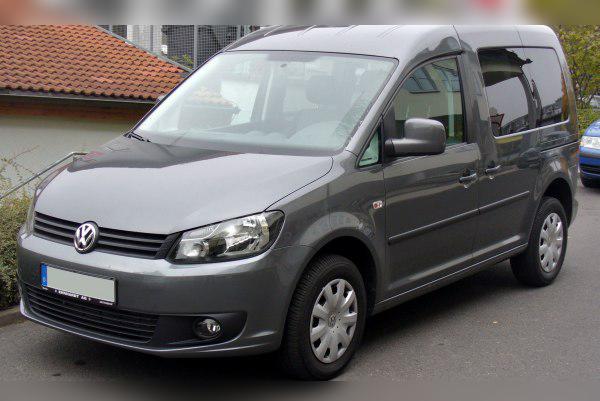
2.0 TDI (CFHF, CLCA) 110 HP: Experiences, problems, fuel consumption and maintenance
Key points (TL;DR)
- Reliability: This is a “detuned” version of the stronger 2.0 TDI engine, which means it is mechanically less stressed and extremely durable.
- Biggest issue: The EGR valve and EGR cooler are the main weak points of this generation (EA189).
- 4MOTION: On Caddy models with all-wheel drive, regular maintenance of the Haldex clutch is essential.
- Injection: Uses a Bosch Common Rail system, which is far more reliable than the old “Pumpe-Düse” systems.
- Recommendation: An excellent choice for those who find the 1.6 TDI too weak but want the longevity of the 2.0 block. Ideal for work vehicles.
- Fuel consumption: Slightly higher due to the Caddy’s aerodynamics and 4x4 drivetrain, but still acceptable.
- AdBlue: These engine codes (Euro 5) usually do not have a factory AdBlue system, which is a big plus for maintenance.
Contents
- Introduction and applications
- Technical specifications
- Reliability, maintenance and failures
- Specific parts and costs
- Fuel consumption and performance
- Tuning and modifications
- Gearbox and drivetrain
- Buying used and conclusion
Introduction: The golden middle ground for the Caddy
Engines with codes CFHF and CLCA belong to the well-known EA189 family of 2.0 TDI engines with Common Rail injection. They were primarily installed in the VW Caddy III (facelift) from 2010 to 2015. With an output of 110 HP (81 kW), these engines represent the “sweet spot” or golden middle ground.
Why are they important? Because they are basically identical to the more powerful 140 HP versions, but are limited to 110 HP by software (and sometimes hardware, e.g. a smaller turbo). In practice, this means that the engine components are overengineered for the power they deliver, resulting in great durability. The CFHF version is most often paired with 4MOTION all-wheel drive, while CLCA is often found in specific variants (sometimes even without balance shafts, which is a plus for reliability).
Technical specifications
| Parameter | Value |
|---|---|
| Engine displacement | 1968 cc |
| Power | 81 kW / 110 HP |
| Torque | 280 Nm at 1750–2750 rpm |
| Engine codes | CFHF, CLCA |
| Injection type | Common Rail (Bosch) |
| Charging | Turbocharger (VGT) with intercooler |
| Emission standard | Euro 5 |
Reliability and maintenance
Belt or chain?
The CFHF and CLCA engines use a timing belt for the valvetrain. This is standard for Volkswagen diesel engines of this generation. The oil pump is driven by a separate belt or a hex shaft (depending on the exact sub-version of the sump and oil pump), but in general these engines have solved the oil pump issues that plagued the older 2.0 TDI PD engines.
Major service and oil change
The factory interval for the major service (replacement of timing belt, tensioner and water pump) is often listed at 210,000 km. However, experienced mechanics and real-world practice suggest shortening this interval.
- Recommended major service interval: Every 150,000 to 160,000 km or 5–7 years of age. The water pump is a sensitive point, and if it starts leaking or seizes, it can cause catastrophic damage, so it is replaced preventively.
- Oil quantity and type: The engine takes about 4.3 liters of engine oil. You must use 5W-30 oil that meets the VW 507.00 specification. This spec is crucial because of the DPF filter (low-ash oil).
Oil consumption
These engines are known to be able to consume a little oil, but that should not be alarming. Consumption of up to 0.5 liters per 10,000 km is perfectly acceptable, especially if the car is driven under load or on the motorway. If consumption exceeds 1 liter per 2–3 thousand kilometers, this indicates a problem with the piston rings or the turbocharger.
Injectors
Unlike the older Siemens piezo injectors that caused all sorts of trouble, these engines use Bosch electromagnetic (solenoid) injectors. They are extremely durable. Their service life is often over 250,000–300,000 km. Symptoms of bad injectors include smoke on cold start, rough idle and increased fuel consumption. The advantage is that these injectors can be refurbished, which is cheaper than buying new ones.
Most common failures
EGR valve and EGR cooler: This is by far the most common failure. Soot builds up in the valve, or the EGR cooler starts leaking (loss of coolant). Symptoms include the “Check Engine” light or the glow plug warning (spiral) coming on, and loss of power. Replacement is not cheap, but a permanent solution is often to delete the EGR (software and hardware), where the law allows it.
CP4 high-pressure pump: Especially in earlier versions, Bosch CP4 pumps are sensitive to poor fuel quality. If the pump seizes, it sends metal shavings through the entire system, destroying the injectors. This is not as widespread as with some other brands, but it does happen.
Specific parts (costs)
Dual-mass flywheel
Yes, it has one. Since this is a 2.0 engine with 280 Nm of torque, and often paired with 4MOTION all-wheel drive, a dual-mass flywheel is standard. Its lifespan is usually between 150,000 and 200,000 km, depending on driving style. Symptoms include rattling when switching the engine off, vibrations in the clutch pedal or knocking at idle. The cost of replacement (clutch kit + flywheel) falls into the expensive category (depends on the market).
Turbocharger
The engine uses a single VGT turbocharger. It is not heavily stressed because the engine produces only 110 HP from 2.0 liters of displacement. With regular oil changes and proper cooldown after fast driving, the turbo can last as long as the engine. Failures are most often related to the actuator (vacuum part) or clogged variable geometry, which can be solved by cleaning.
DPF and AdBlue
This model (Caddy III facelift) has a DPF filter. Problems arise if it is driven exclusively in the city (stop-and-go delivery driving). Symptoms include frequent regenerations (raised idle speed, radiator fan running after the engine is switched off). If it gets clogged, professional cleaning or replacement is required.
AdBlue: The CFHF and CLCA engines are Euro 5 generation. In 99% of cases on Caddys of this model year they DO NOT have an AdBlue system. This is a huge advantage because there are no issues with AdBlue tank heaters, pumps and urea injectors that plague newer models (Caddy 4 / Euro 6).
Fuel consumption and performance
Real-world fuel consumption
The Caddy is a tall vehicle (a “box”), and the 4MOTION drivetrain adds weight and friction.
- City driving: Expect between 7.5 and 9.0 liters/100 km, depending on whether the vehicle is empty or loaded.
- Country roads: This is where it is most economical, around 5.5–6.0 liters/100 km.
- Motorway (130 km/h): Due to aerodynamics, consumption rises to about 7.0–8.0 liters/100 km.
Is the engine “sluggish”?
For an empty Caddy, 110 HP and 280 Nm is quite enough for smooth driving. However, a Caddy Maxi with 4MOTION and a load can feel sluggish when overtaking or on long climbs. It is not dangerously slow, but it does require frequent gear changes. It is not as lively as the 140 HP version.
Motorway driving
With the 6-speed manual gearbox, at 130 km/h the engine runs at about 2,300–2,500 rpm (depending on the final drive ratio on 4MOTION versions). This is a comfortable range, the engine is not noisy, but you do hear wind noise due to the shape of the body.
Additional options and modifications
Chiptuning (Stage 1)
This is an engine that loves remapping. Since the CFHF/CLCA is basically a software-“choked” 2.0 TDI 140 HP, with a simple Stage 1 remap the power can be safely raised to 140–150 HP and torque to 320–340 Nm.
This drastically changes the character of the vehicle, especially on heavy Caddy Maxi versions. If the engine, turbo and clutch are healthy, this is a highly recommended modification that can even reduce fuel consumption in normal driving.
Gearbox and drivetrain
Types of gearboxes
- 6-speed manual: The most common choice with 4MOTION. Code 02Q or similar. Very robust.
- DSG 6 (DQ250): Automatic dual-clutch gearbox (wet clutch). Installed on some variants.
Gearbox failures and maintenance
Manual gearbox: Very reliable. Failures are rare, usually gearbox bearings at high mileage. An oil change in the gearbox is recommended every 100,000 km, even though VW says it is “lifetime fill”.
DSG gearbox: Requires oil and filter changes strictly every 60,000 km. If this is followed, it lasts a long time. If not, the mechatronics (expensive) or clutches can fail.
4MOTION (Haldex clutch): This is critical for owners of 4x4 models. The Caddy III (facelift) uses 4th-generation Haldex. The oil in the Haldex clutch must be changed every 3 years or 60,000 km! If this is neglected, the Haldex pump fails and you lose drive to the rear wheels (the car becomes front-wheel drive only). Pump repair is expensive.
Buying used and conclusion
When buying a Caddy with the CFHF or CLCA engine, pay attention to:
- Cold start: The engine must start immediately, without long cranking and without a cloud of white smoke.
- Flywheel noise: Listen for metallic knocking while the car is idling, and whether the sound changes when you press the clutch.
- Coolant level: Check whether the expansion tank is full. If coolant is missing, suspect the EGR cooler or water pump.
- 4MOTION service history: Ask for proof that the oil in the Haldex clutch has been changed.
Final verdict
The 2.0 TDI 110 HP engine in the Caddy is a workhorse without too much drama. It is a much better choice than the 1.6 TDI for this body style, because it offers greater reliability and handles loads more easily, while fuel consumption is only marginally higher. If you find an example with a proper service history, especially one without an AdBlue system, you have a vehicle that can easily cover 500,000+ km with regular maintenance.
Was this content useful to you?
Your opinion helps us to improve the quality of the content.