CXBA, CXBB Engine
- Engine
- 1803 cm3
- Aspiration
- Turbocharger, Intercooler
- Fuel
- Petrol (Gasoline)
- Fuel injection system
- Direct injection
- Power
- 168 hp @ 4500 rpm
- Torque
- 270 Nm @ 1600 rpm
- Cylinders
- 4
- Valves
- 16, 4 per cylinder
- Cylinders position
- Inline
- Oil capacity
- 5.7 l
- Systems
- Start & Stop System
# Vehicles powered by this engine
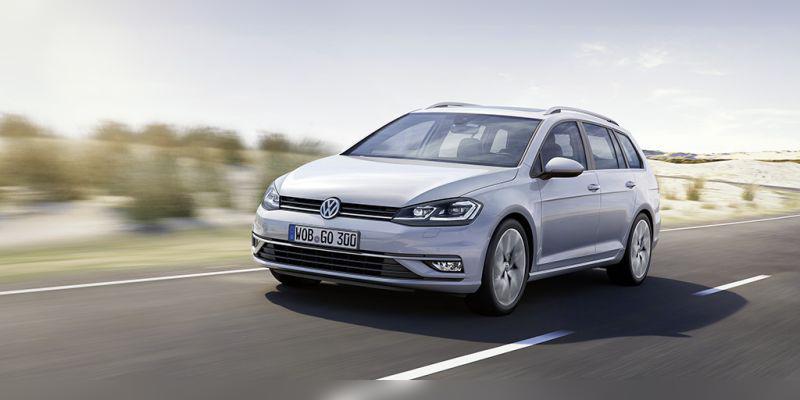
1.8 TSI (CXBA, CXBB) – Experiences, issues, fuel consumption and maintenance
Key points (TL;DR)
- Generation: Belongs to the EA888 Gen 3 family – significantly more reliable than the notorious older 1.8 TSI/TFSI engines (lower oil consumption).
- Biggest downside: The thermostat housing and water pump are made of plastic and will almost certainly start leaking sooner or later.
- Drivetrain: In this configuration it comes with 4MOTION all-wheel drive, which means excellent traction, but also higher fuel consumption and more expensive maintenance (Haldex).
- Potential: The engine is factory "detuned" to 168 PS (170 HP), but has huge potential for remapping because it is mechanically very similar to the more powerful 2.0 TSI versions.
- Recommendation: An excellent choice for drivers who want petrol power and the safety of 4x4 drive, but do not cover mileages that justify a diesel.
Contents
- Introduction and applications
- Technical specifications
- Reliability and maintenance
- Specific parts (costs)
- Fuel consumption and performance
- Additional options and modifications (LPG, tuning)
- Gearbox and drivetrain
- Buying used and conclusion
Introduction and applications
The engines designated CXBA and CXBB are Volkswagen’s attempt to offer the ideal middle ground between economical 1.4 TSI engines and sporty GTI (2.0 TSI) variants. This is the third generation (Gen 3) of the renowned yet controversial EA888 engine family.
It was primarily installed in the Volkswagen Golf VII Variant (estate) Facelift (from 2017 onwards), specifically in models intended for markets that prefer petrol engines with all-wheel drive (e.g. Alltrack versions or certain Highline trims). These engines are particularly common on North American market models imported into Europe, but are also found in European specifications. It is important to note that this 168 PS version (often listed as 170 HP) was designed to be flexible and durable rather than a racing machine, even though it shares its DNA with much more powerful units.
Technical specifications
| Parameter | Data |
|---|---|
| Displacement | 1803 cc (1.8 L) |
| Power | 125 kW (168–170 PS) |
| Torque | 270 Nm at 1600–4200 rpm |
| Engine codes | CXBA, CXBB (EA888 Gen 3) |
| Injection type | Direct injection (TSI/FSI) |
| Forced induction | Turbocharger (IHI IS12), intercooler |
| Camshaft drive | Timing chain |
Reliability and maintenance
Does this engine have a timing belt or a chain?
This engine uses a timing chain. Unlike older generations (Golf 5/6) where the chain was "made of glass", the system here is significantly improved. Still, the chain is not eternal. It is recommended to check the condition of the chain and tensioner using diagnostics or visually after around 150,000 km. Chain stretch can manifest as metallic rattling on cold start that lasts a few seconds.
What are the most common failures on this engine?
The biggest "weak point" of EA888 Gen 3 engines is the thermostat and water pump module. It is made of plastic that deforms over time due to heating and cooling cycles, which leads to coolant leaks. The symptom is disappearing coolant without visible puddles under the car (until it becomes critical) or the smell of evaporated coolant under the bonnet.
Another common issue is the PCV valve (oil separator). When it fails, the engine may start consuming oil, whistle while running, or blow out the crankshaft seal due to excessive crankcase pressure.
At what mileage is the major service done?
Since the engine has a chain, there is no classic "major service" (timing belt replacement) at a fixed interval. However, the serpentine belt and its pulleys should be replaced at around 100,000–120,000 km. The chain is replaced only if it becomes noisy or if diagnostics show excessive phase deviation (usually after 200,000 km with good maintenance).
Oil: quantity, grade and consumption
The sump holds approximately 5.7 litres of engine oil (always buy 6 litres). The recommended grade is usually 5W-30 or 0W-20 (depending on year and market, check the label, VW 504.00/507.00 or the newer 508.00 standard).
Oil consumption: Gen 3 engines have solved the catastrophic oil consumption problem that Gen 2 had (due to bad piston rings). Still, consumption of 0.3 to 0.5 litres per 10,000 km is completely normal and acceptable. If it uses a litre per 1,000 km, the engine has a problem.
Spark plugs and coils
On turbo petrol engines, spark plugs are under heavy load. The factory interval is often longer, but in practice you should replace spark plugs every 60,000 km (or every 4 years). Use only iridium plugs specified for this engine (NGK or Bosch). Coils can fail; the symptom is rough running and "stuttering" under acceleration.
Specific parts (costs)
Dual-mass flywheel
Yes, it has one. Both manual gearbox versions and DSG versions (paired with 4MOTION) have a dual-mass flywheel. Its lifespan is usually around 150,000–200,000 km, depending on driving style. Replacement is expensive (varies by market), but necessary for comfortable driving.
Fuel injection system and injectors
The engine uses direct fuel injection at high pressure. Injectors are generally reliable, but sensitive to poor fuel quality. A specific problem with direct-injection engines is carbon buildup on intake valves, because fuel does not wash the valves. This can manifest as rough idle after 100,000+ km. Cleaning (walnut shell blasting) solves the problem.
Note: Some 1.8 TSI versions have "dual injection" (both direct and port injection), which solves this issue, but CXBA/CXBB are often "US spec" engines that may have only direct injection.
Turbocharger
It uses a single turbocharger (usually IHI IS12). It is a smaller turbo that spools quickly (no noticeable turbo lag). It is very reliable provided the oil is changed on time (every 15,000 km at most) and the engine is not switched off immediately after hard motorway driving.
Emissions equipment (DPF, GPF, EGR)
This engine does not have a DPF (that’s for diesels) and does not use AdBlue. However, since we are talking about 2017+ model years (facelift), European models likely have a GPF (OPF) filter – a gasoline particulate filter. It rarely clogs because exhaust gas temperatures on petrol engines are higher, so regeneration occurs passively. There is an EGR valve, but it is not as problematic as on diesels.
Fuel consumption and performance
Real-world city consumption
Do not expect miracles. This is a 1.8 turbo petrol in a heavy body (Variant) with all-wheel drive (4MOTION).
City driving: Realistically expect between 9 and 11 litres/100 km. In heavy traffic and winter, it can easily go up to 12 litres.
Is the engine "lazy"?
Absolutely not. With 270 Nm of torque available from as low as 1600 rpm, the car pulls decisively. It is not as brutal as a Golf R, but it is more than adequate for overtaking and fast driving. The 4MOTION system gives it an advantage off the line because there is no wheelspin.
Motorway
This is the natural habitat of this model. At 130 km/h the engine is very quiet and relaxed. If paired with a 6-speed or 7-speed DSG gearbox, it spins at about 2,200 to 2,400 rpm. Fuel consumption on the open road drops to a reasonable 6.5–7.5 litres/100 km.
Additional options and modifications
LPG conversion
Not recommended / Only worthwhile for very high mileage. Due to direct injection, a special (and expensive) system is required that either uses liquid-phase LPG or injects a small percentage of petrol to cool the petrol injectors. Installation is very expensive (varies by market), so it rarely pays off unless you drive more than 30,000 km per year.
Remapping (Stage 1)
This engine is a "hidden gem" for tuners. The factory 168 PS is software-limited. With a simple Stage 1 remap, you can safely get 210 to 220 PS and over 320 Nm of torque. The engine can handle this without issues because the hardware is robust.
Gearbox and drivetrain
Which gearboxes are fitted?
With the 1.8 TSI 4MOTION in the Golf 7.5 (facelift) you most commonly get a DSG automatic gearbox.
Specifically, due to the torque and 4x4 drivetrain, the problematic "dry" DSG (DQ200) is NOT used here. Instead, you get the robust DQ250 (6-speed) or the newer DQ381 (7-speed) with "wet" clutch.
Gearbox maintenance and failures
DSG (wet clutch): The most important thing is to change the oil and filter in the gearbox every 60,000 km. If this is followed, these gearboxes can cover very high mileage. Failures are usually related to the mechatronics unit (the gearbox brain) if the oil has not been changed.
Manual: If you find a manual (rarer with 4Motion), it will be the MQ350 (6-speed). Very reliable, failures are rare, usually just clutch kit replacement at high mileage.
Haldex coupling (4MOTION)
Do not forget the drivetrain! 4MOTION uses a Haldex coupling (most likely 5th generation). It also has oil that must be changed (recommended every 40,000–50,000 km, or every 3 years). A clogged Haldex pump is a common cause of loss of drive to the rear wheels.
Buying used and conclusion
What to check before buying:
- Water pump: Check for white residue (dried coolant) around the thermostat housing at the front of the engine.
- Cold start: The engine should run smoothly as soon as it starts. If you hear a metallic "zrrrc" for longer than 2–3 seconds, the chain is due for replacement.
- DSG service: Ask for proof of gearbox oil changes. If the car has 200,000 km and the oil has never been changed – walk away.
- Haldex: Test the car on a slippery surface or with a hard launch. The rear wheels must engage immediately. If the front wheels spin for a long time, 4MOTION is not working (often just the Haldex pump).
Conclusion:
The VW Golf VII Variant with the 1.8 TSI (CXBA/CXBB) engine and 4MOTION all-wheel drive is an outstanding all-rounder. It offers performance close to GTI models (with mild tuning), safety in snow and rain, and the practicality of an estate. Reliability is at a high level, far better than with older generations.
Who is it for? Ideal for families living in hilly areas or places with a lot of snow, who want the refinement of a petrol engine and do not drive more than 20,000 km per year (due to fuel consumption). If you accept slightly higher city consumption as the price for power and 4x4 drive, this is one of the best packages in its class.
Was this content useful to you?
Your opinion helps us to improve the quality of the content.