CRKA, CLHB Engine
- Engine
- 1598 cm3
- Aspiration
- Turbocharger, Intercooler
- Fuel
- Diesel
- Fuel injection system
- Diesel Commonrail
- Power
- 90 hp
- Torque
- 230 Nm
- Cylinders
- 4
- Valves
- 16, 4 per cylinder
- Cylinders position
- Inline
- Valvetrain
- DOHC
- Oil capacity
- 4.7 l
- Systems
- Start & Stop System, Particulate filter
# Vehicles powered by this engine
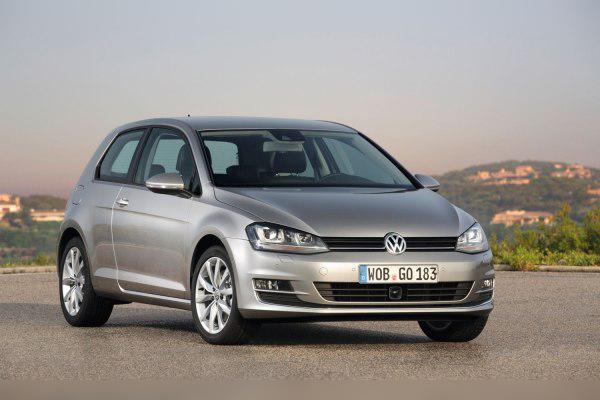
1.6 TDI (CRKA, CLHB) in Golf VII: Experiences, issues and maintenance
Key points (TL;DR)
- Reliability: Very high. This is the EA288 generation, significantly improved compared to the older 1.6 TDI engines.
- Biggest downside: Variable-flow water pump – it often gets stuck and leads to overheating.
- Dual-mass flywheel: Good news – the 90 hp (66 kW) version with a manual gearbox usually does not have a dual-mass flywheel.
- Fuel consumption: Extremely low, a real "saver". Realistically you can expect around 5.0–5.5 l/100 km combined.
- Power: 90 hp is enough for city driving, but on the highway and when overtaking with a fully loaded car, the lack of power is noticeable.
- Recommendation: An ideal engine for drivers who cover a lot of mileage and want low maintenance costs.
Contents
- Technical specifications
- Reliability and maintenance
- Specific parts and costs
- Fuel consumption and performance
- Additional options and modifications (tuning)
- Gearbox: Manual vs DSG
- Buying used and conclusion
The 1.6 TDI engine with the codes CRKA and CLHB is the entry-level diesel option in the seventh-generation Volkswagen Golf (Golf VII). These engines belong to the more modern EA288 series. Unlike their predecessors (notorious for problematic Siemens injectors in the early stages), these units were developed to be quieter, cleaner and more reliable. With 90 hp, this engine is not meant for racing, but for economical use. It is often found in fleet vehicles, which means that on the used market there are many examples with high mileage.
Technical specifications
| Characteristic | Data |
|---|---|
| Engine displacement | 1598 cc |
| Power | 66 kW (90 hp) @ 2750–4800 rpm |
| Torque | 230 Nm @ 1400–2700 rpm |
| Engine codes | CRKA, CLHB |
| Injection type | Common Rail (Bosch/Delphi) |
| Charging | Turbocharger (VGT) + intercooler |
| Emission standard | Euro 5 / Euro 6 (depending on model year) |
Reliability and maintenance
Timing belt or chain?
This engine uses a timing belt for the valvetrain. That is good news because the system is quieter and generally more reliable than the thin chains that caused problems on older TSI engines. However, it is important to note that there is also a small belt that drives the oil pump, located inside the oil pan ("running in oil"). Although it is designed to last as long as the engine, regular oil changes are crucial for its lifespan.
Most common failures
Although the EA288 series is reliable, there are some specific weak points:
1. Water pump (thermostat/housing): This is by far the most common issue. The pump has a plastic ring (shroud) that moves to regulate coolant flow and warm up the engine faster. That plastic part often gets stuck, which leads to engine overheating even though the pump is technically still working.
2. Coolant leaks: They often occur at the thermostat housing or at the EGR cooler.
3. EGR valve: As with any modern diesel, city driving clogs it with soot. Symptoms are jerky running while driving and the "Check Engine" light coming on.
Major service (timing belt service)
The factory recommendation for timing belt replacement is often optimistic and states an interval of up to 210,000 km. However, practice and mechanics’ experience say otherwise. It is recommended to do the major service between 150,000 km and 180,000 km, or every 5 to 7 years, whichever comes first. Due to issues with the water pump, many owners are forced to do the major service earlier, because when the pump is replaced, the belt is changed as well.
Oil: quantity and consumption
The engine takes approximately 4.6 to 5 liters of oil (depending on whether the filter is changed – always buy 5 liters).
Grade: You must use oil that meets the VW 507.00 specification. Most often this is 5W-30 or 0W-30.
Oil consumption: EA288 engines are known for very low oil consumption. Up to 0.5 liters per 10,000 km is considered perfectly normal. If it consumes more than 1 liter per service interval, the turbocharger or piston rings should be checked, although this is rare at lower mileage.
Injectors
The 90 hp versions (CLHB, CRKA) usually use solenoid (electromagnetic) injectors (most often Bosch or Delphi), and not the more sensitive piezo injectors that were used in more powerful variants or older engines. This is a big advantage. Solenoid injectors are more robust, longer-lasting and cheaper to refurbish. With good-quality fuel they can easily exceed 250,000+ km.
Specific parts and costs
Dual-mass flywheel
This is the question that interests buyers the most. The 1.6 TDI 90 hp engine in the Golf 7, paired with the 5-speed manual gearbox, usually does NOT have a dual-mass flywheel, but a solid one. This drastically reduces the cost of clutch replacement.
Note: Always check by VIN, because some specific series (e.g. BlueMotion with a more aggressive start-stop system) could have a dual-mass flywheel, but on the 90 hp version this is rare.
Turbocharger
The engine has a single variable-geometry turbocharger (VGT). Its service life is long, often over 250,000 km, provided that the oil is changed regularly (every max 15,000 km, not 30,000 km as the factory states for LongLife). Failure symptoms are a characteristic "siren-like" whistling noise and loss of power. Rebuilding is possible and the price is average (depends on the market).
DPF, EGR and AdBlue
DPF filter: Standard equipment. Problems arise only if the car is driven exclusively in the city. It needs to be taken out on the open road at least once every two weeks so that it can perform regeneration.
EGR valve: Prone to fouling. Cleaning is possible, but replacement is more expensive because in newer engines it is integrated into a more complex module.
AdBlue: The CRKA and CLHB engines in the Golf 7 are mostly early Euro 5 or transitional models and usually do not have an AdBlue system, but use LNT (Lean NOx Trap) technology for exhaust gas treatment. This is a plus because you avoid the cost of the pump, heater and AdBlue injector, which have proven very failure-prone on newer 2016+ models. Still, check whether there is a blue cap next to the fuel cap – if there isn’t, you’re in the clear.
Fuel consumption and performance
Real-world fuel consumption
This is the strongest selling point of this engine.
City driving: Expect between 5.5 and 6.5 l/100 km, depending on traffic and how heavy your right foot is. In winter it can go up to 7 liters.
Open road: On country roads, consumption drops to an impressive 3.8–4.5 l/100 km.
Is the engine "sluggish"?
With 90 hp and 230 Nm, the Golf VII is no athlete. For city driving it is perfectly adequate – it has enough torque to pull away from traffic lights. However, the problem appears when the car is loaded (4 passengers + luggage) and you need to overtake a truck on an uphill stretch. Then the lack of power is noticeable and you need to downshift and "wring" the engine. If you often travel with a fully loaded car, the 105/110 hp version is a better choice.
Highway driving
With the 5-speed gearbox, at a speed of 130 km/h the engine runs at around 2,300–2,500 rpm. Thanks to the good sound insulation of the Golf 7, this is not too noisy, but a "sixth" gear is missing for complete comfort and even lower fuel consumption.
Additional options and modifications (chip tuning)
Chip tuning (Stage 1)
This engine is extremely suitable for remapping. The reason is simple: CRKA/CLHB (90 hp) is almost hardware-identical to the more powerful 105 hp version (CLHA). The factory "strangled" it via software.
A safe Stage 1 remap can raise power to 130–140 hp and torque to 300+ Nm. This drastically changes the character of the car, making it much livelier, and fuel consumption in normal driving can even slightly decrease. Of course, only do this at reputable tuners.
Gearbox
Manual gearbox (5-speed)
The most common option with this engine. The gearbox code is usually from the MQ250 series.
Reliability: Very reliable. No major known issues.
Oil: Although VW says the oil is "lifetime", it is recommended to change it every 100,000–150,000 km for smoother shifting and to preserve the synchros. The gearbox takes about 2 liters of oil.
Automatic gearbox (DSG 7)
If your model has an automatic, it is the DQ200 7-speed gearbox with "dry" clutches.
Problems: This is VW’s most notorious gearbox. The most common failures are worn clutch packs (between 150k and 200k km) and mechatronic unit failure (the gearbox "brain"). Repairs are expensive (very expensive). Symptoms include jerking when taking off, hesitation when changing gears or metallic noises.
Servicing: Although the clutches are dry, the gearbox has oil in the mechanical part and oil in the mechatronic unit. It is advisable to have it checked and replaced every 60,000 km by specialists, even though this is not in the regular maintenance schedule.
Buying used and conclusion
Before buying a Golf VII with the 1.6 TDI (90 hp) engine, pay attention to the following:
- Cold start: The engine should start immediately and idle smoothly. Rough running can indicate injector problems.
- Temperature: Check whether the temperature gauge stays fixed at 90°C after warming up. Fluctuations indicate a problem with the water pump or thermostat.
- Clutch noise: (If it’s a manual) Press the clutch pedal halfway. If you hear knocking or the sound changes, the car may actually have a dual-mass flywheel that is at the end of its life (even though this is rare on the 90 hp version, it must be checked).
- Diagnostics: Always check DPF saturation and injector correction values.
Final conclusion
The Volkswagen Golf VII 1.6 TDI (90 hp) is a rational choice. It is not a car you buy with your heart, but with a calculator. It offers comfort, good build quality and extremely low fuel consumption with (usually) cheaper maintenance thanks to the absence of a dual-mass flywheel. It is ideal for students, small families or as a second car in the household for city driving and occasional trips. If performance is not a priority for you, this is probably the most cost-effective version of the Golf 7 to own.
Was this content useful to you?
Your opinion helps us to improve the quality of the content.