CAVD, CTHD, CTKA, CNWA Engine
- Engine
- 1390 cm3
- Aspiration
- Turbocharger, Intercooler
- Fuel
- Petrol (Gasoline)
- Fuel injection system
- Direct injection
- Power
- 160 hp @ 5800 rpm
- Torque
- 240 Nm
- Cylinders
- 4
- Valves
- 16, 4 per cylinder
- Cylinders position
- Inline
- Oil capacity
- 3.6 l
# Vehicles powered by this engine
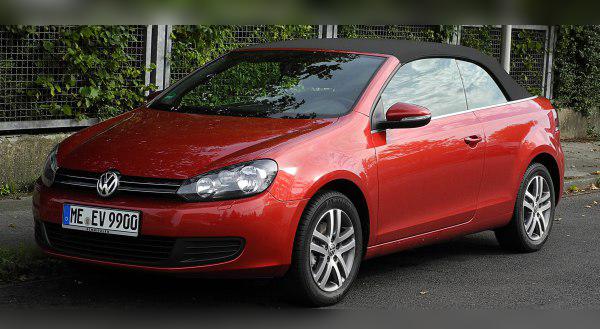
1.4 TSI Twincharger (160 HP) – Engineering Marvel or Used-Car Nightmare? (CAVD, CTHD, CTKA)
Key points (TL;DR)
- Complexity: This is a "Twincharger" engine – it has both a mechanical supercharger and a turbocharger. Performance is great, but complexity is high.
- Achilles' heel: On early versions (CAVD) there are frequent cases of piston and ring failures. Later versions (CTHD, CTKA) are significantly more reliable.
- Timing chain: The timing system uses a chain. Chain stretch and tensioner failure are known issues that require immediate attention.
- Water pump: It is specific because it contains a magnetic clutch for the supercharger. Failure is common and the part is not cheap.
- DSG gearbox: Often paired with the DQ200 7-speed gearbox (dry clutch), which has a notorious reputation when it comes to mechatronics.
- Recommendation: Buy only if you have complete service history, preferably newer engine codes (after 2012), and you are ready for strict maintenance.
Contents
Introduction: What makes the 1.4 TSI (160 HP) special?
The engine we’re talking about today belongs to the EA111 family and represents one of Volkswagen’s most ambitious projects of that era. Installed in the Volkswagen Golf VI Cabriolet, this unit was designed to combine the seemingly incompatible: a small 1.4-liter displacement with the power of large 2.0 naturally aspirated engines, with minimal fuel consumption.
The engine codes CAVD, CTHD, CTKA and CNWA refer to the most powerful 160-horsepower variant. Its key characteristic is twin charging: a mechanical supercharger that works at low revs for instant throttle response, and a turbocharger that takes over at higher revs. Although it provides a fantastic driving feel, this technology brings specific challenges when buying used.
Technical Specifications
| Parameter | Data |
|---|---|
| Displacement | 1390 cc (1.4 L) |
| Configuration | Inline 4-cylinder, 16 valves |
| Power | 118 kW (160 HP) @ 5800 rpm |
| Torque | 240 Nm @ 1500-4500 rpm |
| Engine codes | CAVD, CTHD, CTKA, CNWA |
| Fuel injection system | Direct injection (TSI / FSI) |
| Charging method | Twincharger: Roots supercharger + turbocharger |
| Camshaft drive | Chain |
Reliability and Maintenance
Chain or belt?
This engine (EA111 generation) uses a timing chain to drive the camshafts. Unfortunately, the chain is one of the weaker points of this engine. It was designed to last for the “lifetime” of the engine, but in practice it often stretches already between 80,000 and 120,000 km. Symptoms include metallic rattling during cold start that lasts a few seconds. If ignored, the chain can jump a tooth, leading to piston-to-valve contact – a complete engine failure.
Most common failures: Piston cracking
On the CAVD variant (mostly models before 2012/2013), the most serious problem is piston and ring cracking. This occurs due to excessive thermal load and detonation (LSPI - Low Speed Pre-Ignition), often caused by poor fuel quality or an aggressive engine map. Symptoms include a drastic loss of compression on one cylinder, rough running and high oil consumption.
Note: The CTHD and CTKA versions (installed later, towards the end of Golf VI production and in Cabrio versions) have reinforced pistons and the chain issue is largely resolved, so they are a much safer purchase.
Service intervals and oil
Forget about “LongLife” intervals of 30,000 km. For this engine, that’s a death sentence.
- Minor service: Mandatory every 10,000 km or once a year.
- Major service: Since the engine has a chain, there is no fixed replacement interval as with a belt. It is replaced as needed, i.e. as soon as chain noise is heard. Preventive inspection of the chain and tensioner is recommended every 100,000 km.
- Oil quantity and type: The engine takes approximately 3.6 liters of oil (always check the dipstick). Recommended grades are 5W-30 or 5W-40 (VW 504.00 / 502.00 standard). High-quality synthetic oil is crucial for the lifespan of the turbo and chain.
- Oil consumption: These engines are known to consume oil. Consumption up to 0.5 liters per 1,000 km is considered “acceptable” by the (overly tolerant) factory specs, but in practice a healthy engine should not consume more than 0.5 to 1 liter between services (over 10,000 km). If it uses more, suspect the rings or the turbo.
Spark plugs and coils
Due to the high specific output and combustion temperatures, the spark plugs are under heavy stress. Replacement is recommended every 40,000 to 60,000 km. Use only high-quality NGK or Bosch plugs specified for this engine (iridium). Worn plugs can cause detonation that destroys pistons. The ignition coils (one per cylinder) also tend to fail, which shows up as running on 3 cylinders and an illuminated “Check Engine” light.
Specific Parts (Costs)
Dual-mass flywheel
Yes, this engine in the Golf VI Cabrio does have a dual-mass flywheel, regardless of whether it is paired with a manual or DSG gearbox. Its lifespan is usually between 150,000 and 200,000 km, depending on driving style. Replacement is not cheap (Category: Expensive).
Fuel injection system
The engine uses direct fuel injection at high pressure. Injectors are generally reliable, but sensitive to poor fuel quality. A bigger problem than the injectors themselves is carbon buildup on the intake valves. Since the fuel does not “wash” the valves (it is injected directly into the cylinder), carbon deposits build up over time and reduce airflow, leading to power loss and rough running. Cleaning the valves (walnut shell blasting or chemical treatment) is recommended at around 100,000 km.
Twincharger: Turbo and supercharger
This is the heart of both the fun and the trouble.
- Supercharger (Roots type): Mechanically driven by a belt. Generally durable, but the water pump with magnetic clutch is problematic. This clutch engages and disengages the supercharger. When it fails, you hear squealing and the car loses low-end power. The water pump is expensive (depends on the market, but expect a higher cost).
- Turbocharger: Works at higher revs. Its lifespan depends on regular oil changes and allowing the engine to cool down before switching off. The turbo’s wastegate can seize, requiring turbo repair or replacement.
Emissions (DPF, EGR, AdBlue)
Since this is a petrol engine:
- No DPF filter (it has a catalytic converter). GPF (gasoline particulate filter) is only fitted on newer generations (EA211 Evo), so the Golf VI generally doesn’t have it.
- No AdBlue system.
- EGR valve: The exhaust gas recirculation system is often implemented via internal valve overlap (VVT), but there are variants with an external valve. It is not as problematic as on diesels, but it can get dirty.
Fuel Consumption and Performance
Fuel consumption
Even though it’s only 1.4 liters, 160 horses need to be fed. Consumption varies greatly with driving style (the “Jekyll & Hyde” effect):
- City driving: Realistically expect between 8.5 and 10.5 l/100 km. In heavy stop-and-go traffic, it can easily go over 11 l/100 km.
- Open road: This is where the engine shines. With moderate driving it can use around 6.0 - 7.0 l/100 km.
- Motorway (130 km/h): Thanks to the 6th gear (or 7th on DSG), the engine runs at relatively low revs (around 2,800 - 3,000 rpm) and consumes about 7.5 l/100 km.
Is the engine “lazy”?
Absolutely not. Thanks to the supercharger that provides torque almost from idle (you get the full 240 Nm already from 1,500 rpm), the Golf VI Cabrio with this engine “pulls like a train” at any moment. In-gear acceleration is excellent and it feels like you’re driving a 2.0-liter or larger engine. The cabrio body is heavier due to reinforcements, but this engine handles it effortlessly.
Additional Options and Modifications
LPG (Autogas)
Installing LPG on this engine is complicated and expensive. Due to direct injection, you need a special system that either uses liquid-phase LPG (through the petrol injectors) or injects a small amount of petrol together with LPG to cool the injectors.
The cost-effectiveness is questionable unless you cover very high mileages. Many “cheap” systems lead to injector overheating and engine failure.
Chip tuning (Stage 1)
Caution! Although this engine can easily be tuned to 200+ HP, this is not recommended for daily use, especially not for the CAVD version. The pistons are already at the limit of their durability from the factory. Increasing boost pressure and combustion temperatures drastically raises the risk of piston failure. If you absolutely must do it, only do so on a completely healthy engine (checked injectors, new timing chain set) and with top specialists, using only 98/100-octane fuel.
Gearbox (Manual vs DSG)
Manual gearbox (6-speed)
Precise, reliable and cheaper to maintain. The most common expense is the clutch kit and dual-mass flywheel. It’s a good idea to change the gearbox oil preventively every 100,000 km, even though VW often claims it is “fill for life”.
DSG automatic gearbox (7-speed - DQ200)
This engine is paired with the DQ200 gearbox with dry clutches. This is probably the most problematic DSG gearbox VW has made.
- Failures: The mechatronics unit (control unit) often fails, and the clutch pack wears out faster than on “wet” DSG gearboxes (e.g. on the 2.0 TDI). Juddering when taking off, harsh shifts or loss of gears are typical symptoms.
- Costs: Mechatronics repair or clutch replacement falls into the category: Very expensive (depends on the market).
- Maintenance: Although the clutch is dry, the mechatronics has its own oil and the gears have theirs. It is recommended to check and replace the mechatronics fluid if possible, but officially it is changed less often than on wet systems.
Buying Used and Conclusion
Before buying a Golf VI Cabriolet with the 1.4 TSI (160 HP) engine, do the following:
- Cold start: Insist that the engine is completely cold. Listen to the chain noise during the first 3 seconds. Any rattling longer than 2–3 seconds is a red flag.
- Test drive: Floor the throttle at low revs (around 1,500 rpm) in a high gear. If the car jerks, it could be spark plugs, coils or the supercharger.
- Engine code: Check the code in the boot (under the carpet) or on the engine block. If it’s CTHD or CTKA, your chances of trouble-free ownership are much higher than with CAVD.
- Compression test: Due to the piston cracking issue, this is the smartest €50 you can spend before buying.
Conclusion:
This engine is “Dr. Jekyll and Mr. Hyde”. When healthy, it offers fantastic performance, quiet operation and the pleasure of driving a cabriolet with reasonable fuel consumption. However, it is technically very complex and requires meticulous maintenance. It is intended for enthusiasts who know what they are driving and do not skimp on quality oil and fuel. If you want a “just fill it up and drive” car with minimal expenses, look for the weaker 122 HP version or a 2.0 TDI.
Was this content useful to you?
Your opinion helps us to improve the quality of the content.