CTHD Engine
- Engine
- 1390 cm3
- Aspiration
- Turbocharger, Intercooler
- Fuel
- Petrol (Gasoline)
- Fuel injection system
- Direct injection
- Power
- 160 hp @ 5500 rpm
- Torque
- 240 Nm @ 2000 rpm
- Cylinders
- 4
- Cylinders position
- Inline
- Oil capacity
- 3.6 l
# Vehicles powered by this engine
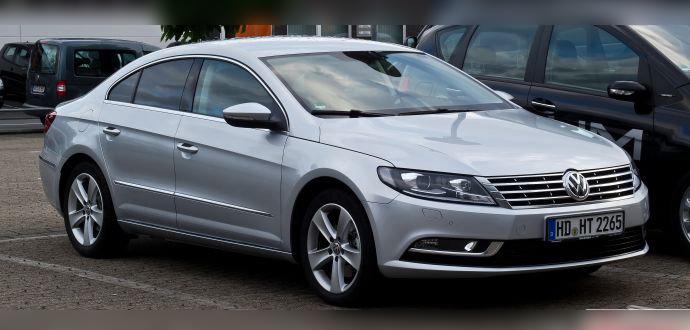
VW 1.4 TSI (CTHD) 160 HP – Experiences, problems, fuel consumption and used car buying tips
Key points (TL;DR)
- Complex technology: This is a “Twincharger” engine (it has both a turbo and a supercharger). It offers great performance but is mechanically more complicated than regular turbo petrol engines.
- Improved version: The CTHD engine code means this is the revised version of the notorious CAVD engine. Piston cracking issues are mostly solved here, but caution is still necessary.
- Timing chain: It still uses a timing chain. Although the tensioning system is better than before, the chain is still a wear item on this engine.
- Water pump: A specific and expensive part because it contains a magnetic clutch for engaging the supercharger.
- DSG gearbox: Often paired with the DSG7 (DQ200) dry-clutch gearbox, which requires checking the mechatronics and clutch pack.
- Sensitivity to fuel: Requires high-quality petrol and regular spark plug replacement to avoid detonation.
- Conclusion: Excellent power-to-displacement ratio for the VW CC, but it requires an owner who won’t skimp on preventive maintenance.
Contents
Introduction and engine application
The engine with the code CTHD is one of the most technically interesting, but also most controversial powerplants from the Volkswagen Group’s “downsizing” era. It is a 1.4 TSI unit that extracts a respectable 160 horsepower from a small displacement. The secret lies in twin charging: a mechanical supercharger works at low revs to eliminate turbo lag, while a conventional turbocharger takes over at higher revs.
This engine is specific to the Volkswagen CC (facelift model from 2012). It is very important to note that CTHD is the successor to the problematic CAVD engine. In the CTHD version, VW installed reinforced pistons, modified rings and an improved timing system, which significantly increased reliability, but the stigma of its predecessor still follows it.
Technical specifications
| Characteristic | Data |
|---|---|
| Engine displacement | 1390 cc (1.4 litres) |
| Power | 118 kW (160 HP) |
| Torque | 240 Nm at 1500–4500 rpm |
| Engine code | CTHD (EA111 family) |
| Injection type | Direct injection (TSI) |
| Charging system | Twincharger (Mechanical supercharger + Turbocharger) |
| Camshaft drive | Chain |
Reliability and maintenance
When talking about 1.4 TSI Twincharger engines, reliability is always the first topic. CTHD is the “mature” version, but it still has its quirks.
Chain or belt?
This engine uses a timing chain. Although in theory a chain should last as long as the engine, in practice with the EA111 generation this is not the case. CTHD has a revised tensioner and a higher-quality chain compared to earlier versions, but chain stretching still occurs. The symptom is a metallic rattle (as if you’re shaking a box of nails) on cold start, lasting a few seconds. If you hear this, replacement is urgent to avoid the chain jumping teeth and catastrophic engine failure (pistons hitting valves).
Most common failures
Besides the chain, CTHD engines are sensitive to the condition of the ignition system. Detonation (knocking) is this engine’s worst enemy. If a spark plug is not working perfectly or the fuel is poor, uncontrolled explosions in the cylinder can occur and damage the pistons (even though the CTHD pistons are reinforced, they are not indestructible). Another frequent issue is carbon build-up on the intake valves due to direct injection, which can lead to rough running and power loss.
Service intervals and spark plugs
The major service (chain replacement) is not specified at a fixed mileage; it is done “as needed” or preventively. Experienced mechanics recommend checking the chain condition as early as 100,000 km, and replacing it no later than 120,000–150,000 km, or as soon as the first noise appears. Minor service (oil and filters) should be done every 10,000 to 15,000 km (or once a year).
On CTHD engines, spark plugs are a critical component. They are replaced more often than on regular naturally aspirated engines – the recommendation is every 30,000 to 40,000 km. Always use only top-quality NGK or OEM plugs specified exactly for this engine.
Oil: quantity and consumption
The sump holds about 3.6 litres of oil. The recommended grade is 5W-30 or 5W-40 (VW 504.00 or 502.00 standard). As for oil consumption, these engines tend to “drink” some oil. Consumption up to 0.5 litres per 1,000 km is considered acceptable by the (often overly generous) factory standards, but in practice a healthy engine should not consume more than 1–1.5 litres between two minor services. Increased consumption may indicate a problem with the oil control rings or the turbo.
Specific parts (costs)
Dual-mass flywheel
Yes, this engine has a dual-mass flywheel, regardless of whether it is paired with a manual or DSG gearbox. Given the 240 Nm of torque available early on, the flywheel is under stress. Failure symptoms include knocking when switching off the engine, vibrations at idle and rattling from the gearbox area.
Fuel injection system and injectors
The engine uses direct fuel injection at high pressure. The injectors are generally reliable but sensitive to fuel quality. Injector failure can manifest as leaking (which can wash oil off the cylinder walls) or poor atomisation, which can lead to piston melting. The price of a single injector is quite high (it depends on the market, but it is among the more expensive parts).
Turbo and supercharger (Twincharger)
This is the heart of the system. You have one turbocharger and one mechanical Roots-type supercharger. The supercharger works from idle up to about 2,400–3,500 rpm, and the turbo takes over at higher revs. Turbo lifespan is standard (around 150,000–200,000 km with good maintenance). However, a specific problem is the water pump. Why? Because the water pump pulley has an integrated magnetic clutch that engages and disengages the supercharger. When that clutch fails (and it does happen), you have to replace the entire water pump, which is significantly more expensive than a regular one (a very expensive part for this class).
EGR, DPF and AdBlue
As a petrol engine, this unit does not have a DPF filter nor does it use AdBlue fluid, which is a big advantage over diesels in city driving. An EGR valve (or recirculation system) does exist, but it rarely clogs to the extent seen on diesels. The main “breathing” problem for this engine is the aforementioned carbon on the valves, not the EGR.
Fuel consumption and performance
The Volkswagen CC is a heavy saloon/coupé, but 160 HP handles it surprisingly well.
- City driving: Don’t expect miracles here. Real-world consumption in heavy traffic ranges from 8.5 to 11 litres per 100 km, depending on how heavy your right foot is and on the gearbox (DSG can slightly lower consumption if driven gently).
- Open road: This is where the engine shines. At a cruising speed of 130 km/h, thanks to the 6th gear (or 7th on DSG), the engine runs at relatively low revs (around 2,800–3,000 rpm), and consumption drops to about 6.5–7.5 litres.
- Sluggish? Absolutely not. Thanks to the supercharger, which provides torque immediately from take-off, the engine feels lively even in the heavy CC body. There is none of that classic “hole” while waiting for the turbo.
Additional options and modifications
LPG
Can it run on LPG? It can, but it is not recommended for the average driver. Due to direct injection, an expensive system is required (liquid phase system or a system that uses a petrol–LPG mix to cool the injectors). Installation is costly (often over 1,000 EUR), and cost-effectiveness is questionable unless you cover very high mileages.
Remap (tuning)
This engine has potential, but be careful. A Stage 1 remap can raise power to about 190–200 HP and 300 Nm. However, the risk is high. Increasing pressure and temperature in the cylinders further stresses the pistons (which are historically the weakest link) and the DSG gearbox (DQ200 is rated for up to 250 Nm, and you would be pushing it beyond its limit). Advice: Leave it at factory settings if you want it to last.
Gearbox
The VW CC 1.4 TSI CTHD comes with two gearbox options:
- 6-speed manual gearbox: Very precise and reliable. Maintenance involves changing the oil at long intervals (even though VW says it’s “lifetime”, change it at 100,000 km) and replacing the clutch kit and flywheel when worn. This is the safer option for a used car.
- 7-speed DSG (DQ200): This is a gearbox with dry clutches. Unfortunately, the DQ200 is known for failures of the mechatronics unit (the gearbox “brain”) and faster clutch wear, especially in stop–go city driving.
The cost of replacing the clutch kit and dual-mass flywheel on the manual gearbox is high (several hundred euros plus labour), while overhauling a DSG gearbox or replacing the mechatronics is even more expensive (very costly). On DSG gearboxes, the oil in the mechatronics and gear section should be changed every 60,000 km, even if the manufacturer sometimes claims otherwise.
Buying used and conclusion
Before buying a VW CC with the CTHD engine, a thorough inspection is mandatory:
- Cold start: Insist that the engine is completely cold. Listen carefully during the first 3–5 seconds. Any chain rattle is a sign to walk away or to negotiate the price down by the cost of a chain replacement.
- Test drive: Accelerate with full throttle from low revs. Acceleration must be linear, without jerks (misfires). Jerking indicates problems with spark plugs, coils or, in the worst case, compression/pistons.
- Whistling noise: If you hear a loud whistle under acceleration, the problem may be in the supercharger’s magnetic clutch (water pump) or in the turbo itself.
Conclusion: The 1.4 TSI (CTHD) engine is an impressive engineering achievement that gives the VW CC agility with reasonable registration costs. It is aimed at drivers who want style and performance and are willing to pay for quality and preventive maintenance. If you are looking for a “fill up and drive” car with minimal expenses, look for a simpler 2.0 TDI. If you want a petrol engine, the CTHD is a good choice, but only with a well-documented service history.
Was this content useful to you?
Your opinion helps us to improve the quality of the content.