CDAB Engine
- Engine
- 1781 cm3
- Aspiration
- Turbocharger, Intercooler
- Fuel
- Petrol (Gasoline)
- Fuel injection system
- Direct injection
- Power
- 152 hp @ 5000 rpm
- Torque
- 250 Nm @ 1500 rpm
- Cylinders
- 4
- Valves
- 20, 5 per cylinder
- Cylinders position
- Inline
- Valvetrain
- DOHC
- Oil capacity
- 4.7 l
# Vehicles powered by this engine
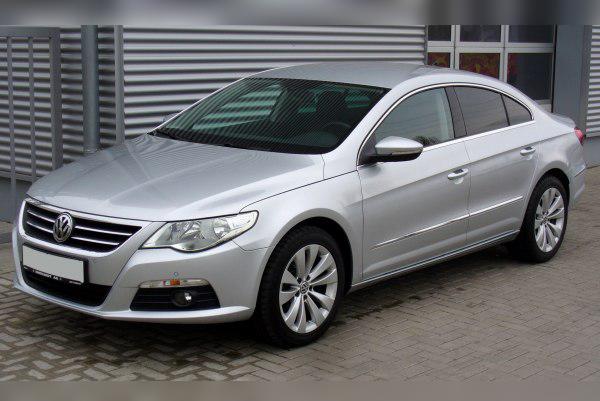
CDAB 1.8 TSI (152 HP) – Experiences, issues, fuel consumption and buying tips
Key points in short (TL;DR)
- Performance: Excellent power-to-torque ratio, the engine is flexible and fun to drive.
- Main issue (Oil): The notorious "oil consumption" caused by poorly designed piston rings. This is a factory defect on most units produced before 2012.
- Timing chain: The timing chain and, even more often, the chain tensioner are weak points that can lead to catastrophic engine failure.
- Gearbox: Often paired with the DSG7 (DQ200) dry-clutch gearbox, which requires careful maintenance and has expensive mechatronics repairs.
- Potential: The engine is extremely easy to remap ("chip tune") and can deliver a lot more power.
- Recommendation: Purchase is recommended only if you have proof that the engine has already been overhauled (pistons and rings replaced with the revised version), or if the price is so low that it covers the cost of a major engine rebuild.
Contents
- Introduction and applications
- Technical specifications
- Reliability and maintenance
- Specific parts and costs
- Fuel consumption and performance
- Additional options and modifications
- Gearbox (Manual and DSG)
- Used car buying tips and conclusion
Introduction and applications
The CDAB engine belongs to the second generation (Gen 2) of Volkswagen Group’s EA888 engine family. Specifically, the 152 HP (112 kW) version is a slightly "detuned" variant of the popular 1.8 TSI 160 HP engine, often sold on specific markets due to tax regulations or internal model segmentation. It was primarily installed in the Volkswagen Passat CC, but also in the Škoda Yeti, Superb and Octavia.
This unit is technically very advanced, using direct fuel injection and a turbocharger to deliver diesel-like torque with petrol-engine refinement. However, it also carries the burden of one of VW engineering’s most controversial eras when it comes to oil consumption and timing chain issues.
Technical specifications
| Specification | Data |
|---|---|
| Engine code | CDAB (EA888 Gen 2) |
| Displacement | 1798 cc (Commonly referred to as 1.8, although it’s closer to 1800 cc) |
| Power | 112 kW (152 HP) at 4300–6200 rpm |
| Torque | 250 Nm at 1500–4200 rpm |
| Injection type | Direct injection (TSI / TFSI) |
| Induction | Turbocharger (KKK K03) + intercooler |
| Emission standard | Euro 5 |
Reliability and maintenance
Chain or belt?
The CDAB engine uses a timing chain. Unfortunately, this is not a "lifetime" chain as it was once marketed. The problem is not only chain stretch, but also the hydraulic chain tensioner. Older revisions of the tensioner can fail, allowing the chain to jump teeth, which leads to piston-to-valve contact – a total engine write-off. The recommendation is a preventive replacement of the complete set (chain, guides, latest-revision tensioner) at around 100,000 to 120,000 km, or as soon as you hear a characteristic rattling noise on cold start.
Oil consumption issue (Piston rings)
This is the biggest flaw of CDAB engines produced before mid-2012. VW used overly thin oil control rings with oil drain holes that are too small. They quickly clog with carbon deposits, and instead of returning to the sump, the oil stays in the cylinder and burns. Symptoms are bluish exhaust smoke and drastic oil consumption.
Does it burn oil? Yes, if the engine hasn’t been revised. The manufacturer claims that up to 0.5 L/1000 km is "normal", but in practice these engines can consume 1 liter per 300–500 km in the terminal stage. The solution is an expensive "semi-rebuild" – removing the pistons, machining the connecting rods (because the new pistons have a wider wrist pin) and installing modified pistons with thicker rings.
Minor and major service
Major service: Since it has a chain, there is no classic fixed interval as with a belt, but as mentioned, the chain kit is replaced preventively between 100,000 and 120,000 km. Also check the water pump, which is often integrated into the thermostat housing and prone to leaks.
Engine oil: The engine takes approximately 4.6 to 4.8 liters of oil. Recommended viscosity is 5W-30 or 5W-40 that meets VW 504.00 or 502.00 standards. Due to the piston ring issue and fuel dilution of the oil, the change interval should be shortened to a maximum of 10,000 km or one year (definitely not Long Life intervals of 30,000 km).
Spark plugs and ignition coils
On turbocharged petrol engines with direct injection, spark plugs are heavily stressed. It’s recommended to replace them every 40,000 to 60,000 km. If the car is tuned, the interval drops to around 30,000 km. A common failure point are the ignition coils (one per cylinder), which can fail suddenly, causing the engine to run on 3 cylinders and triggering the "Check Engine" light.
Specific parts (Costs)
Fuel injection system
The CDAB uses high-pressure direct injection. The injectors are generally durable, but sensitive to poor fuel quality. A bigger issue is the PCV valve (oil vapor separator). When its membrane tears, the engine loses vacuum, idles roughly, whistles, and oil consumption increases. This is a relatively cheap part and easy to replace.
Another side effect of direct injection is intake valve coking. Since fuel does not wash over the intake valves (as in older port-injected engines), carbon deposits build up on them over time, reducing airflow. Cleaning (walnut shell blasting) is required at higher mileages.
Dual-mass flywheel and turbocharger
Yes, this engine has a dual-mass flywheel, both with the manual and DSG gearboxes. Its lifespan is usually around 150,000–200,000 km, depending on driving style. Replacement is expensive (very costly, varies by market).
The engine uses a single KKK K03 turbocharger. It is very reliable if the oil is changed regularly and the engine is not switched off immediately after hard driving. Symptoms of failure include whining (siren-like noise) or loss of power.
EGR and emissions systems
This petrol engine does not have a classic EGR valve that clogs up like on diesels (it uses variable valve timing for that purpose). It also does not have a DPF filter (the petrol equivalent GPF was introduced years later), and does not use an AdBlue system. This makes it simpler to maintain in terms of emissions equipment compared to diesel engines of the same era.
Fuel consumption and performance
Real-world fuel consumption
Although the official figures look low, the Passat CC is not a light car.
- City driving: Expect between 10 and 12 L/100 km. In heavy traffic and winter conditions, this can go up to 13–14 L/100 km.
- Open road: This is where the engine shines. With moderate driving, it uses around 6.5 to 7.5 L/100 km.
- Motorway (130 km/h): Consumption is around 7.5 to 8.5 L/100 km.
Is the engine "lazy"?
Absolutely not. With 250 Nm available from just 1500 rpm, the CDAB pulls very linearly and strongly. Subjectively, the car feels more powerful than the 152 HP on paper would suggest. Acceleration is convincing and overtaking is safe. At 130 km/h in sixth gear (or 7th gear with DSG), the engine spins at around 2600–2800 rpm, making for quiet and comfortable cruising.
Additional options and modifications
LPG conversion
Due to direct injection (injectors are in the combustion chamber), LPG conversion is complex and expensive. It requires a dedicated Direct Injection Kit that also uses a small amount of petrol while running on gas (to cool the petrol injectors), or an even more expensive liquid LPG injection system. Considering the high installation cost and potential complications, it only really pays off if you cover very high annual mileages.
Chip tuning (Stage 1)
This is a favorite pastime of 1.8 TSI owners. Hardware-wise, the engine is very similar to its more powerful 2.0 TSI sibling. With a simple software remap (Stage 1), power can be safely increased from 152 HP to 200–210 HP, and torque jumps to over 300 Nm. This transforms the car into a serious sports sedan. However, before tuning, the engine must be mechanically perfect (timing chain and oil consumption issues resolved).
Gearbox
Options and maintenance
With the CDAB engine in the Passat CC you most commonly get:
- Manual gearbox (6-speed): Very precise and reliable. The most common expense is the clutch kit and dual-mass flywheel. It’s recommended to change the gearbox oil every 60,000 km, even though VW often claims it is "lifetime".
- Automatic gearbox (DSG 7 - DQ200): This is a gearbox with a dry clutch. It was designed for lower torque outputs (up to 250 Nm, which is exactly the limit of this engine).
DSG7 (DQ200) issues
The DQ200 is known as a problematic gearbox, especially in the early production years. The main issues are:
- Clutch wear: Dry clutches wear out faster in stop-and-go city driving. Symptoms include juddering when setting off or shifting from 1st to 2nd gear.
- Mechatronics unit: The electro-hydraulic unit that controls the gearbox often fails, leading to loss of gears or the car refusing to move. Repairs are expensive (varies by market, but counts as a very costly failure).
The DSG7 gearbox uses two types of oil (for the mechatronics and for the gear set), and it is recommended to service it every 60,000 km, despite claims that it is maintenance-free.
Buying used and conclusion
Buying a Passat CC with the 1.8 TSI (CDAB) engine is a "double-edged sword". You get a beautiful car with great performance for relatively little money, but you risk very high repair costs.
What to check before buying?
- Exhaust: Put your finger inside the tailpipe. If it’s completely black and oily with soot, the engine is probably burning a lot of oil.
- Timing chain noise: Listen to the engine on a cold start. If you hear metallic rattling or grinding for the first 2–3 seconds, the chain or tensioner need urgent replacement.
- Service history: Look for proof of an "engine overhaul" or "engine refresh" where pistons and rings are explicitly mentioned. If the engine has never been opened and has over 150,000 km, be prepared that you might be the one who has to do it.
- Idle quality: Rough idle can indicate issues with the PCV valve, injectors, or deposits on the valves.
Conclusion: This engine is aimed at enthusiasts who are willing to invest in maintenance, or at those who find a car where the factory issues have already been resolved (pistons/rings and chain replaced). If you are looking for "fill up and drive" reliability with no major expenses, this engine in its pre-2012/2013 versions may not be the best choice for you, unless the purchase price is low enough to justify a potential full engine rebuild.
Was this content useful to you?
Your opinion helps us to improve the quality of the content.