BRN, BRP, BTT Engine
- Engine
- 5998 cm3
- Aspiration
- Naturally aspirated engine
- Fuel
- Petrol (Gasoline)
- Fuel injection system
- Multi-port manifold injection
- Power
- 450 hp @ 6000 rpm
- Torque
- 550 Nm @ 3500 rpm
- Cylinders
- 12
- Valves
- 48, 4 per cylinder
- Cylinders position
- W-engine
- Valvetrain
- DOHC
- Oil capacity
- 12.5 l
- Coolant
- 13 l
# Vehicles powered by this engine
VW 6.0 W12 (BRN, BRP, BTT) – Experiences, problems, fuel consumption and buying used
Key points (TL;DR)
- Engineering masterpiece: The W12 engine is extremely smooth, linear and powerful, essentially made from two VR6 engines.
- Expensive maintenance: Due to the compactness of the engine, many seemingly simple repairs (such as lambda sensor replacement or timing chain service) require removing the engine from the car.
- Fuel consumption: This is not an engine for those who care about fuel prices. Expect city averages above 18 l/100 km.
- Drivetrain: It comes exclusively with an automatic transmission and 4Motion all-wheel drive, which are robust but require regular maintenance.
- Cooling is crucial: Plastic hoses and connectors in the cooling system are a weak point and can lead to overheating.
- Recommendation: Intended exclusively for enthusiasts with deep pockets who want top comfort and prestige, not efficiency.
Contents
Introduction and Engine Characteristics
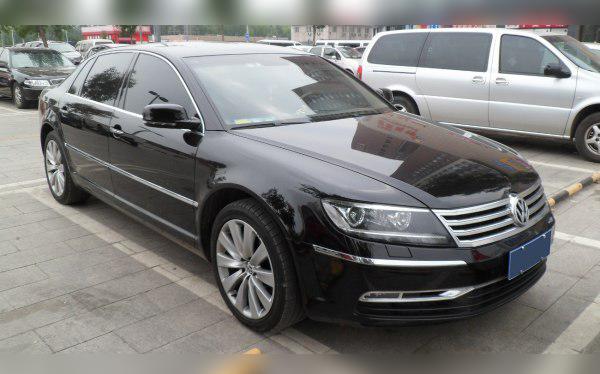
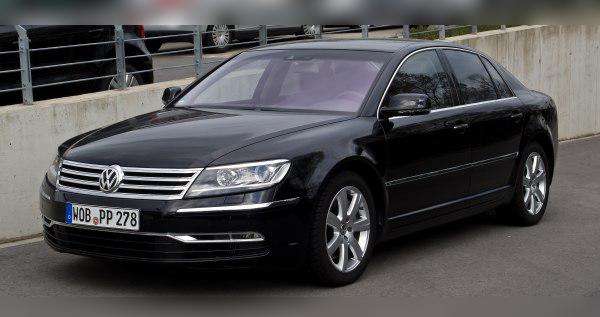
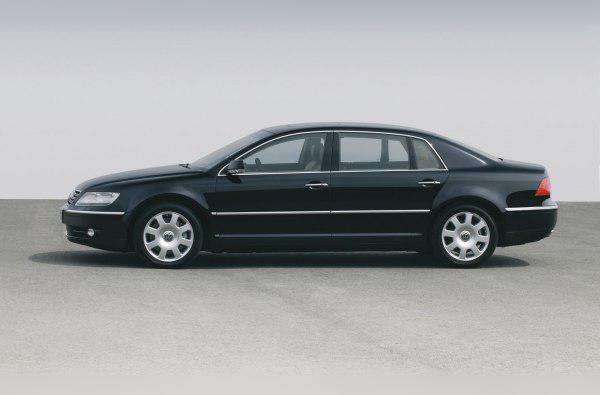
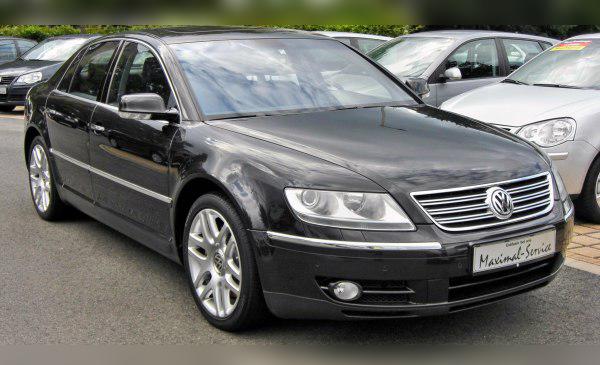
Volkswagen’s 6.0 W12 (engine codes BRN, BRP, BTT) represents the peak of the manufacturer’s ambition to enter the ultra-luxury sedan segment. This engine is the "heart" of the prestigious Volkswagen Phaeton (facelift versions after 2010). Unlike classic V12 engines, which are very long, the W12 is constructed by combining two narrow VR6 blocks at a 72-degree angle on a single crankshaft. The result is an engine that is extremely short (similar in size to a V8), which made it possible to install all-wheel drive (4MOTION).
This is not a racing engine, but one for effortless "cruising" (Grand Touring). Its operation is virtually silent, vibrations are non-existent, and the 450 hp is available instantly, with no turbo lag because it is a naturally aspirated unit. However, the complexity of this engine makes it one of the most demanding to own.
Technical Specifications
| Parameter | Value |
|---|---|
| Displacement | 5998 cc (6.0 L) |
| Configuration | W12 (12 cylinders in W layout) |
| Power | 331 kW (450 hp) at 6050 rpm |
| Torque | 560 Nm at 2750–5200 rpm |
| Engine codes | BRN, BRP, BTT |
| Injection type | Multipoint indirect injection (MPI) |
| Aspiration | Naturally aspirated |
| Camshaft drive | Chain (multiple chains) |
Reliability and Maintenance
Timing system: chain or belt?
This engine uses a timing chain system for valve timing. The system is extremely complex and is located on the rear side of the engine (between the engine and the transmission). Although the chain is designed to last "for life" (by factory definition around 250,000 km), in practice chain stretch or failure of tensioners and guides can occur earlier, especially if oil change intervals were long.
Symptoms of problems: Rattling noise on cold start that lasts longer than a few seconds, or the "Check Engine" light coming on due to camshaft synchronization issues. Note: Replacing the timing chain on a W12 engine requires removing the entire engine and transmission from the car, which is an extremely expensive job (depending on the market, expect thousands of euros just for labor).
Most common failures
Besides the chain, the biggest enemy of this engine is heat in the engine bay. Due to the "packed" design, airflow is limited.
- Cooling system: Plastic tees, hoses and connectors become brittle from heat and crack. Coolant leaks are a common problem. The thermostat is often hard to access (sometimes requires removing the intake manifold).
- Ignition coils: The engine has 12 coils. When one fails, the engine runs rough (misfire). It is recommended to replace them as a set or at least by bank (per side of the engine), even though it is expensive.
- Vacuum system: Numerous vacuum hoses that control engine operation also deteriorate from age and heat. Unmetered ("false") air leads to rough idle and increased fuel consumption.
- Oil leaks: Valve cover gaskets often fail and oil can leak onto the exhaust manifolds, causing smoke and an unpleasant smell.
Service intervals and oil
A minor service is recommended every 10,000 km up to a maximum of 15,000 km. You should by no means follow "Long Life" intervals of 30,000 km on such a complex engine.
Oil capacity: This engine takes a huge amount of oil, usually between 10.5 and 12 liters (depending on the exact oil pan and oil cooler variant). This alone makes even a minor service financially demanding.
Viscosity: Recommended grades are 5W-40 or 0W-40 that meet VW 502.00 or 504.00 standards. High-quality synthetic oil is mandatory due to high operating temperatures.
Oil consumption: W12 engines are known to "drink" some oil. Consumption of 0.5 to 1 liter per 2,000–3,000 km can be considered acceptable for an older engine, as long as there is no blue smoke from the exhaust. If it consumes a liter per 1,000 km, it is time to check piston rings or valve stem seals.
Spark plugs
Since this is a petrol engine, spark plugs should be replaced every 60,000 km (or earlier if the car is driven mostly in city traffic). Keep in mind you need 12 iridium spark plugs, and access to the rear cylinders is difficult and requires removing the intake manifold.
Specific Parts and Costs
Flywheel and clutch
This engine is paired exclusively with an automatic transmission (Tiptronic), so it does not have a classic dual-mass flywheel like manual gearboxes or DSG units. Instead, it uses a hydraulic torque converter. It is durable, but its overhaul is expensive (depending on the market) if slipping or vibrations occur.
Fuel injection system
These versions (BRN, BTT) mostly use Multipoint (MPI) port injection into the intake manifold, which is good news. Injectors are less sensitive to fuel quality compared to FSI (direct injection), and there are no such severe issues with carbon buildup on intake valves. Injectors rarely cause problems, but replacement is labor-intensive.
Turbocharger, DPF, EGR, AdBlue
- Turbo: The engine is naturally aspirated, it has no turbochargers. This is a big advantage for reliability as there are no expensive turbo overhauls.
- DPF and AdBlue: Being a petrol engine, it does not have a DPF filter nor does it use AdBlue.
- EGR and catalytic converters: It has an exhaust gas recirculation system and, more importantly, four catalytic converters and four lambda sensors. Failure of a catalytic converter (the core usually disintegrates) is very expensive because the parts are specific and hard to find.
- Secondary air pump: The system that pumps air at cold start (for faster catalytic converter warm-up) often fails, which triggers the check engine light.
Fuel Consumption and Performance
Real-world fuel consumption
To be completely honest – the W12 consumes a lot.
- City driving: Expect 18 to 25 l/100 km. In heavy traffic and in winter, this figure easily goes above 25 l/100 km.
- Country roads: On open roads it is possible to get it down to around 11–12 l/100 km.
- Motorway (130 km/h): Consumption is around 13 to 15 l/100 km.
Performance and "sluggishness"
The engine is by no means "sluggish". Although the Phaeton weighs over 2.2 tons, 560 Nm of torque is available over a wide rev range. The car pulls linearly, like a locomotive. There is no "kick in the back" as with turbo engines, but rather constant, relentless acceleration. On the motorway, at 130 km/h, the engine runs at very low revs (around 2000–2200 rpm), in complete silence.
Additional Options and Modifications
LPG conversion
In theory, since the engine is mostly MPI-based, it is possible to install an LPG system. In practice, however, it is a nightmare. You need a system for 12 cylinders (two ECUs, two vaporizers, 12 injectors). In the engine bay there is no space for anything, let alone additional LPG components. Most mechanics will refuse this job. If it is done, it must be top-quality equipment (very expensive).
Chiptuning (Stage 1)
On naturally aspirated petrol engines, chiptuning does not bring dramatic results. You can expect an increase of 15 to 20 hp and better throttle response. The main benefit of "chipping" this model is usually removing the electronic top speed limiter (factory 250 km/h), after which the W12 can reach up to around 300 km/h.
Transmission and Drivetrain
Type of transmission
In the facelift Phaeton, this engine is paired exclusively with an automatic Tiptronic transmission (usually the 6-speed ZF 6HP series, or a modified version in later years). A manual transmission does not exist in this combination.
Transmission maintenance and failures
- Oil service: Although VW often claims the oil is "lifetime", the transmission manufacturer (ZF) recommends changing the oil and filter every 80,000 to 100,000 km. Always use original ZF Lifeguard oil.
- Most common failures: Oil "leaks" from the transmission pan or the electronics connector. Symptoms are jerks when shifting (especially from 2nd to 1st when stopping) or engine revs flaring up due to slipping.
- Cost: Overhauling the torque converter or mechatronics is expensive (depending on the market), but if the oil is changed regularly, these transmissions are very durable and can cover high mileages.
Buying Used and Conclusion
When buying a used car with a W12 engine, the basic rule is: There is no such thing as a cheap example. If the price is low, the required investment is probably astronomical.
What to check?
- Cold start: Listen for timing chain rattle. It must disappear within 1–2 seconds. If it lasts longer, walk away.
- Diagnostics: Check for misfires on all cylinders and catalytic converter efficiency.
- Leaks: Put the car on a lift. Remove the undertrays. Inspect the engine–gearbox mating area and look for traces of coolant.
- Electronics: The Phaeton has kilometers of wiring. Check every button, air suspension operation, seat massage, climate control (4 zones).
Conclusion
The VW 6.0 W12 is an engine for collectors and true engineering enthusiasts. It offers a level of refinement comparable to Rolls-Royce and Bentley (where this engine is also used). However, it is a financial time bomb for the average driver. Buy it only if you have a maintenance budget that can comfortably absorb unexpected bills of several thousand euros without blinking. For everyday driving, a V8 or V6 TDI is a more rational choice, but the W12 is in a class of its own.
Was this content useful to you?
Your opinion helps us to improve the quality of the content.