CDLK Engine
- Engine
- 1984 cm3
- Aspiration
- Turbocharger, Intercooler
- Fuel
- Petrol (Gasoline)
- Fuel injection system
- Direct injection
- Power
- 280 hp @ 6000 rpm
- Torque
- 350 Nm
- Cylinders
- 4
- Valves
- 16, 4 per cylinder
- Cylinders position
- Inline
- Oil capacity
- 4.6 l
# Vehicles powered by this engine
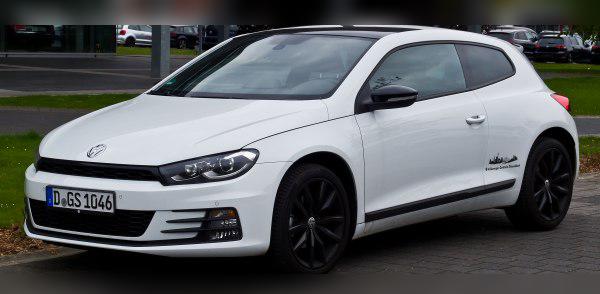
2.0 TSI CDLK (280 hp) – Experiences, problems, fuel consumption and used car buying guide
Key points (TL;DR)
- Performance: This is an "old school" turbo engine (based on the EA113 block) with a large K04 turbocharger. It offers explosive power and huge tuning potential.
- Timing system: A combination of a timing belt (main drive) and a chain (intermediate drive between camshafts). The major service is mandatory.
- Oil consumption: Although better than the notorious EA888 engines from that period, it still tends to drink oil if driven hard.
- Achilles' heel: The cam follower (high-pressure fuel pump tappet) is a wear item that must be checked because it can destroy the camshaft.
- Carbon buildup: As a direct injection engine, it is prone to carbon deposits on the intake valves.
- Recommendation: An excellent engine for enthusiasts who understand regular maintenance, but expensive as a "daily driver" in heavy city traffic.
Contents
- Introduction and Models
- Technical specifications
- Reliability and maintenance
- Specific parts and costs
- Fuel consumption and performance
- Additional options and modifications
- Gearbox (DSG and manual)
- Buying used and conclusion
Introduction: The heart of the Scirocco R
The engine with the code CDLK represents the peak of the evolution of the older but highly respected EA113 engine series from the Volkswagen Group. While the Golf 7 R moved to the newer generation of engines (EA888 Gen 3), Volkswagen decided to keep this proven unit in the facelifted Scirocco R (2014–2017), increasing its output to an impressive 280 hp.
This is an engine for drivers who appreciate raw power. Unlike more modern units that deliver power linearly, the CDLK has that recognizable "turbo kick" thanks to the K04 turbo. Although it belongs to the generation before the Golf 7 in terms of technology, many tuners still prefer it because of its robust engine block and somewhat simpler construction compared to the first EA888 series.
Technical specifications
| Parameter | Data |
|---|---|
| Engine displacement | 1984 cc (2.0 L) |
| Power | 206 kW (280 hp) at 6000 rpm |
| Torque | 350 Nm at 2500–5000 rpm |
| Engine code | CDLK (EA113 family) |
| Injection type | FSI / TSI (Direct injection) |
| Induction | K04 Turbocharger + Intercooler |
| Camshaft drive | Timing belt (main) + Chain (camshafts) |
Reliability and maintenance
Timing belt or chain?
This is a common misconception. The CDLK engine (EA113) has a timing belt that drives the exhaust camshaft from the crankshaft. However, it also has a small chain at the rear of the engine that connects the exhaust and intake camshafts.
So, you have both. The timing belt is reliable and is replaced at regular service intervals, while the chain and its tensioner can become noisy at higher mileage and should be checked if you hear rattling from the right-hand side of the engine (viewed from the front).
Most common failures and what to look out for
The most critical point of this engine is the cam follower (high-pressure fuel pump tappet). It is a small metal part located between the camshaft and the fuel pump. Over time, the protective coating on the follower wears off and metal starts rubbing against metal.
Symptoms: Loss of power, fault codes related to fuel pressure, and in the worst case – a destroyed camshaft and fuel pump. It is recommended to replace this part preventively every 30,000 to 50,000 km (the part itself is not expensive, but the damage it can cause is).
Another common problem is the PCV valve (crankcase ventilation / oil separator). When it fails, the engine starts to run rough at idle, consumes more oil and you may hear a whistling sound. Also, the diverter valve (DV) on the turbo can crack (if it is the older rubber version), which leads to a loss of boost and power. It is recommended to install the newer piston-type version of the valve.
Service intervals and oil
Major service: Although the manufacturer sometimes specifies longer intervals, given the power and thermal load of the CDLK engine, it is recommended to replace the timing belt kit and water pump every 5 years or 100,000 km (whichever comes first).
Oil: The engine takes about 4.6 liters of oil. The recommended grade is 5W-30 or 5W-40 (VW 504.00/507.00 or 502.00 standard). For spirited driving and warmer climates, 5W-40 is a better choice due to its stability at high temperatures.
Oil consumption: Yes, this engine does consume oil, but usually less than the newer first and second generation EA888 engines. Consumption of 0.3 to 0.5 liters per 1,000 km is considered "normal" by the factory, but in practice, a healthy engine should not consume more than 1 liter per 5,000–7,000 km.
Spark plugs and injectors
Spark plugs: On a stock engine they are replaced every 60,000 km. If the engine is remapped (Stage 1 or higher), the interval must be shortened to 20,000–30,000 km, and "colder" spark plugs are recommended (e.g. NGK BKR7EIX).
Injectors: The direct injection system is generally reliable, but injectors can start leaking or become clogged. A bigger issue than the injectors themselves is carbon buildup on the intake valves, because the fuel does not wash the valves. This is solved by mechanical cleaning (so-called "walnut blasting") every 100,000 km.
Specific parts and costs
Dual-mass flywheel
Yes, both manual and DSG versions have a dual-mass flywheel. Given the torque of 350 Nm (available at low revs), the flywheel is under heavy load.
Cost: Expensive. Replacing the flywheel is one of the bigger expenses on this car. Symptoms include metallic rattling when switching off the engine or vibrations at idle.
Turbocharger
The CDLK uses the famous BorgWarner K04 turbocharger. This is a larger turbo than on the standard GTI model (which uses a K03). The K04 is an extremely durable and robust turbo. With regular oil changes and proper cooldown of the engine after driving, the turbo often lasts as long as the engine itself. There are not two turbos, just one big one.
DPF, EGR and AdBlue
Since this is a petrol engine, it has no DPF filter and no AdBlue system. It does have a catalytic converter, which can fail if the engine burns too much oil or has combustion issues, but this is not a common failure. There is no EGR valve in the classic diesel sense that constantly clogs; exhaust gas recirculation is handled differently (via variable valve timing).
Fuel consumption and performance
Real-world fuel consumption
Do not be fooled by the official figures. This is a 280 hp engine in a relatively heavy body.
City driving: Expect between 11 and 14 l/100 km. In heavy traffic and in winter, this easily goes over 15 l/100 km.
Open road: With moderate driving on country roads it is possible to get down to 7–8 l/100 km.
Motorway: At 130 km/h, fuel consumption is around 8.5 to 9.5 l/100 km.
Performance and driving feel
Is the engine lazy? Absolutely not. The Scirocco R with this engine is a real "rocket". In-gear acceleration is fantastic. The only problem can be putting that power down to the road, because the Scirocco R is exclusively front-wheel drive (FWD), unlike the Golf R which is 4x4. Because of this, when you floor it in first and second gear, the electronics (XDS differential) have their hands full.
On the motorway, at 130 km/h in sixth gear (DSG), the engine spins at around 3,000 rpm, which provides an instant throttle response without the need to downshift.
Additional options and modifications
LPG conversion
It is possible, but not recommended nor cost-effective for most owners. Since this is a direct injection engine (FSI), it requires a specific LPG system that either uses a "liquid phase" (using petrol injectors for LPG) or injects a small amount of petrol along with LPG to cool the injectors. These systems are very expensive (often over 1000 EUR) and complicated to set up on such a powerful engine.
Remapping (Stage 1)
The CDLK is every tuner’s dream. The engine block is reinforced from the factory.
Stage 1: With just a software change (remap), this engine safely reaches 310–320 hp and over 400 Nm of torque.
Stage 2+: With an upgraded intake and exhaust ("downpipe"), this engine easily exceeds 350 hp. However, keep in mind that higher power drastically shortens clutch life and requires more frequent servicing.
Gearbox: Manual and DSG
Two types of 6-speed gearboxes were fitted to this engine:
- 6-speed manual: Precise and robust. The most common issue is the clutch, which may not last long if the car is remapped. Replacing the clutch kit together with the flywheel is expensive.
- 6-speed DSG (DQ250): This is a gearbox with "wet" clutches. It is considered one of the most reliable automatic gearboxes if maintained properly. It allows lightning-fast gear changes and the characteristic "pops" from the exhaust when shifting (the famous "DSG farts").
DSG maintenance: The oil and filter in the DSG gearbox must be changed strictly every 60,000 km. If this is neglected, the mechatronics unit (the gearbox brain) will fail, and repairing it is extremely expensive. Symptoms of problems include jerking when setting off or a delay when engaging "R".
Buying used and conclusion
Before buying a Scirocco R with the CDLK engine, make sure to check:
- Chain noise: When the engine is cold, listen for rattling from the right-hand side of the engine.
- Cam follower: Ask the owner when the fuel pump cam follower was last replaced. If they do not know what that is – be cautious.
- DSG history: Check for proof of gearbox oil changes every 60,000 km.
- Exhaust smoke: Bluish smoke when revving or on overrun indicates worn piston rings or valve stem seals.
Conclusion: The 2.0 TSI CDLK in the Scirocco R is a future classic. It is an old-school engine with modern performance. It is not for those who want economical A-to-B driving. It is aimed at drivers who want excitement and are prepared to pay for quality fuel and regular, preventive maintenance. If you find a well-maintained example that has not been "driven to death" by aggressive driving, you will get one of the most entertaining engines VW has ever made.
Was this content useful to you?
Your opinion helps us to improve the quality of the content.