EA888 / CULA Engine
- Engine
- 1984 cm3
- Aspiration
- Turbocharger, Intercooler
- Fuel
- Petrol (Gasoline)
- Fuel injection system
- Direct injection and Multi-port manifold injection
- Power
- 180 hp
- Torque
- 280 Nm
- Cylinders
- 4
- Valves
- 16, 4 per cylinder
- Cylinders position
- Inline
- Valvetrain
- DOHC
- Oil capacity
- 5.7 l
- Systems
- Start & Stop System
# Vehicles powered by this engine
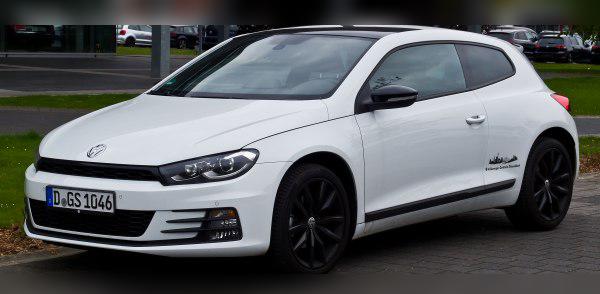
2.0 TSI (EA888 Gen 3 / CULA) – Experiences, Problems and Maintenance: The Golden Middle Ground for the Scirocco
1. In Short (TL;DR)
- Significantly improved engine: This is the third generation (Gen 3) of the EA888 engine, which has solved most of the excessive oil consumption issues that plagued previous versions.
- Thermostat and water pump: The biggest weak point of this engine. The housing is plastic and coolant leaks are a matter of "when", not "if".
- Timing chain instead of belt: Although the chain tensioning system has been improved, the chain can still stretch at higher mileages (over 150,000 km).
- Performance: With 180 hp and 280 Nm, the engine is extremely lively in the Scirocco body and easily copes with the weight of the car.
- Tuning potential: This engine has huge potential for remapping; with software only, it can easily reach GTI power levels.
- DSG gearbox: Requires strict maintenance (oil change every 60,000 km) to ensure longevity.
Contents
- Introduction
- Technical Specifications
- Reliability and Maintenance
- Specific Parts and Costs
- Fuel Consumption and Performance
- Additional Options and Modifications
- Gearbox
- Buying Used and Conclusion
Introduction
The engine with the code CULA belongs to the famous EA888 family from the Volkswagen Group, more precisely its third generation (Gen 3). This 180 hp unit was specifically designed to fill the gap between the weaker 1.4 TSI engines and the more powerful 2.0 TSI versions used in GTI/R models. It was primarily installed in the Volkswagen Scirocco III (facelift models from 2014 onwards), replacing the problematic 1.4 TSI Twincharger with 160 hp.
For driving enthusiasts, this is an important engine because it brings the architecture and robustness of the GTI engine, but in a more "civilized" package with lower fuel consumption and lower registration costs, while still retaining excellent performance.
Technical Specifications
| Parameter | Value |
| Engine displacement | 1984 cc (2.0 L) |
| Power | 132 kW (180 hp) |
| Torque | 280 Nm |
| Engine code | CULA (EA888 Gen 3) |
| Injection type | Direct (TSI/FSI) + Port (MPI) combined |
| Charging | Turbocharger (IHI IS20 or similar) + Intercooler |
| Camshaft drive | Chain |
Reliability and Maintenance
Does this engine have a timing belt or a chain?
The engine uses a timing chain. This was a sore point of the previous generations (Gen 1 and 2), but on this CULA engine (Gen 3) the tensioner system and the chain itself have been significantly improved. Still, the chain is not eternal. It is recommended to check its condition (stretch) via diagnostics (camshaft phase reading) after 120,000 km, or immediately if you hear a metallic rattling noise on cold start that lasts longer than 2–3 seconds.
What are the most common failures on this engine?
Although more reliable than its predecessors, the CULA engine has several specific issues:
- Thermostat module and water pump: This is the most common failure. The housing is made of plastic that deforms over time due to heat cycles, which leads to coolant leaks. The symptom is a dropping coolant level without visible puddles under the car (because it evaporates on the block) or a coolant smell in the cabin.
- PCV valve (oil separator): When the membrane in this valve tears, the engine starts to run unevenly (vibrates at idle), you may hear a whistling sound, and oil consumption suddenly increases.
- Turbocharger actuator: The electronic part that controls the turbo can seize or develop play, which leads to the "Check Engine" light coming on and loss of power (EPC fault).
At what mileage is the major service done?
Since the engine has a chain, a classic "major service" as on belt-driven engines does not exist at a fixed interval. However, the auxiliary belt (serpentine belt), tensioners and water pump should be inspected. Chain replacement is done as needed, but in practice this is most often between 150,000 and 200,000 km. If you hear rattling, it should be replaced immediately.
Oil: Quantity, grade and consumption
The engine takes approximately 5.7 liters of oil. The recommended grade is usually 5W-30 (VW 504.00/507.00 standard), although newer recommendations for some variants may go towards 0W-20 (check the owner’s manual or by VIN).
Oil consumption: Gen 3 engines have drastically reduced the oil consumption problem by changing the piston ring design. Still, consumption of 0.5 to 1 liter per 10,000 km is considered completely normal and acceptable for this type of engine. If it consumes more than that, first check the PCV valve or the turbo.
Spark plugs
The factory recommendation is often 60,000 km, but for optimal operation and to protect the ignition coils (which are sensitive), it is recommended to replace the spark plugs every 30,000 to 40,000 km, especially if you drive more aggressively.
Specific Parts (Costs)
Does the engine have a dual-mass flywheel?
Yes, it does. Both manual gearbox versions and DSG automatic versions are equipped with a dual-mass flywheel (DMF). Its lifespan is usually around 150,000–200,000 km, depending on driving style. Failure symptoms are knocking at idle that disappears when you press the clutch (on manuals) or metallic noises when switching the engine off. Replacement cost is high (depends on the market).
Fuel injection system and injectors
EA888 Gen 3 engines (depending on the market, but CULA mostly does) often use combined injection: they have 4 direct injectors (in-cylinder) and 4 port injectors (in the intake manifold). This is a great solution because the port injectors wash the intake valves with fuel, so there are no issues with carbon buildup like on older TSI engines. The injectors are generally reliable, but direct injectors are expensive if one fails.
Turbocharger
The engine uses a single turbocharger (usually IHI IS20). Its service life is very good and it often lasts as long as the engine itself with regular oil changes. It is critical not to switch the engine off immediately after hard driving on the highway.
Emissions: DPF, EGR, GPF, AdBlue?
As a petrol engine, this unit does not have a DPF filter or AdBlue fluid.
However, it does have a catalytic converter. As for the GPF (Gasoline Particulate Filter), Scirocco models from 2014–2017 mostly do not have it, because GPF became mandatory later with Euro 6d-TEMP standards (from 2018/2019). Still, always check by VIN, as later models may have a GPF that can clog similarly to a diesel DPF, although much less frequently.
Fuel Consumption and Performance
Real-world city fuel consumption
Do not trust the factory figures. The reality for the 2.0 TSI in the Scirocco is:
- City driving: Expect between 9 and 11 liters/100 km. In heavy traffic and winter, this easily goes up to 12 l.
- Highway / open road: Here the engine is efficient and can consume around 6.5–7.5 liters/100 km.
Is the engine "lazy"?
Absolutely not. The Scirocco is not a heavy car, and 280 Nm of torque is available from as low as 1500 rpm. The car pulls linearly and strongly. The subjective feeling is that you are driving a proper sports coupe. 0–100 km/h takes about 7.4 seconds, which is very respectable.
Behavior on the highway
This is the natural habitat of this engine. At 130 km/h the engine is relaxed (especially with the DSG gearbox in 6th gear), revs are usually below 3000 rpm. There is plenty of power in reserve for overtaking without the need for excessive downshifting.
Additional Options and Modifications
Is it suitable for LPG conversion?
Not recommended / Economically not viable. Due to the direct injection system, installation of a "regular" sequential LPG system is not possible. Expensive systems are required that either inject liquid gas (Direct Liquid Injection) or use a mixture of petrol and LPG (e.g. 80% LPG, 20% petrol) to cool the petrol injectors. Installation cost is very high (depends on the market) and only pays off if you drive more than 25–30,000 km per year.
Tuning (Stage 1)
This engine is a "detuned" version of the more powerful 2.0 TSI units. That means the hardware is capable of much more. A safe Stage 1 remap raises power from 180 hp to as much as 240–250 hp, and torque to over 350–370 Nm. This completely transforms the car. However, before remapping, be sure to check the condition of the chain and turbocharger.
Gearbox
Types of gearboxes
- Manual: 6-speed. Precise, with a short throw.
- Automatic: 6-speed DSG (code DQ250). This is a gearbox with a wet clutch.
Gearbox failures and maintenance
Manual: Very reliable. The most common expense is the clutch kit and dual-mass flywheel.
DSG (DQ250): This is a robust gearbox, much better than the notorious 7-speed DQ200 used on lower-powered engines. However, oil and filter changes in the DSG gearbox are mandatory every 60,000 km. If this is not done, the mechatronics (the gearbox brain) will fail, and repairs are very expensive. Also, the dual-mass flywheel on the DSG can be heard as metallic rattling in "P" or "N" position.
Buying Used and Conclusion
When buying a used Scirocco with this engine, pay attention to:
- Cold start: Ask for the engine to be completely cold. Listen to the chain noise during the first 3 seconds.
- Signs of coolant leaks: Look under the intake manifold, around the thermostat housing. If you see white/pink traces, prepare money for a new pump.
- DSG service history: If there is no proof that the gearbox oil was changed on time, skip that car.
Conclusion: The VW Scirocco 2.0 TSI (180 hp) with the CULA engine is probably the best balance in this model range. It offers reliability (far better than the 1.4 TSI), performance close to a GTI, and moderate maintenance costs. It is intended for drivers who want a sporty look and driving experience, but are not ready to pay the premium for the "R" or full GTI models. With regular oil changes and attention to the cooling system, this engine can cover very high mileages.
Was this content useful to you?
Your opinion helps us to improve the quality of the content.