DACB Engine
- Engine
- 1498 cm3
- Aspiration
- Turbocharger, Intercooler
- Fuel
- Petrol (Gasoline)
- Fuel injection system
- Direct injection
- Power
- 130 hp @ 5000 rpm
- Torque
- 220 Nm
- Cylinders
- 4
- Valves
- 16, 4 per cylinder
- Cylinders position
- Inline
- Oil capacity
- 4.3 l
- Systems
- Start & Stop System, Cylinder deactivation system, Particulate filter
# Vehicles powered by this engine
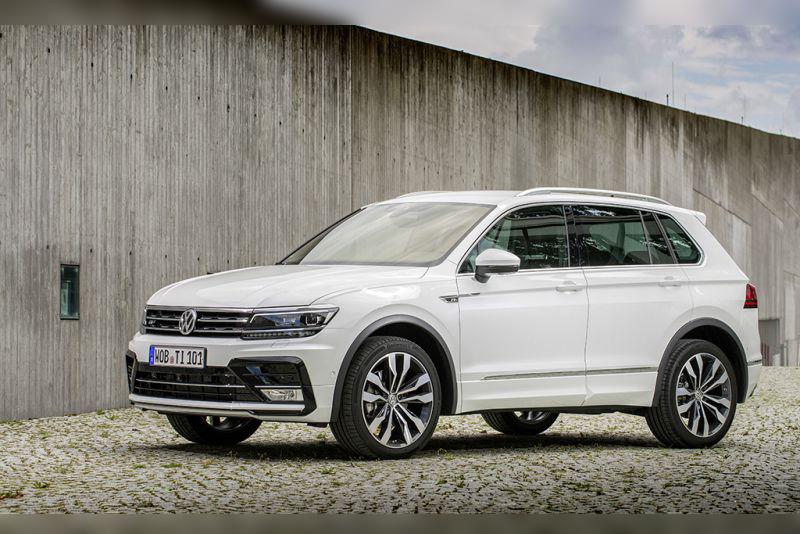
In short: 1.5 TSI (DACB) 130 hp – What you need to know
- Technology: This is a “Miller cycle” engine focused on extreme efficiency, equipped with a VTG turbocharger (variable geometry), which is rare for petrol engines.
- Notorious “kangarooing”: Early models (2018–2019) had an issue with jerking when setting off with a cold engine. It is solved by a software update.
- ACT system: The engine shuts down two cylinders when there is no load. The system is generally reliable, but it adds complexity.
- Timing drive: It uses a timing belt, not a chain, which is a big plus for reliability compared to the old 1.4 TSI engines.
- Performance in the Tiguan: 130 hp is the lower limit for an SUV of this size. It’s not a sports car, but it is perfectly adequate for normal family driving.
- Gearbox: If you choose an automatic, it’s the DQ200 (dry clutch), which requires caution when buying used.
Contents:
1.5 TSI (DACB) 130 hp – Real-world experience, issues and maintenance
The engine with the code DACB belongs to the modern EA211 Evo family of the Volkswagen Group. This is not just a “downsized” older engine, but a technologically very advanced unit that uses the Miller combustion cycle. What does that mean for you? It means this engine is designed to squeeze out every drop of fuel, sacrificing a bit of peak power in favor of better efficiency and lower emissions.
In a model such as the VW Tiguan II, this engine represents the entry-level option. Many are skeptical whether 1.5 liters is enough for an SUV, but thanks to the advanced turbo, it behaves better in practice than the numbers on paper suggest. Still, like every modern machine packed with emissions tech and sensors, it has its quirks you need to pay attention to.
Technical specifications
| Feature | Data |
|---|---|
| Displacement | 1498 cc (1.5 L) |
| Power | 96 kW (130 hp) |
| Torque | 220 Nm at 1750–3500 rpm |
| Engine code | DACB (EA211 Evo) |
| Injection type | Direct injection (TSI/GDI) – up to 350 bar |
| Charging | VTG Turbo (Variable geometry), Intercooler |
| Valve system | DOHC, 16 valves, Timing belt drive |
| Emissions | Euro 6d-TEMP (with GPF filter) |
Reliability and Maintenance
Timing belt or chain?
Good news for everyone who remembers the horror stories about stretched chains on the old 1.4 TSI engines: the 1.5 TSI (DACB) uses a timing belt. This system has proven to be very reliable. The manufacturer often quotes optimistic replacement intervals (up to 210,000 km or 10 years), but as an experienced editor I recommend shortening that interval. In reality, it is safe to do the major service at 150,000 to 180,000 km or at a maximum of 7–8 years of age, whichever comes first.
Most common failures and symptoms
Although mechanically robust, the engine suffers from a few specific issues:
- “Kangarooing” (Jerking when setting off): This was the most common problem with early series (2018–2019). When the engine was cold, the car would hop (like a kangaroo) in first gear. Cause: Poor engine software mapping that tried to heat up the catalytic converter too quickly. Solution: A software update at an authorized service center solves about 90% of cases.
- Oil consumption: Like any turbo engine with low-friction design, it can consume some oil. Up to 0.5 liters per 5,000 km is acceptable, but anything above that requires inspection. The piston rings are thin to reduce friction.
- Carbon buildup (Soot): Due to direct injection, the intake valves are not washed by fuel. Over time, carbon deposits can build up and reduce power. A typical symptom is rough idle.
Minor service: Oil and Spark plugs
This engine takes approximately 4.3 liters of oil. For this Evo engine VW strictly recommends low-viscosity 0W-20 oil (VW 508.00 standard) to save fuel and ensure proper operation of the ACT system. You can also use 5W-30 (VW 504.00) if you are not running extended LongLife intervals, but check the owner’s manual for your climate zone.
Spark plugs: They should be replaced every 60,000 km or 4 years. Don’t skimp on them, because bad plugs can damage the coils that sit directly on top of them.
Specific Parts (Costs)
Dual-mass flywheel
Yes, this engine has a dual-mass flywheel, especially in the 130 hp version in the heavy Tiguan. Due to the cylinder deactivation system (ACT) and low-rpm operation for fuel saving, vibrations are present, so a dual-mass flywheel is necessary to absorb them. Its lifespan is usually around 150,000–200,000 km, depending on driving style. Replacement is expensive (very costly, depends on the market).
Turbocharger and Injection
This 130 hp version uses a VTG turbocharger (Variable Turbine Geometry). This technology was for decades reserved for diesels (because of the high exhaust gas temperatures in petrol engines). VW solved this with expensive materials. VTG provides excellent throttle response at low revs. However, if it fails, overhauling is complicated and expensive, and a new unit is very costly (depends on the market). The injection system operates at pressures up to 350 bar – the injectors are precise but sensitive to poor-quality fuel.
DPF (GPF) and EGR
Petrol engines do not have a DPF, but they do have its equivalent – a GPF (Gasoline Particulate Filter). Unlike diesels, the GPF regenerates (heats up) much more easily and quickly because petrol exhaust gases are hotter. Clogging is rare, unless the car is driven exclusively 2 km a day in winter. There is no AdBlue fluid; that is reserved for diesels.
Fuel Consumption and Performance
Real-world fuel consumption
The Tiguan is not a light car and has poor aerodynamics (boxy shape). Factory figures are optimistic; the reality is:
- City driving: Expect between 7.5 and 9.0 l/100 km, depending on traffic and how heavy your right foot is.
- Highway / country roads: This is where the Miller cycle shines. It is possible to bring consumption down to 5.5–6.5 l/100 km with moderate driving.
Is 130 hp too little for the Tiguan?
The engine is not “lazy” in city conditions thanks to the 220 Nm of torque available low down. However, on the motorway, when overtaking with a fully loaded car, you will feel the lack of power. You will have to downshift and rev it higher. Cruising at 130 km/h is quiet and comfortable; revs are usually around 2,400–2,600 rpm (depending on the gearbox), which is pleasant for both your ears and your wallet.
Additional Options and Modifications
LPG conversion
Since this is a direct-injection engine, an LPG conversion is complex and expensive. It requires a system that either injects liquid gas directly through the petrol injectors (very expensive) or a system that uses a mixture of petrol (20%) and LPG (80%) to cool the injectors. Given the relatively low petrol consumption, the cost-effectiveness of LPG is questionable unless you cover very high mileages.
Chiptuning (Stage 1)
The engine can be remapped. A Stage 1 tune usually raises power to about 150–160 hp and torque to around 250–260 Nm. Caution: If you have an automatic gearbox, check its torque limit. Also, the VTG turbo is already a complex component, so aggressive maps can shorten its lifespan.
Gearbox: Manual and DSG
With this engine in the Tiguan II you will most commonly find:
- 6-speed manual gearbox (MQ281): Precise and robust. Failures are rare, and the clutch kit is a wear item (cost is moderate).
- 7-speed DSG (DQ200): This is an automatic gearbox with a dry dual clutch.
DSG (DQ200) issues
This is a critical point. The DQ200 is designed for engines up to 250 Nm. Since the 1.5 TSI 130 hp has 220 Nm, it is in the “safe zone”, but the Tiguan is a heavy car. In city stop-and-go driving, the dry clutches wear faster and can overheat. Symptoms of problems: Jerking when setting off, hesitation when shifting, metallic noises. Replacing the clutch kit and dual-mass flywheel on a DSG is an expensive job (very costly, depends on the market). The mechatronics unit (the gearbox brain) can also fail.
Gearbox service: For the DQ200 VW says it is “sealed for life” (no maintenance), but in practice the oil in the mechatronics and gearbox section should be checked/replaced every 60,000–80,000 km to extend its life.
Buying Used and Conclusion
What to check before buying?
- Cold start: Insist on starting the car when the engine is completely cold. If the engine jerks unpleasantly, stalls, or “hops” during the first minute of driving, it may be a software issue or carbon buildup on the valves.
- Cylinder deactivation behavior: When you are driving at a constant speed and the display shows “2-cylinder mode” (or ECO), you should not feel any jerk or change in sound. If the car vibrates, the engine mounts or flywheel may be worn.
- DSG behavior: The gearbox must set off smoothly, without shocks, even on an incline.
Final word
1.5 TSI (130 hp) DACB in the VW Tiguan is a rational, not an emotional choice. It is intended for drivers who spend most of their time in city and suburban driving, and who want the comfort and quietness of a petrol engine with fuel consumption that is not dramatically higher than a diesel. If you often tow a trailer or drive a fully loaded car on the motorway, look for a 2.0 TDI. For everyone else, this is a modern, refined and (with regular maintenance) sufficiently reliable engine.
Was this content useful to you?
Your opinion helps us to improve the quality of the content.