BPD, BPE Engine
- Engine
- 2461 cm3
- Aspiration
- Turbocharger, Intercooler
- Fuel
- Diesel
- Fuel injection system
- Pump-nozzle (Unit Injector)
- Power
- 174 hp @ 3500 rpm
- Torque
- 400 Nm @ 2250 rpm
- Cylinders
- 5
- Valves
- 10, 2 per cylinder
- Cylinders position
- Inline
- Valvetrain
- SOHC
- Oil capacity
- 8.9 l
- Coolant
- 9 l
- Systems
- Particulate filter
# Vehicles powered by this engine
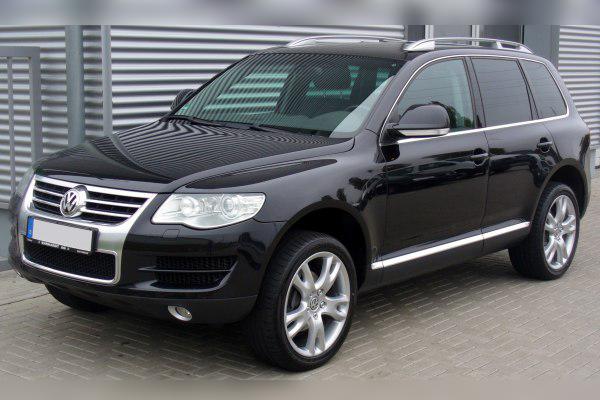
2.5 TDI (BPD, BPE) – Experiences, problems, fuel consumption and used-buying guide for VW Touareg
Key points (TL;DR)
- No timing belt or chain: The timing is driven by gears, which is theoretically a lifetime solution, but it has its quirks.
- Water pump is a critical point: It sits inside the engine block; when it leaks, coolant goes straight into the oil (sump).
- Specific engine oil: This engine is extremely sensitive to incorrect oil. Using the wrong grade destroys the camshaft and valve lifters.
- Fuel consumption is not low: Although it’s “only” 2.5 liters, in a heavy Touareg it consumes almost as much as a V6, while offering weaker performance.
- Expensive peripheral parts: The alternator and A/C compressor pulleys have specific couplings (rubber and one-way bearings) that must be replaced preventively.
- Conclusion: A robust, old-school engine, but it requires meticulous maintenance by a mechanic who knows VW R5 engines.
Contents
- Introduction and applications
- Technical specifications
- Reliability and maintenance
- Specific parts (costs)
- Fuel consumption and performance
- Additional options and modifications
- Gearbox
- Buying used and conclusion
Introduction and applications
The engine in question is an inline five-cylinder (R5), known for its characteristic deep sound that resembles light commercial vehicles. The designations BPD and BPE refer to facelift versions of the first-generation VW Touareg (7L), which came from the factory with a DPF filter to meet stricter emission standards.
This is the “entry-level” engine for the Touareg. It was conceived as a more economical alternative to the larger V6 TDI, but in practice it turned out to be a unit that requires specific know-how to maintain. Enthusiasts appreciate it for its robust block and the absence of a timing belt, while critics avoid it because of the noise and insufficient power for the vehicle’s weight.
Technical specifications
| Characteristic | Value |
|---|---|
| Displacement | 2461 cc (2.5 l) |
| Configuration | R5 (Inline, 5 cylinders) |
| Power | 128 kW (174 hp) at 3500 rpm |
| Torque | 400 Nm at 2000 rpm |
| Engine codes | BPD, BPE |
| Injection system | Pumpe-Düse (PD / Unit Injector) |
| Charging | Turbocharger with variable geometry + intercooler |
| Emission standard | Euro 4 (with DPF) |
Reliability and maintenance
Does this engine have a timing belt or chain?
This engine is specific in that it has neither a timing belt nor a chain. Valve timing and auxiliary drive are handled via a gear train (gear-driven). This is theoretically a “lifetime” solution that does not require replacement. However, the gears are noisy and if they get damaged (e.g. due to poor oil), repairs are extremely expensive because the engine has to be removed and the entire timing assembly dismantled.
What are the most common failures on this engine?
The most serious issue is the water pump. It is located inside the engine block. When its seal fails, coolant does not leak outside, but directly into the sump and mixes with the engine oil. The symptom is a rising oil level (“oil is being created”) and an emulsion (mayonnaise) on the filler cap. If you don’t react immediately, the entire engine is ruined.
Another frequent problem are the couplings (freewheel) of the alternator and A/C compressor. Since there is no multi-rib belt, these units are driven via rubber couplings that must be replaced at around 150,000 km. If they fail, you lose charging or air conditioning.
On older versions (before 2006) there was an issue with the plasma coating in the cylinders flaking off, but BPD/BPE engines are somewhat better in that regard, although still sensitive if poor fuel or oil is used.
At what mileage is the major service done?
A classic “major service” (belt replacement) does not exist here. However, it is recommended that every 150,000 km you replace the rubber couplings (Gates couplings) and one-way bearings on the alternator and A/C compressor. Preventive replacement of the water pump is also advisable at a similar mileage to avoid catastrophic failure.
How many liters of oil does this engine take and which grade is recommended?
The engine holds a large amount of oil, about 7.4 liters (check the exact amount during service). For BPD and BPE engines equipped with a DPF filter, it is mandatory to use oil that meets the VW 507.00 specification (usually 5W-30). Using the wrong oil (e.g. without appropriate high-pressure additives) leads to rapid wear of the camshaft and rocker arms.
Does it consume oil between services?
Yes, these engines are known to consume oil. Consumption of 0.5 to 1 liter per 10,000 km is considered acceptable for a higher-mileage engine. However, be careful: if the oil level is rising, it’s a sign that diesel is leaking into the oil (via injector seals or the tandem pump) or that coolant is entering (water pump). The level must be checked regularly.
How long do the injectors last and how reliable are they?
The system uses Pumpe-Düse (PD) units. They are robust and can last over 300,000 km. The most common problem is not the injectors themselves, but their seats in the cylinder head. Over time the seats “wear out”, so the injector develops play. Also, the seals (O-rings) on the injectors fail, which leads to mixing of diesel and oil or hard starting (fuel drains back to the tank while the car is parked). Injector overhaul is possible, but expensive (Overhaul cost: High).
Specific parts (costs)
Does the engine have a dual-mass flywheel?
Yes, versions with a manual gearbox have a dual-mass flywheel. Given the high torque and vibrations of the five-cylinder, the flywheel is under heavy stress. Automatics do not have a classic dual-mass flywheel; instead, they use a torque converter.
Does the engine have a turbocharger and what is its lifespan?
It has a single turbocharger with variable geometry (VGT). It is quite durable with regular oil changes and proper cooldown after driving. Problems more often occur with the turbo actuator or due to clogged variable geometry (soot), which causes the engine to go into “safe mode” under load.
Does this model have a DPF filter or EGR valve?
BPD and BPE engines are factory-fitted with a DPF filter and an EGR valve. The DPF filter is a common source of problems if the vehicle is used mainly in the city. Regeneration does not complete properly, the oil level rises (due to diesel injected for regeneration), and the warning light often comes on. The EGR valve clogs with soot, which chokes the engine.
Does this engine have AdBlue?
No, this generation of Touareg (7L) with the 2.5 TDI engine does not have an AdBlue system. It relies only on the catalytic converter and DPF to clean exhaust gases.
Fuel consumption and performance
What is the real fuel consumption in city driving?
Don’t expect miracles. The Touareg weighs around 2.3 tons, has permanent four-wheel drive and poor aerodynamics. In city driving, real-world consumption ranges from 12 to 15 l/100 km, depending on traffic and how heavy your right foot is. In winter it can be even higher.
Is this engine “lazy” for the weight of the body?
Objectively – it is somewhat lazy. With 174 hp and 400 Nm, it copes well with city driving and maintaining speed, but in-gear acceleration is slow. Overtaking on country roads requires planning. The feeling of sluggishness is more pronounced with the automatic gearbox, which “eats up” part of the power.
How does the engine behave on the motorway?
On the motorway it behaves like a tank – stable and noisy. At 130 km/h the engine spins at about 2600–2800 rpm (depending on the gearbox), and consumption is around 9–11 l/100 km. Speeds above 150 km/h don’t suit it much, both because of the noise and because fuel consumption rises dramatically.
Additional options and modifications
How far can this engine be safely “chipped” (Stage 1)?
This engine responds well to remapping (Stage 1). It can safely be raised to about 200–210 hp and 450–480 Nm. This modification significantly improves driving characteristics, the car “breathes easier” and struggles less with the body weight. However, before remapping, you must check the condition of the exhaust manifold (prone to cracking) and the turbocharger. If the gearbox is automatic, be moderate with torque so as not to shorten the gearbox’s lifespan.
Gearbox
Which gearboxes were fitted?
With the 2.5 TDI you could get:
1. A 6-speed manual gearbox.
2. A 6-speed automatic Tiptronic (Aisin) – much more common.
What are the most common failures?
Manual gearbox: Very reliable, failures are rare. The main expense is the clutch kit and dual-mass flywheel.
Automatic gearbox (Aisin 09D): A Japanese gearbox that is robust but has a weak point – the valve body. Symptoms are harsh shifts (especially from 5th to 4th or when taking off) once the gearbox is warm. Valve body overhaul is expensive (Depending on the market: Medium to very expensive).
How much does clutch replacement cost (manual)?
The clutch kit with dual-mass flywheel is a major expense. Replacement is labor-intensive due to the 4x4 drivetrain. (Parts cost: Expensive, depends on brand LUK/Sachs).
At what mileage should the gearbox be serviced?
For automatics, VW once claimed the oil is “lifetime”. This is not true. Oil and filter in the automatic gearbox should be changed every 60,000 km. This dramatically extends the life of the valve body.
Buying used and conclusion
Before buying a Touareg with the 2.5 TDI engine, pay attention to the following:
- Open the oil filler cap: If you see white emulsion (mayonnaise), walk away – the water pump has failed. Also, if steam is puffing out of the cap like a locomotive, the engine is worn out.
- Starting: It should fire up instantly, both cold and hot. Long cranking indicates a problem with injector seals or the tandem pump.
- Noise: Listen for rattling from the front of the engine (gear timing) or whistling (cracked exhaust manifold).
- Automatic gearbox: Test-drive the car until it is fully warm. Shifts must be smooth and barely noticeable. Any thump means a potential overhaul of 1000+ euros.
Conclusion: The Touareg 2.5 TDI (BPD/BPE) is a car for those who want a robust SUV and are ready to accept higher maintenance costs in exchange for capability and comfort. It’s not fast, it uses plenty of fuel, but with proper maintenance (especially oil and water pump) it can cover huge mileages. If your budget allows, the V6 TDI is a better match for this car, but the 2.5 TDI is cheaper to buy initially and doesn’t have the complex timing chains of the V6.
Was this content useful to you?
Your opinion helps us to improve the quality of the content.