CAVC, CTHC Engine
- Engine
- 1390 cm3
- Aspiration
- Turbocharging and Supercharger, Intercooler
- Fuel
- Petrol (Gasoline)
- Fuel injection system
- Direct injection
- Power
- 140 hp @ 5600 rpm
- Torque
- 220 Nm @ 1500 rpm
- Cylinders
- 4
- Valves
- 16, 4 per cylinder
- Cylinders position
- Inline
- Oil capacity
- 3.6 l
# Vehicles powered by this engine
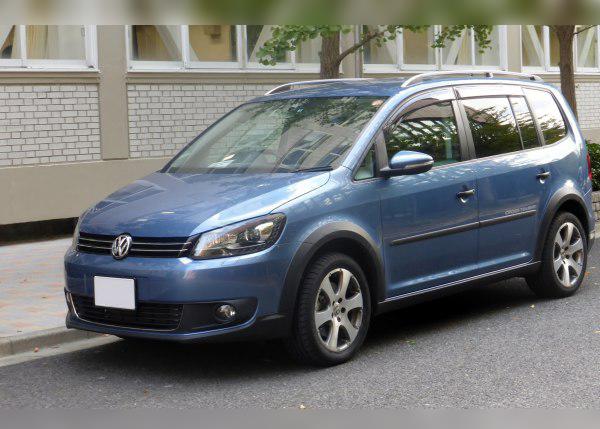
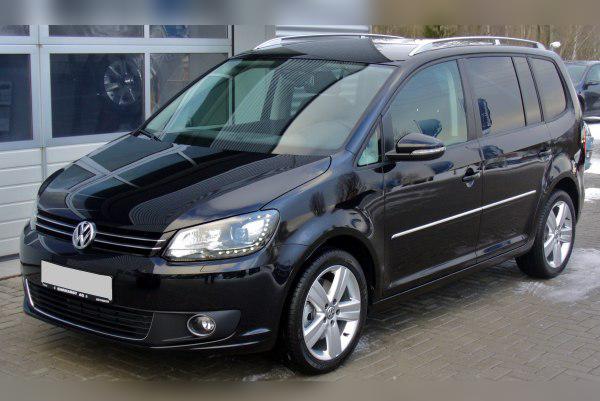
1.4 TSI (CAVC, CTHC) 140 HP – Experiences, problems, fuel consumption and used car buying tips
Key points (TL;DR)
- Technology: This is a "Twincharger" engine (Turbo + Supercharger). It offers great performance for a small displacement, but is mechanically very complex.
- Timing drive: The engine uses a timing chain which is known for stretching and tensioner issues, especially in earlier (CAVC) versions.
- Oil consumption: Common issue, often caused by problematic piston rings or cracked pistons in older series.
- Critical engine codes: CAVC (older) is riskier than CTHC (newer, with improved pistons and chain).
- Gearbox: The 7‑speed DSG (DQ200) with dry clutch requires caution and a thorough mechatronics check.
- Recommendation: Excellent to drive, but requires meticulous maintenance and a verifiable service history. Not for those who want a “fill up and drive” car with no investment.
Contents
Introduction: A small powerhouse in a heavy body
The 1.4 TSI engine with 140 HP (engine codes CAVC and CTHC) belongs to the famous but also controversial EA111 family of Volkswagen engines. This is not an ordinary turbo petrol. It uses "Twincharger" technology that combines a mechanical supercharger for low revs and a turbocharger for higher revs. The goal was to eliminate turbo lag and deliver the power of a 2.0 naturally aspirated engine with lower fuel consumption.
It was primarily installed in the VW Touran I (2010 facelift) and its Cross Touran version. This is an important engine because it represents VW’s transitional phase towards downsizing, but it also comes with certain "teething problems" that were solved on the go.
Technical specifications
| Specification | Data |
|---|---|
| Engine displacement | 1390 cc |
| Power | 103 kW (140 HP) |
| Torque | 220 Nm at 1500–4000 rpm |
| Engine codes | CAVC (until end of 2012), CTHC (from 2013) |
| Fuel injection system | Direct injection (TSI / FSI) |
| Forced induction | Turbocharger + Mechanical supercharger (Roots type) |
Reliability and maintenance
Chain or belt?
This engine (EA111 generation) uses a timing chain to drive the camshafts. Unfortunately, the chain is one of the weaker points of this engine. It was designed to last the life of the engine, but in practice it often stretches as early as 60,000 to 100,000 km. The symptom is a characteristic rattling (metallic noise) on cold start that lasts a few seconds. If ignored, the chain can jump a tooth, which leads to catastrophic engine failure (piston-to-valve contact).
Most common failures
Besides the chain, the most serious problem, especially for the CAVC version, is piston cracking. Due to high thermal load and sometimes poor fuel quality, there were cases of detonation (LSPI – Low Speed Pre-Ignition) which break piston rings or the pistons themselves.
Another frequent failure is the electromagnetic clutch on the water pump. The water pump on this engine is complex because via the pulley and magnetic clutch it also engages the supercharger. When the clutch fails, the supercharger does not engage, the car loses low-end power and the "Check Engine" light comes on.
Major service and spark plug replacement
Since the engine has a chain, the classic "major service" is not done at a fixed interval like with a belt; instead, the chain is replaced as needed (when it becomes noisy). However, it is recommended to thoroughly check the condition of the chain and tensioner every 100,000 km.
Spark plugs are critical for this engine. Due to high temperatures and direct injection, it is recommended to replace them every 30,000 to 40,000 km (even though the manufacturer sometimes states 60,000 km). Worn spark plugs can cause ignition coil issues (which are also consumable items) and risky detonation in the cylinders.
Oil: quantity and consumption
The engine takes about 3.6 litres of engine oil. You must use fully synthetic oil of grade 5W-30 or 5W-40 that meets the strict VW 504.00 / 502.00 standards.
Oil consumption is a frequent topic. The manufacturer tolerates up to 0.5 litres per 1,000 km, but in practice a healthy engine should not consume more than 1–1.5 litres between services (over 10,000 km). If the engine consumes a litre of oil every 1,000–2,000 km, this is a clear sign of worn piston rings or turbo issues, which requires an expensive repair.
Specific parts (costs)
Dual-mass flywheel
Yes, this engine (in the Touran) combined with either the manual gearbox or the DSG gearbox uses a dual-mass flywheel. Its role is to dampen engine vibrations. Service life depends on driving style, but it usually lasts between 150,000 and 200,000 km. Replacement cost is high (varies by market), but it is an unavoidable expense on modern cars.
Turbo and supercharger
The engine has one turbocharger and one mechanical supercharger (Roots). The supercharger works from idle up to around 2,400 rpm, and the turbo takes over at higher revs. The supercharger itself is mechanically robust and rarely fails on its own, but the mechanism that engages it (via the water pump) is sensitive. The turbocharger has an average service life (around 200,000 km), provided quality oil is used and the engine is allowed to cool down after hard driving.
Fuel injection system and emissions
It uses direct fuel injection. The injectors are precise but sensitive to poor fuel quality. They can start to "dribble" fuel, which washes oil off the cylinder walls and accelerates engine wear.
As for emissions, the engine has a catalytic converter and an EGR system. It does not have a DPF filter (that’s for diesels), and in this generation it does not have AdBlue or a GPF (gasoline particulate filter), which only came with later standards. One of the issues with direct injection is carbon buildup on the intake valves, which over time requires mechanical cleaning (so‑called walnut shell blasting).
Fuel consumption and performance
City driving and motorway
The VW Touran is a heavy car, and its body shape is not particularly aerodynamic.
City driving: Expect real-world consumption between 9 and 11 litres per 100 km, depending on traffic and how heavy your right foot is. Official figures are often overly optimistic.
Out of town: Consumption drops to around 6.5 to 8 litres.
Is the engine "lazy"?
Quite the opposite. Thanks to the supercharger which provides 220 Nm of torque already from 1,500 rpm, the engine pulls surprisingly well even in a fully loaded Touran. On the road it behaves like a much larger naturally aspirated engine (e.g. 2.0 or 2.4 litres). There is no feeling of lack of power when overtaking.
On the motorway, at 130 km/h in top gear (6th gear or 7th on the DSG), the engine spins at about 2,800 to 3,000 rpm, which provides a relatively quiet and comfortable drive.
Additional options and modifications
LPG conversion
Since this is a direct injection engine (FSI/TSI), LPG conversion is complex and expensive. A special system is required that either injects liquid gas directly through the petrol injectors, or a system that uses a mixture of petrol and gas (to cool the petrol injectors). The cost-effectiveness of such a conversion is questionable unless you cover very high mileages.
Chip tuning (Stage 1)
Although turbo engines are easy to "chip", with the 1.4 TSI Twincharger you need to be extremely careful. A Stage 1 remap can raise power to 170–180 HP, but given the sensitive pistons and chain on the CAVC version, this is not recommended if you want a long-lasting engine. Increasing cylinder pressure can drastically shorten the life of already heavily stressed components.
Gearbox
Manual and DSG
With this engine you get two options:
- 6‑speed manual gearbox: Very precise, reliable and cheaper to maintain. It requires oil changes at long intervals, and the main expense is the clutch kit and dual-mass flywheel.
- DSG 7 (DQ200): Automatic dual‑clutch gearbox with dry clutches. It is faster and more comfortable, but carries certain risks.
Problems with DSG 7 (DQ200)
The DQ200 gearbox is known for several issues. The clutches wear faster than on "wet" DSG gearboxes (especially in stop‑and‑go city driving). Also, the mechatronics unit (the brain of the gearbox) is prone to failures due to overheating or electrical faults. Mechatronics repair is very expensive. The oil in the gearbox (gear section) should be changed, even though VW sometimes states it is "lifetime"; it is recommended to replace it every 60,000 km, together with the fluid in the mechatronics unit if it is serviceable.
Buying used and conclusion
Before buying a Touran with this engine, make sure you do the following:
- Listen to a cold start: If you hear chain rattle for more than 2–3 seconds, prepare money for a timing chain replacement.
- Check the engine code: Try to find a model with the CTHC code (usually models from late 2012 onwards). They have reinforced pistons and resolved chain tensioner issues that the CAVC had.
- Test drive: Check whether the car "stutters" under acceleration (coils/spark plugs) and whether it pulls linearly from low revs (proper operation of the supercharger and magnetic clutch).
- Check the DSG: The gearbox must shift smoothly. Any jolts or slipping are signs of an expensive fault.
Conclusion
The VW 1.4 TSI Twincharger in the Touran is a fantastic driver’s engine. It delivers performance you would not expect from 1.4 litres and makes driving a heavy MPV fun. However, it is technically complex and demanding. If you are looking for maximum reliability and low running costs, a simpler diesel or conventional petrol engine is a better option. This engine is for those who want petrol performance and are willing to pay for quality maintenance and preventive servicing.
Was this content useful to you?
Your opinion helps us to improve the quality of the content.