CHYA, CHYE, DAFA Engine
- Engine
- 999 cm3
- Aspiration
- Naturally aspirated engine
- Fuel
- Petrol (Gasoline)
- Fuel injection system
- Multi-port manifold injection
- Power
- 60 hp @ 5000 rpm
- Torque
- 95 Nm
- Cylinders
- 3
- Valves
- 12, 4 per cylinder
- Cylinders position
- Inline
- Oil capacity
- 3.4 l
- Systems
- Particulate filter
# Vehicles powered by this engine
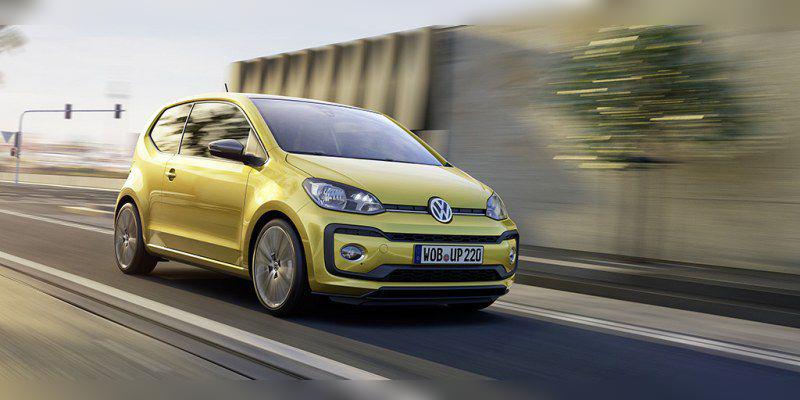
VW 1.0 MPI (60 hp) – Experiences, problems, fuel consumption and buying used
When talking about perfect city cars, the Volkswagen Up! (together with its siblings Škoda Citigo and Seat Mii) holds a special place. Under the bonnet of these little cars, especially in the facelift versions from 2016 onwards, you’ll most often find the proven 1.0 MPI engine. This is not a racer, it’s not an engine for breaking speed records, but it’s probably one of the most rational choices for today’s urban jungle.
The codes CHYA, CHYE and DAFA belong to the more modern generation of EA211 engines. Unlike older VW engines that were known to cause headaches, this small three-cylinder unit was designed to be simple, cheap to maintain and durable, provided you accept its performance limitations.
Key points (TL;DR)
- Reliability: Extremely high. Simple construction without turbo and direct injection means fewer failures.
- Timing service: The engine uses a timing belt, not a chain, which has solved many problems of previous generations.
- Gearbox: The manual is excellent, while the ASG (robotised) gearbox should be avoided due to uncomfortable driving and high repair costs.
- City driving: Its ideal environment. The engine is lively up to 60 km/h, but runs out of breath on open roads.
- LPG: A perfect candidate for LPG conversion thanks to MPI injection.
- Fuel consumption: Very low, realistically around 5–6 litres in the city.
- Sound: The characteristic “snorty” three‑cylinder sound and mild vibrations at idle are normal.
Contents
- Technical specifications
- Reliability and Maintenance
- Specific Parts (Costs)
- Fuel Consumption and Performance
- Additional Options and Modifications
- Gearbox: Manual vs ASG
- Buying Used and Conclusion
Technical specifications
| Parameter | Value |
|---|---|
| Engine displacement | 999 cc (1.0 litre) |
| Power | 44 kW / 60 hp |
| Torque | 95 Nm at 3000–4300 rpm |
| Engine codes | CHYA, CHYE, DAFA |
| Injection type | MPI (Multi Point Injection) – Indirect |
| Induction | Naturally aspirated (No turbo) |
| Number of cylinders | 3 cylinders |
Reliability and Maintenance
Does this engine have a timing belt or a chain?
Unlike the older 1.2 engines that had problematic chains, the 1.0 MPI (EA211 series) uses a timing belt. This is very good news. The belt runs more quietly and has proven to be a very reliable solution. The camshaft drive is designed so that the belt is under less stress than in older designs.
What are the most common issues with this engine?
The engine is generally “indestructible” if regularly maintained, but there are some specific weak points:
- Thermostat housing and water pump: They are often made of plastic which becomes brittle over time and starts leaking. Symptoms are loss of coolant or overheating.
- Dirt on the throttle body: Can cause rough idle or stalling when coming to a stop. Cleaning usually solves the problem.
- Sensors: Occasional issues with the camshaft or crankshaft sensor, which show up as hard starting.
- Vibrations: Since this is a three‑cylinder, mild vibrations at idle are a design characteristic, but if they are too strong, check the engine mounts.
At what mileage should the major timing service be done?
For this type of belt, Volkswagen often states an “inspection” at 240,000 km, which is far too optimistic for real‑world use. Experienced mechanics recommend doing the major timing service (belt, tensioner and water pump replacement) at 120,000 to 150,000 km or every 5 to 7 years, whichever comes first. Rubber ages regardless of mileage.
Oil: Quantity, grade and consumption
The sump holds a relatively small amount of oil, around 3.4 to 3.6 litres (always check the dipstick). The recommended grade is usually 5W‑30 (VW 504.00 standard) or for newer models 0W‑20 (VW 508.00). Check the sticker under the bonnet.
As for oil consumption, these engines are significantly better than the older TSI units. Still, it’s not unusual for the engine to “drink” around 0.5 litres per 10,000 km, especially if driven aggressively on the motorway. The manufacturer considers anything up to 0.5 l per 1,000 km “within spec” (which is absurd), but in practice, if you top up one litre between services, that’s acceptable for a used car.
Spark plugs
Being a petrol engine, spark plugs are crucial. Replacement is recommended every 60,000 km. If you mostly drive in the city (stop‑and‑go), shorten this interval to 40,000 km to protect the ignition coils.
Specific Parts (Costs)
Does the engine have a dual‑mass flywheel?
No. This engine uses a classic solid flywheel. This is a huge advantage for your wallet. The clutch kit is simple and replacement is relatively cheap (depends on the market, but it falls into the “affordable repairs” category).
Injection system and injectors
The engine uses an MPI (Multi Point Injection) system, where fuel is injected into the intake manifold, not directly into the cylinder. The injectors are robust, rarely fail and are not as sensitive to fuel quality as on TSI engines. It also prevents carbon buildup on the valves, which is a common issue with direct injection.
Turbocharger
There is no turbocharger. This is a naturally aspirated engine. No turbo, no intercooler, no expensive boost control valves. “What isn’t there can’t break.”
DPF, EGR and GPF
As a petrol engine, it has no DPF filter. Models before 2018 generally don’t have a GPF (Gasoline Particulate Filter) either. They do have a catalytic converter, which can fail if you drive with bad spark plugs or coils, but that’s not a regular failure. There is an EGR valve in the recirculation system, but on petrol engines it clogs far less often than on diesels. Cleaning is usually enough if the warning light comes on.
AdBlue: No, this engine does not use AdBlue fluid.
Fuel Consumption and Performance
Real‑world city fuel consumption
This is where the VW Up! 1.0 shines. Real‑world city consumption is between 5.0 and 6.5 litres per 100 km, depending on traffic and how heavy your right foot is. In winter it can rise towards 7 litres, but rarely above that.
Is the engine “sluggish”?
With 60 hp and 95 Nm, you can’t expect miracles. However, the car is light (under 1,000 kg).
In the city: The engine is surprisingly lively up to 50–60 km/h. The gearbox has short lower gears, which helps with brisk starts at traffic lights.
Uphill and under load: If you turn on the air‑conditioning and take three passengers, you will feel a drastic drop in power. The engine then needs high revs (over 3,500 rpm) to pull properly.
Behaviour on the motorway
The motorway is not this engine’s natural habitat.
At 130 km/h, the engine spins at a fairly high 3,500–4,000 rpm (in fifth gear). Cabin noise is more pronounced and fuel consumption goes up. Overtaking requires serious planning, dropping to fourth or even third gear. Top speed is around 160 km/h, but anything over 120 km/h is a bit of a torture for this engine.
Additional Options and Modifications
LPG conversion
Absolutely YES. Thanks to the MPI injection system, this engine is ideal for LPG conversion. Installation is simple, inexpensive (standard sequential system) and the engine handles LPG very well. This is one of the most economical ways to get around today.
Remapping (Stage 1)
Since the engine is naturally aspirated, remapping will not bring dramatic gains like on turbo engines. However, there is a trick. The 60 hp version is often just a software‑detuned version of the 75 hp engine.
With a remap, power can be increased to around 75–80 hp. Torque doesn’t change significantly, but the engine becomes more “willing” at higher revs. Don’t expect miracles in acceleration, but throttle response can be better.
Gearbox: Manual vs ASG
Which gearboxes are fitted?
- 5‑speed manual: Standard, precise, light.
- ASG (Automated Shift Gearbox): Robotised manual gearbox (SQ100).
Most common issues and recommendations
Manual gearbox: Very reliable. Failures are rare. Clutches last a long time. It’s recommended to change the gearbox oil at around 150,000 km, even though the manufacturer says it’s “lifetime”.
ASG gearbox (BE VERY CAREFUL): This is NOT a conventional automatic, nor a DSG. It’s a regular manual gearbox with robots (actuators) bolted on to shift gears for you.
Problems: It’s slow, it “nods” the passengers’ heads with every gear change (power interruption), and it can get confused. Clutch actuators fail and are expensive to replace.
Maintenance: Requires more frequent calibration and fluid changes. If possible, avoid ASG and choose the manual gearbox.
Clutch cost: On the manual, replacement is cheap. On the ASG, the clutch kit itself is similar in price, but the work on the actuators and adaptation can significantly increase the total cost.
Buying Used and Conclusion
When buying a VW Up! with this engine, pay attention to the following:
- Cold start: Listen to the engine when it’s cold. Rattling may indicate issues with hydraulic lifters or pistons (piston slap), although this is rarer on the 1.0 MPI than on the old 1.4 engines.
- Clutch: It should be light. If it bites very high, it’s near the end of its life.
- Signs of coolant leaks: Look around the belt and thermostat area for pink residue (antifreeze).
- Air‑conditioning: Check that it works. The A/C compressor is a serious load for this small engine and can fail.
Conclusion:
The VW 1.0 MPI (60 hp) in the Up! is a fantastic choice for city drivers, students, or as a second car in the family. It’s cheap to maintain, uses very little fuel and is very reliable if you avoid the automatic (ASG) gearbox. It’s not for racing, nor for long motorway trips with a full boot, but for what it’s designed to do – there aren’t many better options.
Was this content useful to you?
Your opinion helps us to improve the quality of the content.