4A92 Engine
- Engine
- 1590 cm3
- Aspiration
- Naturally aspirated engine
- Fuel
- Petrol (Gasoline)
- Fuel injection system
- Multi-port manifold injection
- Power
- 117 hp @ 6000 rpm
- Torque
- 154 Nm @ 4000 rpm
- Cylinders
- 4
- Valves
- 16, 4 per cylinder
- Cylinders position
- Inline
- Valvetrain
- DOHC
- Oil capacity
- 4.2 l
- Coolant
- 6 l
- Systems
- Start & Stop System
# Vehicles powered by this engine



Mitsubishi 1.6 MIVEC (4A92) – Experiences, problems, fuel consumption and used car buying guide
Key points (TL;DR)
- Reliability: Extremely reliable old-school naturally aspirated engine. Failures are rare and usually minor.
- Timing: Uses a chain instead of a timing belt, which reduces regular maintenance costs.
- Performance: In models such as the ASX, the engine can feel "lazy" due to a lack of torque at low revs. It needs to be revved.
- Maintenance: No dual-mass flywheel, no turbo, no DPF. Maintenance is affordable.
- Gearbox: Most often comes with a 5-speed manual gearbox which is noisy on the motorway (high revs).
- LPG: Works very well on LPG, but requires valve clearance checks.
- Verdict: An ideal choice for drivers who value peace of mind and low running costs more than sporty performance.
Contents
Introduction: Japanese philosophy of simplicity
The engine designated as 4A92 is Mitsubishi’s answer to the need for an efficient, lightweight and reliable petrol unit in the compact and mid-size class. This engine belongs to the 4A9 family, which was developed during the cooperation with Daimler-Chrysler, but over time Mitsubishi refined the technology, especially its famous MIVEC variable valve timing system.
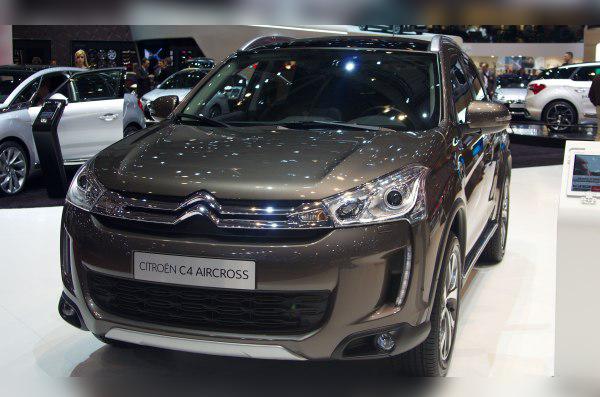
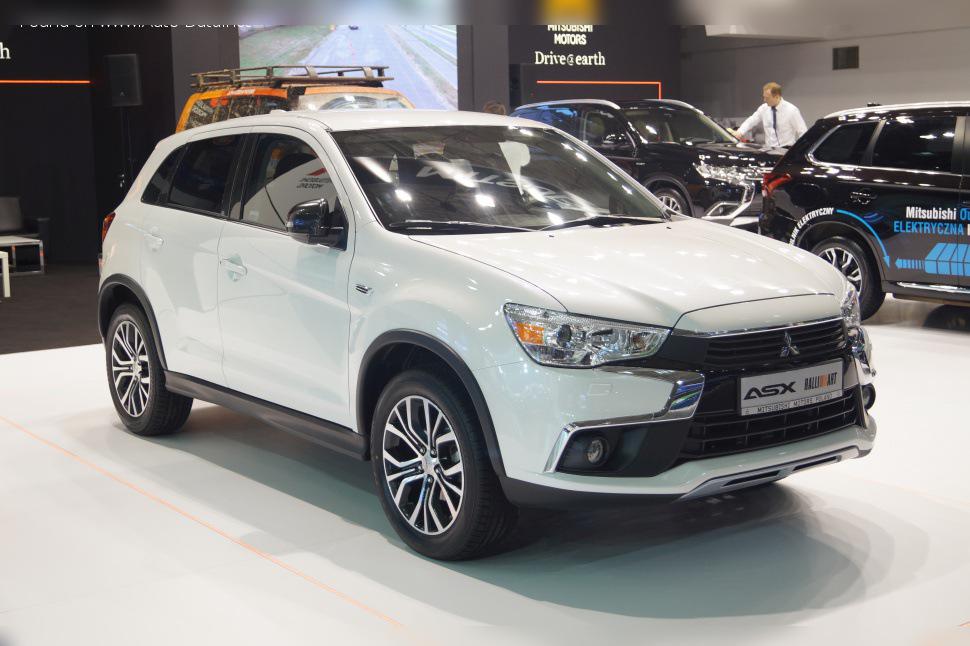
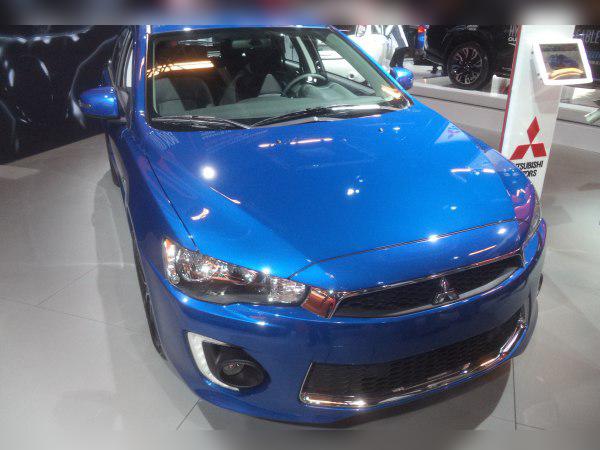
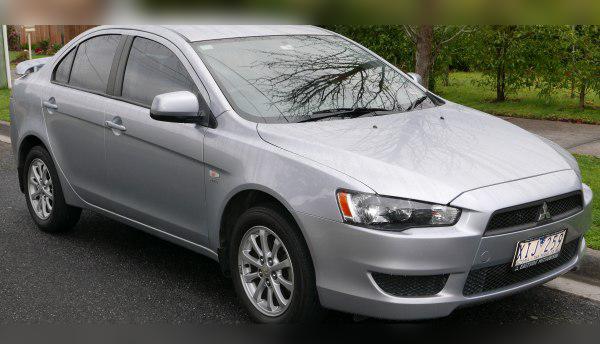
You will most often find it in the popular crossover Mitsubishi ASX (and its twin brother Citroen C4 Aircross), as well as in the last generation of the Lancer. Unlike modern downsized engines with small displacement and big turbos, this is a classic 1.6 naturally aspirated petrol engine. That means fewer parts that can fail, but also a different driving character that modern drivers need to get used to.
Technical specifications
| Specification | Data |
|---|---|
| Engine code | 4A92 |
| Displacement | 1590 cc (1.6 litres) |
| Power | 86 kW (117 hp) at 6000 rpm |
| Torque | 154 Nm at 4000 rpm |
| Fuel type | Petrol (Eurosuper 95/98) |
| Aspiration | Naturally aspirated |
| Injection | MPI (Multi-Point Injection) – indirect |
| Valve timing drive | Chain (DOHC) |
| Engine block | Aluminium |
Reliability and maintenance
Timing belt or chain?
The 4A92 engine uses a timing chain for valve timing. This is great news for owners because there is no fixed replacement interval as with a belt. In practice, this chain is very durable and often lasts over 200,000–250,000 km without intervention. Still, it is not eternal. If you hear rattling on a cold start that does not disappear after a few seconds, it is a sign that the chain has stretched or that the hydraulic tensioner is failing.
Most common issues
This engine is considered one of the most reliable in its class, but it is not completely trouble-free:
- Crankshaft/camshaft position sensor: Can occasionally fail, causing the engine to stall or not start. Not an expensive repair.
- Valve cover gasket: At higher mileage, it can start to seep oil.
- Dirty throttle body: Manifests as unstable idle or fluctuating revs. Cleaning solves the problem and is not expensive.
- MIVEC system: Although rare, the variable valve timing actuator can become noisy or fail if the oil is not changed regularly.
Service intervals and oil
Minor service: Recommended every 10,000 to 15,000 km (or once a year). Ignore extended 30,000 km intervals if you want the engine to last.
Oil capacity: The sump holds about 4.2 litres of oil (including the filter).
Viscosity: Mitsubishi usually recommends 0W-20 or 5W-30 (synthetic). For higher-mileage engines in warmer climates, 5W-30 or 5W-40 is often a better choice for protection.
Oil consumption
In general, the 4A92 does not consume oil in alarming quantities. Consumption of up to 0.5 litres per 10,000 km is considered perfectly normal. If the engine uses more than 1 litre per 5,000 km, this points to a problem with piston rings or valve stem seals (often due to poor past maintenance or overheating).
Specific parts (costs)
Dual-mass flywheel and clutch
Good news! This engine is paired with a solid flywheel. This drastically reduces maintenance costs. When it is time to replace the clutch (pressure plate, disc, release bearing), the cost falls into the “affordable” to “moderately expensive” category, depending on the parts manufacturer (e.g. Exedy, Aisin, Sachs).
Fuel injection system and injectors
The engine uses a classic MPI (Multi-Point Injection) system. This is not direct injection (GDI). The injectors are robust, not too sensitive to average fuel quality and cheap to clean or replace. Injector failures are extremely rare.
Turbo and EGR/DPF
This is a naturally aspirated engine – there is no turbocharger. That means: no turbo rebuilds, no intercooler issues, no turbo lag.
Also, as a petrol engine, it does not have a DPF filter. It does have an EGR valve, but on petrol engines it clogs much less frequently than on diesels. There is a catalytic converter, which can fail only if the engine burns a lot of oil or has mixture ignition problems.
Fuel consumption and performance
Is the engine “lazy”?
We need to be realistic here. With 154 Nm of torque available only at a high 4000 rpm, this engine in an SUV body (ASX/C4 Aircross) can feel lazy. In the city it is perfectly adequate and reasonably lively (first and second gears are short). However, on open roads, overtaking requires dropping down a gear (from 5th to 3rd) and revving the engine close to the redline. In the lighter Lancer, the situation is better and the car feels more agile.
Fuel consumption (real-world)
- City driving: Expect between 8.0 and 10.0 l/100 km. In heavy winter traffic it can go up to 11 l/100 km.
- Country roads: The most economical mode. It can go down to 5.5–6.5 l/100 km.
- Motorway (130 km/h): Due to the lack of a 6th gear, consumption rises to around 7.5–8.5 l/100 km.
Motorway cruising
This is the biggest drawback of this engine and gearbox combination. At a speed of 130 km/h, the engine spins at around 3,500 to 3,800 rpm (depending on tyre size). This creates cabin noise and increases fuel consumption. Mechanically, the engine can handle it just fine, but on long journeys the noise can bother passengers.
Additional options and modifications
LPG conversion
Since it is an MPI engine, it is an ideal candidate for LPG. The system is simple and installation is not too expensive.
IMPORTANT WARNING: This engine (4A92) often has mechanical valve lifters (buckets), not hydraulic ones. That means valve clearance does not adjust itself. Running on LPG can accelerate valve seat recession. It is essential to install a valve lubrication system (“valve saver” or electronic additive) and to check valve clearances every 40,000–50,000 km. If this is neglected, cylinder head repair is expensive.
Chiptuning (Stage 1)
On naturally aspirated petrol engines, “chipping” is mostly a waste of money. You may get a better throttle response and maybe 3–5 hp, which you will hardly feel in real driving. The factory map is already optimised for the best balance of fuel consumption and longevity.
Gearbox and drivetrain
Manual gearbox
The 1.6 MIVEC almost exclusively comes with a 5-speed manual gearbox. The gearbox is precise, the throws are relatively short and it is pleasant to use.
Failures: It is very durable. It can sometimes be notchy when engaging reverse or first gear while cold (a characteristic, not necessarily a fault). The gearbox oil should be changed every 60,000–80,000 km (the cost is low, it takes about 2 litres of 75W-80 or similar oil).
Automatic gearbox
On the European market, the 1.6 petrol was rarely paired with an automatic. If you find such an example (often imported from other markets), it is usually a CVT gearbox. Mitsubishi (Jatco) CVTs require strictly regular oil and filter changes. If you are not sure about the CVT’s service history, the manual is a much safer and cheaper option.
Buying used and conclusion
What to check before buying?
- Cold start: Listen for chain rattling that lasts longer than 2–3 seconds.
- Idle: The engine should run smoothly, without jerks. Jerking points to a dirty throttle body, bad spark plugs or ignition coils.
- Exhaust: Under hard acceleration, there should be no blue smoke (oil consumption).
- Air conditioning: When you turn on the A/C, revs should rise slightly, not drop drastically (checks the compressor and idle control electronics).
Final verdict
The Mitsubishi 1.6 MIVEC (4A92) is a textbook example of a rational purchase. It is not exciting, it will not pin you to the seat, and it will be noisy on the motorway. However, it offers something that is rare today: simple mechanics that do not break down, cheap maintenance and longevity.
If you are buying a Lancer, this engine is a bullseye. If you are buying an ASX or C4 Aircross, this engine is sufficient for city and family driving, provided you are not an aggressive driver. For those who cover a lot of kilometres in town and on country roads, with an LPG conversion this is one of the most economical options on the market.
Was this content useful to you?
Your opinion helps us to improve the quality of the content.