NFX TU5JP4 Engine
- Engine
- 1587 cm3
- Aspiration
- Naturally aspirated engine
- Fuel
- Petrol (Gasoline)
- Fuel injection system
- Multi-port manifold injection
- Power
- 118 hp @ 6600 rpm
- Torque
- 145 Nm @ 5200 rpm
- Cylinders
- 4
- Valves
- 16, 4 per cylinder
- Cylinders position
- Inline
- Valvetrain
- DOHC
- Oil capacity
- 3.5 l
- Coolant
- 5.8 l
# Vehicles powered by this engine
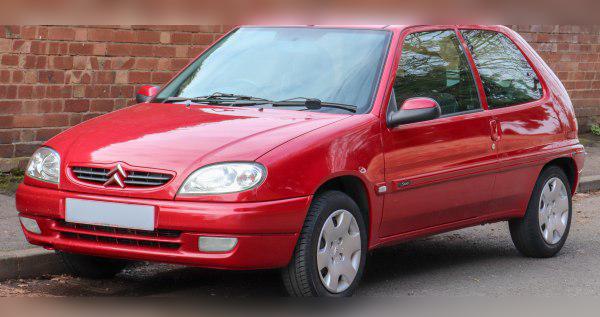
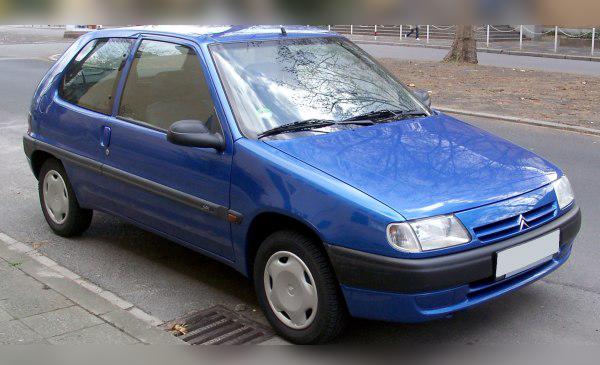
Engine 1.6 16V NFX (TU5J4): Experiences, problems, fuel consumption and buying tips for the legendary “buzzbox”
In short (TL;DR)
- Performance: An explosive engine in a light body (Saxo VTS). True “old school” naturally aspirated unit that loves high revs.
- Reliability: Mechanically very robust, a “bulletproof” engine block, but ancillaries and electronics can cause minor issues.
- Maintenance: Parts are cheap and easy to find. The engine is simple to work on for most mechanics.
- Gearbox: The MA gearbox is the “Achilles’ heel” – sensitive to aggressive driving and synchros often fail.
- Fuel consumption: It can be economical if driven gently, but since this car begs to be revved, expect higher city consumption.
- Conclusion: Not for those who seek comfort and quiet, but for enthusiasts who want a cheap entry into the world of hot hatches.
Contents
- Introduction and engine applications
- Technical specifications
- Reliability, Maintenance and Oil
- Specific Parts and Systems
- Fuel Consumption and Real-world Performance
- Additional Options, LPG and Tuning
- Gearbox and Drivetrain
- Used-buying tips and Conclusion
Introduction: The heart of the French “pocket rocket”
The engine with code NFX, better known among mechanics as TU5J4 (although some confuse it with the newer TU5JP4), is the “Holy Grail” of small French sports cars from the late 90s. This is the engine that made the Citroën Saxo VTS famous (and its brother, the Peugeot 106 GTI).
Why is this engine important? Because it offers 118 horsepower in a car that weighs less than one ton (around 935 kg). That results in a power-to-weight ratio that shames many modern, much more expensive cars. This is not a cruising engine; it’s a machine that really wakes up above 4,000 rpm and screams all the way to the rev limiter. It was fitted in Saxo Phase I and Phase II, and today it enjoys cult status among “track day” enthusiasts.
Technical specifications
| Parameter | Value |
|---|---|
| Displacement | 1587 cc (1.6 litres) |
| Power | 87 kW (118 hp) at 6600 rpm |
| Torque | 145 Nm at 5200 rpm |
| Engine code | NFX (TU5J4) |
| Injection type | Multipoint (Indirect injection) |
| Configuration | Inline 4-cylinder, 16 valves (DOHC) |
| Induction | Naturally aspirated |
Reliability and Maintenance: What to expect?
Timing belt or chain?
The NFX (TU5J4) engine uses a timing belt to drive the camshafts. This is a critical maintenance point. Considering the age of these cars and the likelihood that they are driven at high revs, it is recommended to replace the timing kit (belt, tensioners, water pump) every 60,000 to 80,000 km or 4–5 years, whichever comes first. A snapped belt leads to piston-to-valve contact, which means an expensive rebuild or engine replacement.
Most common failures
Although the mechanical base (block, pistons) is very durable, time takes its toll:
- Head gasket: TU engines are known for “weeping” oil at the corner of the block near the alternator. If oil mixes with coolant (mayonnaise on the filler cap) or the engine starts overheating, the head gasket needs replacing.
- Coil pack: One of the more common issues. Symptoms are running on 3 cylinders, jerking while driving and the “Check Engine” light coming on.
- Idle control valve (stepper motor): Unstable idle, stalling at traffic lights. Cleaning sometimes helps, but replacement is the permanent fix.
- Valve stem seals: At higher mileage they harden, so the engine starts burning blue smoke on cold start or after idling for a longer time.
Oil: Capacity and consumption
The sump holds approximately 3.5 litres of oil (with filter). Due to the engine design and high revs, it is recommended to use good quality synthetic or semi-synthetic oil of grade 5W-40 or 10W-40.
Does it burn oil? Yes, especially if driven the way a Saxo VTS is meant to be driven. Consumption of up to 0.3–0.5 litres per 1,000 km under hard driving is considered acceptable for this engine at its age. Anything above that points to worn piston rings or (more often) valve stem seals. Regularly checking the oil level (with the dipstick – don’t rely on sensors) is a must!
Specific Parts (Costs)
Dual-mass flywheel and clutch
Good news: This engine DOES NOT have a dual-mass flywheel. It uses a classic solid flywheel which is practically indestructible. That significantly lowers the cost of clutch replacement. The clutch itself is relatively cheap (falls into the “affordable” category), but pay attention to the clutch cable, which is known to snap or become stiff.
Fuel injection system
It uses standard multipoint electronic injection. The injectors are generally reliable and rarely cause trouble. If problems do occur, it’s usually due to dirty fuel, and ultrasonic cleaning solves it. Used replacements are also inexpensive.
Turbo, DPF, EGR?
This engine is a “purebred” naturally aspirated unit. It has no turbocharger, no intercooler, which means fewer parts that can fail. Also, as a petrol engine from that era, it has no DPF filter.
As for the EGR valve, early models often don’t have one at all, or the system is very primitive (crankcase vapour recirculation). There are no clogging issues like on modern diesels. This is a simple engine by design – air, fuel, spark.
Fuel Consumption and Performance
City driving and “laziness”
Is the engine lazy? Absolutely not. With 118 hp in under 950 kg, the Saxo VTS flies. Throttle response is instant (no turbo lag). However, the real power is high up, above 4500 rpm. At low revs it’s civilised, but the real “beast” wakes up when the needle hits the red.
Real-world city consumption: The factory claims less, but in practice you should expect 8.5 to 11 litres of petrol per 100 km. It’s hard to drive this car slowly, and the short gearbox ratios keep the engine at higher revs even at city speeds.
Motorway and cruising
This is not the natural habitat of the Saxo VTS. Due to the short gearbox (designed for acceleration), at 130 km/h the engine spins at around 4,000–4,200 rpm (depending on tyre size and final drive). That means the cabin is very noisy and motorway consumption goes up (around 7.5–8.5 l/100 km). It’s not comfortable for long journeys.
Additional Options and Modifications
LPG conversion
The engine is very suitable for a sequential LPG system. The metal intake manifold (on older NFX units) and simple electronics handle LPG well. Still, owners of these cars rarely install LPG because you lose part of the boot space (which is already small) and add weight, which hurts performance. If you do install it, it must be mapped perfectly so the mixture doesn’t run lean at high revs.
Remap (Stage 1)
On naturally aspirated engines, a software-only remap does not bring spectacular gains. Expect an increase of about 5 to 8 hp and slightly better throttle response.
However, this engine is an excellent base for mechanical tuning. Different camshafts, an open cone intake (“mushroom” filter – the well-known Simota intake does wonders for sound and response), a 4-2-1 exhaust manifold and a remap can raise power to a real 135–140 hp, which makes a serious difference in such a light car.
Gearbox: The weakest link
Gearbox type
The 1.6 16V NFX engine comes exclusively with a 5-speed manual gearbox, code MA. Automatic gearboxes were fitted to lower-powered versions (1.4 or 1.6 8V), but not to the VTS 16V.
Problems and failures
The MA gearbox is known as “soft”. The most common failures are:
- Second-gear synchro: Due to fast shifting (racing), the second-gear synchro wears out, so the gearbox grinds when engaging second.
- Differential: Under extreme driving, the satellite shaft in the differential can break and punch a hole in the gearbox casing.
- Gear linkages: They have plastic parts that wear out, so the gear lever develops a lot of play and becomes imprecise. A linkage repair kit is cheap.
Gearbox service
The gearbox oil should be changed every 60,000 km. It takes about 2 litres of 75W-80 oil. Regular oil changes can extend the life of the sensitive synchros.
Buying used and Verdict
Buying a Citroën Saxo VTS with this engine today means buying a “youngtimer”.
What you must check:
- Rear axle (torsion beam): Not part of the engine, but it’s the most expensive failure on the car. If the rear wheels lean in at the top (/ \) or you hear knocking from the back, the torsion beam needs a rebuild (costly repair).
- Cold start: The engine should fire up immediately and stabilise quickly. Smoke from the exhaust right after starting points to worn valve stem seals.
- Gearbox: Try a fast shift from first to second at higher revs. If it grinds, the gearbox is due for a rebuild.
- Rust: Check under the boot floor and the sills.
Conclusion:
The NFX (TU5J4) engine is a gem of the French car industry. It’s not the most refined, it’s not the quietest, but it delivers raw fun that modern cars can’t replicate for the same money. Maintenance is cheap (except for some specific VTS body parts), and the smile on your face is guaranteed. If you find an example that hasn’t been “dragged out of the grave”, buy it and keep it – prices are only going up.
Was this content useful to you?
Your opinion helps us to improve the quality of the content.