5GR EP6FDTX Engine
- Engine
- 1598 cm3
- Aspiration
- Turbocharger, Intercooler
- Fuel
- Petrol (Gasoline)
- Fuel injection system
- Direct injection
- Power
- 208 hp @ 5800 rpm
- Torque
- 300 Nm @ 3000 rpm
- Cylinders
- 4
- Valves
- 16, 4 per cylinder
- Cylinders position
- Inline
- Oil capacity
- 4.25 l
- Coolant
- 6 l
- Systems
- Start & Stop System
# Vehicles powered by this engine

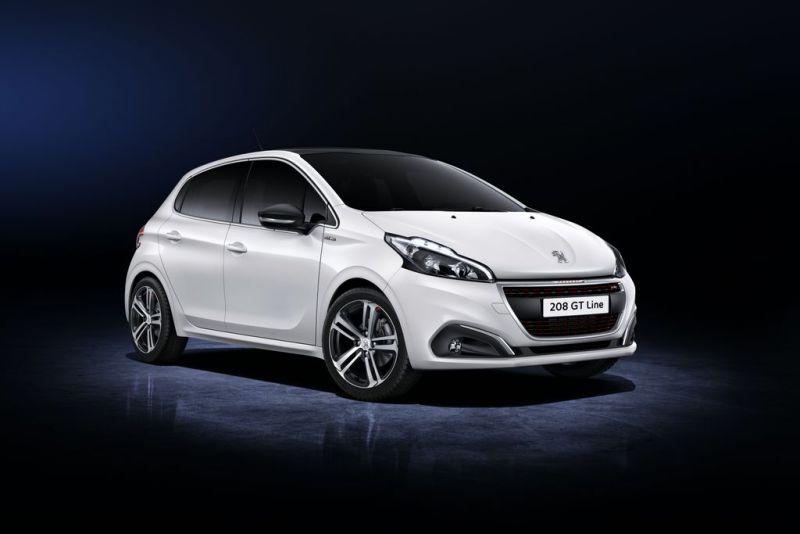
1.6 THP 208 HP (5GR EP6FDTX): Experiences, problems, fuel consumption and buying used
1. Most important in short (TL;DR)
If you don’t have time to read the whole article, here’s what you need to know about the 1.6 THP (EP6FDTX) engine before buying:
- Performance: An excellent power-to-weight ratio. This is “hot hatch” territory – the engine is bursting with power in small bodies such as the Peugeot 208 GTi or DS 3.
- Timing: Uses a chain. Although this version (200+ HP) is significantly reinforced compared to the notorious early series (THP 150/156), the chain and tensioner are still weak points that must be checked.
- Carbon buildup: As a direct-injection engine, it suffers from carbon deposits on the intake valves, which choke the engine at higher mileage.
- Oil consumption: Get used to checking the dipstick regularly. These engines like to “drink” oil if driven hard.
- High-pressure fuel pump: A known weak spot of THP engines; although less common on this evolution, it can still cause headaches.
- Conclusion: An engine for enthusiasts who know what they’re buying and are ready for preventive maintenance – not for drivers who just “fill up and drive”.
Contents
- Introduction and applications
- Technical specifications
- Reliability and maintenance
- Specific parts and costs
- Fuel consumption and performance
- Additional options and tuning
- Gearbox and drivetrain
- Used car buying tips and conclusion
Introduction and applications
The engine designated 5GR EP6FDTX is the pinnacle of engineering that came out of the cooperation between the PSA group (Peugeot/Citroën) and BMW (the famous “Prince” engine family). While the lower-powered versions (150/156 HP) were plagued with teething problems, this 208 HP version (often listed as 200 or 205 HP depending on market and emissions standard) was significantly revised.
This is not a regular city-driving engine; this is the heart of sporty models. It has reinforced pistons (Mahle), different connecting rods and an improved cooling system compared to the standard versions. It is primarily fitted in the Peugeot 208 GTi (including the 30th Anniversary edition) and the DS 3 Cabrio Performance. It offers explosiveness that very few 1.6 engines can match.
Technical specifications
| Parameter | Value |
| Engine displacement | 1598 cc (1.6 litres) |
| Power | 153 kW (208 HP) @ 6000 rpm |
| Torque | 300 Nm @ 3000 rpm |
| Engine code | EP6FDTX (5GR) |
| Injection system | Direct injection (GDI) |
| Forced induction | Twin-scroll turbo + intercooler |
| Timing drive | Chain |
Reliability and maintenance
Timing system: chain or belt?
This engine uses a timing chain. This is the most sensitive topic with THP engines. Although on the 208 HP version (EP6FDTX) the tensioning system and the chain itself were improved compared to older models, it is not lifetime.
Symptoms of problems: A cold start accompanied by rattling (metallic noise) that lasts a few seconds or longer. This is a sign that the hydraulic tensioner has weakened or the chain has stretched. If ignored, the chain can jump a tooth and cause catastrophic engine failure (pistons and valves “meeting”).
Major and minor service
- Minor service (oil change): The manufacturer often recommends intervals of 20,000 km or even 30,000 km. Forget that. Due to the high temperatures generated by the turbo and the tendency to form oil sludge, change the oil every 8,000 to 10,000 km at most, or once a year.
- Major service: Since it has a chain, there is no fixed replacement interval as with a belt. However, in practice, replacing the timing chain kit (chain, guides, tensioner) is often needed between 100,000 and 120,000 km. Consider this regular maintenance, not a failure.
Oil: quantity and consumption
The engine takes approximately 4.25 litres of oil. Only fully synthetic oil of grade 0W-30 or 5W-30 that meets strict PSA specifications is recommended (Low SAPS because of the catalytic converter).
Oil consumption: Yes, this engine consumes oil. Consumption of 0.3 to 0.5 litres per 1,000 km can be considered “normal” for a THP under sporty driving. The causes are oil evaporation through the PCV system and leakage past valve stem seals or piston rings on older units. Check the dipstick regularly!
Most common failures
- High-pressure fuel pump (HPFP): It can fail, causing loss of power, hard starting and a “Check Engine” light. A typical symptom is the car going into limp mode. Replacement is not cheap.
- Thermostat and thermostat housing: Plastic housings can crack or the temperature sensor can send incorrect data, leading to overheating or coolant leaks.
- Carbon buildup: Because of direct injection, petrol does not wash the intake valves. Over time, carbon deposits build up and reduce airflow. Symptoms are rough idle and loss of power. The solution is mechanical cleaning (walnut shell blasting) every 60–80,000 km.
Specific parts and costs
Injection system and turbo
The engine uses direct petrol injection into the cylinders under high pressure. The injectors are precise but sensitive to poor fuel quality. Replacing a full set of injectors is expensive.
It uses a single twin-scroll turbocharger (usually BorgWarner). Twin-scroll technology allows the turbo to spool up even at low revs, eliminating turbo lag. The turbo’s lifespan is long if the oil is changed regularly and the engine is not switched off immediately after hard driving. A sensitive point can be the electric diverter valve on the turbo.
Dual-mass flywheel and clutch
Yes, in combination with the manual gearbox this engine has a dual-mass flywheel. Considering the 300 Nm of torque and the sporty nature of the car, the flywheel is under heavy load. Symptoms of failure are knocking when starting/stopping the engine and vibrations in the clutch pedal. A clutch kit with flywheel is a very expensive item (often over 600–800 EUR including labour).
Emissions equipment (DPF/GPF/EGR)
Depending on model year (especially after 2017/2018), this engine (EP6FDTX) may have a GPF filter (Gasoline Particulate Filter), the petrol equivalent of a DPF. Models from 2012 and 2015 most likely do not have a GPF, only a standard catalytic converter. A classic separate EGR valve is often not present, as exhaust gas recirculation is handled via variable valve timing (VVT), which is one less thing to worry about, but the variable valve timing system (solenoids) can get dirty.
Fuel consumption and performance
Is the engine “lazy”?
Absolutely not. With 208 HP and 300 Nm in a body weighing around 1,100–1,200 kg (Peugeot 208 / DS 3), this car is a real rocket. Throttle response is instant thanks to the twin-scroll turbo. 0–100 km/h is usually under 6.5 seconds. The “pushed into the seat” feeling is guaranteed.
Real-world fuel consumption
- City driving: Expect between 8.5 and 11 l/100 km. If you have a heavy right foot, the figure easily goes to 12+.
- Country roads: It is possible to get it down to 6.0–7.0 l/100 km with moderate driving.
- Motorway (130 km/h): Consumption is around 7.5–8.5 l/100 km. The gearbox is geared short for acceleration, so at 130 km/h the engine spins at slightly higher revs (around 3,000–3,200 rpm), which increases noise and consumption but offers instant overtaking power without downshifting.
Additional options and modifications
LPG conversion
Not recommended. Due to direct injection, a regular sequential LPG system cannot be installed. You need systems for direct liquid-phase LPG injection or systems that use a petrol–LPG mix to cool the petrol injectors. Such systems are very expensive (over 800–1,000 EUR), complicated to set up, and the cost-effectiveness is questionable unless you drive huge mileage – which is not the point of this car.
Chiptuning (Stage 1)
This engine responds very well to tuning. A Stage 1 remap can safely raise power to 230–240 HP and torque to 340–350 Nm without mechanical changes. However, keep in mind that higher boost pressure puts additional stress on the already sensitive chain, clutch and cooling system. Before remapping, the engine must be in perfect condition (clean intake, new chain, healthy fuel pump).
Gearbox
Types of gearboxes
The 1.6 THP 208 HP is almost exclusively paired with a 6-speed manual gearbox (code MCM or a reinforced version). What is crucial on models such as the 208 GTi by Peugeot Sport or 30th Anniversary is the presence of a Torsen limited-slip differential. This drastically changes the car’s behaviour in corners.
Note: Automatic gearboxes (EAT6) are more common on lower-powered versions (165 HP), while the 208 HP “hardcore” version is usually manual.
Gearbox maintenance and failures
- Manual gearbox failures: The gearbox is generally robust, but the synchros for second and third gear can wear out from aggressive shifting. Also, the shift cables can stretch.
- Gearbox oil: Although manufacturers say it is “lifetime”, change the gearbox oil every 60,000 km. This is especially important if you have a Torsen differential, which requires quality lubrication to function properly.
Buying used and conclusion
What to check before buying?
- Cold start: Insist that the engine is completely cold. Listen for chain rattling on the left side of the engine.
- Exhaust smoke: Bluish smoke when you blip the throttle or after idling indicates oil consumption (valve stem seals/turbo). Black smoke is a sign of a rich mixture (fuel or air supply issue).
- Diagnostics: Always check injector corrections and fuel pressure on the rail. Also check whether the car has been remapped.
- Test drive: Accelerate at full throttle in 3rd and 4th gear from low revs. If you feel “hesitation” or uneven power delivery, it may indicate problems with spark plugs, ignition coils (which often fail) or carbon buildup.
Final verdict
The 1.6 THP 208 HP engine is a fantastic source of fun. It offers performance that puts much more expensive cars to shame. However, it is a “diva” of an engine. Buy it only if: you have the budget for quality maintenance, are ready to check the oil regularly and do not plan to cut corners on parts.
For the average driver who just wants transport from point A to point B, this engine is too big a risk and a potential money pit. For an enthusiast – it is one of the best small turbo engines of its era, provided the chain has been replaced.
Was this content useful to you?
Your opinion helps us to improve the quality of the content.