SFJA, SFJB, SFJC, SFJD Engine
- Engine
- 998 cm3
- Aspiration
- Turbocharger, Intercooler
- Fuel
- Petrol (Gasoline)
- Fuel injection system
- Direct injection
- Power
- 100 hp @ 6000 rpm
- Torque
- 170 Nm
- Cylinders
- 3
- Valves
- 12, 4 per cylinder
- Cylinders position
- Inline
- Valvetrain
- DOHC
- Oil capacity
- 4.1 l
- Coolant
- 5.8 l
- Systems
- Start & Stop System
# Vehicles powered by this engine

Ford 1.0 EcoBoost 100 HP (SFJA/SFJB/SFJC/SFJD): Experiences, problems, fuel consumption and buying tips
Key points in short (TL;DR)
- Revolutionary but sensitive design: This is a three-cylinder turbo petrol engine that offers great performance for its size, but requires meticulous maintenance.
- "Wet" timing belt: The biggest peculiarity (and potential downside) of this engine. The belt runs in oil. The wrong oil degrades it and destroys the engine.
- Cooling system: Plastic hoses and tanks are a weak point. Coolant leaks quickly lead to overheating and a warped cylinder head.
- PowerShift gearbox: Avoid automatic versions from this period (Fiesta/B-MAX with PowerShift). It’s a dual-clutch gearbox known for expensive failures.
- Performance: Surprisingly lively engine. 100 HP is more than enough for the Fiesta, and even for the B-MAX.
- Economy: Low fuel consumption if driven gently, but it rises sharply if you push it hard (the “turbo effect”).
- Recommendation: An excellent choice for city driving and shorter trips, provided it has a proper service history with proof of using only Ford‑spec oil.
Contents
- Technical Specifications
- Reliability and Maintenance (Belt in oil)
- Specific Parts and Costs
- Fuel Consumption and Performance
- Additional Options (LPG and Remap)
- Gearbox: Manual vs. Automatic
- Buying Used and Conclusion
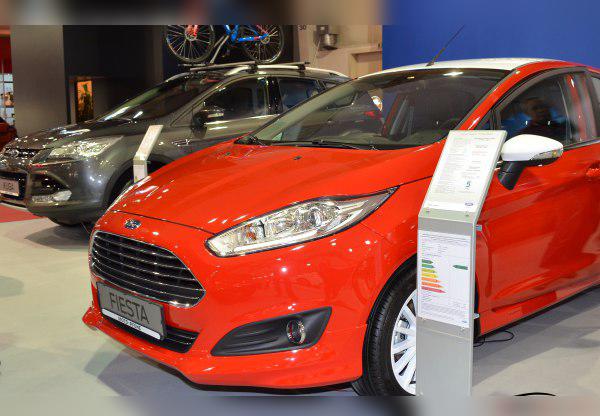
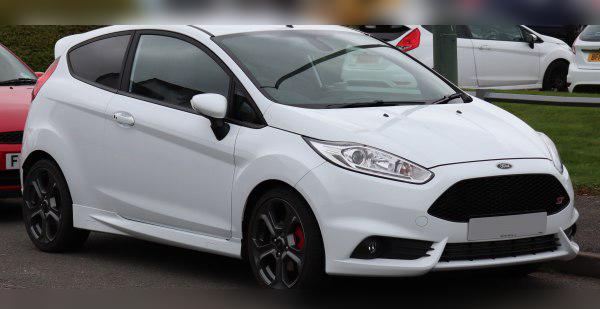
Ford’s 1.0 EcoBoost engine, known internally by the nickname “Fox”, is a multiple winner of the “International Engine of the Year” award. When it appeared, it changed the rules of the game, offering the power of an old 1.6 naturally aspirated engine in a package that fits on an A4 sheet of paper. Engine codes SFJA, SFJB, SFJC, SFJD refer to the 100 horsepower version that was installed in the Fiesta Mk7 (facelift) and the practical B-MAX. Although an engineering marvel, this engine is not without flaws, and buying a used one requires knowledge so you don’t end up buying a pig in a poke.
Technical Specifications
| Characteristic | Data |
|---|---|
| Displacement | 998 cc (3 cylinders) |
| Power | 74 kW (100 HP) at 6000 rpm |
| Torque | 170 Nm at 1400-4000 rpm |
| Engine codes | SFJA, SFJB, SFJC, SFJD |
| Injection type | Direct injection (GDI) |
| Induction | Turbocharger (low pressure) + intercooler |
| Engine block | Cast iron – for faster warm‑up |
Reliability and Maintenance
Timing belt or chain? (The most important question)
This is the key point. SFJA/SFJB series engines use a timing belt running in oil (Wet Belt). In fact, there are two belts: one drives the camshafts (timing belt), and the other drives the oil pump. Both are “wet”.
The problem: The belt material is sensitive to oil acidity and additives. If the wrong oil is used or the change interval is exceeded, the belt starts to flake. Rubber particles fall into the oil pan and clog the oil pump pickup screen. This leads to a drop in oil pressure and catastrophic engine failure (seized crankshaft or camshafts).
Most common failures
- Cooling system (Degas hose): The plastic hose that runs from the engine to the expansion tank is prone to cracking on older models (before 2014/2015, though sometimes later as well). Coolant loss is rapid, and since the engine block doesn’t have much “meat”, the head overheats and warps almost instantly. This was the subject of a recall in some countries.
- Clogged oil pump pickup: A direct consequence of belt degradation (see above). The symptom is the oil warning light coming on, usually too late.
- Carbon buildup: Like any direct‑injection engine, the intake valves get dirty over time because fuel doesn’t wash them. Symptoms are rough idle and loss of power.
Major service and oil changes
Ford specifies an optimistic 240,000 km or 10 years for belt replacement. Ignore this! Practice has shown that this is far too long.
Mechanics’ recommendation: Do the major service at a maximum of 150,000 km or 8–9 years.
Cost: The major service is expensive (significantly more than on conventional engines) because it requires many labor hours, special tools and removal of many parts. Expect a cost of 400 to 700 EUR, depending on the workshop and parts.
Oil: quantity and grade
The engine takes approximately 4.1 liters of oil.
The grade is sacred: You must use only 5W-20 oil that meets the Ford WSS-M2C948-B specification (e.g. Castrol Magnatec Professional E). Any other oil (5W-30, 10W-40) will destroy the timing belt in record time!
Oil consumption: A healthy 1.0 EcoBoost should not consume a significant amount of oil. Consumption up to 0.5 liters per 10,000 km is acceptable. If it consumes more, this may indicate a problem with the turbo or piston rings.
Specific Parts and Costs
Flywheel
Good news for the 100 HP version (SFJA/SFJB): In most cases, especially in the Fiesta and B-MAX with the 5‑speed manual gearbox, this engine uses a solid (single‑mass) flywheel. This significantly reduces the cost of clutch kit replacement. Still, always check by VIN, as there were variations for certain markets.
Injection system and injectors
It uses a Bosch direct‑injection system. The injectors are precise (6 holes), but sensitive to poor fuel quality. They are not prone to widespread failures, but replacing a single injector can be expensive (around 100–150 EUR per piece).
Turbocharger
The engine has a small, low‑inertia turbocharger (Continental). It spins up to an incredible 248,000 rpm. Despite this, they are quite reliable if the engine is properly maintained and allowed to idle briefly after fast driving before switching off. Failures are mostly related to lubrication problems (again, that belt and the oil pump pickup screen).
DPF and EGR
These models (model years 2012–2016) are petrol engines and generally do not have a GPF (Gasoline Particulate Filter), which only became mandatory later (Euro 6d‑TEMP). They have a catalytic converter integrated into the exhaust manifold, which makes it expensive to replace if it fails. There is an EGR valve, but on petrol engines it clogs less often than on diesels, although it is not immune to failure at higher mileages.
Fuel Consumption and Performance
Real‑world fuel consumption
The “Eco” label is somewhat misleading. The engine is economical only if you are gentle with the throttle.
- City driving: Realistically expect between 6.5 and 8.0 l/100 km. In heavy stop‑and‑go traffic in a B-MAX, it can go up to 8.5 liters.
- Highway / open road: This is where the engine shines and can use around 4.5–5.5 liters.
Power and “sluggishness”
Is it sluggish? Absolutely not. With 170 Nm of torque available from just 1400 rpm, this engine pulls better than the old 1.6 petrol units.
In the Fiesta it feels very lively. In the B-MAX (which is heavier and taller) it is perfectly adequate for family driving and even overtaking, but don’t expect sports‑car performance when the car is fully loaded with passengers and luggage.
Motorway (130 km/h)
Thanks to a well‑chosen gearbox ratio, at 130 km/h the engine spins at about 2800–3000 rpm (in 5th gear). Cabin noise is surprisingly low for a three‑cylinder – the engine is very refined and quiet. It has no problem maintaining cruising speeds.
Additional Options and Modifications
LPG conversion
Not recommended or very expensive. Since this is a direct‑injection engine, you cannot install a standard sequential LPG system. You need a system for direct injection (liquid phase or a system that uses both petrol and LPG at the same time to cool the injectors). Such systems are expensive (often over 800–1000 EUR), and given the sensitive cylinder head, the risk of valve overheating is increased.
Remap (Stage 1)
The engine has potential. The 100 HP version is hardware‑wise almost identical to the 125 HP version (differences are mainly in mapping and the gearbox on some models). A safe Stage 1 remap can raise power to 125–135 HP and torque to over 200 Nm.
Warning: A remap puts additional stress on the cooling system and pistons. Do this only if the engine is in perfect condition.
Gearbox
Manual gearbox (IB5 – 5 speeds)
The SFJA/SFJB versions (100 HP) usually come with a 5‑speed manual gearbox (code IB5).
Reliability: Average. It’s not indestructible like some older gearboxes.
Failures: Oil leaks at driveshaft seals and sometimes issues with input shaft bearings (you hear a whining noise). Changing the gearbox oil is recommended every 60,000–80,000 km, even though Ford claims it is “lifetime”.
Automatic gearbox (PowerShift – DPS6) – CAUTION!
If the car has an automatic gearbox, it is Ford’s PowerShift with dry dual clutches.
Verdict: This is one of the most problematic gearboxes in recent history.
Failure symptoms: Jerking when setting off, hesitation when shifting, “dropping” into neutral (safe mode).
Cause: Failure of the TCM module (electronics) and clutch overheating due to poor seal design (oil leaks onto the dry clutches).
Recommendation: Avoid used Fiestas and B-MAX models with this gearbox unless you have proof that the gearbox has been completely overhauled or replaced with a new revision.
Buying Used and Conclusion
What to check before buying?
- Service book: If there is no proof of using 5W-20 oil, walk away.
- Timing belt: Ask if it has been replaced. If the car is close to 150,000 km or 10 years and the belt hasn’t been changed, immediately factor in a cost of ~500+ EUR in the price.
- Coolant: The level must be correct. If it is below minimum, there is a risk the engine has already overheated. Check the color (there should be no traces of oil).
- Noise: The engine should run smoothly. Rattling on cold start can indicate an issue with the camshaft phasers (VVT) or hydraulic lifters, but deeper dull knocks are a sign of crankshaft bearing problems.
Final verdict
The Ford 1.0 EcoBoost 100 HP is a technological gem that requires a responsible owner. It is intended for drivers who want an excellent balance of performance and registration costs (under 1000 cc), mostly drive in the city, but are not afraid of motorway trips.
If you find a car with a manual gearbox and a verified maintenance history – go for it, it’s a fun and modern car. If the maintenance history is questionable or it’s an automatic – give it a wide berth.
Was this content useful to you?
Your opinion helps us to improve the quality of the content.